Key takeaways
- What wears first: rung locks, rope, pulleys and rubber feet. Inspect them before every use.
- Setting the angle wrong: too steep may tip back, and too shallow may slide at the base.
- Overreaching: keep your belt buckle between the rails and move the ladder rather than stretching.
- Ignoring power lines: stay at least 10 feet away from overhead lines and never use metal ladders near them.
- Storing outdoors: sunlight can degrade fiberglass over time, so store inside when possible.
The best 16 foot ladder for most homeowners is a fiberglass extension ladder rated Type IA, such as the Louisville Ladder FE3216, which roundups repeatedly name as the value pick. For lighter handling and a higher duty rating, the Little Giant HyperLite 16 is a Type IAA ladder at about 28 pounds, and for a ladder that does several jobs the Little Giant Dark Horse 2.0 is the leading multi-position fiberglass model. A 16 foot extension ladder reaches roughly 13 feet at its top contact point once the sections overlap, which puts a gutter on a single-story home within reach.
Our top picks


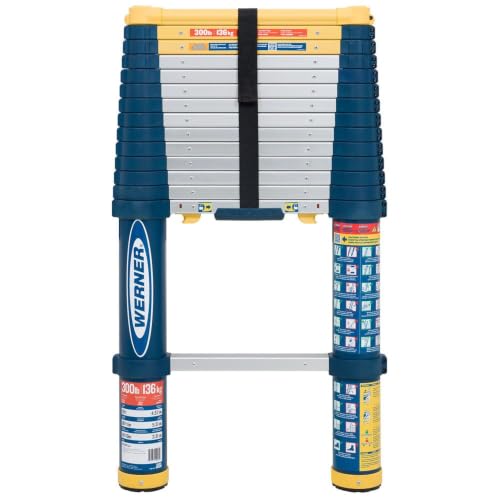
As an Amazon Associate we earn from qualifying purchases at no extra cost to you.
Quick Comparison of 16 Foot Ladders
| Pick | Best for | Material | Duty rating / load | Weight (per listings) | Price tier |
|---|---|---|---|---|---|
| Louisville Ladder FE3216 | Best value extension | Fiberglass | Type IA, 300 lb | About 30 lb | Mid-range |
| Little Giant HyperLite 16 | Lightest, highest rating | Fiberglass | Type IAA, 375 lb | About 28 lb | Upper-mid |
| Werner D6016-2 | Trusted general use | Fiberglass | Type I, 250 lb | About 33 lb | Mid-range |
| Werner D7116-2 | Heavy-duty contractor use | Fiberglass | Type IAA, 375 lb | Heavier build | Upper-mid |
| DeWalt DXL3020-16PT | Warranty-backed Type IA | Fiberglass | Type IA, 300 lb | Listed by maker | Mid-range |
| Louisville Ladder AE3216 | Lowest weight, no electrical work | Aluminum | Type I, 250 lb | About 25 lb | Budget to mid |
| Little Giant Dark Horse 2.0 (M17) | Multi-position versatility | Fiberglass | Type IA, 300 lb | About 31.5 lb | Upper-mid |
Ratings and weights come from manufacturer listings and published roundups, which may differ slightly by production year. Always read the labels on the ladder you actually receive, and check the duty rating against your weight plus tools.
Best Value: Louisville Ladder FE3216
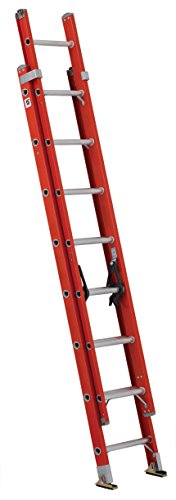
The FE3216 is a Type IA fiberglass extension ladder with a 300 pound rating, and it is commonly described as a proven workhorse at a fair price. Fiberglass rails resist electrical conduction when clean and dry, though you should still keep any ladder away from power lines. The trade-off is weight: at around 30 pounds it is manageable for most adults but awkward to lift alone onto a high wall.
Best Lightweight and Highest Rated: Little Giant HyperLite 16
The HyperLite 16 is a straight extension ladder with a Type IAA rating and a 375 pound load capacity at about 28 pounds, so it adds capacity without adding weight. That suits professionals and heavier users, and anyone who raises the ladder alone. It costs more than a basic Type IA model.
Best Familiar Brand: Werner D6016-2
Werner and Louisville are the two brands most consistently recommended for fiberglass extension ladders by owner and contractor feedback. The D6016-2 is a Type I model at 250 pounds and about 33 pounds in weight, so it fits lighter household tasks. If your combined weight with tools approaches 250 pounds, step up to a Type IA or IAA model.
Best for Heavy Use: Werner D7116-2
The D7116-2 is a Type IAA fiberglass ladder aimed at heavy-duty work. It suits painters, roofers and general contractors who use a ladder daily. The extra build adds weight, so a ladder stabilizer or stand-off is a worthwhile add-on.
Best With Strong Warranty: DeWalt DXL3020-16PT
This Type IA 300 pound fiberglass ladder carries a three-year warranty, according to published listings. It suits buyers who want a tool-brand name and a warranty on their ladder.
Best Lightweight Aluminum: Louisville Ladder AE3216
The AE3216 is a Type I, 250 pound aluminum ladder at about 25 pounds. Aluminum is lighter and often cheaper, but it conducts electricity, so it should not be used anywhere near power lines or service drops.
Best Multi-Position: Little Giant Dark Horse 2.0
The Dark Horse 2.0 (M17) is a multi-position fiberglass ladder with five positions, including stepladder, extension, scaffold and stairway configurations, along with Tip and Glide wheels. It weighs about 31.5 pounds and carries a Type IA 300 pound rating. If you need one ladder for the garage, deck and house exterior, this style often replaces both a stepladder and an extension ladder. The trade-off is that its hinges and locks need regular inspection.
Reach and Setup: A Worked Calculation
A 16 foot extension ladder is measured by the combined length of its two sections, and the extended working length is about 13 feet because the sections must overlap. Ladder safety guidance uses the 4-to-1 rule: for every 4 feet of height to the contact point, place the base 1 foot away from the wall.
| Ladder contact height | Base distance from wall (4:1) | Highest rung you should stand on |
|---|---|---|
| 8 ft | 2 ft | Roughly 4th rung from the top or lower per label |
| 10 ft | 2.5 ft | Per the ladder’s top-step markings |
| 12 ft | 3 ft | Per the ladder’s top-step markings |
| 13 ft (fully extended) | 3.25 ft | Do not stand above the label limit |
For access to a roof edge, the ladder should extend at least 3 feet above the landing point. A fully extended 16 foot ladder with that overlap generally suits a roof edge near 9 to 10 feet, which is typical of a single-story home. Higher than that, you need a 20 to 24 foot ladder. Follow the labels and manufacturer instructions for exact limits.
How to Choose a 16 Foot Ladder
Duty rating and load
Add your body weight, clothing, tools and materials. Type I is 250 pounds, Type IA is 300 pounds and Type IAA is 375 pounds. Choose a rating with margin over your total load.
Fiberglass or aluminum
Fiberglass resists electricity when clean and dry, weathers well and flexes less, but it weighs more. Aluminum is lighter but conducts electricity, so it is unsuitable near lines.
Extension or multi-position
An extension ladder gives the most reach for its weight. A multi-position ladder is more versatile indoors and out but costs more and is more complex.
Feet and levelers
Look for swivel feet that grip pavement and soft ground. For uneven ground, add a leveler rather than propping a rail with blocks.
Storage and transport
A 16 foot ladder is about 8 feet long when retracted and fits on many truck racks. Measure your vehicle, garage and storage wall before buying.
Ownership Realities and Common Mistakes
- What wears first: rung locks, rope, pulleys and rubber feet. Inspect them before every use.
- Setting the angle wrong: too steep may tip back, and too shallow may slide at the base.
- Overreaching: keep your belt buckle between the rails and move the ladder rather than stretching.
- Ignoring power lines: stay at least 10 feet away from overhead lines and never use metal ladders near them.
- Storing outdoors: sunlight can degrade fiberglass over time, so store inside when possible.
Frequently Asked Questions
How high does a 16 foot extension ladder reach?
Fully extended, it has a working length of about 13 feet. After accounting for the angle and a safe standing height, it fits single-story gutters and eaves.
Is a 16 foot ladder tall enough for a two-story house?
Usually not. Most two-story homes need a 24 foot or longer extension ladder.
Which duty rating should I buy?
Type IA at 300 pounds suits most homeowners, and Type IAA at 375 pounds suits heavier users or professional work.
Is fiberglass really safer than aluminum?
Fiberglass does not conduct electricity when clean and dry, which makes it safer around electrical hazards. You should still avoid contact with lines.
How much space do I need to store it?
Retracted, a 16 foot extension ladder is about 8 feet long, so you need a wall, rack or garage ceiling space of roughly that length.