Key takeaways
- Anchor rails into studs or solid blocking, with fasteners suited to the load.
- Use brake wheels or locking mechanisms, especially with children or pets.
- Keep the ladder’s rated capacity well above your weight plus books.
- Do not climb with a full armload of books. Make two trips.
- Check the hardware annually, and tighten bolts and clean rollers.
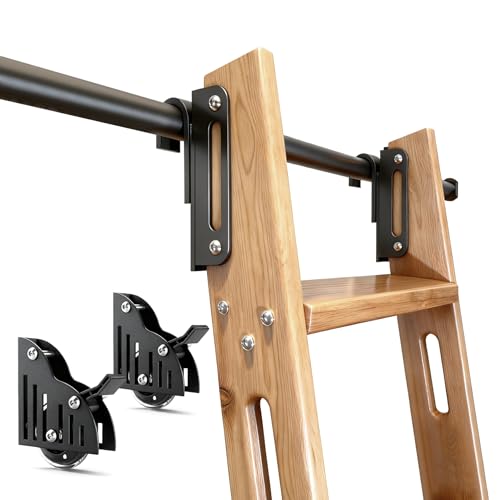
The best library ladder for most home libraries is a rolling ladder kit sized to your shelf height, with a solid red oak ladder such as the KINMADE 9 or 10 foot for warmth and a metal-rail aluminum kit such as the Fredbeck or HARDJULAN for a modern look at a lower price. For a custom, long-lasting installation, Putnam Rolling Ladder offers solid hardwood ladders and aluminum rail systems. Measure the height of your top shelf before you shop, because the ladder length and rail height decide everything else.
Our top picks



As an Amazon Associate we earn from qualifying purchases at no extra cost to you.
Quick Comparison of Library Ladder Picks
| Pick | Best for | Material | Size / capacity (per listings) | Trade-off | Price tier |
|---|---|---|---|---|---|
| Putnam Classic No. 1 | Premium custom installs | Red oak or other hardwoods, solid aluminum rails | Made to fit your shelves | Highest cost, lead time | Premium |
| KINMADE 9 or 10 ft kit | Warm wood look | Solid red oak | 330 lb capacity | Heavier, needs strong wall support | Mid-range to upper-mid |
| 104RDHOUSE 96 in red oak ladder | Stain-your-own oak | Red oak, iron handrail | 400 lb capacity | Unfinished, needs staining | Mid-range |
| CEAKIAN 8 ft solid wood ladder | Home libraries and lofts | Solid wood | 8 ft class | Wood finish quality varies | Mid-range |
| Fredbeck 8 ft aluminum ladder | Complete aluminum package | Aluminum | 8 ft class | Less traditional look | Budget to mid |
| HARDJULAN 96 in aluminum with 4 ft track | Brake-wheel safety, modern | Aluminum | 330 lb capacity, brake wheels | Short track included | Mid-range |
| Rockler 8 ft hardware kit | DIY builds | Satin black metal hardware | You supply the ladder | Requires woodworking | Mid-range |
The specs come from manufacturer listings and published roundups, which are often affiliate sites, so check the seller for load rating, rail dimensions and wall requirements.
Best Premium Custom: Putnam Classic No. 1
Putnam makes its Classic No. 1 ladder in red oak or a choice of hardwoods including maple, birch, walnut, cherry, white oak and mahogany. The company states that its track system uses solid aluminum rails rather than hollow tubes. Curved rail sections are available from specialty suppliers. Choose Putnam when the ladder is a permanent fixture of a finished room, and expect a higher price and a longer lead time.
Best Oak Ladder Kit: KINMADE 9 or 10 Foot
KINMADE sells solid red oak kits at 9 and 10 feet with a stated 330 pound capacity. Roundups list them as both a best overall and a premium wood finish pick. They suit rooms with shelves up to about 9 feet. The trade-off is weight, so wall anchoring must be solid.
Best Stain-Your-Own: 104RDHOUSE 96 Inch Red Oak
This 96 inch red oak ladder has a 400 pound capacity and an iron handrail. It arrives unfinished, so you can match the color of your cabinetry. It is a good pick if you enjoy finishing wood.
Best Solid Wood for Lofts: CEAKIAN 8 Foot
CEAKIAN’s 8 foot ladder is a top home library pick in one roundup, and the brand also sells aluminum hardware kits. It is a middle path between premium oak and budget aluminum.
Best Aluminum Package: Fredbeck 8 Foot
Fredbeck’s complete aluminum kit is named best overall aluminum ladder in a roundup. Aluminum suits modern and industrial interiors and resists warping.
Best Safety Features: HARDJULAN 96 Inch Aluminum
HARDJULAN offers a 96 inch aluminum ladder with a 4 foot track, brake wheels and a 330 pound capacity. Brake wheels keep the ladder from rolling while you climb, which is valuable for safety.
Best for DIY: Rockler 8 Foot Hardware Kit
Rockler sells the track and rollers in a satin black finish. You build or buy the ladder, which lets you match the species of wood. This suits woodworkers who want a custom size.
How to Measure for a Library Ladder
Follow these steps and write the numbers down before ordering.
- Measure the top shelf height: measure from the finished floor to the top of the highest shelf you want to reach. The reason is that the ladder hooks onto a rail mounted above this point.
- Choose the rail height: the rail normally sits a few inches above the top shelf or on the face of the shelf frame. Measure from the floor to the planned rail center.
- Select ladder length: the ladder leans at an angle, so it should be longer than the rail height. A 96 inch ladder suits rail heights around 8 feet (roughly 90 to 93 inches) in typical kits, but follow the maker’s chart.
- Measure the run: measure the length of shelving the ladder will travel and add room at each end. A 4 foot track covers a short bookcase, and long walls need longer or multiple rails.
- Check floor clearance: make sure there is room for the base to swing without hitting furniture, and that the floor is level enough for wheels or glides.
- Verify wall strength: locate studs and confirm the rail mounts into framing, not just drywall.
Example: a library with a top shelf at 84 inches and a rail at 88 inches should consider an 8 foot ladder class. A room with 10 foot ceilings and shelves to 100 inches calls for a 10 foot ladder.
Wood Versus Aluminum Library Ladders
| Factor | Solid wood | Aluminum |
|---|---|---|
| Look | Traditional, warm | Modern, industrial |
| Weight | Heavier, needs strong rail | Lighter, easier to move |
| Durability | Can scratch or need refinishing | Resists warping, can dent |
| Customization | Stains and species options | Limited finish colors |
| Cost | Mid to premium | Budget to mid |
Safety and Installation Tips
- Anchor rails into studs or solid blocking, with fasteners suited to the load.
- Use brake wheels or locking mechanisms, especially with children or pets.
- Keep the ladder’s rated capacity well above your weight plus books.
- Do not climb with a full armload of books. Make two trips.
- Check the hardware annually, and tighten bolts and clean rollers.
Ownership Realities
The parts that wear first are the rollers, hooks and rubber feet. Clean the track with a dry cloth, and add a drop of light lubricant to the rollers if recommended by the maker. Wood ladders may need an occasional coat of finish, and aluminum parts may need tightening where fasteners meet the rail.
Worked Example: Planning a 9 Foot Wall of Books
Imagine a study with a 9 foot wall and shelves that reach 100 inches. The rail typically mounts near the top shelf, around 104 inches above the floor. A 10 foot ladder, which is 120 inches long, leans at a shallow angle so its top lands at the rail while the base sits roughly 8 to 12 inches out from the shelves. If the wall is 12 feet long, plan for a rail of the same length, and allow about 6 inches of clearance at each end so the ladder does not strike a window or doorframe.
| Room detail | Example value | What it decides |
|---|---|---|
| Top shelf height | 100 in | Rail height around 104 in |
| Wall length | 144 in (12 ft) | Rail length and number of brackets |
| Ladder length | 120 in (10 ft class) | Reach and base angle |
| Bracket spacing | Every stud, 16 in on center | Load distribution into the wall |
| Floor clearance behind base | At least 12 in | Freedom of movement |
These values are an example and not a manufacturer specification, so use the sizing chart supplied with the kit you choose.
Finishing and Style Tips
For a traditional room, match the ladder species and stain to the shelving, and choose black or bronze hardware for contrast. In a modern room, aluminum or black steel rails with a simple wood ladder look clean. Consider a rail that mounts to the shelf face instead of a ceiling bracket if your ceiling beams are hard to reach. If you need to turn a corner, ask the maker about curved rail sections, which cost more and need careful planning.
Finally, think about storage. A ladder that parks at the end of the shelving frees the room, and some designs hook off the rail and fold flat against the books. This is a simple feature that keeps a small room from feeling crowded.
Frequently Asked Questions
How much weight can a library ladder hold?
Listings for popular kits show 330 to 400 pounds. Check the rated capacity and the rail’s mounting requirements.
What size library ladder do I need?
Match the ladder to the rail height, which is usually a few inches above the top shelf. An 8 foot ladder suits shelves up to about 7 feet, and a 10 foot ladder suits higher walls.
Can I install a rolling ladder myself?
Many homeowners do, using a level, stud finder and drill. Complex curved rails or large installations may need a carpenter.
Are library ladders safe for climbing?
They are safe when installed correctly and used within capacity, ideally with brake wheels. Keep three points of contact while climbing.
Do I need a rail or can I use a leaning ladder?
A leaning ladder can work in a pinch, but a rail keeps the ladder aligned and prevents sliding along the shelves.