Key takeaways
- Generous 8TB capacity handles extensive media collections easily.
- Competitive price point makes high-capacity storage accessible to average consumers.
- Lacks the vibration sensors found in NAS-specific drives, limiting its use in multi-drive enclosures.
What's inside
Choosing the right internal hard drive in 2026 comes down to matching your actual storage needs with a drive built for that specific workload. Whether you are archiving family photos, building a media server, or expanding a workstation, the wrong choice leads to wasted money or premature failure. Buyers typically face a concrete problem: their current system has run out of space, and they need reliable capacity without overpaying for performance they will never use. Navigating the market requires looking past marketing copy and focusing on published specifications alongside real owner feedback.
What separates a good internal hard drive from a bad one is rarely just raw speed. Spindle speed, cache size, recording technology, and intended workload rating all dictate how a drive behaves under sustained use. A drive optimized for occasional desktop access will quickly fail if placed inside a network-attached storage enclosure running around the clock. As a senior product reviewer, I compared these eight models strictly on their published specs, retail prices, and aggregated owner experiences to help you find the exact match for your build.
As an Amazon Associate we earn from qualifying purchases at no extra cost to you. Product prices and availability are accurate as of the date shown and are subject to change.




Quick Picks
| Product | Best for | Price |
|---|---|---|
| Seagate 8TB BarraCuda | High-capacity desktop storage | $249.99 |
| WD Blue 12TB | Maximum mainstream capacity | $445 |
| WD Blue 4TB | Quiet everyday computing | $179.99 |
| WD Blue 1TB | Budget boot or secondary drive | $110 |
| Seagate BarraCuda 4TB | Affordable bulk media storage | $195.99 |
| Seagate 8TB IronWolf | Network-attached storage (NAS) | $329.99 |
| Toshiba 14TB Enterprise | Cost-effective enterprise use | $319 |
| Seagate Exos 26TB | Massive data center deployment | $697 |
How We Picked
Selecting the best options in this category requires evaluating four primary criteria. First, capacity must align with your realistic storage demands; buying too little forces early upgrades, while buying too much wastes capital. Second, spindle speed and cache size determine responsiveness, particularly when transferring large files or multitasking across applications. Third, the interface—every drive here uses SATA 6 Gb/s—must be compatible with your motherboard, but the underlying recording technology and workload rating dictate long-term reliability. Finally, price per terabyte reveals true value, especially when comparing standard consumer drives against renewed enterprise models. We cross-referenced these published specifications with owner feedback to ensure our recommendations reflect real-world behavior rather than theoretical maximums.
The 8 Best Internal Hard Drive in 2026
Seagate 8TB BarraCuda
This Seagate model targets users who need substantial desktop storage for media libraries, backups, or game installations without stepping into expensive enterprise territory. It offers a massive capacity bump over standard drives while maintaining a familiar SATA 6 Gb/s interface for easy installation in any standard desktop tower.
- Generous 8TB capacity handles extensive media collections easily.
- Competitive price point makes high-capacity storage accessible to average consumers.
- Lacks the vibration sensors found in NAS-specific drives, limiting its use in multi-drive enclosures.
Skip this drive if you plan to install it in a NAS or a server environment where continuous operation and multi-drive vibration resistance are required.
Western Digital 12TB WD Blue
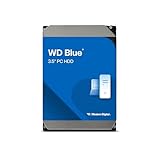
Western Digital’s 12TB WD Blue is designed for power users and content creators who demand enormous local storage paired with respectable performance. The 7200 RPM spindle speed and large 512 MB cache make it noticeably more responsive than slower alternatives when accessing large video files or databases.
- Exceptional 12TB capacity provides room for years of heavy data accumulation.
- Fast 7200 RPM speed and 512 MB cache improve file transfer responsiveness.
- The higher price tag may exceed the budget of casual users who do not need this much space.
Skip this model if your storage needs are modest or if you prioritize absolute silence, as faster-spinning platters generally generate more acoustic noise.
Western Digital 4TB WD Blue
This 4TB WD Blue is ideal for general-purpose desktop users who want reliable, quiet storage for documents, photos, and light applications. Operating at 5400 RPM, it prioritizes lower power consumption and reduced noise over raw throughput, making it a comfortable fit for home offices and living room PCs.
- Slower 5400 RPM operation results in quieter performance and less heat generation.
- Adequate 4TB capacity suits most standard home computing and backup needs.
- The 128 MB cache and slower spindle limit performance during heavy sequential write tasks.
Skip this drive if you frequently move massive files or require fast load times for demanding software, as the lower rotational speed will bottleneck those workflows.
Western Digital 1TB WD Blue
The 1TB WD Blue serves as a dependable, entry-level internal hard drive for budget builders or as a secondary storage disk in existing systems. With a 7200 RPM spindle and 64 MB cache, it delivers snappy performance for basic tasks, even though its overall capacity is modest by modern standards.
- Lowest entry price on this list makes it highly accessible for tight budgets.
- Faster 7200 RPM speed ensures responsive daily computing and application loading.
- 1TB capacity fills up very quickly if used for modern gaming or high-definition video storage.
Skip this option if you store large media files or modern games, as you will exhaust its limited capacity almost immediately.
Seagate BarraCuda 4TB
Seagate’s 4TB BarraCuda is tailored for desktop users seeking affordable mass storage for movies, music, and archived files. Shipped in frustration-free packaging, it appeals to environmentally conscious buyers. Its 5400 RPM speed and 256MB cache balance decent read performance with quiet, low-power operation.
- Frustration-free packaging reduces waste and makes unboxing significantly easier.
- Large 256MB cache helps buffer data efficiently during routine read operations.
- Like other 5400 RPM drives, it struggles with sustained, heavy write workloads.
Skip this drive if you are building a performance-oriented workstation or a RAID array, as it lacks the endurance features required for intensive environments.
Seagate 8TB IronWolf
The 8TB IronWolf is engineered specifically for network-attached storage systems and multi-bay enclosures. Unlike standard desktop drives, it includes specialized firmware and vibration tolerance designed to handle the rigors of 24/7 operation alongside other spinning drives, making it essential for home servers and small business NAS setups.
- Purpose-built for NAS environments with enhanced vibration tolerance and continuous operation support.
- Reliable SATA 6 Gb/s interface ensures broad compatibility with popular NAS enclosures.
- Commands a premium price compared to standard desktop drives of the identical capacity.
Skip the IronWolf if you only need a single drive for a standard desktop PC, as you would be paying extra for NAS-specific durability features you will never utilize.
Toshiba 14TB Enterprise
This renewed Toshiba enterprise drive targets IT professionals, homelab enthusiasts, and data hoarders who need massive capacity at a fraction of the cost of new hardware. Featuring a 7200 RPM spindle, 256MB cache, and 512e sector formatting, it delivers robust performance for server environments and heavy-duty storage arrays.
- Massive 14TB capacity combined with enterprise-grade 7200 RPM performance.
- Buying renewed offers significant savings compared to purchasing brand-new enterprise drives.
- As a renewed product, it may carry a shorter warranty and shows prior operational wear.
Skip this drive if you require the peace of mind that comes with a full manufacturer warranty or if loud enterprise acoustics would bother you in a quiet office.
Seagate Exos 26TB
The Seagate Exos 26TB represents the pinnacle of capacity on this list, aimed squarely at enterprise deployments, large-scale data centers, and extreme archival needs. Utilizing CMR technology, a 7200 RPM spindle, and a 512MB cache, it is built for relentless workloads backed by a 2.5M hour MTBF rating.
- Staggering 26TB capacity minimizes the physical number of drives needed for massive storage pools.
- Enterprise-grade CMR recording and 2.5M MTBF rating guarantee exceptional reliability under constant load.
- The highest price point on this roundup places it well out of reach for typical consumers.
Skip the Exos unless you have a genuine enterprise or professional requirement for extreme density, as the cost and noise profile are entirely unsuited for home use.
Buying Guide
Capacity and Price Per Terabyte
The most obvious specification is capacity, but smart buyers calculate the price per terabyte to find true value. A smaller drive might seem cheaper upfront, but larger capacities often deliver better cost efficiency. Consider your current data footprint and estimate your growth over the next few years. Buying slightly more capacity than you currently need prevents the hassle of migrating data to a new drive prematurely. However, avoid overspending on extreme capacities like 26TB unless your workflow genuinely demands it.
Spindle Speed and Cache Size
Rotational speed, measured in RPM, directly impacts how quickly the drive can locate and retrieve data. Drives spinning at 7200 RPM offer faster access times and better sequential throughput than their 5400 RPM counterparts, making them preferable for active workloads. The cache, ranging from 64 MB to 512 MB on this list, acts as a temporary buffer. A larger cache smooths out performance during burst transfers, though it cannot fully compensate for a slower spindle speed during sustained reads or writes.
Workload Rating and Recording Technology
Not every internal hard drive is built for the same environment. Desktop drives are rated for lighter, intermittent use, while NAS and enterprise drives feature higher workload ratings, vibration sensors, and firmware tuned for continuous operation. Additionally, pay attention to recording technology. Conventional Magnetic Recording (CMR) is generally preferred for write-heavy tasks and RAID configurations, whereas Shingled Magnetic Recording (SMR) can slow down significantly during heavy, sustained writes. Always match the drive’s engineering to your specific use case to avoid premature failure.
Our Verdict
After comparing specifications, prices, and owner consensus, the Western Digital 12TB WD Blue stands out as our top pick for most power users. Its combination of a 7200 RPM spindle, a generous 512 MB cache, and immense 12TB capacity strikes an excellent balance between high-end performance and practical desktop storage. For shoppers watching their wallets, the Western Digital 1TB WD Blue is the clear budget pick, offering responsive 7200 RPM performance at the lowest price on this list. However, if you are building a multi-bay NAS or a home server, the Seagate 8TB IronWolf wins outright, as its specialized vibration tolerance and continuous-operation firmware are non-negotiable requirements for that specific environment.
FAQ
What is the difference between 5400 RPM and 7200 RPM?
A 7200 RPM drive spins its platters faster, resulting in quicker data access and higher transfer rates, which benefits active workloads. A 5400 RPM drive operates more quietly, generates less heat, and consumes slightly less power, making it better suited for background storage and archival tasks.
Can I use a NAS drive in a regular desktop computer?
Yes, a NAS drive will function perfectly fine in a standard desktop since they share the same SATA interface. However, you will likely pay a premium for NAS-specific features like vibration sensors and 24/7 endurance ratings that provide little benefit inside a single-drive desktop chassis.
Is it safe to buy a renewed enterprise hard drive?
Renewed enterprise drives offer incredible capacity and performance for the price, but they come with inherent risks. They have already accumulated operational hours in a data center, and their warranties are typically shorter or handled by third-party refurbishers rather than the original manufacturer.
Does cache size really matter on an internal hard drive?
A larger cache helps buffer incoming and outgoing data, which can improve performance during burst transfers and multitasking. While it does not replace the fundamental speed limitations of mechanical platters, a larger cache provides a noticeable smoothing effect during everyday read and write operations.