Key takeaways
- Store fiberglass indoors or under cover and wipe off dirt that can compromise its insulating performance.
- Inspect rungs, rivets, and locks before every use, and retire any ladder with bends, cracks, or loose rungs.
- Level uneven ground with a purpose-made leveler instead of boards or bricks.
- Never stand on the top three rungs of the fly section, and keep your belt buckle between the rails.
- Keep three points of contact and hoist heavy items with the rope instead of carrying them up.
For most homeowners the best extension ladder is a 24-foot fiberglass Type IA model such as the Louisville FE3224, because it reaches a typical two-story eave, carries 300 pounds, and does not conduct electricity. Pick a 16-foot version for single-story gutters and an aluminum Werner if weight matters more than electrical safety. The right length depends on one measurement, so start there.
Our top picks


As an Amazon Associate we earn from qualifying purchases at no extra cost to you.
Quick Comparison of the Best Extension Ladders
| Pick | Best for | Material | Duty rating | Approx. working length | Price range |
|---|---|---|---|---|---|
| Louisville FE3224 (24 ft) | Best overall | Fiberglass | Type IA, 300 lb | 21 ft | Upper mid |
| Louisville FE3216 (16 ft) | Best for one-story work | Fiberglass | Type IA, 300 lb | 13 ft | Mid |
| Werner D6224-2 (24 ft) | Best lightweight aluminum | Aluminum | Type IA, 300 lb | 21 ft | Mid |
| Little Giant HyperLite (24 ft) | Best premium light fiberglass | Fiberglass | Check the model label | About 21 ft | Premium |
| Louisville FE3228 (28 ft) | Best for taller homes | Fiberglass | Type IA, 300 lb | 25 ft | Premium |
Best Overall: Louisville FE3224 24-Foot Fiberglass
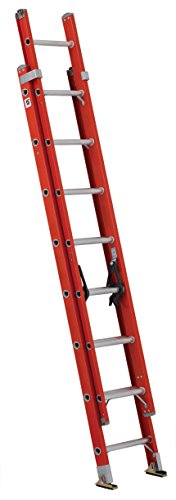
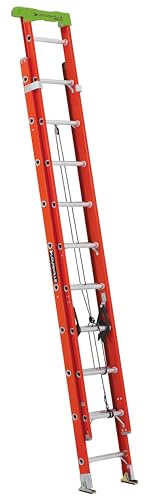
This is the ladder most owners of two-story houses should buy first. The 24-foot nominal length gives roughly 21 feet of working length once the fly section is extended and the required overlap is accounted for. That reaches gutters on many two-story homes with the ladder tip set a few rungs above the roof edge. The fiberglass rails stay non-conductive when dry and clean, which matters near service drops and exterior wiring. Its main trade-off is weight: fiberglass is heavier than aluminum, so carrying it alone takes practice and a plan.
Best for One-Story Work: Louisville FE3216 16-Foot Fiberglass
A 16-foot ladder has about 13 feet of working length, enough for soffits, porch gutters, and garage eaves. It is far easier to move and store than a 24-foot unit. If your highest task is below 11 feet, this is the more sensible choice. The trade-off is obvious: it will not stretch to a second-story edge.
Best Lightweight Aluminum: Werner D6224-2
Werner’s aluminum D-series ladders are a long-standing contractor staple. Aluminum rails shave pounds compared with fiberglass, which helps when you are setting the ladder by yourself. The cost of that lighter weight is electrical conductivity, so never use it near power lines or the meter base. It suits painting, siding, and gutter cleaning on houses with no overhead lines close to the work area.
Best Premium Light Fiberglass: Little Giant HyperLite 24 Foot
Little Giant’s HyperLite line is built to cut weight while keeping fiberglass rails. Published ratings vary between retailers, so confirm the duty rating on the label of the exact model you buy rather than trusting a summary. The premium price buys a lighter carry and refined rung locks. If you will raise the ladder many times a season, that weight savings adds up. For an occasional user, the standard fiberglass option is better value.
Best for Taller Homes: Louisville FE3228 28-Foot Fiberglass
Homes with high gables or steep lots need about 25 feet of working length, which is what a 28-foot nominal ladder provides. It is a two-person ladder to raise. Stay within the manufacturer’s instructions and consider hiring a pro for roof edges beyond this height. Never stack, splice, or join two ladders to gain height.
How to Choose the Right Extension Ladder
Match duty rating to your weight plus gear
The duty rating covers you plus tools and materials. Type IA is rated at 300 pounds, Type I at 250, Type II at 225, and Type III at 200. A 180-pound person carrying a 30-pound tool belt and a 5-gallon bucket of paint is already near 250 pounds, so Type IA gives a real margin. Choose Type IA for any regular home use.
Calculate the length you need
A worked example: your eave sits 18 feet above the ground, and you want the ladder to extend 3 feet above the support when climbing onto a roof. You need about 21 feet of working length, which means a 24-foot nominal ladder. A 20-foot nominal ladder (about 17 feet working) would fall short.
| Nominal length | Approx. working length | Typical use |
|---|---|---|
| 16 ft | 13 ft | Single-story eaves, porch |
| 20 ft | 17 ft | Tall single story, low two-story |
| 24 ft | 21 ft | Most two-story homes |
| 28 ft | 25 ft | Tall two-story, high gables |
Use the 4-to-1 rule for the angle
For every 4 feet of height to the support point, place the ladder base 1 foot away from the wall. At 20 feet up, the base sits 5 feet from the wall. Too steep risks tipping backward, and too shallow risks the base kicking out.
Fiberglass or aluminum
Fiberglass is the safer default for homeowners because it does not conduct electricity when clean and dry. Aluminum is lighter and often cheaper, but it should stay away from any wiring.
Check locks and feet
Look for rung locks that visibly engage on both rails, a rope and pulley that move freely, and swivel feet with a serrated pad for hard surfaces. Replace damaged feet instead of climbing on worn ones.
Ownership Realities and Common Mistakes
- Store fiberglass indoors or under cover and wipe off dirt that can compromise its insulating performance.
- Inspect rungs, rivets, and locks before every use, and retire any ladder with bends, cracks, or loose rungs.
- Level uneven ground with a purpose-made leveler instead of boards or bricks.
- Never stand on the top three rungs of the fly section, and keep your belt buckle between the rails.
- Keep three points of contact and hoist heavy items with the rope instead of carrying them up.
Duty ratings and lengths above reflect manufacturer-published classes and nominal sizes. Confirm the label on the exact model you buy.
Which Extension Ladder Fits Your Situation
| Your situation | Choose | Why |
|---|---|---|
| Two-story home, power lines nearby | 24 ft fiberglass Type IA | Reach plus non-conductive rails |
| Ranch house, occasional gutter cleaning | 16 ft fiberglass | Easy to store and carry |
| Frequent solo setup, no wires near | Aluminum 24 ft or light fiberglass | Lower weight per raise |
| Tall gable or sloped lot | 28 ft fiberglass with a helper | Extra working length |
Cost per year of use
A quality ladder that serves ten years of seasonal work costs only a small amount per year compared with one fall injury. Spending a tier up for Type IA and better locks is the cheapest safety upgrade you can make on a home project.
Storing and transporting
Store horizontally on at least three supports or on wall hooks so the rails do not sag. In a truck, tie it down at two points and flag any overhang. Keep it away from heat sources, because high heat can weaken the resin in fiberglass over time.
Frequently Asked Questions
What size extension ladder do I need for a two-story house?
Most two-story homes need a 24-foot ladder, which gives about 21 feet of working length. If your eave is higher than roughly 18 feet or the roofline has tall gables, consider a 28-foot model. Always measure the height you need to reach first.
Is fiberglass or aluminum better for an extension ladder?
Fiberglass is better when there is any chance of contact with electrical wiring, because it does not conduct electricity when clean and dry. Aluminum is lighter and easier to carry. Homeowners with overhead lines near the house should choose fiberglass.
What does Type IA mean on a ladder?
Type IA is an industrial-rated class with a 300-pound duty rating, covering the climber plus tools and materials. It is a step above Type I at 250 pounds and Type II at 225 pounds. It is the sensible baseline for home use.
How far should an extension ladder extend above the roof?
Safety guidance calls for the side rails to extend at least 3 feet above the landing surface when you step onto a roof. That raises the length you need beyond the roof height itself. Tie off the ladder at the top when possible.
How do I carry and raise a long ladder safely?
Carry it with the fly section collapsed, balanced on your shoulder, and set the base against a wall or a helper’s foot before raising it hand over hand. For 24-foot and longer ladders, use a helper. Check overhead for wires before lifting.