Key takeaways
- Pro: included battery system means no surprise extra cost at checkout.
- Pro: long-term parts availability and brand support give confidence.
- Con: the smaller battery limits runtime, so expect shorter working sessions.
What's inside
Choosing a hedge trimmer means matching power source, blade length, and weight to the actual size and density of the shrubs you are cutting. A tool that handles a single low privet screen all afternoon will feel underpowered on a mature leylandii wall, and one built for heavy topiary will tire your arms on a light spring trim. Stihl hedge trimmers carry a reputation for reliability in this category, which makes them a common starting point, but the market now includes strong alternatives from EGO, Husqvarna, BLACK+DECKER, and others that deserve a fair comparison.
What separates a good buy from a frustrating one comes down to a few concrete decisions: whether you want to mix fuel or charge a battery, how long the blade cuts in a single pass, how heavy the tool feels after twenty minutes overhead, and whether the battery you already own in your shed will power it. This roundup compares published specifications, listed prices, and what owners consistently report back about real-world performance.
As an Amazon Associate we earn from qualifying purchases at no extra cost to you. Product prices and availability are accurate as of the date shown and are subject to change.





Quick Picks
| Product | Best for | Price |
|---|---|---|
| Stihl HSA 26 | Light trimming with included battery system | $259 |
| Husqvarna 122LKH | Heavy-duty gas power for dense hedging | $259.99 |
| BLACK+DECKER LHT2220 | Budget-friendly cordless trimming | $79 |
| VEVOR 5-in-1 | Multi-tool versatility at a low price | $178.42 |
| 20V 22-Inch (two-battery kit) | Value bundle for occasional use | $59.99 |
| EGO HT2600 | Long-reach cordless for existing EGO owners | $179 |
| EGO HT2601 | Full kit for homeowners wanting EGO power | $249 |
| DEWALT DCHT821B | DEWALT ecosystem users needing 22-inch reach | $167 |
How We Picked
We narrowed this list by weighing four factors that determine satisfaction over several seasons of use. First, cutting capacity relative to blade length — a longer blade that stalls on half-inch stems is less useful than a shorter one that clears them consistently. Second, weight distribution and vibration, because a tool that fatigues your shoulders on a mid-sized job will end up sitting in the shed. Third, battery or fuel ecosystem compatibility, since most homeowners already own equipment from one brand and a shared battery eliminates redundant cost. Fourth, the total ownership price when you factor in included batteries, chargers, and any recurring fuel or maintenance expenses.
The 8 Best Stihl Hedge Trimmers in 2026
Stihl HSA 26
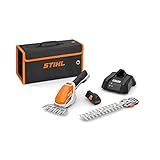
The Stihl HSA 26 appeals to gardeners who value a compact, well-balanced tool for routine trimming of small to medium hedges. Its AS2 battery and AL1 charger ship in the box, so you are cutting within minutes of delivery. The blade handles standard boxwood and thuja without drama, and the build quality reflects Stihl’s parts and service reputation.
- Pro: included battery system means no surprise extra cost at checkout.
- Pro: long-term parts availability and brand support give confidence.
- Con: the smaller battery limits runtime, so expect shorter working sessions.
Skip it if your hedge line runs long and thick; the runtime ceiling will frustrate you before the blade gets near its service life.
Husqvarna 122LKH
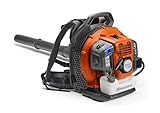
Gas power is not dead, and the Husqvarna 122LKH makes a case for it when you face dense, mature hedging that would stall a cordless unit. The long-reach design suits tall walls without requiring a ladder.
- Pro: no runtime anxiety — refuel and keep cutting.
- Pro: the engine torque handles thick, woody stems that battery tools struggle with.
- Con: fuel mixing, pull-start effort, and ongoing maintenance add friction for casual users.
Skip it if you already own a compatible battery platform from another brand and your hedges are under six feet; the operational overhead is hard to justify for lighter work.
BLACK+DECKER LHT2220
At $79 with battery and charger included, the BLACK+DECKER LHT2220 is the entry point most people reach for when the hedge is short, the job is seasonal, and the budget is tight. The 22-inch steel blade and soft grip make it comfortable for an hour of light work.
- Pro: everything needed to start cutting arrives in one box.
- Pro: notably less vibration than gas equivalents, reducing hand fatigue.
- Con: it is not built for dense, woody growth or extended sessions.
Skip it if you are trimming a mature conifer wall or need more than a single battery’s worth of runtime per outing.
VEVOR 5-in-1
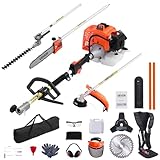
The VEVOR 63 cc unit trades single-purpose refinement for broad attachment flexibility. As a 5-in-1 system, the same power head drives a hedge trimmer, string trimmer, and other implements, suiting owners who want one gas engine for varied yard tasks.
- Pro: multi-attachment design offers genuine versatility at a competitive price.
- Pro: 63 cc of two-cycle displacement clears thicker stems than entry-level cordless.
- Con: build quality and parts support lag behind established outdoor-power brands.
Skip it if your priority is years of trouble-free use on the hedge trimmer specifically rather than a jack-of-all-trades setup.
20V 22-Inch Two-Battery Kit
This 20V cordless trimmer stands out primarily for its bundled value: two 5.0Ah batteries and a charger at $59.99 total. For occasional trimming of short hedges and shrubs, it covers the basics without a brand premium.
- Pro: two high-capacity batteries extend work sessions noticeably versus single-battery kits.
- Pro: the price makes it a low-risk choice for first-time buyers or backup tools.
- Con: without a recognized ecosystem, replacement batteries and accessories are harder to source.
Skip it if you already own a major-brand platform and would rather buy a bare tool that uses your existing batteries.
EGO HT2600
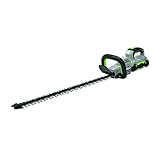
The bare-tool EGO HT2600 is a smart choice for anyone already invested in the 56V platform. The 26-inch blade provides meaningful reach for taller hedges, and cordless convenience eliminates fuel without sacrificing power on medium-density growth.
- Pro: lowest net cost for its blade length if you own compatible EGO batteries.
- Pro: 26-inch span reduces repositioning on long, uniform hedge runs.
- Con: the advertised price excludes battery and charger, which raises the true cost significantly without them.
Skip it if you have no EGO batteries; the HT2601 bundle is the better value in that case.
EGO HT2601
The HT2601 bundles the same 26-inch cordless trimmer with a 56V 2.5Ah battery and charger, positioning it as a complete kit for new EGO adopters. The included cell suits moderate hedge lines without requiring a spare.
- Pro: one purchase provides everything needed, simplifying the buying decision.
- Pro: 56V power clears denser growth that lower-voltage units struggle with.
- Con: at $249 the premium over the bare tool is steep if you already own EGO gear.
Skip it if you are committed to a different battery platform; you would be paying for ecosystem entry rather than the tool itself.
DEWALT DCHT821B
The 20V MAX hedge trimmer from DEWALT targets the homeowner who already owns multiple cordless DEWALT tools and wants hedge work on the same battery. The 22-inch blade is a practical middle length — wide enough for efficient cutting without the weight penalty of a 26-inch unit.
- Pro: seamless integration with any existing DEWALT 20V MAX battery and charger.
- Pro: compact enough for overhead and detailed shaping without shoulder strain.
- Con: the bare-tool price assumes you already own a compatible battery; otherwise the real cost rises.
Skip it if you have no DEWALT investment and would prefer a kit with the battery included at a similar total.
Buying Guide
Power Source: Gas vs. Battery
Gas engines still dominate for dense, mature hedging and long continuous work because they offer unlimited runtime once refueled. Battery platforms have closed much of the gap for typical residential jobs — most homeowners with hedges under eight feet tall and stems thinner than three-quarters of an inch will find cordless units sufficient. The practical question is whether you already own a compatible battery ecosystem. If so, a bare tool from that platform almost always beats switching brands or buying fuel equipment for occasional trims.
Blade Length and Cut Capacity
A 20- to 22-inch blade suits short hedges and detailed shaping. A 24- to 26-inch blade covers taller walls more efficiently by reducing passes. Beyond length, check the maximum cut diameter in the specifications: two trimmers with identical blade spans can differ substantially in the thickest stem they clear without stalling. Match the cut capacity to the wood you actually have, not the advertised reach.
Weight and Vibration
Weight becomes the deciding comfort factor after fifteen to twenty minutes of continuous use. A tool under seven pounds is easy to hold overhead; above nine, shoulder fatigue sets in quickly on tall hedges. Look for balanced distribution where the motor does not pull the nose downward. Cordless units generally produce far less vibration than gas engines, which reduces cumulative hand strain over a full season of trimming.
Our Verdict
For most homeowners weighing Stihl hedge trimmers against the broader field, the EGO HT2601 is the strongest overall pick: a 26-inch cutting span, 56V power through dense growth, and a complete kit with battery and charger in one purchase at $249. For the budget buyer, the BLACK+DECKER LHT2220 at $79 with its included battery remains the easiest low-risk entry for light seasonal work. One condition where another tool wins outright: if you already own a DEWALT 20V MAX battery, the DCHT821B at $167 delivers the best value within that ecosystem without redundant gear.
FAQ
Do I need a gas hedge trimmer or is cordless enough?
For hedges under eight feet tall with stems thinner than three-quarters of an inch, modern cordless platforms deliver sufficient power. Gas becomes worthwhile when you face dense, mature woody hedging or need to work continuously for hours without battery swaps. Most residential jobs do not require gas.
Does battery voltage tell me how powerful a trimmer will be?
Voltage is one input, but not the whole picture. A 56V platform generally produces more torque than 20V, which translates to cleaner cuts through thicker stems. Battery amp-hour rating governs runtime, and blade geometry affects how efficiently power reaches the cutting edge. Compare tools within the same voltage tier rather than fixating on a single number.
What is the real cost of a bare-tool purchase?
A bare tool listed without a battery may require additional spending of $80 or more in battery and charger costs if you do not already own a compatible pack. Before committing, confirm that an existing battery in your shed actually fits the tool’s platform, because brands are not interchangeable.
How does blade length affect day-to-day trimming?
A longer blade cuts more per pass, saving time on long, uniform hedge runs. The tradeoff is added weight and reduced maneuverability for detailed shaping or tight corners. A 22-inch blade is a solid general-purpose compromise; a 26-inch blade is better for flat-faced walls that stretch many feet in a single row.