Key takeaways
- Browse any major online retailer for books about the best golf courses in the world and you will find dozens of titles that look remarkably similar on the surface—glossy covers, sweeping aerial photographs, and promises of bucket-list itineraries. The differences…
What's inside
Browse any major online retailer for books about the best golf courses in the world and you will find dozens of titles that look remarkably similar on the surface—glossy covers, sweeping aerial photographs, and promises of bucket-list itineraries. The differences that matter, however, show up in how each book organizes its content, how current its recommendations are for 2026, and whether it serves a player who wants a practical travel reference or a collector who simply wants beautiful pages on a coffee table.
We compared these eight titles on their published specifications, listed prices, and aggregated owner feedback. A strong entry in this category delivers clear course descriptions with actionable details such as designer lineage, routing logic, and booking guidance, while a weaker one leans entirely on photography and vague superlatives that leave the reader no closer to planning an actual tee time. The reviews below reflect that distinction.
As an Amazon Associate we earn from qualifying purchases at no extra cost to you. Product prices and availability are accurate as of the date shown and are subject to change.




Quick Picks
| Product | Best for | Price |
|---|---|---|
| Fairways of the World | General overview | $25 |
| Remarkable Golf Courses (Updated) | Illustrated browsing | $22.99 |
| Dream Golf Courses | Inspiration and wishlists | $22.8 |
| Golf Courses of the World: 365 Days | Daily browsing or gifting | $19.81 |
| 150 Golf Courses You Need to Visit | Structured travel planning | $17.96 |
| Gary Player’s Top Golf Courses | Curated regional coverage | $24.99 |
| 100 Best Golf Courses in the World | Continental breadth on a budget | $18.99 |
| World Atlas of Golf | Strategic hole-by-hole detail | $15.85 |
How We Picked
Three criteria carried the most weight. First, practical utility: does the book include enough course-level detail—yardage notes, designer history, routing descriptions—to help a reader actually plan a trip? Second, visual and editorial quality: owner feedback consistently flags whether photography is sharp and captions are informative or merely decorative. Third, value relative to price: a guide at $15 should not feel thinner or less useful than one at $25 unless the added cost buys a specific, identifiable advantage.
The 8 Best Golf Courses In The World in 2026
Fairways of the World
This guide targets the broadest possible audience: a golfer who wants a single reference covering links, parkland, and desert courses without committing to a niche theme. Owners praise its straightforward layout and the way each entry opens with a short paragraph summarizing what makes the course distinctive before moving into supporting images. A notable pro is the geographic spread, which avoids over-concentrating on Scotland and the United States. The design is clean but functional rather than luxurious, and a few entries read more like directory listings than evocative narratives. Skip this if you want a book to display rather than a working travel companion.
Remarkable Golf Courses: The Updated Illustrated Guide
For readers who prioritize photography and visual storytelling over dense text, this edition earns its place. The updated content reflects course renovations and new builds that older guides miss, and the print quality is consistently commended in owner reviews. Two pros: the images are large and well-reproduced, and the captions carry genuine information rather than filler. The main con is that the text depth varies noticeably—some courses receive substantial paragraphs while others get a single sentence. Skip this if you need a reliable planning tool with uniform coverage across all entries.
Dream Golf Courses: Remarkable Golf Courses Around the World
Positioned squarely as a bucket-list inspiration piece, this title suits a golfer who already knows their favorite links and wants to discover what else exists. Owner feedback highlights the aspirational tone and the way the book pairs each course with a brief backstory about its creation. Pros include strong image curation and a logical grouping by region that makes browsing intuitive. The con is that practical details—green fees, booking windows, difficulty ratings—are largely absent, making it less useful as a pre-trip resource. Skip this if you need actionable logistics alongside the visuals.
Golf Courses of the World: 365 Days
Structured as a daily calendar, this book works best as a gift or a desk companion for someone who wants to see one course per day throughout the year. The format is its defining feature and its limitation. Pros: the bite-sized presentation makes it easy to return to repeatedly, and the variety across 365 entries introduces lesser-known tracks from Africa, South America, and Asia. The con is the obvious one—depth per course is minimal because each entry gets roughly a quarter-page. Skip this if you want more than a thumbnail introduction to any individual course.
150 Golf Courses You Need to Visit Before You Die
This entry in the well-known 150 Series targets readers who want a curated shortlist with enough detail to act on. The selection spans all major golf nations and balances classic championship layouts with newer designs that have earned respect quickly. Pros: the list format creates a clear sense of priority, and owner reviews note that the included tips on booking and best-season timing are genuinely useful. The con is that the writing can feel formulaic, with many entries following an identical paragraph structure. Skip this if you prefer narrative variety or a more personal editorial voice.
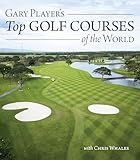
Gary Player’s Top Golf Courses of the World
Leveraging Player’s unparalleled playing history across five continents, this book offers a perspective that younger writers cannot replicate: firsthand memory of how courses played decades ago alongside their present condition. The regional chapters covering Scotland, Ireland, the U.S., and Australia each carry distinct character. Pros: the authorial voice is engaging and opinionated, and the 55-course selection feels deliberate rather than padded. The con is that some of the practical travel advice reflects an earlier era and may not map onto current booking systems. Skip this if you need up-to-date fee information or digital booking links.
100 Best Golf Courses in the World: The Ultimate Travel Guide
At just under $19, this guide covers every continent with an emphasis on accessibility for international travelers. Owner feedback praises the breadth and notes that the book successfully highlights courses in regions where English-language coverage is sparse. Pros: the continental organization helps trip-planners working within a single region, and the price-to-content ratio is among the best here. The con is editorial inconsistency—several entries read as though assembled from varying sources without a unifying voice. Skip this if uniform writing quality matters more to you than geographic coverage.
World Atlas of Golf: The Greatest Courses and How They Are Played
The most analytically minded book on this list, the Atlas pairs course overviews with strategic hole-by-hole discussion, explaining why certain routing choices create difficulty or opportunity. Pros: the tactical commentary gives players a mental model before they ever set foot on the property, and the maps and diagrams are detailed. The con is a narrower course count and a format that prioritizes analysis over photography, which may disappoint readers who want a visual showcase. Skip this if you want a book to hand to a non-golfer or display prominently.
Buying Guide
Course Coverage and Regional Balance
Check whether the book over-indexes on Scotland, Ireland, and the American Northeast, which is common even in titles marketed as global. A useful guide should name courses in at least four or five distinct golf regions beyond those three. If your travel plans include Asia, Australia, or South America, verify that those continents appear with more than token entries before you buy.
Depth of Practical Information
Determine what you need from a “planning” book: green-fee ranges, booking difficulty, best months to play, and course-management notes separate a functional guide from a coffee-table product. Owner reviews are especially helpful here because they reveal whether the practical sections are current and accurate or whether they read as stale filler. If the book’s description does not mention these elements, assume they are absent.
Visual Production Quality
For a category built on landscape photography, print resolution matters. Check whether the book uses full-bleed spreads or smaller inset images, and read owner feedback on color accuracy—cheap reprints often render greens and sand tones poorly. If you plan to browse the book primarily for visual pleasure, prioritize titles whose production quality is specifically praised in reviews rather than those known only for their text.
Our Verdict
The top pick for most buyers is 150 Golf Courses You Need to Visit Before You Die—it balances a clear curatorial list with enough practical detail to support actual trip planning, and its price under $18 makes it a low-risk entry into the category. The budget pick is World Atlas of Golf at $15.85, which delivers the deepest strategic content per dollar on this list, ideal for players who want to understand a course before playing it. If your priority is visual display and gift-worthiness over planning utility, Remarkable Golf Courses: The Updated Illustrated Guide wins on print quality and image size at $22.99.
FAQ
Do these books include digital or online components?
None of the eight titles reviewed here advertise a companion website, app, or QR-linked updates. Treat them as fixed print references; course conditions and fees change annually regardless of when a book was published.
Which book is best for planning a multi-country golf trip?
The 150 Series title and Gary Player’s Top Golf Courses both span multiple continents, but the 150 Series offers a more consistent per-course format that makes side-by-side comparison easier when you are narrowing a longlist to a realistic itinerary.
Are these books suitable as gifts for non-golfers?
The visually driven titles—Remarkable Golf Courses, Dream Golf Courses, and Golf Courses of the World: 365 Days—work well as gift objects even for people who do not play, because their appeal rests largely on landscape photography and layout rather than technical content.
How current should I expect course recommendations to be?
Older print editions may reference courses that have since closed, been renovated significantly, or lost accreditation status. When comparing titles, check owner reviews for mentions of outdated information, and prioritize the most recently updated editions if available.