Key takeaways
- Three is the age when play gets noticeably more purposeful. A child who spent the toddler months mouthing blocks now wants to hammer, pour.
Three is the age when play gets noticeably more purposeful. A child who spent the toddler months mouthing blocks now wants to hammer, pour, match letters, and act out grown-up jobs. The best toys for a 3 year old meet that jump with open-ended pieces, simple rules, and enough challenge to hold attention for ten minutes without making a parent referee a meltdown. The choice is less about trends than about which skill your child is ready to practice.
This guide is for parents, grandparents, and gift buyers shopping for a three-year-old’s birthday or the 2026 holidays. It compares seven toys that cover pretend play, early math and letters, gross motor movement, sensory exploration, and drawing, judging each one only on what its listing states. Use the picks, the checklist, and the situation matcher to choose a toy that will be played with in March, not just unwrapped in December.
Quick Picks
Our top picks




As an Amazon Associate we earn from qualifying purchases at no extra cost to you.
| Product | Best for | Key spec from the title |
|---|---|---|
| TONZE Wooden Tool Set | Pretend play and fine motor skills | 44 pieces with drill, apron, and storage box |
| iPlay, iLearn Rocket Space Toy | Building and imaginative play | Spaceship playset, electric drill, 2 astronauts |
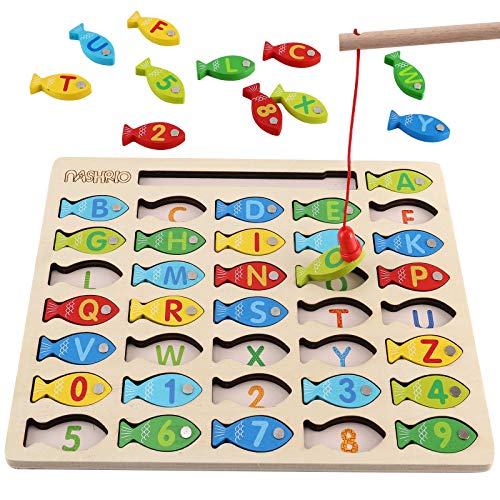
| Magnetic Wooden Fishing Game | Letters and number practice | Alphabet and counting fish, magnetic catching |
| Flybar My First Foam Pogo Jumper | Burning off indoor energy | Foam and bungee design, supports up to 250 lb |
| Creativity for Kids Construction Zone Sensory Bin | Tactile, screen-free play | Excavator playset for ages 3-5+ |
| HCFJEH Magnetic Drawing Board | Mess-free drawing and doodling | Erasable color doodle pad, ages 3+ |
| Wooden Dinosaur Puzzles | Early puzzle skills | Set of 4, 20-piece wood jigsaw puzzles |
How to Choose
Match the toy to the skill your child is building
At age three, most children are working on three things: small-muscle control (turning, pinching, stacking), early language and counting, and big-body coordination. A tool set and a drawing board train the hands. A fishing game and jigsaw puzzles train letters, numbers, and visual matching. A pogo jumper trains balance. Pick the skill that is the biggest gap right now, rather than buying one of everything.
Check age labels, small parts, and weight limits
Look for an age grading of 3 and up, and read warnings about small parts, which matter most if a younger sibling is in the house. Wooden pieces should be large enough that they cannot fit inside a child’s mouth. For active toys like a pogo jumper, confirm the stated weight limit, since a child who is tall for their age may reach it earlier than expected. Always supervise play with anything that bounces or has magnets.
Prefer open-ended play over single-trick toys
Toys with lights and sounds hold attention for a few minutes. Toys that can be used many ways, such as wooden tools, sensory bin pieces, or magnetic drawing boards, keep working as imagination grows. Ask whether a child could use it ten different ways. If yes, it will last longer than a button-pressing gadget, and it tends to cost less per hour of play.
Think about storage, cleanup, and durability
A toy with many pieces needs a home, so a built-in box or apron helps. Sensory and building sets need a tray or mat for cleanup. Budget toys often cut corners on finishing, paint durability, and packaging first, so expect slightly rougher edges at the lowest tier. Wood and silicone parts tend to survive better than thin plastic through repeated drops and hand-me-downs.
The 7 Best Options
TONZE Wooden Tool Set
This 44-piece wooden tool set comes with a drill, an apron, and a storage box, and is described as a Montessori, STEM-style toy for pretend play and fine motor practice. It suits a three-year-old who likes to “fix” things alongside a parent and who responds well to realistic role play. The apron and box also give a small ritual of getting dressed for work and cleaning up when the job is done.
- Strength: the piece count and apron give children plenty of room for repair-shop and construction games.
- Strength: the storage box keeps cleanup easy and encourages putting things away.
- Trade-off: many small pieces can be lost over time, so the box matters, and tiny parts need an eye on younger siblings.
Skip it if your child tends to throw toys or if you have a baby who still mouths small objects.
iPlay, iLearn Rocket Space Toy
This spaceship building playset is aimed at ages 3 to 5 and includes an electric drill and two astronauts. It combines construction with imaginative storytelling, which fits a child who is curious about space or enjoys making up missions. The two astronauts give a ready-made cast for stories once the building is done.
- Strength: building and pretending in one toy extends the play beyond a quick assembly.
- Strength: the electric drill adds a tactile element that many children enjoy.
- Trade-off: the electric drill means batteries and supervision when pieces are being screwed together.
Skip it if you want a quiet toy that needs no batteries, or if you would rather your child build with simple wooden blocks.
Magnetic Wooden Fishing Game
This wooden fishing game features alphabet fish, counting, and number and letter matching, and it uses magnets to catch the fish. It suits the preschooler who is starting to recognize letters and who learns best through a game rather than a worksheet. Matching letters and counting fish also gives early practice in turn-taking and patience.
- Strength: turns ABC and number practice into a simple turn-taking game that a parent and child can share.
- Strength: magnetic catching gives hand-eye practice without fine pincers.
- Trade-off: it is a tabletop game that depends on a grown-up or sibling to keep it going.
Skip it if your child already reads simple words and needs more of a challenge, or if magnets are a concern in a home with a baby.
Flybar My First Foam Pogo Jumper
Described as a foam pogo jumper with bungee for ages 3 and up, this one supports up to 250 pounds, so it can outlast a few growth spurts. It is a good pick for a child with energy to burn who wants a safer first bouncing toy. A foam body also makes it a reasonable choice for a living room or playroom where hard edges would be a worry.
- Strength: foam construction is gentler on floors and furniture than a rigid jumping toy.
- Strength: it builds balance and leg strength while burning off restless energy.
- Trade-off: it needs open floor space and an adult nearby until balance improves.
Skip it if the play area is cramped, your child is nervous about balancing, or you would rather avoid a toy that encourages constant bouncing indoors.
Creativity for Kids Construction Zone Sensory Bin
This sensory bin playset centers on construction with an excavator theme and is listed for ages 3-5 and up. It appeals to children who love trucks and who learn through touch and movement rather than through instruction, and the excavator theme gives a natural story to act out for preschool learning activities.
- Strength: tactile, touch-based play supports imagination and fine motor control.
- Strength: the construction theme is a natural fit for vehicle-loving kids and works well for preschool learning activities.
- Trade-off: sensory play can get messy, so plan for a tray, towel, or table, and expect to spend a few minutes on cleanup afterward.
Skip it if you want zero-mess play or a child who still tends to taste textures.
HCFJEH Magnetic Drawing Board
Listed for ages 3 and up, this color doodle pad is erasable and designed for writing and sketching. It suits travel, waiting rooms, and quiet afternoons, and it lets a child practice strokes without a pile of paper or marker stains. Because it is erasable, it is a gentle introduction to scribbles, lines, and first letters.
- Strength: the erasable surface means unlimited tries and almost no cleanup.
- Strength: it builds pencil control that carries into letters and shapes.
- Trade-off: the drawings cannot be saved, which disappoints children who like to keep their art.
Skip it if your child wants a keepsake drawing, loves paint and paper projects, or already writes confidently with a pencil.
Wooden Dinosaur Puzzles
This set of four wooden puzzles, each with 20 jigsaw pieces and a dinosaur theme, is labeled for ages 3-5. The puzzle count suits a preschooler moving beyond chunky knob puzzles and ready for a slightly longer challenge. Each board has a different dinosaur, so they work for a short session or a long rainy afternoon.
- Strength: four boards give variety, and the dinosaur theme appeals to many young children.
- Strength: 20-piece puzzles teach shape matching and patience at a manageable level.
- Trade-off: loose pieces from four puzzles can get mixed up without a storage plan.
Skip it if your child is still learning to place pieces in a simple frame, or if you do not have a spot to keep four sets sorted.
Which One Fits Your Situation
Your child loves “helping” around the house
The TONZE Wooden Tool Set matches that urge and gives the child a job. It is an easy gift for a parent who wants pretend play with a purpose, and the apron makes the outfit part of the fun.
You need to burn off energy on a rainy day
The Flybar My First Foam Pogo Jumper turns a hallway into a gym, as long as you have clear floor space and are close by. Keep a rug or play mat under it, and set a time limit so the energy burn ends before bedtime.
You want learning that feels like a game
Try the Magnetic Wooden Fishing Game for letters and numbers or the Wooden Dinosaur Puzzles for visual matching. Both work well for short play sessions and for two children taking turns.
You need a quiet or travel-friendly option
Choose the HCFJEH Magnetic Drawing Board for restaurants and car rides. If a child prefers digging and building, the Creativity for Kids Sensory Bin or the iPlay, iLearn Rocket Space Toy offers longer indoor play, especially on weekends when a parent can join in.
Common Mistakes
- Buying for the child’s age on paper instead of the skill they are building now.
- Skipping the small parts warnings when an older toy shares space with a baby sibling.
- Choosing flashy single-use toys over open-ended ones that grow with imagination.
- Forgetting storage, so the pieces vanish under the couch within a week.
- Ignoring weight and age limits on active toys such as pogo jumpers.
Specs and Terms Explained
Age grading and small-parts warnings
A label reading “3+” means the maker considers the toy suitable for a child of three or older. Toys meant for younger children are tied to small-parts rules, and products with tiny pieces carry a warning for under three. If a younger sibling shares the playroom, the warning still matters at your house, so read it on the TONZE Wooden Tool Set and the Wooden Dinosaur Puzzles.
Magnet safety
Both the Magnetic Wooden Fishing Game and the HCFJEH Magnetic Drawing Board rely on magnets. Look for magnets that are enclosed inside the toy or its pieces rather than loose, because swallowed magnets are a recognized danger. A child of three can understand “no mouths” better than a toddler can, but keep play within sight.
Weight limit
The Flybar My First Foam Pogo Jumper is the item here where a printed weight limit matters most. Compare it with your child’s current weight, and remember the figure is a ceiling, not a target. A wide foam base and a handle are the features that make a jumper steadier for new users.
Sensory bin and open-ended play
A sensory bin, like the Creativity for Kids Construction Zone Sensory Bin, is a container of loose material for scooping, pouring and digging. It counts as open-ended because there is no single right way to use it. Read the contents list so you know which textures and tools are included.
Setup and Care Tips
- Put the pogo jumper on a flat floor, away from stairs and furniture corners, and hold hands for the first few attempts.
- Wipe wooden toys with a barely damp cloth and dry them straight away; soaking can swell or crack wood.
- Use a tray or play mat under the sensory bin so cleanup stays contained, and keep the lid for storage.
- Keep puzzle pieces in a zip bag or small tub so one missing dinosaur does not ruin the set.
- Rotate toys instead of putting them all out at once, which tends to renew interest.
- Wipe the drawing board clean after each session so old marks do not stain the surface.
Who Should Skip These
The sensory bin is a poor match if your child still mouths things or you have an infant in the house. The pogo jumper needs open floor space and a bit of coordination, so it is a questionable pick for a cramped apartment or a very cautious child. The Magnetic Wooden Fishing Game and the drawing board are best set aside until younger siblings are out of the putting-things-in-mouths phase. The iPlay, iLearn Rocket Space Toy suits a child who loves pretend adventures, but it is likely to gather dust with one who prefers constructing and puzzles.
Related guides
- Cordless Vacuum For Hardwood Floors In Apartments
- Black Friday Cyber Monday Health Equipment Deals
- Stain Remover For Set In Stains On Clothes
Frequently Asked Questions
Are wooden toys better than plastic ones for three-year-olds?
Wood tends to be sturdier and quieter, and it lasts through hand-me-downs. Plastic can be lighter and cheaper, but thin versions break sooner. Choose based on the specific toy, not material alone.
How many toys does a three-year-old need?
Fewer than most families buy. A handful of open-ended toys, rotated every few weeks, tends to hold attention better than a crowded toy box.
Is a pogo jumper safe for a three-year-old?
A foam jumper designed for ages 3 and up is intended for this age group, but it should be used on a clear floor with an adult nearby. Always follow the listed weight limit.
What is a good toy for a child who gets bored quickly?
Try something with multiple ways to play, such as a tool set, sensory bin, or puzzle collection. Variety within the toy keeps novelty high.