Key takeaways
- 1 baguette or narrow French loaf, 250–300 g
- 115 g unsalted butter, softened but not melted
- 4 medium garlic cloves, finely grated or minced
- 2 tablespoons finely chopped fresh parsley
- ¼ teaspoon fine salt, or less if using salted butter
- ¼ teaspoon black pepper
- 25 g finely grated Parmesan, optional
Homemade Garlic Bread Recipe: Crisp, Buttery Slices
This homemade garlic bread recipe uses 115 g butter, 4 garlic cloves, and a hot 220°C oven to produce crisp edges, a tender center, and enough spread for one standard baguette.
Quick Recipe Overview
| Item | Recommendation |
|---|---|
| Yield | 12–16 slices, serving 4–6 |
| Prep time | 10 minutes |
| Baking time | 10–14 minutes |
| Oven temperature | 220°C conventional or 200°C fan |
| Bread | 1 baguette, approximately 250–300 g |
| Butter-to-garlic ratio | 115 g butter to 4 medium cloves, approximately 28.75 g butter per clove |
| Best texture | Foil-covered for tenderness, then uncovered for crisp edges |
Ingredients
- 1 baguette or narrow French loaf, 250–300 g
- 115 g unsalted butter, softened but not melted
- 4 medium garlic cloves, finely grated or minced
- 2 tablespoons finely chopped fresh parsley
- ¼ teaspoon fine salt, or less if using salted butter
- ¼ teaspoon black pepper
- 25 g finely grated Parmesan, optional
The core ratio is 115 g butter to 4 cloves of garlic. For milder garlic bread, use 3 cloves; for a noticeably sharp garlic flavor, use 5. Avoid adding much more unless you also increase the butter, because excess raw garlic can taste harsh and may burn at the cut edges.
Our top picks
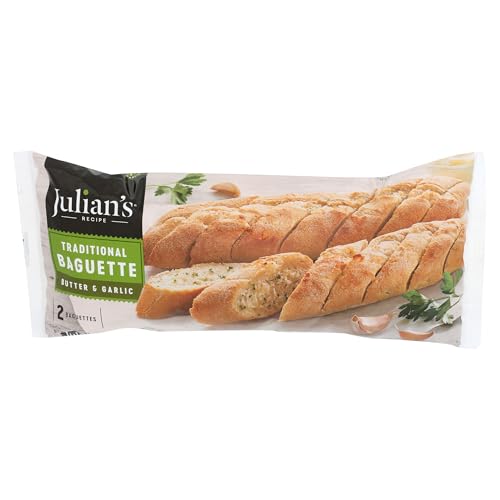


As an Amazon Associate we earn from qualifying purchases at no extra cost to you.
Choose the Right Bread
A baguette gives the most crisp surface and a pleasant contrast between crust and soft interior. A soft Italian loaf absorbs more butter and produces a tender, sandwich-like result. Sourdough adds acidity and a chewier crust, while sliced sandwich bread is suitable for quick individual portions but will not provide the same substantial center.
| Bread type | Best use | Cut thickness | Expected result |
|---|---|---|---|
| Baguette | Crisp restaurant-style slices | 2–2.5 cm | Crunchy crust and tender middle |
| Italian loaf | Soft, heavily buttered garlic bread | 2.5–3 cm | Moist and substantial |
| Sourdough | Stronger flavor and chew | 2 cm | Chewy with browned edges |
| Sandwich bread | Fast single servings | 1.5–2 cm | Light and crisp, but less tender inside |
Day-old bread is often easier to use because it holds its shape under the butter. Fresh bread works too, but slice it carefully and avoid spreading with excessive pressure. Bread that is already very dry may need a slightly thicker layer of butter or a short foil-covered stage.
How to Make Homemade Garlic Bread
1. Prepare the garlic butter
Leave the butter at room temperature for 20–30 minutes, then mix it with the garlic, parsley, salt, pepper, and Parmesan if using. Soft butter spreads evenly and carries the garlic flavor across the entire surface. Melted butter tends to run off the bread and collect on the baking tray before it can soak into the crumb.
For a smoother spread, grate the garlic on the fine side of a box grater. This distributes its juices more evenly than a rough chop. If you prefer a gentler flavor, cook the minced garlic in 1 teaspoon of the butter over low heat for 1–2 minutes, cool it, and then combine it with the remaining butter.
2. Slice the loaf
Cut the baguette into 2–2.5 cm slices. For pull-apart garlic bread, make diagonal cuts nearly all the way through while keeping the bottom crust connected. For maximum crispness, cut the loaf completely into separate slices so that both sides can brown.
Use about 1½ teaspoons of garlic butter per 2 cm baguette slice. A 250–300 g loaf usually needs 90–115 g of butter mixture. If the bread is unusually wide or you want a thick, rich coating, prepare the full quantity and use the remainder on the outside crust or freeze it for another batch.
3. Set up the oven
Heat the oven to 220°C conventional or 200°C fan. Place a rack in the upper-middle position, not directly beneath the top heating element. Line a baking tray with parchment or foil to catch butter that escapes from the bread.
For softer centers, wrap the buttered loaf loosely in foil. For separate slices, arrange them close together and cover the tray with foil without pressing it onto the butter. For the crispest result, skip the foil and place the slices cut-side up with a small gap between them.
4. Bake in two stages
Bake foil-covered bread for 8 minutes, then open the foil and bake for another 4–6 minutes. This traps enough steam to soften the center before the final uncovered stage dries and browns the edges. Separate slices generally need 8–10 minutes uncovered, while a thick, connected loaf may need 12–14 minutes total.
Look for bubbling butter, lightly browned corners, and a firm, crisp surface. If the top is still pale after the recommended time, move the tray one rack higher and bake for 1–2 additional minutes. Watch closely during this final stage because minced garlic can darken quickly.
5. Rest briefly and serve
Let the bread rest for 2 minutes before serving. This gives the butter time to settle into the crumb while the crust remains crisp. Serve immediately for the best contrast in texture.
Adjustments by Situation
| Your priority | Use this approach | Change to timing or ratio |
|---|---|---|
| Maximum crunch | Cut separate slices and leave uncovered | 220°C for 8–10 minutes |
| Soft center | Keep the loaf connected and cover with foil | 8 minutes covered, then 5–6 uncovered |
| Mild garlic flavor | Use 3 cloves and add extra parsley | 115 g butter to 3 cloves |
| Strong garlic flavor | Use 5 cloves, finely grated | 115 g butter to 5 cloves; monitor browning |
| Cheesy topping | Add Parmesan after spreading | 25–40 g cheese; uncover for the final 5 minutes |
| Frozen prepared bread | Wrap tightly in foil before freezing | Bake from frozen at 200°C for 18–24 minutes, then uncover |
Common Mistakes and Fixes
- Burnt garlic: The garlic is probably chopped too coarsely, the oven is too hot, or the bread is too close to the top element. Grate the garlic finely and finish on the middle rack.
- Greasy, soggy bread: The butter layer may be too thick for the loaf, or the bread was wrapped for the entire bake. Uncover for the last 4–6 minutes and use a perforated or wire baking rack if needed.
- Dry center: The slices may be too thin or the bread too stale. Cut thicker slices and use the covered first stage.
- Uneven flavor: Large garlic pieces create concentrated bites. Grate or mince the garlic until it forms a fine paste, then mix thoroughly.
- Pale top: Increase the uncovered stage by 1–2 minutes rather than raising the temperature substantially.
Storage and Make-Ahead Options
Unbaked garlic bread can be refrigerated, wrapped, for up to 24 hours. For longer storage, freeze the buttered slices or connected loaf for up to 2 months. Bake frozen bread without thawing so the butter does not separate and soak the bread unevenly. Add approximately 8–10 minutes to the covered baking stage, then uncover until crisp.
Leftover baked slices keep for up to 2 days in the refrigerator, although the crust softens. Reheat them on a tray at 190°C for 5–8 minutes. A microwave warms the center quickly but removes most of the crispness.
Frequently Asked Questions
Can I use olive oil instead of butter?
Yes, but the texture changes. Use 80 ml olive oil for a 250–300 g loaf, along with the same garlic and herbs. Oil produces crisp edges but a less rich, less tender center. A mixture of 60 g butter and 40 ml olive oil provides both flavor and easier browning.
Should garlic bread be baked or broiled?
Baking at 220°C gives the most even result. A brief 1-minute broil or grill at the end can brown cheese or edges, but stay nearby because garlic and butter can scorch quickly.
Why does my garlic bread taste bitter?
Garlic becomes bitter when it burns. Finely grated garlic, moderate heat, and a covered first stage help prevent this. Remove any green sprout from older cloves for a milder flavor.