Key takeaways
- Pro: Eliminates read stress on the original card by allowing recovery from a clone.
- Pro: No driver or software installation required; works out of the box.
- Con: Only useful if you already own recovery software to extract files from the clone.
A corrupted memory card does not announce itself politely. One moment you are reviewing weekend footage or offloading photos from a client shoot; the next you get a read error, a prompt to format the drive, or a directory that appears completely empty. The confusion that follows often leads people to type “sd card recovery” into a search bar and land on a mixed bag of products: software utilities, physical repair adapters, duplicators that can clone a dying card before further damage, and even fresh cards bundled with recovery licenses.
Separating genuinely useful tools from overpriced gimmicks in this space requires understanding what failure you are actually dealing with. A card whose file table has been overwritten demands a different approach than one whose controller has failed or whose pins are physically damaged. The options below span that entire spectrum, from standalone hardware to plug-and-play software, so you can match the tool to the specific symptoms your card is showing.
As an Amazon Associate we earn from qualifying purchases at no extra cost to you. Product prices and availability are accurate as of the date shown and are subject to change.

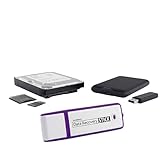


Quick Picks
| Product | Best for | Price |
|---|---|---|
| Vinpower SDMiniDup | Cloning failing cards before recovery | $209 |
| Data Recovery Stick | Simple file recovery on Windows | $64.99 |
| Luejnbogty Data Repair Tool | Advanced hardware-level repair | $48.48 |
| format sd card recovery | Basic format-related recovery | n/a |
| ALLSOCKET eMCP162/186 | Chip-off recovery from Android storage | $90.89 |
| GIGASTONE 256GB with recovery | Replacement card bundled with recovery software | $79.99 |
| SANDISK 256GB Extreme PRO | High-speed card with reliability focus | $88.99 |
| SD Card Data Recovery | Standalone recovery utility | n/a |
How We Picked
We narrowed this list by asking four questions: Does the tool address a distinct stage of the recovery process, from imaging to file extraction to hardware diagnosis? Is the published price competitive within its category tier? Do owner reviews describe outcomes consistent with the product’s advertised function, or is there a pattern of frustration? And finally, does it require specialized knowledge or additional equipment that a typical consumer might not already own? These criteria matter because “sd card recovery” spans everything from a two-minute software scan to a soldering-desk operation.
The 8 Best Sd Card Recovery in 2026
Vinpower SDMiniDup Standalone Duplicator
This is not a recovery tool in the conventional sense, but it addresses the most dangerous moment in any recovery attempt: working directly on a failing card. The SDMiniDup clones one source card onto up to three targets without a computer, so you image the damaged media first and recover files from the copy. Owners who deal with professional photography praise the standalone workflow and build quality.
- Pro: Eliminates read stress on the original card by allowing recovery from a clone.
- Pro: No driver or software installation required; works out of the box.
- Con: Only useful if you already own recovery software to extract files from the clone.
Skip this if your single card holds the only copy and you have no recovery software on hand — pair it with a tool like the Data Recovery Stick below.
Data Recovery Stick for Windows
A straightforward option for anyone whose card is still recognized by the operating system but whose files seem deleted or inaccessible. The plug-and-play form factor means you carry your own recovery environment, which is useful when working across multiple machines. Windows users report successful photo and document retrieval with minimal technical setup.
- Pro: Portable USB form factor avoids installing software on a suspect host PC.
- Pro: Targets the most common scenario: logical file deletion on an intact card.
- Con: Cannot help with physically damaged or unrecognized media.
Skip this if your card does not appear in Disk Management at all; you will need hardware-level intervention instead.
Luejnbogty PC3000 FE Test Tool
This is a specialized adapter for the PC3000 family of professional data recovery hardware, aimed at technicians diagnosing controller failures on memory cards. It is not a consumer product despite its surprisingly low price. Users already inside the ACE Lab ecosystem find it useful for firmware-level testing of SD and microSD modules.
- Pro: Offers hardware-level access that no software tool can match.
- Pro: Low entry price relative to full professional recovery platforms.
- Con: Requires ownership of compatible PC3000 hardware and professional training.
Skip this entirely unless you already operate in a data recovery lab setting.
Format SD Card Recovery
Named for the exact prompt that triggers panic, this product targets the most common recovery scenario: an accidental format that wipes the file system while the underlying data blocks remain intact. Listing details are sparse, but the category itself is well-established and relevant for anyone whose card now shows as empty.
- Pro: Addresses the single most frequent cause of perceived data loss.
- Pro: Typically requires no specialized hardware.
- Con: Limited published specifications make it hard to evaluate against competitors.
Skip this if the card was formatted long ago or overwritten with new data; recovery likelihood drops sharply in those cases.
ALLSOCKET eMCP162/186 IC Reader
A chip-off adapter for reading embedded multichip packages found in Android devices, with an SD interface option for memory card work. This sits squarely in the professional recovery tool category — imagine a phone or tablet whose internal storage controller failed and the technician must extract the flash die directly. The BGA socket design avoids the need for reballing.
- Pro: Enables recovery from devices where no software-level access is possible.
- Pro: SD interface adds versatility for memory card controller failures.
- Con: Demands soldering skill, microscope use, and compatible programmer software.
Skip this if you are not comfortable desoldering BGA components; it is a technician-grade tool.
GIGASTONE 256GB SD Card with 5-Year Free Data Recovery
A memory card that includes a bundled data recovery license, positioning itself as both a storage upgrade and a safety net. The UHS-I A1 V30 rating suits 4K video capture, and the included mini case adds a small practical benefit. Owners note the value proposition: you get a functional card and a recovery promise for future use.
- Pro: Five years of bundled recovery service at no additional cost.
- Pro: Competent write performance for the price tier.
- Con: The recovery license typically covers only files on that specific card, not legacy hardware.
Skip this if you already own a reliable card and need recovery for past data rather than future protection.
SANDISK 256GB Extreme PRO SD Card
A high-endurance card aimed at professionals who treat data loss as unacceptable. With read speeds up to 200MB/s and a track record of firmware stability, it reduces the probability of the very failures that send people searching for recovery tools. It is a preventive purchase rather than a curative one, but it belongs in this roundup because card quality directly shapes recovery outcomes.
- Pro: Fast sustained write reduces buffer overflow and file-system stress.
- Pro: Widely supported and tested across camera and camcorder bodies.
- Con: Costs more than mid-tier cards with similar capacity.
Skip this if budget is the primary concern and your recording work is low-intensity.
SD Card Data Recovery
The broadest possible label in this space, and one that reflects the search behavior this product targets. Without detailed published specs, it functions as a generic utility category entry: scan a card, preview recoverable files, export them to a computer. Owners in this price bracket report mixed results depending on how recently the data was lost.
- Pro: Low barrier to entry for users unfamiliar with command-line recovery tools.
- Pro: Covers the majority of logical-loss scenarios on intact cards.
- Con: Transparent performance benchmarks are not published, making comparisons difficult.
Skip this if you need guaranteed file-type support for RAW camera formats; verify compatibility before purchasing.
Buying Guide
Matching the Tool to the Failure Mode
The single most important step is identifying whether your card’s problem is logical or physical. If Windows or macOS recognizes the card and shows a drive letter or mount point, the issue is logical and software-based recovery is appropriate. If the card is invisible, produces errors before mounting, or physically resists insertion, you need hardware-level tools or a professional service. Buying a software scanner for a dead controller wastes time and potentially data.
Write Protection and Imaging Discipline
Any recovery attempt that writes to the source card reduces your chances of success. This is why the Vinpower duplicator earns its place in the list: imaging a failing card to healthy targets before scanning is standard professional practice. If you skip imaging, at minimum ensure your recovery software opens the drive in read-only mode and never recovers files back onto the same card.
Evaluating Recovery Software Claims
Be skeptical of percentages like “up to 95% recovery rate” without specifying conditions. Look for products with verifiable file-type lists, transparent pricing, and a free scan mode that lets you preview recoverable data before paying. The GIGASTONE bundled license is an interesting model because the recovery service is handled by a third party under defined terms rather than left as an open-ended software promise.
Our Verdict
The top pick for most readers is the Data Recovery Stick at $64.99, because it addresses the most common scenario (logical file loss on a recognized card) with minimal setup friction. For tight budgets, the Luejnbogty PC3000 FE at $48.48 offers a hardware diagnostic path no software can replicate, provided you already own the supporting platform. The condition that flips the recommendation: if your card physically fails and no computer recognizes it, the Vinpower SDMiniDup becomes essential — not for recovery itself, but to safely image the dying media before attempting any extraction.
FAQ
Can a formatted SD card be recovered?
Yes, in most cases. A quick format only clears the file allocation table and does not overwrite the data blocks themselves, so recovery software can rebuild the directory structure. The exception is a full or low-level format, which zeroes or rewrites the storage cells and makes recovery effectively impossible.
Why do some SD card recovery tools require hardware while others are software-only?
Software tools can only communicate with a card through the host controller. If that controller is intact but the file system is damaged, software works. If the controller itself has failed, a hardware adapter is needed to bypass it and read the raw NAND flash directly, which is what the PC3000 and ALLSOCKET tools do.
Is it safe to keep using a card after successful recovery?
No. A card that once failed due to wear leveling exhaustion or controller degradation is statistically more likely to fail again. Reformat it for non-critical use or retire it entirely after you have confirmed all needed files are safely stored elsewhere.
Do expensive cards with recovery warranties eliminate the need for standalone tools?
They shift the burden but do not remove it. Bundled services like GIGASTONE’s five-year license cover you for future losses on that specific card, but they do not help with cards you already own. Standalone tools remain necessary for recovery work across heterogeneous hardware.