Key takeaways
- Pro: Lowest price on this list by a wide margin, making it a nearly risk-free purchase.
- Pro: Dual-band operation splits traffic between 2.4 GHz and 5 GHz without any manual intervention.
- Con: Owners with plans above 100 Mbps frequently report throughput well below their ISP promise.
What's inside
A weak signal dropping your video call in the bedroom, a smart home hub going offline when four people stream at once, a gaming session stuttering because your ISP plan outpaces your hardware — these are the complaints that drive people to search for wireless router recommendations they can actually trust. The problem is that the market floods buyers with specs, marketing jargon, and price tiers that seem arbitrary, making it hard to know whether you are paying for performance you will feel or simply for brand recognition.
What separates a worthwhile purchase from a regrettable one is how well the hardware matches your actual environment: the number of connected devices, the square footage you need covered, whether you already own a modem, and whether your internet plan demands a certain wireless standard to avoid a bottleneck. Based on published specifications, pricing, and consistent themes from owner feedback, this guide breaks down eight wireless router recommendations that represent distinct use cases across the full price spectrum.
As an Amazon Associate we earn from qualifying purchases at no extra cost to you. Product prices and availability are accurate as of the date shown and are subject to change.




Quick Picks
| Product | Best for | Price |
|---|---|---|
| TP-Link Archer A54 | Tightest budget, basic browsing | $24.34 |
| NETGEAR Nighthawk RS90 | WiFi 7 future-proofing, medium homes | $99.99 |
| TP-Link AC1900 Smart Router | Affordable dual-band upgrade | $49.96 |
| NETGEAR Nighthawk CAX30 | Replacing modem and router together | $259 |
| NETGEAR R6700AX | WiFi 6 on a modest budget | $60.05 |
| TP-Link Archer AX1450 | Cheapest entry into WiFi 6 | $29.99 |
| NETGEAR Nighthawk RAX36 | Gaming and VPN on WiFi 6 | $99.99 |
| TP-Link Archer AX73 | High-speed WiFi 6, larger spaces | $129.99 |
How We Picked
We narrowed this list by weighing four factors that owners consistently report as deal-breakers or deal-makers: real-world coverage relative to stated square-footage claims, the number of devices the radio can handle without noticeable degradation, whether the wireless standard matches your current or near-term internet plan, and the price-to-performance ratio over the first two years of ownership. Routers that scored well on paper but generated repeated complaints about dropped connections or overheating were excluded.
The 8 Best Wireless Router Recommendations in 2026
TP-Link Archer A54
This AC1200 dual-band router is the floor of the category. It suits a student apartment, a rental where you need basic coverage for a laptop and a phone, or a backup unit for a guest network. Owners praise its straightforward setup and the fact that TP-Link’s Tether app keeps configuration simple without a computer.
- Pro: Lowest price on this list by a wide margin, making it a nearly risk-free purchase.
- Pro: Dual-band operation splits traffic between 2.4 GHz and 5 GHz without any manual intervention.
- Con: Owners with plans above 100 Mbps frequently report throughput well below their ISP promise.
Skip this if you run more than a handful of connected devices or need coverage beyond a single-room footprint.
NETGEAR Nighthawk RS90
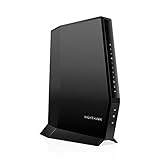
At BE3600 speeds and a 2.5 Gig internet port, the RS90 is the most future-ready option here. NETGEAR claims coverage up to 2,000 square feet and support for 50 devices, positioning it for families stacking smart TVs, tablets, consoles, and IoT gadgets. The free expert help line addresses the common complaint that WiFi 7 setup still confuses less technical buyers.
- Pro: WiFi 7 support means you will not outgrow this hardware for several years.
- Pro: The 2.5 Gig port handles multi-gig plans that would bottleneck older interfaces.
- Con: WiFi 7 remains early in adoption; most current devices cannot take full advantage yet.
Hold off if your internet plan is under 300 Mbps and you do not expect a speed bump soon.
TP-Link AC1900 Smart WiFi Router
This dual-band AC1900 sits comfortably in the value tier. It targets households that have moved past basic browsing into streaming and light gaming without wanting to pay WiFi 6 prices. The “Smart” branding refers to TP-Link’s parental controls and guest-network tools, which owners rate as genuinely usable compared to competitors’ clunky alternatives.
- Pro: AC1900 throughput handles multiple 4K streams without the congestion owners report on AC1200 units.
- Pro: Built-in parental controls and scheduling reduce the need for third-party software.
- Con: No USB port for network storage, a feature buyers increasingly expect at this price.
Look elsewhere if you want wired storage or plan to add more than ten devices.
NETGEAR Nighthawk CAX30
This modem-router combo pairs DOCSIS 3.1 cable modem hardware with a WiFi 6 AX2700 router, eliminating the rental fee many cable subscribers pay monthly. Compatible with Xfinity, Spectrum, Cox, and other major ISPs, it is the strongest wireless router recommendation for anyone replacing two rental devices at once.
- Pro: One device replaces a rented modem and a separate router, cutting recurring fees.
- Pro: DOCSIS 3.1 supports gigabit-class cable plans without a second upgrade cycle.
- Con: If either component fails, you replace the entire unit rather than just the broken half.
Skip this if you already own a modem you like or use fiber internet instead of cable.
NETGEAR R6700AX
The R6700AX delivers WiFi 6 at a price that still feels like WiFi 5 money. With AX1800 speeds, coverage up to 1,500 square feet, and 4-stream design, it handles dual-band traffic for up to 20 devices. NETGEAR’s free expert support is a practical differentiator for buyers who dread router configuration.
- Pro: 4-stream WiFi 6 at this price point is uncommon, giving owners OFDMA and MU-MIMO benefits without a premium tag.
- Pro: Covers apartments and smaller single-family homes without dead zones, per consistent owner reports.
- Con: Only 20-device rated capacity, so smart-home-heavy households may outgrow it.
Consider stepping up if your home regularly hosts more than twenty connected devices.
TP-Link Archer AX1450 (Renewed)
This renewed WiFi 6 router lists at under thirty dollars, making it the cheapest credible path to 6 GHz-band-free AX operation. UP to 1.45 Gbps speeds are modest by WiFi 6 standards but still exceed what most AC-class budget routers actually deliver on real networks.
- Pro: WiFi 6 access at a price that rivals the cheapest AC routers on this list.
- Pro: Renewed condition from TP-Link includes a warranty, reducing the risk buyers associate with refurbishment.
- Con: Lower throughput ceiling means it struggles with multiple simultaneous 4K streams.
Pass on this if you need heavy multi-device throughput or prefer new-in-box hardware.
NETGEAR Nighthawk RAX36
The RAX36 targets a specific buyer: someone gaming or running a VPN who wants dedicated hardware for both. AX3000 speeds, built-in VPN server and client, a USB 3.0 port for network storage, and coverage up to 2,000 square feet for 25 devices make it a feature-dense WiFi 6 option at $99.99.
- Pro: Built-in VPN server lets you reach your home network remotely without separate software.
- Pro: USB 3.0 port supports attached storage or a printer, a feature many mid-range routers dropped.
- Con: Owners report the Nighthawk app pushes frequent firmware prompts that can interrupt sessions.
Choose another unit if you dislike companion apps or want the absolute simplest setup.
TP-Link Archer AX73
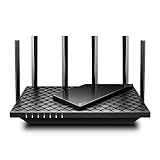
AX5400 throughput puts the Archer AX73 in a different performance bracket from the WiFi 6 routers listed above it. The six-stream design and broad 5 GHz coverage make it suitable for larger homes or congested apartment buildings where neighboring networks create interference. At $129.99, it is the strongest high-speed option under $150.
- Pro: AX5400 rated speed provides headroom for multi-gig plans and dense device environments.
- Pro: TP-Link’s HomeShield security suite is free and active out of the box.
- Con: Large physical footprint; owners in tight media consoles report difficulty fitting it.
The RS90 makes more sense if WiFi 7 future-proofing matters more than raw current speed.
Buying Guide
Match the Standard to Your Plan
A WiFi 7 router cannot make a 200 Mbps plan feel faster, and a WiFi 5 router cannot feed a 940 Mbps plan without throttling. Identify your internet tier first, then buy hardware rated to exceed it comfortably. If you are close to a multi-gig plan, prioritize a router with a 2.5 Gig port or higher to avoid a bottleneck at the WAN interface.
Count Your Devices Honestly
Manufacturers state device capacity in ideal conditions. Real homes accumulate tablets, smart speakers, thermostats, cameras, and streaming boxes that each hold a connection open. If your household has eight phones and laptops plus a dozen IoT gadgets, a router rated for twenty devices will struggle. Look for routers that explicitly mention OFDMA and MU-MIMO, as these technologies let the radio serve multiple clients simultaneously rather than sequentially.
Decide on Coverage Needs Before Paying for Range
Bigger antennas and higher transmit power help in open-plan spaces but do almost nothing in multi-story homes with dense walls. If your problem is a dead spot in the basement, a mesh system or an extender may be a better use of money than a single high-powered router. Use the stated coverage figures as a rough guide, but weight your decision toward the layout and construction of your actual home.
Our Verdict
The NETGEAR R6700AX is the top pick for most buyers in 2026: it delivers WiFi 6 benefits, 4-stream throughput, and solid coverage at a price that does not punish you for upgrading from an older AC router. The TP-Link Archer A54 remains the budget pick for anyone who simply needs reliable dual-band coverage in a small space. If you are replacing a rented cable modem and router in one move, the NETGEAR CAX30 wins on long-term cost savings despite its higher upfront price.
FAQ
Is WiFi 6 worth buying over WiFi 5 in 2026?
Yes, for most households. WiFi 6 handles congested environments far better thanks to OFDMA, and the price gap between AC and AX routers has narrowed to the point where budget WiFi 6 models exist. The main exception is a very light-usage setup with fewer than five devices.
Do I need a separate modem if I buy a modem-router combo?
No, and that is the entire point of units like the CAX30. They integrate the modem and router into one chassis, which reduces rental fees and simplifies wiring. You do give up the ability to replace only one component if it fails.
Will a more expensive router give me faster internet?
Only up to the speed your ISP plan provides. A router cannot increase your subscribed bandwidth. What a better router does provide is the ability to fully utilize your existing speed across more devices and more rooms without slowdowns.
Are renewed routers reliable?
Manufacturer-renewed units, like the TP-Link Archer AX1450 on this list, typically undergo inspection and carry a short warranty. They are less reliable than new hardware in absolute terms, but the price reduction can be substantial enough to justify the risk for a secondary or temporary setup.