Key takeaways
- Wheel or blade size: 14 inches is standard for larger cuts, and 8 to 10 inches suits lighter work.
- Motor: corded 15-amp motors are typical for abrasive saws. Cordless options have emerged for job sites but require higher-capacity batteries.
- Cut capacity: check the maker’s stated capacity for round, square and angled cuts at 45 degrees.
- Vise: a quick-action vise holds the work and sets angles. Look for one that clamps firmly with minimal fuss.
- Guards and safety: wheel guards, spindle lock and a trigger guard are essential. Read the manual for the wheel’s maximum rated speed and make sure it matches the saw.
- Weight and portability: a handle and moderate weight make a saw more convenient to move.
- Spark deflector and dust management: useful for controlling hazards and cleanup.
For most metal cutting jobs in a shop or on a job site, a 14-inch abrasive chop saw such as the DeWalt D28715, the Makita LW1401 or the Milwaukee 6955-20 is the traditional choice, while a dry-cut cold saw like the Milwaukee 8-inch metal cutting saw or the Evolution Rage 3 suits people who want cleaner cuts with fewer sparks, and wood workers who say “chop saw” usually want a miter saw instead. Which tool is right depends on the material, how many cuts you make, and how much noise, spark and dust you can manage safely.
Our top picks



As an Amazon Associate we earn from qualifying purchases at no extra cost to you.
At a glance: chop saws and close alternatives
| Saw | Best for | Key stated specs | Limits |
|---|---|---|---|
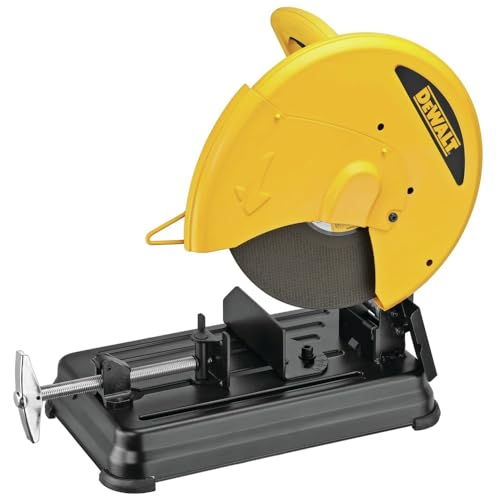
| DeWalt D28715 14-inch abrasive chop saw | General steel cutting in workshops | 14-inch abrasive wheel, corded motor, quick-action vise per the maker | Sparks, dust, wheel wear, heavy |
| Makita LW1401 14-inch cut-off saw | Reliable fabrication shop saw | 14-inch wheel, corded, adjustable vise | Corded only, loud |
| Milwaukee 6955-20 14-inch abrasive chop saw | Heavy-duty production cutting | 14-inch wheel, powerful motor, corded | Heavy and premium tier |
| Evolution Rage 3 or similar multi-material saw | Dry-cutting steel with carbide blade | Blade in the 14-inch class, carbide-tipped, cleaner cuts | Blade is costlier than abrasive wheel |
| Milwaukee 8-inch metal cutting circular saw | Fast, cold cuts on steel | 8-inch carbide-tipped blade, cold-cut design | Smaller cut capacity |
| Milwaukee M18 Fuel 14-inch cordless abrasive chop saw | Job-site work without power | Battery-powered 14-inch cutting, per the maker | Battery and tool tier is premium |
Model numbers and kit contents change, so use the maker’s product page for current specifications, guards and vise details.
What is a chop saw?
A chop saw is a stationary power saw with a circular blade or abrasive wheel on a pivoting arm that you pull down onto a clamped workpiece. In metalworking the term usually means an abrasive cut-off saw, which uses a reinforced abrasive wheel to grind through steel, and the term can also include cold-cut saws that use a carbide-tipped or toothed blade. In woodworking, people often use “chop saw” for a miter saw. Decide which you need first, because the machines, blades and safety needs differ.
Abrasive versus cold-cut saws
Abrasive chop saw
An abrasive saw runs a bonded abrasive wheel at high speed. It cuts steel quickly, is simple, and wheels are inexpensive. The trade-offs are heavy sparks, hot burrs on the cut, abrasive dust and noise. Reviewers describe it as a rough, fast tool, well suited to structural steel, tube and bar stock where finish is secondary.
Cold-cut and dry-cut saws
These use a toothed or carbide blade at a lower speed. They cut cleaner with fewer sparks and cooler workpieces, according to the makers, which means less cleanup. They tend to cost more, and the blade needs gentle handling. They are preferred where finish and precision matter, such as fabricating furniture or railings.
Miter saws for wood
If you cut lumber, moulding or decking, a miter saw (the woodworker’s chop saw) is the tool. Do not use wood blades on metal or abrasive wheels on wood, and always match the blade or wheel to the tool and material as the manual states.
Key specifications to compare
- Wheel or blade size: 14 inches is standard for larger cuts, and 8 to 10 inches suits lighter work.
- Motor: corded 15-amp motors are typical for abrasive saws. Cordless options have emerged for job sites but require higher-capacity batteries.
- Cut capacity: check the maker’s stated capacity for round, square and angled cuts at 45 degrees.
- Vise: a quick-action vise holds the work and sets angles. Look for one that clamps firmly with minimal fuss.
- Guards and safety: wheel guards, spindle lock and a trigger guard are essential. Read the manual for the wheel’s maximum rated speed and make sure it matches the saw.
- Weight and portability: a handle and moderate weight make a saw more convenient to move.
- Spark deflector and dust management: useful for controlling hazards and cleanup.
Safety essentials
Chop saws throw sparks, fragments and loud noise. The following points reflect common guidance, and the manufacturer’s manual governs.
- Wear eye protection, a face shield, hearing protection, a respirator rated for the dust or fume, gloves suited to the task, and close-fitting clothing.
- Clamp the workpiece firmly. Never hold it by hand.
- Keep flammable materials, solvents and sawdust clear of the spark path, and keep a fire extinguisher nearby.
- Inspect each abrasive wheel for cracks or damage before use, and let a new wheel run at idle speed in a safe position, as the manual describes.
- Use only wheels or blades rated for the saw’s speed and size.
- Unplug the saw or remove the battery before changing wheels or blades.
- Ensure good ventilation, especially when cutting coated or galvanized steel, because fumes can be hazardous. Seek advice from a qualified professional on safe practices for coated metals.
- Work on a stable bench and keep the cord clear of the cut path. If you are unsure about your power circuit, ask a licensed electrician.
Budget tiers
- Budget: basic 14-inch abrasive saws from value brands. Fine for occasional jobs, but vises, guards and motors are simpler.
- Mid-range: DeWalt and Makita 14-inch saws. Reliable for regular shop use.
- Premium: Milwaukee abrasive and cold-cut saws, cordless Fuel models and higher-end Evolution machines. Better performance and battery options.
Pick the saw if …
| You are | Pick | Why |
|---|---|---|
| Cutting structural steel and bar stock regularly | DeWalt D28715 or Makita LW1401 | Proven 14-inch abrasive designs |
| Running a production shop | Milwaukee 6955-20 | Heavy-duty motor and build |
| Wanting cleaner cuts with fewer sparks | Evolution Rage 3 or Milwaukee cold-cut saw | Carbide blades give less burr |
| Working away from power outlets | Milwaukee M18 Fuel cordless saw | Battery power on site |
| Cutting wood trim and framing | A miter saw | Designed for wood and angles |
| Cutting only occasionally | Rent or buy a budget abrasive saw | Lower upfront cost |
Alternatives
- Angle grinder with cutting wheel: portable and versatile for occasional cuts, but offers less control than a clamped saw.
- Portable band saw: quieter and cleaner for tube and bar stock, though slower.
- Metal-cutting bandsaw: a stationary saw for repetitive cuts with minimal sparks.
- Miter saw with a metal-cutting blade: only if the maker explicitly approves metal cutting for that model.
Choosing wheels and blades
The saw is only half of the setup, because the wheel or blade determines how it cuts. Abrasive wheels are labelled by the metals they suit, and the label also lists the maximum rated speed, the size and the arbor hole. The wheel’s rated speed must be at or above the saw’s no-load speed, and the arbor must fit the spindle, as the manual states. Using the wrong wheel is a leading cause of accidents. Store wheels flat in a dry place, because moisture and rough handling weaken them, and discard any wheel that is cracked, chipped or past its expiry date, which many makers print on the wheel.
Carbide-tipped blades for cold saws are designed for a particular material and thickness range. Thin-wall tube and thick plate need different tooth counts, and the manual lists suitable materials. Do not use a blade that is not approved for the saw.
Setting up the work area
- Bolt the saw to a sturdy bench or stand so it does not walk during a cut.
- Provide a stable support for long stock on both sides of the saw.
- Place the saw so sparks fly away from people, walkways and flammable items.
- Keep the floor clear and provide plenty of light.
- Use a dust collection or ventilation approach appropriate to the job, and consider a respirator.
- Keep children and bystanders away from the area during cutting.
After a cut, let the workpiece cool before handling it, because both abrasive and cold-cut methods can leave hot, sharp edges. Deburr the cut end with a file or a deburring tool. Clean the saw regularly, and have a qualified technician service it if you hear unusual noises or notice the motor running poorly. Following the manual and local workplace safety rules is more important than any buying decision.
Frequently Asked Questions
What is the difference between a chop saw and a miter saw?
A metalworker’s chop saw is an abrasive or cold-cut saw for steel, while a miter saw is designed for wood and angled cuts. Using the wrong blade or wheel can be dangerous, so match the tool to the material as the manual states.
Do abrasive chop saws wear out wheels quickly?
Yes. Abrasive wheels shrink as they cut, and you replace them regularly. The cost per wheel is low, but the cost builds with use. Cold-cut blades last longer but cost more.
Can I cut aluminum or stainless steel with an abrasive saw?
Some wheels are made for steel only, and others for stainless or aluminum. Use a wheel labelled for the material and compatible with the saw. Soft metals can clog an abrasive wheel.
How do I reduce sparks and dust?
Use a cold-cut saw or carbide blade where suitable, keep the area clear of flammables, and use a respirator and eye protection. Ventilation and a spark deflector help.
Is a cordless chop saw practical?
Cordless abrasive saws are available, but they rely on large batteries and are best for job sites. Corded saws still deliver the most continuous power at a lower cost.
What size saw do I need?
A 14-inch saw handles most steel stock, tube and angle. Lighter work such as small tube or conduit suits an 8 to 10 inch cold saw. Check the maker’s stated cut capacity against your material.