
Key takeaways
- Two-handed activation: a switch on each handle keeps hands away from the blades.
- Blade brake or quick-stop: stops the blade shortly after release, as described by the maker.
- Blade guard or scabbard: covers the blades for storage and transport.
- Anti-jam features: some trimmers reverse the blade or increase torque if a stem jams; read how the maker describes them.
A cordless trimmer on a battery platform you already own, such as EGO, Ryobi, Greenworks, Makita or DeWalt, suits most homeowners with average-sized hedges, a corded trimmer suits small gardens near an outdoor socket and buyers who dislike battery cost, and a pole hedge trimmer suits tall hedges where a ladder would otherwise be needed. Hedge size, blade length, weight and the battery system you commit to are the main decisions.
Our top picks

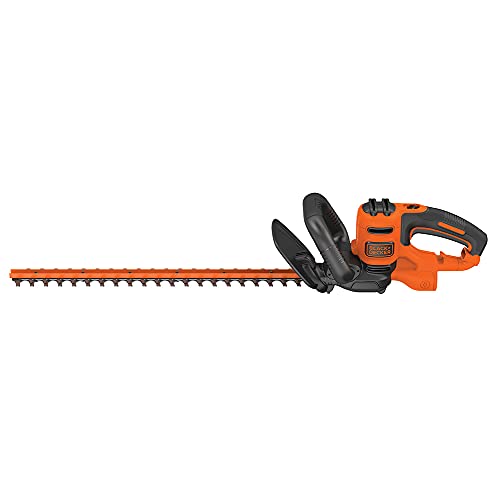
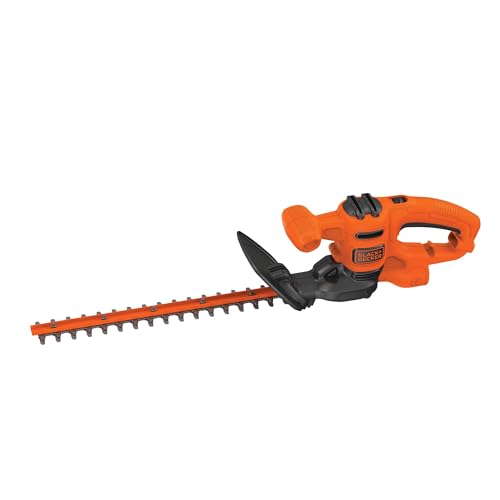

As an Amazon Associate we earn from qualifying purchases at no extra cost to you.
Electric Hedge Trimmers at a Glance
| Type | Example makers | Best for | Key points to compare | Limits |
|---|---|---|---|---|
| Cordless (higher-voltage platform) | EGO, Greenworks, Ryobi 40V, Makita, DeWalt | Medium to large hedges | Blade length, tooth gap, battery capacity, weight | Battery runtime and cost |
| Cordless (compact or 18V class) | Ryobi One+, Makita LXT, Black+Decker, Worx | Small hedges, topiary, existing battery owners | Weight, balance, blade length | Less cutting capacity |
| Corded | Black+Decker, Bosch, Worx, Greenworks | Small gardens near a socket | Cord length, blade length, motor power | Cord limits reach and risk of cutting it |
| Pole hedge trimmer | EGO, Ryobi, Greenworks, Stihl | Tall hedges and overhead reach | Pole length, head angle, weight at the end | Heavier to hold; fatigue over long sessions |
| Hedge shears (cordless, single hand) | Bosch, Ryobi, Black+Decker | Shaping, box balls, small trims | Blade size, safety features | Slow on large hedges |
| Multi-tool with hedge attachment | EGO, Ryobi Expand-It, Stihl KombiSystem | Owners wanting one power head | Attachment compatibility | Compromise on balance and cutting speed |
Buying Criteria
Corded versus cordless
Cordless models offer freedom and simplicity, and many reviewers say recent battery trimmers match corded ones for typical garden work. The trade-off is runtime and expense, since batteries and chargers add to the cost unless you already own them. Corded models provide continuous power and are lighter, but you need a safe outdoor supply and must keep the cable behind you and away from the blades. Use an RCD or GFCI-protected outdoor socket and never use a corded trimmer in wet conditions. Ask a qualified electrician if your outdoor wiring is not suitable.
Blade length and tooth gap
Blade length, commonly listed in inches or centimetres, sets how much hedge you can cut per pass. Longer blades work faster on flat surfaces but are harder to control on curves. The tooth gap, which the maker states in millimetres, indicates the maximum stem thickness the blade can cut; a wider gap handles thicker branches, while narrow gaps give a finer finish on soft growth. Do not try to cut branches larger than the maker’s stated capacity; use loppers or a saw for thick wood.
Weight and balance
Hedge trimming is repetitive and often done overhead, so weight matters. Lightweight models are easier on the shoulders, while heavier units may be more powerful. Look at the weight with the battery installed, since this is what you carry. A rotating rear handle, on models that offer it, helps cut at angles for sides and tops.
Battery platform
If you already own cordless tools, choose a trimmer on the same battery system and consider buying the bare tool. If you are starting fresh, think about the full range of outdoor tools on that platform, such as mower, string trimmer and blower, because sharing batteries lowers the total cost of ownership. Makers state the battery capacity and sometimes a runtime estimate for the trimmer; reviewers usually report that actual runtime varies with hedge thickness.
Safety features
- Two-handed activation: a switch on each handle keeps hands away from the blades.
- Blade brake or quick-stop: stops the blade shortly after release, as described by the maker.
- Blade guard or scabbard: covers the blades for storage and transport.
- Anti-jam features: some trimmers reverse the blade or increase torque if a stem jams; read how the maker describes them.
Wear eye protection, sturdy gloves, hearing protection if noise is high, and non-slip footwear. Remove the battery or unplug the trimmer before clearing jams or changing settings. Check the hedge for nests, as many regions protect nesting birds during breeding season; follow your local wildlife rules. Do not trim near power lines, and keep children and pets away from the work area.
Maintenance
Clean the blades after use, wipe off sap and apply blade oil as the manual suggests. Keep batteries out of extreme heat, store them partly charged if the maker advises, and never use a damaged battery or charger. Dull or nicked blades slow cutting and tear leaves, so have them sharpened or replaced following the maker’s guidance.
Budget Tiers
| Tier | What to expect | Trade-off |
|---|---|---|
| Budget | Corded trimmers, entry-level 18V cordless, small shears | Shorter blades, less power and runtime |
| Mid-range | Full-size cordless trimmers on shared battery platforms | Good balance of power and convenience |
| Premium | High-voltage cordless or professional-style trimmers and pole models | Higher cost; battery packs add weight |
Pick X If…
| Pick this | If you… |
|---|---|
| High-voltage cordless | have long or thick hedges and want freedom from cords |
| Compact cordless | have small hedges and already own that battery platform |
| Corded | have a small garden near an outdoor socket and want low cost |
| Pole trimmer | have tall hedges and prefer to stay on the ground |
| Hedge shears | shape topiary, small shrubs or low edging |
| Multi-tool attachment | already own a compatible power head |
Alternatives
- Manual shears or ratchet loppers: quiet and cheap for small jobs, with more effort.
- Petrol hedge trimmers: still available for heavy commercial use, but noisier and require fuel handling.
- Hiring a gardener: sensible for very tall or large hedges, especially near boundaries or utilities.
Cutting Technique Tips
- Trim in dry weather and avoid wet hedges to reduce slipping and tangling.
- Cut sides first, working upward, then finish the top.
- Make slightly sloped sides, wider at the base, so light reaches lower foliage.
- Use a string line for straight edges.
- Clear clippings promptly to protect the lawn and make cleanup easier.
Common Buying Mistakes
A frequent error is buying a trimmer with a long blade for a small garden. A long blade is awkward on tight shapes, heavier to hold and harder to control, so match blade length to your hedge. Another is picking a cordless model without checking whether the battery and charger are included; many makers sell the tool alone, and the battery can be the largest part of the cost. Buyers also assume all batteries work across a brand, but voltage and battery families differ, so confirm compatibility with any tools you already own. Ignoring weight is another trap. A tool that feels fine for a few seconds may feel heavy after twenty minutes at shoulder height, so look at the stated weight including the battery, and take breaks. Buyers with tall hedges sometimes choose a standard trimmer and stretch on a ladder; a pole trimmer or a stable platform is usually safer. Finally, many forget blade care. Wiping sap, oiling the blades and storing them with the guard on keeps them cutting cleanly and reduces the risk of injury when you pick the tool up later. Keep the manual and charger together in a dry place, and do not charge batteries in damp conditions unless the maker says it is fine.
It also pays to think about noise and neighbours. Electric trimmers are generally quieter than petrol ones, which makes early or late sessions less disruptive, but the cutting action still produces a clatter, and some local rules limit the hours for powered garden tools. Collect clippings on a sheet laid beneath the hedge where possible, and compost green clippings rather than sending them to landfill if your local service allows.
Frequently Asked Questions
How long does a cordless hedge trimmer battery last?
It depends on the battery capacity, the hedge density and the trimmer. Makers often give a typical runtime, and reviewers report shorter times on thick, dense growth. A spare battery is useful for large hedges.
What blade length should I buy?
Medium blades suit most gardens and give a good balance of control and speed. Longer blades suit long, flat hedges, while shorter blades are easier on curves and detailed work.
Can an electric trimmer cut thick branches?
Only up to the stated tooth gap. Beyond that, use loppers or a pruning saw. Forcing the blades risks jams and motor damage.
Is a corded or cordless trimmer safer?
Both are safe when used as directed. Corded models add a cable hazard and need an RCD-protected outdoor supply, while cordless models require careful battery handling. Follow the manual and wear protective gear.
When should I trim hedges?
Timing varies by plant and region. Many local rules protect nesting birds in spring and summer, so check the hedge first and follow local guidance. Late winter or early autumn trims are common for many species.
Do I need a pole trimmer?
Only if your hedge is too tall to reach safely from the ground. A pole trimmer can reduce ladder use, but long reach is tiring, so take breaks and keep a firm stance.





