Key takeaways
- Plug (core) aerators: Hollow tines pull small plugs of soil out of the lawn, leaving holes that let air, water and nutrients reach the roots. Roundups consistently prefer this type for compacted soil.
- Spike aerators: Solid tines or disks poke holes. They are cheaper and easier to use, but one guide’s summary is “core, do not spike”, because spikes can press soil sideways and may not relieve compaction.
- Tow-behind units: Pulled by a lawn tractor or ATV; a weight tray adds pressure so tines penetrate.
- Walk-behind and rolling units: Pushed by hand, such as rolling core aerators, which pull cores as you walk.
- Manual coring tools: Step-on tools for small patches and spot work.
- Motorized aerators: Gas-powered walk-behind machines, often rented, for large lawns without a tractor.
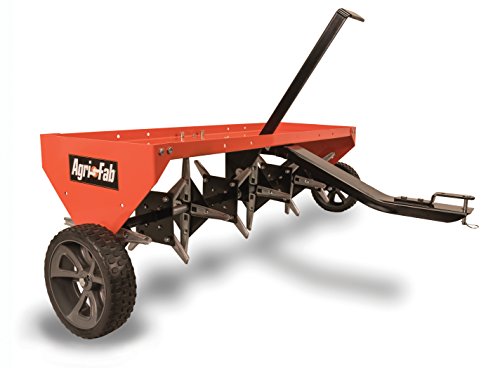
For a lawn tractor or ride-on mower owner, a tow-behind plug (core) aerator such as the Agri-Fab 48-inch or the Brinly 40-inch is the best way to relieve compacted soil, a hand or rolling core aerator suits small lawns without a tractor, and spike aerators are the lightest-duty choice that most reviewers say does little for real compaction. Match the tool to lawn size, soil type and what you can tow or push. Here is how the main options compare, using what the makers and reviewers state.
Our top picks



As an Amazon Associate we earn from qualifying purchases at no extra cost to you.
Aerator types in plain terms
- Plug (core) aerators: Hollow tines pull small plugs of soil out of the lawn, leaving holes that let air, water and nutrients reach the roots. Roundups consistently prefer this type for compacted soil.
- Spike aerators: Solid tines or disks poke holes. They are cheaper and easier to use, but one guide’s summary is “core, do not spike”, because spikes can press soil sideways and may not relieve compaction.
- Tow-behind units: Pulled by a lawn tractor or ATV; a weight tray adds pressure so tines penetrate.
- Walk-behind and rolling units: Pushed by hand, such as rolling core aerators, which pull cores as you walk.
- Manual coring tools: Step-on tools for small patches and spot work.
- Motorized aerators: Gas-powered walk-behind machines, often rented, for large lawns without a tractor.
At a glance
| Model | Type | Best for | Key stated specs | Limits |
|---|---|---|---|---|
| Agri-Fab 48-inch tow-behind plug (45-0299) | Tow-behind core | Large yards | Roundups list 32 galvanized knives, a weight tray of about 175 lb and 3-inch plugs | Needs a tractor; heavy to store |
| Agri-Fab 40-inch plug (45-0518) | Tow-behind core | Mid-size lawns, ride-on owners | Listed with 24 galvanized knives and a tray holding about 140 lb | Narrower pass |
| Brinly PA-403BH | Tow-behind core, 40-inch | Quality-focused buyers | Garden Frontier ranked it best overall | Slower on big areas than 48-inch |
| John Deere 48-inch plug | Tow-behind core | Heavy-duty buyers | Bob Vila’s side-by-side found it better on materials and design than the Agri-Fab | Higher tier |
| Agri-Fab 45-0544 | Tow-behind spike, 40-inch | Light loosening | Listed with 10 galvanized disks and a 100 lb tray | Spiking does less for compaction |
| Brinly SAT-40BH | Tow-behind slicing | Slicing sod | Reported 132 steel stars perforating up to about 2 inches | Not a core aerator |
| K.D STONEDGE rolling core aerator | Push core | No tractor | Pulls cores as you push | Physical effort on large lawns |
| Yard Butler / LawnVigor hand tools | Manual coring | Small patches | Step-on or hand coring tools | Slow for whole lawns |
Many aerator roundups are affiliate lists, and reviewers disagree on rankings, so confirm tine count, working width and tray capacity on the maker’s page.
Tow-behind plug aerators
If you own a lawn tractor, this is the category most roundups point to. The Agri-Fab 48-inch (45-0299) is described as best for large yards, with 32 galvanized knives and a weight tray that carries about 175 lb to push tines in. One reviewer kept it as the top plug aerator after sixty days of use, and Bob Vila called it the best heavy-duty option, though in a side-by-side the John Deere 48-inch beat it on materials and design. For smaller properties, the Agri-Fab 40-inch (45-0518) has 24 knives and a tray for about 140 lb. Garden Frontier ranked the Brinly PA-403BH best overall, with the Agri-Fab 48-inch second as best value because it matches the Brinly on depth and finishes large areas faster.
Weight is what makes a tow-behind aerator work. Fill the tray with sandbags, bricks or pavers according to the manual, and aerate when the soil is moist, not saturated or bone dry.
Spike and slicing aerators
The Agri-Fab 45-0544 with ten disks and a 100 lb tray, and the Brinly SAT-40BH with 132 steel stars, are the spike or slicing models roundups mention. They suit light loosening or lawns that are not badly compacted. The Brinly is called best in its class for slicing and perforating up to two inches. If your lawn is heavy clay or has been driven on, though, reviewers advise coring instead.
No tractor: push and manual options
For people without a tractor, a rolling core aerator like the K.D STONEDGE removes plugs as you push, which makes it suitable for lawns up to a modest size. It takes effort, especially on dry soil. Manual coring tools like the Yard Butler or LawnVigor work on small patches, flower-bed edges or tough spots. For a large lawn without towing power, renting a motorized walk-behind core aerator for a day is often more practical than buying.
When and how to aerate
- Timing: Cool-season grasses are generally aerated in early fall or spring, and warm-season grasses in late spring to early summer, when growth is active. Check guidance from your local extension service.
- Moisture: Moist soil lets tines penetrate; very dry ground resists, and soggy ground clogs.
- Pattern: Make a second pass at right angles on badly compacted areas.
- Afterward: Leave the plugs to break down, and consider overseeding and fertilizing while holes are open.
- Utilities: Mark sprinkler heads, shallow irrigation lines, invisible fence wires and buried cables before aerating.
Fit and safety notes
- Check your tractor’s towing capacity and hitch type; weighted aerators can be heavy.
- Measure the gate and storage space: a 48-inch unit needs room.
- Avoid slopes where a loaded unit might push the tractor; follow the tractor maker’s slope guidance.
- Wear closed shoes and keep hands and feet away from tines, and store the aerator with tines covered or raised so no one steps on them.
- Rinse soil off tines after use and dry them to reduce rust.
Budget tiers
- Budget: Manual coring tools and spike or slicing tow-behinds.
- Mid-range: Agri-Fab 40-inch plug and Brinly 40-inch models, plus rolling core aerators.
- Premium: Agri-Fab 48-inch and John Deere 48-inch plug aerators, or a motorized rental for large lawns.
Pick X if…
| If you have… | Pick | Why |
|---|---|---|
| A big lawn and a tractor | Agri-Fab 48-inch plug | Wide pass, 3-inch plugs |
| A mid-size lawn and a ride-on | Agri-Fab 40-inch or Brinly PA-403BH | Core aeration in a narrower unit |
| A priority on build quality | John Deere 48-inch plug | Bob Vila’s comparison favored its materials |
| Lightly compacted turf | Spike or slicing tow-behind | Gentler and cheaper, with limits |
| No tractor and a small yard | Rolling core aerator | Pulls cores by hand |
| A few bad patches | Manual coring tool | Spot work |
| A large lawn, no tractor | Rented motorized core aerator | Saves effort |
Alternatives
Topdressing with compost, overseeding and reducing foot or vehicle traffic all help compacted lawns alongside aeration. A dethatcher addresses thatch, which is a different problem. Lawn-care companies offer core aeration as a service, which may suit owners who need it once a year.
Choosing tine type and working width
Tine design affects results as much as the brand. Hollow tines that eject a plug suit most lawns, and the depth they reach depends on soil moisture, tray weight and tine sharpness. Roundups cite plug sizes of about three inches for the Agri-Fab 48-inch, which is typical of the larger tow-behind units. Working width determines how many passes the job takes: a 48-inch unit covers a large lawn faster than a 40-inch, but it needs wider gates and more towing power. Check the clearance between your tractor hitch and the aerator frame as well, because some tractors have low hitch points that limit the angle of the tongue.
Common mistakes to avoid
- Aerating when the lawn is waterlogged or parched, which leads to clogged or shallow holes.
- Using a spike tool and expecting the same relief as coring in clay soil.
- Forgetting to mark sprinkler heads and buried lines.
- Skipping overseeding or fertilizer when the holes are open.
- Turning sharply with the tines engaged, which tears turf; lift the tines or make wide turns as the manual advises.
Frequently Asked Questions
Is a plug aerator better than a spike aerator?
For compacted soil, most reviewers say yes. Plug aerators remove cores and create space, while spikes can compact the soil around each hole. Spikes can still loosen a lawn that is only lightly compacted.
How often should I aerate my lawn?
Once a year is common, and heavy clay or high-traffic lawns may benefit more often. Sandy soils usually need it less. Local extension services can advise for your grass and climate.
What should I put in the weight tray?
Sandbags, pavers or bricks are common, up to the tray rating the maker lists. More weight helps tines penetrate firm soil, but never exceed the stated limit or your tractor’s towing capacity.
Do I need to remove the soil plugs?
No. They break down within a few weeks and return nutrients to the lawn. Mowing helps speed this up.
Can I use a push aerator on a large lawn?
You can, but it is physically demanding and slow. For lawns beyond a modest size, a tow-behind unit or a rented motorized aerator is more practical.
When should I aerate relative to seeding?
Aerating just before overseeding gives seed good soil contact in the open holes. Avoid applying weed-control products that could stop seed from germinating unless the product label allows it.