
Key takeaways
- Wear a respirator suited to fine dust and eye protection; drywall dust irritates the airways and eyes. If you have breathing problems, ask a doctor before doing dusty work.
- Use a vacuum compatible with the sander and rated for fine dust; do not use ordinary household bags that may clog or leak.
- Turn off power at the circuit and consult an electrician if you uncover wiring while sanding or repairing.
- Follow the maker’s battery charging and storage instructions for cordless sanders.
- Be careful with older homes; compound or paint from older buildings may contain materials that need special handling. Follow local regulations and professional advice.
For professionals who sand drywall every week, the Festool Planex LHS 2 225 is the premium benchmark; for cordless freedom the DeWalt DCE800B 20V MAX and Milwaukee M18 FUEL drywall sanders are the names reviewers cite; and for a corded value choice the Porter-Cable 7800 is the one most roundups mention. A basic pole sander or hand sanding block is enough for a small patch. The right choice depends on how much drywall you finish, whether you already own a battery platform, and whether you have a vacuum for dust extraction.
Our top picks
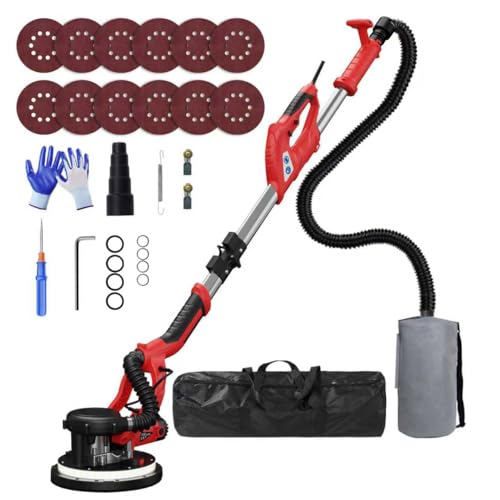


As an Amazon Associate we earn from qualifying purchases at no extra cost to you.
Best Drywall Sanders at a Glance
| Model | Best for | Key stated or reported specs | Limits |
|---|---|---|---|
| Festool Planex LHS 2 225 EQI-Plus | Professional finishing with best dust extraction | Long-reach design, designed to connect to a Festool dust extractor; roundups call its vacuum integration the benchmark | Premium tier; needs a compatible extractor for full benefit |
| DeWalt DCE800B 20V MAX | Cordless job-site sanding | Cordless, uses DeWalt 20V batteries, vacuum port | Battery and charger often sold separately; runtime depends on pack |
| Milwaukee M18 FUEL drywall vacuum sander | Cordless users on the M18 platform | Named best cordless in one roundup | Platform-specific; limited coverage in reviews |
| Porter-Cable 7800 | Corded value for ceilings and walls | Roundups cite a 4.7-amp motor and 9-inch head with a vacuum hose | Corded; weight and dust control vary with the vacuum |
| Bosch GTR55-85 | Heavier material removal | Described by a roundup as pro-grade | Less covered in reviews; premium tier |
| WEN 6369 | Budget buyers | Corded budget model per roundups | Lower power and build quality |
| Pole sander or sanding block | Small repairs, low cost | Manual operation | Slower and dustier on large areas |
How to Choose a Drywall Sander
Decide between powered and manual sanding
If you are patching a few holes or touching up one room, a manual pole sander with fine-grit screens or sponge blocks does the job. Powered long-reach sanders save time and effort when finishing whole rooms or ceilings, because the extension handle reaches high without a ladder and the head keeps a consistent, flat contact. Be honest about how often you will use one; rental can be sensible for a one-off project.
Corded or cordless
Corded models such as the Porter-Cable 7800 offer steady power without battery limits. Cordless models like the DeWalt DCE800B and Milwaukee M18 FUEL remove the trailing cable, which matters on ceilings and on sites without nearby outlets. If you already own batteries from one of those platforms, buying the bare tool is cost-effective. If you do not, factor in the cost of a battery and charger.
Dust extraction
Drywall dust is fine and spreads everywhere. Most drywall sanders have a hose port for a vacuum; Festool’s design is built around its own dust extractors. Use a vacuum rated for fine dust, with a suitable filter, and a respirator. The maker of your sander and your local safety guidelines should guide protective equipment. Cover furniture, seal doorways, and expect cleaning up even with extraction.
Head size and weight
Larger heads, such as the 9-inch head reported on the Porter-Cable, cover more area per pass. Smaller heads reach corners better. Weight at the end of a long arm adds fatigue on ceilings, so reviewers often favour lighter or well-balanced designs for overhead work.
Abrasives and speed control
Variable speed helps prevent gouging the joint compound. Hook-and-loop discs are the standard way to attach abrasives, and most sanders use grits from roughly 100 to 220 for finishing. Start with the coarsest grit needed and finish with a finer grit before paint or primer.
Budget Tiers Explained
At the budget tier, manual pole sanders and entry-level corded models like the WEN 6369 handle small to medium jobs, with lower power and less refined dust control. The mid-range holds the Porter-Cable 7800 and the cordless DeWalt and Milwaukee models, which balance power and convenience for homeowners and small contractors. The premium tier is led by Festool, with Bosch also reported as pro-grade, and is aimed at those who sand drywall frequently and value best-in-class dust control.
Model Notes
Festool Planex LHS 2 225 EQI-Plus
Roundups name the Planex as the best premium or best overall choice, praising its dust extraction and finish quality when connected to a Festool vacuum. The cost is substantial, and you will likely want a compatible extractor. For occasional users it is probably more tool than needed.
DeWalt DCE800B
The DCE800B is the usual best-cordless pick in roundups, described as a proven job-site tool. It is most convenient if you already own DeWalt 20V MAX batteries. Check the maker’s listing for what is included in the box.
Milwaukee M18 FUEL drywall sander
This is named the best cordless pick in one roundup. It is attractive to those already invested in Milwaukee’s M18 battery system, although there are fewer independent reviews than for DeWalt.
Porter-Cable 7800
The Porter-Cable 7800 is the corded value pick in many roundups, with a 4.7-amp motor and 9-inch head reported. One review rates it best for ceilings, while others call it a top choice for serious DIYers and professionals. Expect to supply your own vacuum.
Budget and heavy-duty alternatives
The WEN 6369 and similar models give budget access to powered sanding, with compromises in power and finish. The Bosch GTR55-85 is recommended in one roundup for heavy material removal but is a different type of tool from a drywall-specific long-reach sander.
Safety and Care Notes
- Wear a respirator suited to fine dust and eye protection; drywall dust irritates the airways and eyes. If you have breathing problems, ask a doctor before doing dusty work.
- Use a vacuum compatible with the sander and rated for fine dust; do not use ordinary household bags that may clog or leak.
- Turn off power at the circuit and consult an electrician if you uncover wiring while sanding or repairing.
- Follow the maker’s battery charging and storage instructions for cordless sanders.
- Be careful with older homes; compound or paint from older buildings may contain materials that need special handling. Follow local regulations and professional advice.
Pick X If… Decision Table
| Pick this | If you… |
|---|---|
| Festool Planex | sand drywall regularly and want top-tier dust extraction |
| DeWalt DCE800B | own DeWalt 20V batteries and want cordless convenience |
| Milwaukee M18 FUEL | run the M18 platform |
| Porter-Cable 7800 | want a corded value sander for walls and ceilings |
| WEN 6369 | need a low-cost powered option |
| Pole sander | have only small patches to finish |
Alternatives to Consider
- Sanding sponges and blocks: good for corners, edges and small repairs.
- Wet sanding with a damp sponge: reduces airborne dust on light finishing.
- Renting a drywall sander: sensible for one project instead of buying.
Before You Buy: A Practical Checklist
Estimate the area you will sand. A single patched wall may need only a sanding block, while a whole room of fresh joints and several ceilings could justify a powered long-reach sander or a rental. Think about ceiling height as well, because a long-reach sander lets you work from the floor and avoids repeated ladder moves, which is a safety benefit as well as a comfort one.
Check what you already own. A vacuum with a fitting hose and a fine-dust filter, a respirator, eye protection and spare abrasive discs may cost as much as the sander itself, so include them in the budget. If you already have DeWalt or Milwaukee batteries, a bare-tool cordless sander is the cheaper route. If you have none, a corded sander such as the Porter-Cable 7800 may be the more economical start.
Plan the workflow too. Apply thin coats of compound, let them dry fully, and sand lightly with a fine grit rather than trying to remove thick ridges. Use a raking light to spot low areas and ridges before priming. Finally, wipe or vacuum the dust off before painting, since leftover dust will show through primer and paint.
Frequently Asked Questions
Do I need a drywall sander to finish drywall?
No. Small jobs can be finished with a pole sander or sanding sponge. A powered sander mainly saves time and effort on whole rooms and ceilings. Light coats of compound reduce the amount of sanding required.
Is a cordless drywall sander worth it?
It can be, especially for ceilings and sites without nearby outlets. Battery runtime limits long sessions, so keep a spare pack. If you do not already own the maker’s batteries, the cost is higher.
How do I control drywall dust?
Connect the sander to a suitable vacuum, seal doors and vents, cover surfaces and wear a respirator. Sand lightly and avoid over-sanding. Clean up with a vacuum rather than a broom.
What grit should I use for drywall?
Many finishers use roughly 100 to 150 grit for initial smoothing and 180 to 220 for final passes, but follow the abrasive maker’s guidance. Avoid grits so coarse that they scar the paper face.
Can I use a regular orbital sander on drywall?
It is possible for small areas, but it lacks the reach and flat, wide head of a drywall sander and can gouge the compound. Dust control also tends to be worse. A dedicated tool or manual pole sander is better.
Is the Festool Planex worth the extra cost?
Reviewers say it is for professionals who sand frequently and value dust control. For a single home project, the cost is hard to justify. A Porter-Cable corded sander or a rental covers most homeowners.





