Our Top Picks
 Celestron NexStar 8SE Computerized TelescopeNexstar 8SE Telescope32 x 34 x 52 inches24 PoundsCheck on Amazon
 Celestron NexStar 6SE Schmidt-Cassegrain TelescopeNexstar 6SE Telescope32 x 34 x 52 inches21 poundsCheck on Amazon
 Celestron StarSense Explorer DX 130AZ Smartphone Guided Newtonian130 DX Reflector18 poundsCheck on Amazon
Picture the first clear evening after a telescope arrives: a box on the floor, a dark yard, and an eyepiece you cannot yet point at anything. The Celestron NexStar line is built around the idea that the telescope should do the pointing for you. The two listings here, the NexStar 8SE and the NexStar 6SE, are both Schmidt-Cassegrain scopes on computerized GoTo mounts, and they cost much more than the manual Celestron models that sit beside them.
This article is written by the Editorial team using published specifications, manufacturer documentation and buyer reviews. Nobody on the team has set these telescopes up under a night sky, so there are no first-light impressions here. Instead, you get a plain reading of each listing title, a list of what they leave out, and a way to decide whether a computerized scope is worth its price for the way you will really observe.
Quick facts from the listing titles
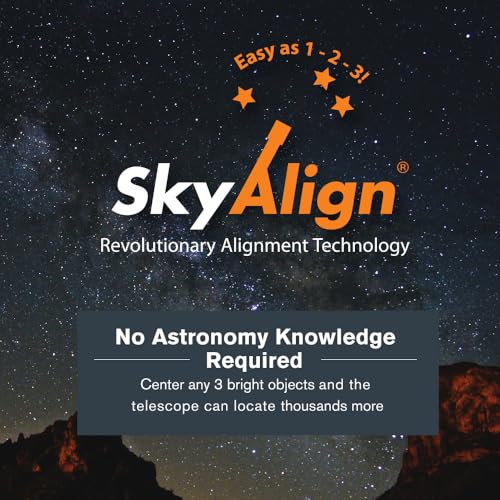
Celestron NexStar 8SE Computerized Telescope – Schmidt-Cassegrain | Fully Automated GoTo Mount with SkyAlign, Large 8" SCT Optics, Visual & Astroimaging Ready, Deep-Sky & Planets, 40k+ Objects




As an Amazon Associate we earn from qualifying purchases. Product prices and availability are accurate as of the date/time indicated.
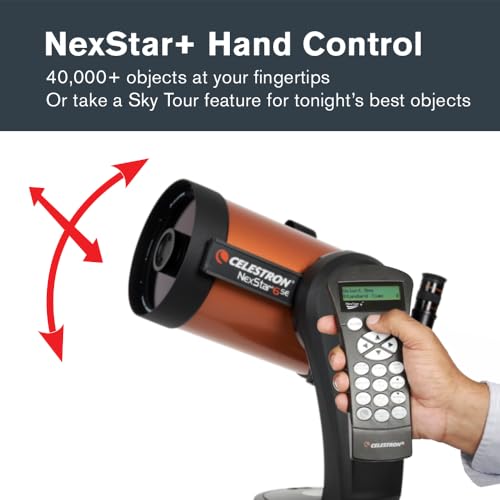
Celestron NexStar 6SE Schmidt-Cassegrain Telescope – Computerized | Fully computerized GoTo mount automatically locates and tracks celestial objects




As an Amazon Associate we earn from qualifying purchases. Product prices and availability are accurate as of the date/time indicated.

Celestron StarSense Explorer LT 114AZ Newtonian Smartphone Guided Telescope | Smartphone App Sky Navigation, Manual Reflector Telescope, Beginner Deep-Sky Telescope, Bright Celestial Views, Portable


As an Amazon Associate we earn from qualifying purchases. Product prices and availability are accurate as of the date/time indicated.
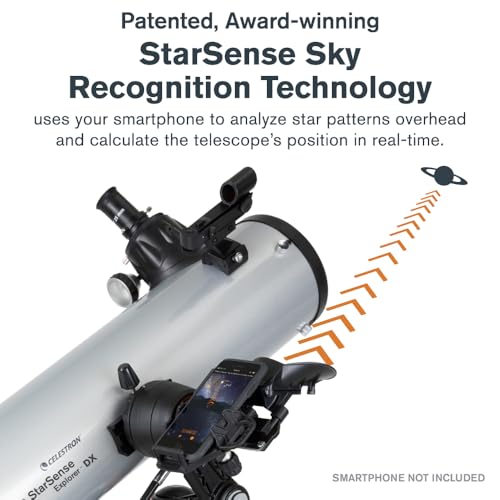
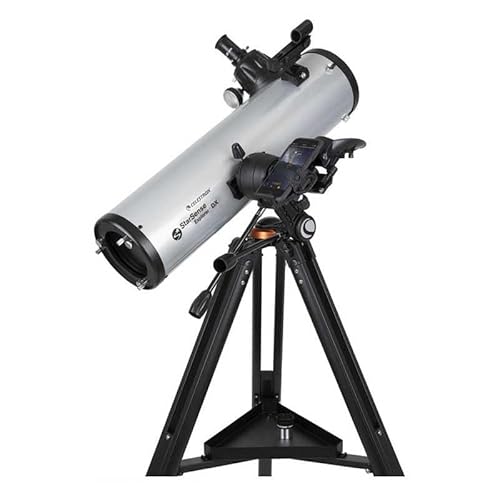
Celestron StarSense Explorer DX 130AZ Smartphone Guided Newtonian Telescope | Smartphone App Sky Navigation, Parabolic Reflector Telescope & Premium Mount, DeepSky Viewing, Perfect for Backyard Astronomy



As an Amazon Associate we earn from qualifying purchases. Product prices and availability are accurate as of the date/time indicated.

Celestron SkyPortal WiFi Module - Smartphone Control Telescope WiFi Adapter | WiFi Telescope Accessory, SkyPortal App for iOS and Android, Simple Setup, Observe Without a Hand Control


As an Amazon Associate we earn from qualifying purchases. Product prices and availability are accurate as of the date/time indicated.

Celestron AstroMaster 130EQ Telescope for Deep-Sky Beginners | Large 130mm Optics, Bright Moon & Deep-Sky Views, Perfect First Telescope, German Equatorial Mount with Easy Manual Controls


As an Amazon Associate we earn from qualifying purchases. Product prices and availability are accurate as of the date/time indicated.
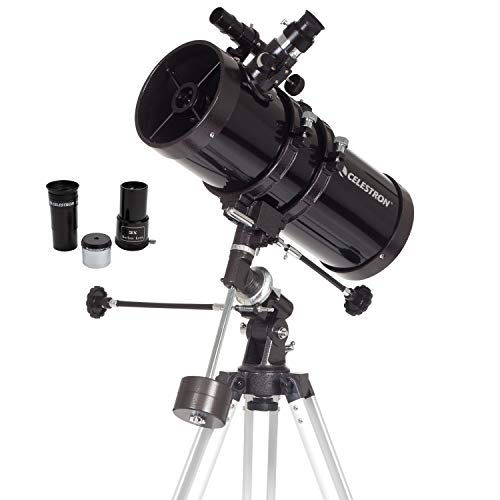
Celestron PowerSeeker 127EQ Reflector Telescope for Home Astronomy | German Equatorial Mount, Bright Views of the Moon, Planets & Deep Sky, Slow-Motion Controls, Stable Tripod, Easy to Use




As an Amazon Associate we earn from qualifying purchases. Product prices and availability are accurate as of the date/time indicated.
| Model | What the title states | Price tier | Best for |
|---|---|---|---|
| NexStar 8SE | Computerized, Schmidt-Cassegrain, GoTo mount with SkyAlign, 8″ optics, visual and astroimaging ready, 40k+ objects | Premium | Buyers who want the larger aperture and automation |
| NexStar 6SE | Schmidt-Cassegrain, computerized GoTo mount that locates and tracks objects | Mid-range | Buyers who want GoTo with a smaller optical tube |
| StarSense Explorer DX 130AZ | Smartphone-guided Newtonian, parabolic reflector, premium mount | Mid-range | Beginners who like an app but want manual control |
| StarSense Explorer LT 114AZ | Smartphone-guided Newtonian, manual, portable | Budget | A low-cost entry with app navigation |
| AstroMaster 130EQ | 130mm optics, German equatorial mount, manual controls | Budget | First scope for people who accept a learning curve |
| PowerSeeker 127EQ | Reflector, German equatorial mount, slow-motion controls | Budget | The lowest-cost route in this set |
| SkyPortal WiFi Module | Smartphone control adapter, not a telescope | Budget | Controlling a compatible scope from a phone |
Tiers are relative to this set of listings only. Prices change, so check the current price on the listing.
Who a NexStar suits, and who should look elsewhere
A GoTo mount makes sense when finding objects is your main frustration. Locating faint targets by hand is a skill that rewards patience, and plenty of beginners give up before they learn it. A computerized mount shortens that stretch by aligning to a few bright stars and then slewing to a chosen target, which suits people with limited free evenings, light-polluted skies where faint star patterns are hard to see, or family members who want to show friends five objects in an hour.
It is less compelling for others:
- Buyers watching their budget. The manual models in this set cost a fraction of the NexStar listings. If you are unsure that the hobby will stick, a cheaper scope and a star chart are a lower-risk start.
- People who want grab-and-go simplicity. A computerized mount means a power source, an alignment routine and more parts to pack. Check the listing for what powers it and what is in the box.
- Anyone who wants serious astrophotography straight away. The 8SE title says “Visual & Astroimaging Ready”, which is a seller claim. In general, long exposures through a telescope on an altitude-azimuth mount have limits, and serious imaging usually needs additional gear and learning. Ask what that phrase means in practice.
- Buyers with limited storage space or mobility. Bigger optics mean a bigger tube. Check the listing for weight and dimensions.
What the titles say, and what they leave out
The 8SE title names the optical design (Schmidt-Cassegrain), the aperture class (8-inch optics), the alignment method (SkyAlign), the object database size (40k+ objects) and the claim that it is ready for visual and imaging use. The 6SE title names the same design and the automatic locate-and-track function. Neither title gives you the following, so you need to find it on the product page or in the manufacturer documentation:
- Focal length, focal ratio and the field of view you get with the included eyepiece.
- Tube and mount weight, and how the pieces break down for transport.
- How the mount is powered and what is included in the package.
- What the hand controller does and whether firmware updates are needed.
- Which eyepieces and accessories come in the box. The 8SE title does not list any, and the amount of included equipment is usually a major reason prices differ.
A general note on the design: Schmidt-Cassegrain scopes fold the light path, which tends to keep the tube compact for its aperture. Whether that matters to you depends on how you plan to carry and store it. Newtonian reflectors, the type named in several other listings here, are generally more open in design and in many cases need occasional collimation, meaning mirror alignment. The manual for each model explains how to do it.
Questions worth answering before you click buy
- How much of the evening do I want to spend on setup, alignment and troubleshooting rather than looking?
- Can I carry the tube and mount from storage to the observing spot on my own?
- Is there an outdoor power plan, such as batteries or an external supply, and what does the manual recommend?
- What eyepieces are included, and will I need to buy more?
- Am I buying mostly for planets and the Moon, or for faint deep-sky targets?
- Does the seller offer a return window if the setup proves too complicated?
The NexStar models in this set
Celestron NexStar 8SE
The 8SE is the headline listing. Its title describes a computerized Schmidt-Cassegrain telescope with a fully automated GoTo mount, SkyAlign, 8-inch optics and a database of more than 40,000 objects. In general, the larger the aperture, the more light the scope gathers, which can make faint targets such as galaxies and nebulae easier to see from a dark site. Planets and the Moon respond well to larger aperture too, although the atmosphere often limits what you see.
The cost of that aperture is size, weight and price. A larger tube takes longer to cool to outside air temperature, which affects image sharpness in the first part of a session. Its title says “ready” for imaging, but a seller phrase is not a guarantee. If you want to photograph the sky, ask a specialist what extra gear you will need.
- Pros: larger aperture class, automated GoTo with a simple alignment routine, large object database.
- Cons: highest price tier in this set, larger and heavier than the smaller scopes, no accessory list in the title.
- Check the listing for: included eyepieces, power requirements, weight, and warranty terms.
- Question to ask: will I actually carry and set up an 8-inch scope often enough to justify it?
Celestron NexStar 6SE
The 6SE gives you the same overall idea (Schmidt-Cassegrain optics on a computerized mount that finds and tracks objects) in a smaller tube with a lower price tier. For many buyers it is the more practical GoTo option because a smaller scope is easier to carry, cools sooner and costs less. You trade some light-gathering power compared with the 8SE, which matters most for faint deep-sky targets, though the Moon, bright planets and many star clusters are still rewarding.
The title is shorter than the 8SE title and does not mention SkyAlign or an object count, so do not assume the two scopes have identical features. Compare the product pages.
- Pros: GoTo automation at a lower price tier than the 8SE, smaller and lighter tube class.
- Cons: smaller aperture, fewer details in the title, still well above the manual scopes.
- Check the listing for: the contents of the box, the hand controller, and the object database size.
- Question to ask: is the gap in price between the 6SE and 8SE worth the extra aperture for my targets?
Cheaper Celestron alternatives to consider
Celestron StarSense Explorer DX 130AZ
This one uses a smartphone app to help you navigate: you place your phone in a dock, and the app guides you to targets while you move the telescope yourself. The title also says it has a parabolic reflector and a premium mount. It is a middle path: much of the benefit of guided finding, with manual operation and a lower price tier than the NexStar scopes. Because it is a Newtonian reflector, expect occasional collimation, which the manual should explain.
- Pros: app-guided navigation, Newtonian design with a 130AZ class aperture, lower price tier.
- Cons: relies on a compatible phone, manual pushing, less automated than GoTo.
Celestron StarSense Explorer LT 114AZ
The LT is the budget version of the same idea. The title lists a manual reflector with smartphone sky navigation and calls it portable. It is the least expensive way into app-guided observing in this group, but it uses a smaller aperture than the DX, and a lighter mount may be less steady at high magnification. It suits someone who wants to see whether stargazing sticks before spending more.
- Pros: low price tier, portable, app guidance.
- Cons: smaller aperture, lighter mount, phone required.
Celestron AstroMaster 130EQ
The title advertises 130mm optics, a German equatorial mount and manual controls, aimed at beginners who want to see the Moon and deep-sky objects. An equatorial mount follows the sky’s rotation using one adjustment axis once set up, but it takes a little practice to understand, and it adds counterweights and setup steps. It is a good fit for a patient learner and a poor fit for someone who wants automatic pointing.
- Pros: 130mm class aperture, equatorial mount, low price tier.
- Cons: steeper learning curve, manual finding, more parts to set up.
Celestron PowerSeeker 127EQ
The lowest-cost telescope in this group is a reflector on a German equatorial mount with slow-motion controls. The title is generous in its claims (“bright views of the Moon, planets and deep sky”), and it is wise to temper expectations at this price. A budget mount can wobble when you touch the focuser, which makes high magnification frustrating. It can still be a fine starter if you treat it as a way to learn the sky, not as a long-term instrument.
- Pros: lowest price tier, easy to try the hobby, slow-motion controls.
- Cons: mount stability may limit it, manual aiming, modest build for the price.
Celestron SkyPortal WiFi Module
This is not a telescope. The title describes a WiFi adapter that lets a smartphone control a telescope via the SkyPortal app, for iOS and Android. It matters because buyers sometimes put it in the cart as if it were a scope. The title does not say which telescopes it works with, so check the compatibility list before buying, especially if you are considering it with a NexStar SE model.
Mistakes first-time telescope buyers tend to make
Buyer reviews of telescopes at every price point tend to circle the same disappointments, and most of them come from expectations rather than from the hardware itself. A few to avoid:
- Judging by magnification claims. Boxes and titles love big numbers, but the useful magnification is limited by aperture and by the steadiness of the air. A stable mount and a good low-power eyepiece are worth more than a “600x” promise.
- Expecting colourful space photographs through the eyepiece. Deep-sky objects usually appear as faint grey smudges to the eye, even in large scopes. Planets and the Moon are the reliable crowd-pleasers.
- Ignoring the mount. A shaky mount makes any tube frustrating. If buyer reviews of a model repeatedly mention wobble, take that seriously.
- Buying a GoTo scope and skipping the basics. Alignment works best when you can recognise a few bright stars and keep the mount level. Spend an evening learning the sky with a free chart or app first.
- Forgetting the observing site. A scope that never leaves a bright, cramped balcony will disappoint however good the optics are. Think about where you will actually set it up.
A buying checklist and a worked example
| Concept | What to look for | Why it matters |
|---|---|---|
| Aperture | The diameter of the main optics | Larger aperture gathers more light, but adds size and weight |
| Mount type | GoTo, manual alt-az or equatorial | Decides how much effort finding and tracking takes |
| Included eyepieces | Number and focal lengths | Determines the magnifications you can use on day one |
| Power | What the mount needs and what is supplied | A GoTo mount without power is only a manual scope |
| Portability | Weight and dimensions of the tube and mount | The best scope is the one you actually carry out |
Worked example: GoTo or manual?
The figures below are assumptions for illustration, not measurements. Suppose you have about two hours on a clear night and want to find eight targets. A beginner star-hopping by hand might average 8 to 10 minutes per target, including misses: roughly 64 to 80 minutes in total. A computerized mount might need about 10 minutes for setup and alignment, then perhaps 1 to 2 minutes to slew to and centre each object, which is about 18 to 26 minutes in all. That leaves around an hour more at the eyepiece.
If you only want to look at the Moon and a couple of bright planets, the scenario changes: both are easy to find by eye, and a GoTo mount saves little. The decision then comes down to whether faint targets are your goal, how much you value the learning process, and what you are comfortable spending.
A safety note applies to every telescope in this article: never point any telescope or finder at the Sun without a proper solar filter made for that purpose and installed as the manufacturer instructs. Even a brief glance can damage eyesight permanently. Keep young children supervised around the tube and heavy mount parts, and follow the manufacturer’s instructions for batteries and power supplies.
Verdict
If you want automatic finding and are prepared to pay for it, the NexStar 6SE is the more practical choice for most people, and the 8SE is the one to buy if you already know you want the larger aperture and will carry it. If you are testing your interest, the StarSense Explorer models give a guided experience for much less, and the AstroMaster and PowerSeeker are cheaper still, with a steeper learning curve. Whatever you choose, look at the box contents, the power needs and the return terms before you commit.
Related guides
- Black Friday Cyber Monday Health Equipment Deals
- Hanging Purse Organizer For Small Closet
- Closet Organizers For Small Closets
Frequently asked questions
Is the Celestron NexStar 8SE worth it for a beginner?
It can be, if you want automated finding and are comfortable with a larger, heavier setup and a premium price. Many beginners would be just as happy with a smaller computerized scope or a guided manual one. The best guide is honesty about how often you will carry and set it up. If you are unsure, start with a cheaper listing in this set and upgrade once you know what you enjoy observing.
What is the difference between the NexStar 6SE and 8SE?
The titles describe both as computerized Schmidt-Cassegrain telescopes with GoTo mounts. The 8SE lists 8-inch optics, SkyAlign and a 40k+ object database, while the 6SE title is shorter and mentions automatic locating and tracking. In general, the 8SE gathers more light, while the 6SE is smaller and more affordable. Check the product pages for tube size, included eyepieces and what comes in the box, because those details often explain more of the price gap than the headline numbers do.
Do NexStar telescopes need collimation?
Collimation means aligning the optics. In general, Newtonian reflectors need it from time to time, and other designs can also need adjustment, though less often. The right procedure depends on the model, so follow the manual for yours. If the idea worries you, ask the seller what maintenance to expect before buying, and read the maintenance section of the manual so there are no surprises later.
Can I take astrophotos with a NexStar 8SE?
The title says “Visual & Astroimaging Ready”, but that is a seller claim, not a promise of results. In general, imaging through a telescope on an altitude-azimuth mount is limited for long exposures, and extra accessories are usually required. Ask for a clear list of what you need for the kind of photos you want, set realistic expectations, and consider starting with the Moon and bright planets, which are the most forgiving targets.
Is a smartphone-guided scope a good alternative?
For many beginners, yes. The StarSense Explorer listings use a phone app to show you where to point, and you move the telescope by hand. They cost less than the NexStar scopes and have fewer parts to set up. The trade-off is that you do the moving, and you need a compatible phone. Check compatibility first, and make sure the phone you own is supported by the app.
Is it safe to look at the Sun through these telescopes?
Never look at the Sun through any telescope, finder or binoculars without a certified solar filter designed for that equipment and fitted exactly as the manufacturer describes. Unfiltered sunlight can cause permanent eye damage in seconds. If you want to observe the Sun, buy the proper filter first, and keep children supervised whenever the scope is set up outdoors.