For most households, a 12-volt cordless rotary tool from an established platform such as Dremel or Milwaukee covers engraving, sanding, polishing and light cutting. Buyers who already own a larger battery system may prefer a rotary tool that shares those batteries, while people who only tinker a few times a year can choose a basic, lower-cost cordless model and still finish most small jobs.
Our top picks

As an Amazon Associate we earn from qualifying purchases at no extra cost to you.
Cordless Rotary Tools at a Glance
| Model line | Best for | Key stated details | Limits |
|---|---|---|---|
| Dremel 8240 (12V) | Hobbyists and general home use | The maker lists variable speed up to roughly 35,000 RPM, a lithium-ion battery and a kit with accessories | Smaller battery than corded power, so long grinding sessions need a spare pack |
| Dremel 8260 / 8250 line | Frequent users wanting more runtime or a brushless motor | The maker positions these above the 8220 and 8240 with longer-life motors and extra accessories | Costs more; accessories matter as much as the tool |
| Milwaukee M12 rotary tool | Trades and homeowners already using M12 batteries | The maker lists a variable speed range up to about 32,000 RPM and compatibility with M12 batteries | Often sold bare, so you may need to buy a battery and charger separately |
| Ryobi One+ cordless rotary tool | Budget-minded owners of the 18V One+ system | Runs on shared 18V One+ batteries, according to the maker | Heavier in the hand than a 12V tool; accessory ecosystem is smaller |
| Compact USB-charged mini tools | Crafts, jewelry, model making | Typically lighter and pen-like, charged by cable | Lower torque, not suited for metal cutting or heavy grinding |
How Cordless Rotary Tools Differ From Corded Ones
A rotary tool spins small bits and discs at high speed. A corded model gives unlimited runtime and steady power, but the cable can drag across delicate work. A cordless model trades some sustained power for freedom of movement, which suits detail carving, sharpening a mower blade in the garage or polishing a piece you cannot easily bring to a bench.
Reviewers who compare the two types generally agree that modern lithium-ion cordless models are strong enough for the typical home list: cleaning rust, deburring metal edges, grinding small tile edges, sanding wood details, and cutting thin plastic. For heavy, extended cutting of steel or masonry, a corded unit or a different tool category, such as a small angle grinder, is usually the better choice.
What to Look For
Speed range and control
Variable speed matters more than top speed. Low speeds protect plastics and soft woods from melting or scorching, and high speeds help with metal and glass engraving. Look for a dial or trigger that lets you set speed accurately, plus a model that holds that speed under load. Makers publish a speed range, usually in the tens of thousands of revolutions per minute, and that figure applies with no load.
Battery platform and runtime
The battery is the largest cost over time. A 12V tool such as the Dremel 8240 or Milwaukee M12 model stays light and balanced. A tool that uses a bigger shared battery, like the Ryobi One+ line, can run longer and saves money if you already own packs, but the extra weight tires the wrist during fine work. Kits that include two batteries are useful because you can charge one while you work with the other.
Collet and accessory compatibility
Most rotary tools accept shank sizes of about 1/8 inch with the right collet. Dremel-branded accessories are widely sold and fit many other brands, though fit is not guaranteed across every brand. Before buying, confirm which collet sizes come with the tool and whether a keyless chuck is included or sold separately. A keyless chuck lets you swap bits quickly but can slip with larger shanks.
Ergonomics and noise
Pen-style grips give precise control; barrel grips feel steadier for sanding and grinding. A lock for the shaft or a one-button spindle lock makes bit changes easier. Rotary tools are loud at high speed and throw fine dust, so eye protection and a dust mask are part of the purchase, not optional extras.
Budget Tiers
Budget
Entry cordless models and USB-charged mini tools cover simple craft and light home chores. Expect lower torque, shorter runtime and a thinner accessory set. They suit occasional users who want to engrave a name on a tool, smooth a 3D print or polish small jewelry pieces.
Mid-range
This is where the Dremel 8220 and 8240 families, Ryobi One+ and other shared-battery offerings sit. These tools offer enough runtime for a full project, standard accessory support, and a practical kit case. For many buyers this tier covers every job they will ever do.
Premium
Brushless models such as the higher-end Dremel line and Milwaukee M12 versions aim at frequent users who want longer motor life, more power and better runtime per charge. The premium is easiest to justify if you already own the matching battery platform.
Which Tool Fits Which Job
| Pick this if you … | Suggested direction |
|---|---|
| Want one tool for hobby projects, engraving and sanding | Dremel 8240 kit with included accessories |
| Already own Milwaukee M12 batteries | Milwaukee M12 rotary tool, bought bare to save duplication |
| Already own Ryobi One+ 18V batteries | Ryobi One+ cordless rotary tool |
| Do very fine detail work, jewelry or models | A light, pen-style mini tool with low speed control |
| Cut or grind metal for extended periods | Corded rotary tool or a small angle grinder |
| Use the tool daily on job sites | Brushless premium option on your existing battery platform |
Safety and Care Notes
Always follow the manufacturer’s manual. Wear safety glasses, because discs and bits can shatter. Cutting wheels are thin and brittle, so use them straight on, never bend them sideways, and replace cracked ones. Keep loose clothing and long hair clear of the spinning shaft. Remove the battery before changing a bit or accessory to prevent accidental start.
Lithium-ion batteries should be charged with the charger supplied by the maker and stored away from heat. Do not use a damaged or swollen pack. Clean vents regularly with a soft brush, because built-up dust reduces cooling and shortens motor life.
Common Accessories Worth Having
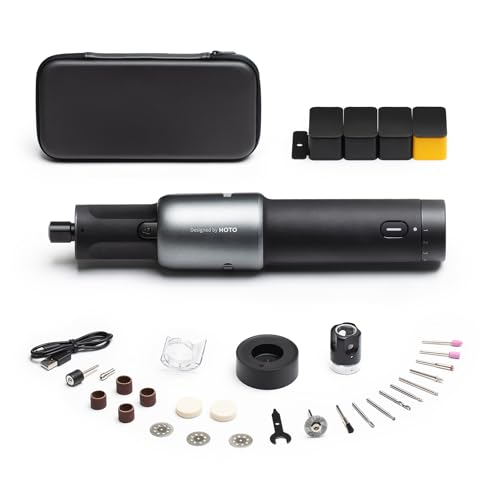
Most kits include a handful of sanding drums, cutting discs, grinding stones and polishing tips. Buyers frequently add a flex shaft for fine control, a router base for edge work, and a small set of diamond bits for glass or stone. These are sold by the maker and by third parties. Match the shank diameter to the collet, and do not run an accessory above its rated maximum speed, which is printed on the packaging.
Common Projects and the Right Accessory
Matching the accessory to the material is the part of rotary tool use that beginners most often get wrong. Sanding drums and flap wheels suit wood and soft metals, while felt polishing tips and compound bring shine to brass, silver and plastic. Small grinding stones sharpen garden shears, chisels and mower blades, but the tool should be held steady and fed lightly to avoid overheating the edge. Engraving bits mark metal, glass and hard plastic and reward slow, controlled passes rather than pressure.
Reinforced cut-off wheels are the most hazardous accessory, because the thin discs can shatter if bent or jammed. Makers advise wearing eye protection, holding the tool with both hands where possible, and never using a wheel that is cracked or chipped. For delicate crafts such as model making, a lower speed and a light touch usually give cleaner results than speed alone.
Storage, Charging and Long-Term Care
A tool kept in its case with the accessories sorted is far more likely to be used than one tossed in a drawer. Keep the case dry and away from heat. Charge the battery before a long project instead of mid-job when possible, and avoid leaving a pack on the charger for weeks unless the maker’s manual says it is fine. If the tool will sit unused for months, many makers advise storing the battery partly charged in a cool, dry place.
Brush dust from the vents and collet after each session. A clogged collet nut can cause bits to slip or wobble, which reduces accuracy and wears bits faster. Replace worn collets rather than overtightening them, and consult the maker’s service guidance if the tool becomes unusually hot, noisy or vibrates.
Alternatives to Consider
- Corded rotary tool: best for steady, long grinding or cutting where runtime matters more than portability.
- Small cordless angle grinder: better suited to cutting bolts, grinding welds or heavy rust removal than a rotary tool.
- Oscillating multi-tool: useful when the job is flush-cutting trim or scraping rather than spinning a bit.
- Micro-motor craft tools: popular for nail, jewelry and model work, with very small bits and light weight.
Frequently Asked Questions
Is a cordless rotary tool powerful enough for metal?
Yes for light work such as deburring, rust removal, sharpening and cutting thin metal with a reinforced cut-off wheel. Thick steel or long cuts are better handled by a corded rotary tool or an angle grinder. Always match the accessory to the material and wear eye protection.
How long does the battery last?
Runtime depends on the battery size, the speed setting and the load. Makers rarely promise exact minutes, and reviewers describe typical hobby sessions as comfortable on a single charge but heavy grinding as draining. A second battery is a practical safeguard if you plan longer projects.
Can I use Dremel accessories on other brands?
Many accessories share a common shank size, so they often fit other brands’ collets. Check the collet size and the accessory’s rated maximum speed before use, because mismatches can cause slipping or breakage.
What is the difference between brushed and brushless motors?
Brushless motors usually run cooler, last longer and make better use of the battery than brushed ones. The trade-off is a higher purchase cost. For occasional use a brushed motor is generally sufficient.
Do I need a keyless chuck?
Not strictly. A standard collet set holds bits more securely, while a keyless chuck is faster when you swap bits constantly. Some users keep both so they can match the job.
Is a rotary tool safe for beginners?
It can be, with basic precautions: eye and dust protection, a firm grip, the battery removed during bit changes, and speeds set according to the material. Beginners should practice on scrap before working on a finished piece, and read the maker’s manual first.