
Key takeaways
- Budget: A daily rental of a drum or planetary unit with an edger, plus a respirator and abrasives. Total cost depends on room size and number of grits.
- Mid-range: A quality handheld belt or large random orbital sander bought for ongoing projects, or a longer rental with extraction.
- Premium: Professional-grade Lägler, Bona, Pallmann or American Sanders machines, normally bought by contractors or hired as a service.
For a first-time refinisher, a rented orbital or planetary-style floor sander is the safer choice, a drum sander suits fast leveling of worn or uneven boards for people who can control it, and an edger is needed alongside either one. Owners who only want to refresh a small room or smooth a finish between coats are usually better served by a large random orbital sander or a belt sander than by a full-size floor machine. This guide sorts the main machine types and brands by who they suit, with the details makers and reviewers state.
Our top picks
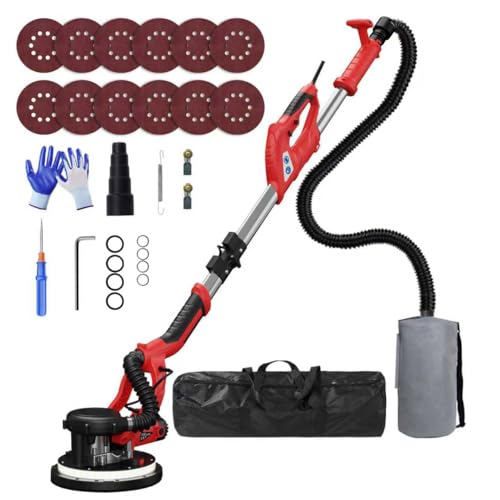

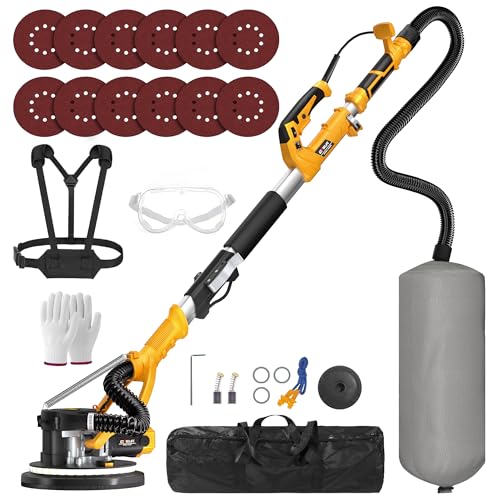

As an Amazon Associate we earn from qualifying purchases at no extra cost to you.
Floor sander types in plain terms
Three machine families cover most floor work. A drum sander has a rotating cylinder wrapped in abrasive belt and removes wood quickly; it is the traditional professional tool for stripping old finish and flattening boards. An orbital (or random orbital) floor sander uses a flat rectangular or round pad that moves in small orbits and cuts more slowly but is much more forgiving. A planetary sander, such as the U-Sand style that rental guides mention for first-timers, uses several spinning discs on a rotating head. Because all three machines are too large to reach walls, an edger handles the perimeter, and a detail or corner sander or hand scraper handles what is left.
Sources including Bob Vila and flooring-rental guides stress the same point: a drum sander can gouge the floor if it stands still or is pressed unevenly, while orbital machines trade speed for safety. Professionals typically combine all of these in sequence.
At a glance
| Option | Type | Best for | Key points as stated by makers or reviewers | Limits |
|---|---|---|---|---|
| Lägler (professional lines) | Drum and orbital | Contractors and frequent refinishers | Described by trade guides as a premium tier of floor sanding equipment | Rental or purchase cost sits at the top of the range |
| Bona (DCS system and Power Drive) | Orbital with dust extraction; drum | Low-dust refinishing | The maker pairs its Dust Care System sanders with a dedicated extraction unit | Needs the extractor and matching abrasives |
| American Sanders | Drum and edgers | Rental fleets and pros | Named by trade guides among the common professional brands | Drum machines need practice |
| Pallmann | Orbital and drum | Professional finishing | Named by trade guides among the professional brands | Professional-level pricing |
| Clarke and similar rental units | Drum/orbital | One-off home projects | Frequently seen at rental counters | Condition varies by rental store |
| U-Sand style planetary | Planetary disc | First-time refinishers | Guides suggest it as a beginner-friendly rental | Slower on deep damage |
| Makita 9403 belt sander | Handheld belt | Heavy removal on small areas | Cited by sander guides for aggressive handheld stripping | Not a whole-floor tool |
| Bosch GET75-6N / Festool ETS 125 | Random orbital handheld | Final smoothing and touch-up | Suggested as follow-up finishing tools | Too small to do a whole floor |
Drum sanders: fast, powerful, unforgiving
If a floor is cupped, lipped or covered with several layers of old finish, a drum sander is the machine that moves through it. Trade guides describe drum sanders as the aggressive option that levels and strips quickly. The cost of that speed is risk: stopping with the drum engaged, tilting the machine or sanding across the grain can leave deep marks that need extra passes to remove. Professionals work with the grain, lower the drum gradually and keep the machine moving.
For a one-time home job, most guides suggest hiring a professional or renting a machine and practicing on a closet floor first. Rental drum machines tend to come from the established brands; one rental source cited a wide spread in daily rates between Lägler, Bona and Clarke, so ask what is included, such as belts, edger, and a dust bag.
Orbital and planetary floor sanders: the forgiving path
Orbital machines remove material slowly and leave a more uniform, scratch-free surface, according to flooring comparison guides. That makes them the lower-risk option for owners with thick, solid hardwood, light wear and a screen-and-recoat type of finish. Bona’s Dust Care System approach, for example, is built around an orbital sander paired with a dust extractor, and the maker markets it for low-dust refinishing. Planetary sanders suit first-timers, though they cut deep scratches or old thick finish more slowly.
Edgers and detail sanders
An edger is a disc sander you tilt and sweep along baseboards. Rental counters typically offer one with the main machine. Sanding the edge to match the main field takes patience; the transition lines are where many amateur jobs show. Corners and stairs need a detail sander, a scraper or hand sanding. If you only have a few edges, a hand-held random orbital sander can double as the edger.
Handheld options for small jobs
Bob Vila’s 2026 list for DIY readers favors handheld tools: the Makita 4×24 belt sander as the best overall and a DeWalt cordless random orbital for versatility. Another guide pairs a Makita 9403 belt sander for heavy removal with a large random orbital such as the Bosch GET75-6N or Festool ETS 125 for smoothing. These tools make sense for a small landing, a hallway, stairs or a single patch repair. They are slow for a big room and can leave unevenness unless you work systematically, but they remove the risk and cost of a full-size rental.
Budget tiers
- Budget: A daily rental of a drum or planetary unit with an edger, plus a respirator and abrasives. Total cost depends on room size and number of grits.
- Mid-range: A quality handheld belt or large random orbital sander bought for ongoing projects, or a longer rental with extraction.
- Premium: Professional-grade Lägler, Bona, Pallmann or American Sanders machines, normally bought by contractors or hired as a service.
Pick X if…
| If your situation is… | Pick | Why |
|---|---|---|
| First time, solid hardwood, one or two rooms | Rented planetary or orbital sander plus edger | Forgiving; lower risk of gouges |
| Deeply worn, uneven or heavily coated floors | Professional drum sanding | Removes material fastest, but needs skill |
| Dust is a big concern indoors | Bona DCS style orbital with extractor | Maker designed it around dust extraction |
| Just a hallway, stairs or a patch | Handheld belt or large random orbital | Easier to control and store |
| Floor is engineered or thin veneer | Orbital or light touch only; ask the flooring maker | Wear layer may not survive aggressive sanding |
| You refinish floors regularly | Lägler, American Sanders, Pallmann or Bona professional line | Built for repeat commercial use |
Safety, fit and prep notes
- Check the floor first. Engineered boards have a limited wear layer, and the maker’s guidance on how many sandings it allows should be followed. Thin floors may not be suitable for any aggressive sanding.
- Nails and staples. Set protruding nails below the surface and remove staples; they tear belts and can damage drums.
- Old finishes. Floors in older homes may carry paint or finish with lead; test and follow local rules before sanding, and consider a certified professional.
- Dust and fire. Fine wood dust irritates lungs and can ignite. Wear a respirator rated for fine dust, use extraction where possible, and dispose of dust and rags following the finish maker’s instructions to avoid spontaneous combustion.
- Electrical load. Large sanders draw significant current, so use a properly rated outlet and cord, and ask an electrician if your circuit is in doubt.
- Grit sequence. Work from coarse to fine in steps, vacuum between passes and do not skip grits.
Alternatives to sanding
A screen-and-recoat refresh scuffs the existing finish and adds a new coat without removing it, which suits floors with light surface wear. Chemical abrasion-free “refresh” systems exist, though results depend on the existing finish. For floors beyond repair, replacement or a professional assessment may cost less than repeated attempts to sand. Hiring a flooring professional is also reasonable for valuable or historic floors.
Frequently Asked Questions
Is it better to rent or buy a floor sander?
For a single project, renting is almost always more practical, since full-size machines are expensive to buy and bulky to store. Buying only makes sense for contractors or people who refinish floors often. If you rent, ask the store for a quick demonstration and confirm what accessories are included.
Can a beginner use a drum sander?
Many guides advise caution. A drum sander removes material quickly, and leaving it in one spot or tilting it can gouge the wood. Beginners typically do better with an orbital or planetary machine, or by practicing in a closet before starting the main room.
How many times can a hardwood floor be sanded?
It depends on the board thickness and the wear layer. Solid hardwood can often be refinished several times over its life, while engineered floors may allow only a few light sandings or none. Check the flooring maker’s guidance or ask a flooring professional.
What grits should I use?
A common progression runs from a coarse grit for removing finish, to medium, then to a fine grit before the finish coat. The exact numbers depend on the floor and the machine, so follow the abrasive and finish makers’ recommendations. Skipping steps leaves scratches that show through stain.
Do I need an edger as well?
Yes, in most cases. Floor sanders cannot reach baseboards, so an edger or a handheld sander does the perimeter. Rental stores usually offer one in a package with the main machine.
How do I control dust?
Seal doorways and vents, use machines with a dust bag or extraction unit, and vacuum between passes. Wear a fine-dust respirator and keep ignition sources away. Dispose of dust and finish-soaked rags as the finish maker instructs.





