Key takeaways
- Lock casters before cutting and make sure the stand is level.
- Attach the saw using every mounting point the stand provides.
- Keep the blade guard, riving knife and push sticks in use per the saw manual.
- Never allow the stand to flex or rock while cutting.
- Keep the area clear of cords and sawdust to avoid slips.
- Wear eye and ear protection and a dust mask.
If you own a compact jobsite table saw from DeWalt, Bosch, Skil or Ryobi, the safest and simplest choice is the maker’s own rolling or folding stand; if your saw has no matching stand, a universal tool stand with adjustable brackets is the next best option. For a permanent shop, a fixed mobile base or cabinet stand gives more stability than a lightweight folding stand.
Our top picks
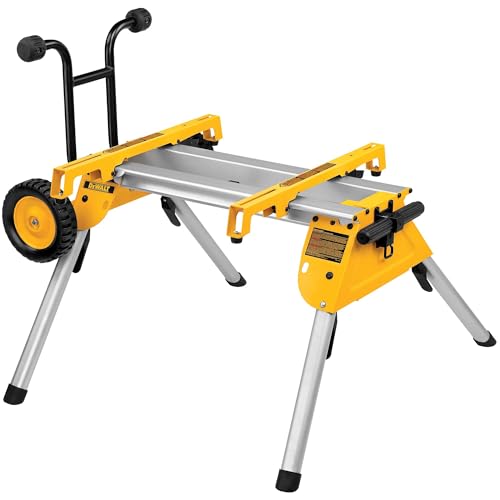

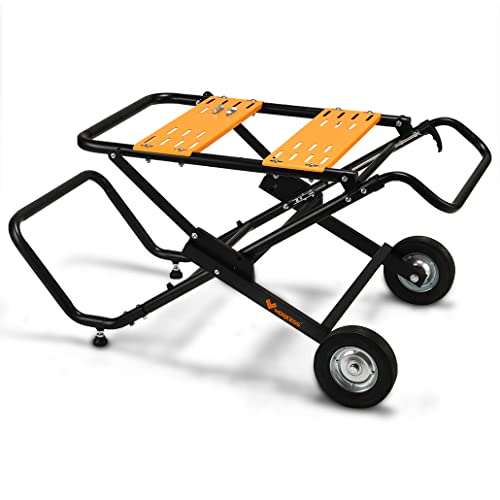

As an Amazon Associate we earn from qualifying purchases at no extra cost to you.
At a Glance
| Stand type | Examples | Best for | Limits |
|---|---|---|---|
| Brand-matched rolling stand | DeWalt DWE7400 series stand, Bosch GTA series stands | Owners of that saw | Fit applies to a narrow model range |
| Universal folding tool stand | Delta, Hercules, Ryobi, Skil and similar | Light jobsite saws, occasional use | Check capacity and mount range |
| Mobile base for heavier saws | Shop Fox, Delta, Bora, Rockler | Cabinet and hybrid saws | Sized per saw footprint |
| Fixed workbench or cabinet | Shop-built or purchased | Permanent shop, outfeed support | Not portable |
Compatibility, weight limit and footprint vary a lot between models and revisions. Confirm the stand lists your saw explicitly, or that your saw’s base falls within the stand’s mount range, using the maker’s current product page.
What to Look For
Matching your saw
Jobsite table saws have a wide range of base patterns. DeWalt’s folding saws, for example, are designed to mate with a specific rolling stand. Using a non-matched stand can lead to loose fits and an unsafe setup, so follow the saw maker’s guidance.
Weight capacity
Portable table saws commonly weigh a moderate amount, and heavier hybrid and cabinet saws weigh much more. Compare the saw weight with the stand’s stated rating, with margin for the work being pushed across it.
Stability and wheel design
A table saw pushes and pulls the stand with each cut. Wide stances, locking casters and large pneumatic wheels all help. Folding stands trade some of this stability for portability.
Height
The working height should allow you to push material comfortably. Many stands have a fixed height; some have adjustable legs. A comfortable height places the saw table about at your hip level, according to common woodworking advice.
Support and outfeed
Long boards need outfeed support behind the saw. Roller stands, folding outfeed tables, or a dedicated outfeed table improve safety and accuracy.
Types Explained
Brand-matched rolling stands
These are designed by the saw maker for a specific saw. They often fold with the saw attached and roll like a hand truck. DeWalt, Bosch and Skil all offer this approach for their jobsite saws. Pricing sits in the mid-range to premium tier.
Universal tool stands
Universal stands use adjustable brackets to hold various benchtop tools including table saws, planers and miter saws. They are versatile, but weight limits and bracket reach need checking. Reviewers often point out that universal stands can feel less rigid than brand-matched ones.
Mobile bases
Bases are frames with casters that lift a heavy stationary saw so it can be rolled. Many workshops use them for cabinet saws. They do not provide a table; they are strictly mobility aids.
Fixed stands and benches
A permanent bench built around the saw can include storage and infeed and outfeed support. It is the steadiest option and common in home shops.
Safety and Setup
- Lock casters before cutting and make sure the stand is level.
- Attach the saw using every mounting point the stand provides.
- Keep the blade guard, riving knife and push sticks in use per the saw manual.
- Never allow the stand to flex or rock while cutting.
- Keep the area clear of cords and sawdust to avoid slips.
- Wear eye and ear protection and a dust mask.
Budget Tiers
| Tier | Typical choice | Trade-off |
|---|---|---|
| Budget | Universal folding stand | Lower rigidity, check capacity |
| Mid-range | Brand-matched folding stand | Fits only that saw family |
| Premium | Heavy mobile base or custom cabinet stand | Cost and space |
Pick One If… Decision Table
| Your situation | Best fit |
|---|---|
| Own a DeWalt or Bosch jobsite saw | The maker’s matching stand |
| Mixed tools in small garage | Universal folding stand |
| Cabinet or hybrid saw | Mobile base sized for the saw |
| Permanent shop, long stock | Fixed bench with outfeed table |
| Frequent transport | Folding wheeled stand |
Alternatives
- Workbench with a cut-out: a shop-built station that holds the saw level with the benchtop.
- Folding sawhorses: only for light, small saws, and only if the saw maker allows it.
- Roller stands and outfeed tables: add-ons that support long stock behind the saw.
- Multi-function workstations: shared stand for several tools.
Fitting the Stand to Your Workflow
Think about where the saw lives. If it travels between a garage and a driveway or a job site, a folding stand that rolls with the saw attached saves time and your back. If it lives in one corner of a shop, a sturdy fixed base or bench is better, because stability matters more than portability. Some woodworkers keep a jobsite saw on a folding stand and add a roll-away outfeed table, giving them a compact setup that can still handle sheet goods.
Consider dust collection as well. A closed-base stand can make dust port connections easier, while open frames let dust fall onto the floor. Connect a vacuum to the saw’s dust port only if the manual allows, and keep hoses clear of the blade path. Cord management also matters; run the power cord so that it cannot be caught by moving material.
Assembly and tune-up
Assemble the stand on a flat surface and tighten every fastener to the maker’s instructions. After mounting the saw, check the blade for parallel alignment to the miter slot, as the manual describes, since moving a saw can disturb it. Re-tighten bolts after the first few uses, as they may settle.
Space and ergonomics
Leave enough room in front for feeding material and behind for outfeed. Standing on a rubber mat reduces fatigue. Good lighting at the cutting area is another simple improvement that helps with accuracy and safety.
Resale and expansion
Brand-matched stands tend to stay useful if you keep buying within one tool platform, while universal stands move easily from one tool to another. Pick the approach that matches your plans for the next few years of tool buying.
Common Buying Mistakes
- Buying a stand before choosing the saw: the saw determines the base pattern, so decide it first.
- Underestimating weight: hybrid and cabinet saws far exceed the capacity of light folding stands.
- Skipping outfeed support: long stock tips off the table and can bind the blade.
- Not locking casters: a saw that rolls during a cut is a serious hazard.
- Using a stand on a slope: a tilted base changes how the saw behaves under load.
Look for owner reports about stand and saw pairings, since small bracket mismatches only show up in use. If you are unsure, contact the stand maker’s support with your saw model and ask whether it is supported.
Frequently Asked Questions
Can I put any table saw on any stand?
No. Base patterns and weights differ. Use the saw maker’s matched stand where available, or a universal stand whose bracket range and load rating clearly cover your saw.
Is a stand necessary for a jobsite table saw?
Not strictly, since many are used on a bench. But a stand sets a comfortable working height and gives mobility and storage, which many users prefer.
How do I stop a folding stand from wobbling?
Set it on firm, level ground, extend legs fully, lock casters and make sure all mounting points are tightened. If wobble persists, a heavier or wider stand may be a better fit.
What height should the saw table be?
Most woodworking guides suggest roughly hip height, so you can push material with good posture. Individual comfort varies.
Do I need outfeed support?
Yes for long boards and sheet goods. Without it, material can tip off the saw table and bind the blade, which is hazardous.
Can I use a mobile base for a cabinet saw?
Many woodworkers do, using a base rated above the saw weight. Follow the saw and base manuals, and lock the casters before cutting.