Key takeaways
- Inspect the ladder before every use, including locks, rungs, and feet.
- Do not exceed the duty rating, and include tools in your weight.
- Keep three points of contact and do not overreach.
- Do not use metal ladders near power lines or electrical work.
- Set the ladder on firm, level ground and follow the maker’s angle guidance for extension use.
A telescoping ladder suits homeowners who need occasional reach for gutters, bulbs, attic hatches, and painting but have little storage space, while a multi-position articulating ladder suits people who want one ladder for stairs, scaffolding, and extension use. Pick by working height, duty rating, weight, and how the rungs lock, not by looks.
Our top picks


As an Amazon Associate we earn from qualifying purchases at no extra cost to you.
Telescoping Ladders at a Glance
| Type | Examples | Best for | Limits |
|---|---|---|---|
| True telescoping, lock by the foot | Xtend+Climb Home, Pro, Contractor series | Tight storage, RV, home use, adjustable height | Maker says home models differ in duty rating from pro models; check the label |
| Telescoping extension | Werner telescoping ladders | Trusted ladder brand, wide range of heights | Fewer features than multi-position ladders |
| Telescoping multi-position | Little Giant Velocity and similar | One ladder for stairs, A-frame, and extension | Heavier and bulkier when collapsed |
| Budget telescoping ladders | Generic brands | Very occasional light use | Lock quality and duty rating vary widely |
The Xtend+Climb site describes three categories (Home, Pro, Contractor) and a lock-by-the-foot design. Exact weights and ratings vary by model, so read the rating label on the specific ladder.
What to Look For
Duty rating
Ladders carry a duty rating that states the maximum load, including the person, tools, and materials. Choose a rating above your total working weight. Household-use ladders have lower ratings than industrial-use ladders, and the ladder should be used within its label limits.
Working height versus ladder height
Maximum extended length is not the height you can safely reach. Standing on the top rungs is not intended, so the safe working height is lower than the extended length. Follow the labels on where to stand.
Locking mechanism
Telescoping ladders rely on locks at each rung or section. Look for clear indicators that the lock has engaged, and test every lock before climbing. Reviewers of telescoping ladders commonly point to lock quality and pinch points when collapsing as top concerns.
Weight and material
Aluminum is common because it is light. Stronger duty ratings may increase weight. Fiberglass is used for ladders near electrical work, but telescoping models are typically aluminum, so do not use them near power lines or live electrical equipment.
Feet and stability
Wide, non-slip feet matter on hard surfaces. Some models include stabilizer bars or pivoting feet. Use only on firm, level ground.
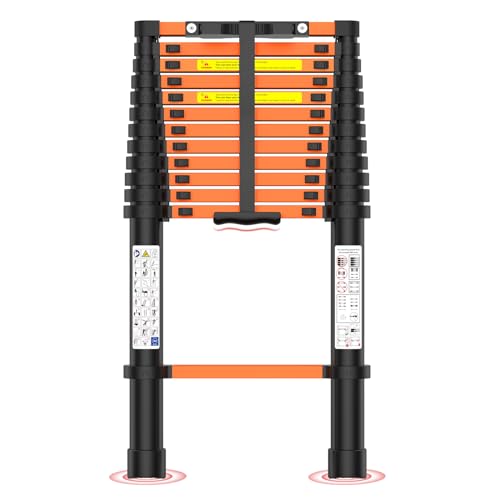
Xtend+Climb: Best Compact Option
The maker markets lock-by-the-foot design, meaning you can set intermediate heights rather than only full extension. Its range spans home to contractor series. That makes it popular for storage in vehicles and closets. Limits: duty rating depends on series, so a lighter home model is not meant for heavy work loads.
Werner Telescoping Ladders: Best Known Ladder Brand
Werner is a long-standing ladder maker with a wide range of ladder types, including telescoping. Buyers who want a familiar brand and widely available accessories often start here. Check each model label for duty rating and maximum extension.
Little Giant and Multi-Position Ladders: Best Versatility
Multi-position ladders fold into A-frame, extension, and stair configurations. They are heavier than a simple telescoping ladder but replace several ladders. They suit homeowners who tackle varied tasks.
Budget Telescoping Ladders
Lower-priced telescoping ladders exist, and some are fine for light, short-duration household use. Because ladder failures can cause serious injury, look for a stated duty rating and compliance to the relevant standard on the label, and avoid ladders with no clear markings.
Pick X If You…
| Pick this | If you… |
|---|---|
| Xtend+Climb | need compact storage and adjustable heights |
| Werner telescoping | want a major ladder brand and straightforward use |
| Multi-position ladder | need stairs, A-frame, and extension in one |
| Budget model | use a ladder rarely, for light jobs, and can confirm the rating label |
Safety Notes
- Inspect the ladder before every use, including locks, rungs, and feet.
- Do not exceed the duty rating, and include tools in your weight.
- Keep three points of contact and do not overreach.
- Do not use metal ladders near power lines or electrical work.
- Set the ladder on firm, level ground and follow the maker’s angle guidance for extension use.
Alternatives
- Step ladder: more stable for indoor tasks at moderate heights.
- Platform step stool: good for low work with a work surface.
- Hiring a professional: for roof, gutter, and high exterior work.
Frequently Asked Questions
Are telescoping ladders safe?
They can be when used within the duty rating and with all locks engaged. Inspect each lock before climbing and replace or retire ladders that show damage or bent rungs.
How high can I safely reach?
The extended length is not the same as safe reach. Follow the ladder label on the highest standing rung and remember that a ladder set at an angle reduces height.
What duty rating should I choose?
Choose a rating above your body weight plus tools and materials. Home-use ratings are lower than industrial ratings, and the label on the ladder is the final word.
Can I use a telescoping ladder outdoors?
Many can be used outdoors on firm level ground, but check the maker’s guidance. Avoid wet or icy surfaces and windy conditions.
How do I collapse a telescoping ladder safely?
Follow the maker’s instructions and keep your fingers clear of the locks and rungs. Reviewers commonly flag pinching during collapse as a risk.
Is a telescoping ladder better than a step ladder?
It depends. A telescoping ladder stores compactly and adjusts height, while a step ladder is generally more stable for indoor tasks. Pick the one that matches your typical job.