Key takeaways
- Clamp or secure the workpiece so it cannot move.
- Start the sander before lowering it onto the surface and lift it off before turning it off.
- Keep the sander moving and let the weight of the tool do the work. Pressing hard burns the wood and shortens the belt life.
- Work with the grain.
- Wear eye, hearing and respiratory protection, and keep loose clothing and hair away from the belt.
- Always follow the manufacturer’s manual and unplug or remove the battery before changing belts.
For most woodworkers and home renovators, a corded 3×21 or 4×24 handheld belt sander such as the Metabo HPT SB8V2 or Makita 9403 offers the best mix of stock removal and control, a cordless model such as the DeWalt 20V MAX suits people who value mobility, and a benchtop belt and disc combination like the JET JSG-6DC suits shop users who shape small parts. Buyers with a tight budget are often pointed to the WEN 6321 or the Skil 7510-01 for occasional jobs.
Our top picks


As an Amazon Associate we earn from qualifying purchases at no extra cost to you.
Handheld or Benchtop?
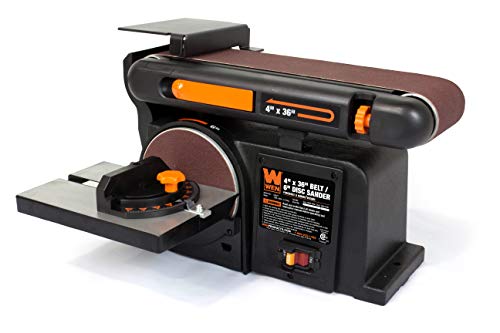
A handheld belt sander carries a looped sanding belt around two rollers and you move it across the workpiece. It removes material quickly, which suits leveling decks, stripping paint from flat surfaces, flattening glued panels or removing old finishes. A benchtop belt sander is fixed to the workbench and you bring the workpiece to the belt. It is better for shaping, deburring small parts, sharpening tools and precision edge work.
Review roundups for 2026 repeatedly cite the Makita 9403, Metabo HPT SB8V2, DeWalt cordless, WEN 6321 and Skil 7510-01 among handheld models, and JET and WEN among benchtop units. Many of these are affiliate-style sites, so confirm figures against the maker’s own specification sheet.
At a Glance
| Model | Type | Belt size | Best for | Limits |
|---|---|---|---|---|
| Makita 9403 | Corded handheld | 4 x 24 inch | Heavy stock removal on large surfaces | Reviewers note it is heavy for overhead or vertical work |
| Metabo HPT SB8V2 | Corded handheld, variable speed | 3 x 21 inch | All-round use with speed control | Narrower belt covers less area per pass |
| DeWalt 20V MAX DCW220B | Cordless handheld | 3 x 18 inch | Mobility on job sites without outlets | Battery and charger may be separate; shorter run time under load |
| Milwaukee M18 Fuel belt sander | Cordless compact | 3 x 18 inch | Compact cordless work for owners of the M18 system | Smaller belt, bare tool in many kits |
| WEN 6321 | Corded handheld | 3 x 21 inch | Budget occasional use | Less refined dust collection and tracking |
| Skil 7510-01 | Corded handheld | 3 x 18 inch | Light to moderate DIY jobs | Lower power than pro models |
| JET JSG-6DC | Benchtop belt and disc | 6 x 48 inch belt, 12 inch disc | Shop shaping and heavy use | Large, heavy, stationary |
Belt size, motor rating and speed range are listed by the makers, and several reviewers report that the Metabo HPT offers variable belt speed in the region of 820 to 1,475 feet per minute, while the Makita 9403 uses an 11-amp motor. Check the data on the maker’s own product page before you buy.
What to Look For
Belt Size
The two numbers describe width and length. A 4×24 belt covers more surface per pass and suits flooring, tabletops and big boards. A 3×21 belt is lighter and easier to handle, which is why it is the popular all-round size. Smaller 3×18 belts appear on compact and cordless units, trading coverage for weight.
Motor Power and Speed Control
Corded motors are rated in amps. More amps usually means more sustained removal under load. Variable speed lets you slow the belt for finishing, softer woods, or paint and varnish that may gum up at high speed. Single-speed machines are simpler and often cheaper but less flexible.
Belt Tracking
The belt must run centered on the rollers. Look for an easily reached tracking knob. Auto-tracking systems, which the Skil 7510-01 is reported to use, reduce fiddling. Poor tracking causes the belt to drift off the roller or damage the housing.
Dust Collection
Belt sanders produce a lot of dust. A dust bag is the baseline, but a vacuum port connected to a shop vacuum is better. Wear a dust mask rated for fine particles, particularly when sanding treated lumber or old paint, which can contain hazardous material. Test for lead if the paint is old, and consult local guidance before sanding.
Weight and Ergonomics
A 4×24 sander is heavy, which helps the machine hold flat on horizontal surfaces but tires your arms on vertical work. Look for a front handle you can hold comfortably and a main grip that keeps the belt flat.
Flush Sanding
Some models let the belt run close to a wall or a vertical surface. If you sand floors, steps or edges near walls, check the maker’s stated flush sanding capability.
Cordless vs Corded
Corded machines provide steady power and are generally cheaper per unit of removal rate. Cordless belt sanders have improved, but the batteries drain faster under heavy load. They fit buyers who already own batteries for other tools and mostly do light to medium work in places without outlets. A corded model remains the more common answer for big surfaces.
Safety and Technique
- Clamp or secure the workpiece so it cannot move.
- Start the sander before lowering it onto the surface and lift it off before turning it off.
- Keep the sander moving and let the weight of the tool do the work. Pressing hard burns the wood and shortens the belt life.
- Work with the grain.
- Wear eye, hearing and respiratory protection, and keep loose clothing and hair away from the belt.
- Always follow the manufacturer’s manual and unplug or remove the battery before changing belts.
Budget Tiers
| Tier | Characteristics | Typical models |
|---|---|---|
| Budget | Single speed or basic controls, adequate for occasional use | WEN 6321, Skil 7510-01 |
| Mid-range | Variable speed, better dust collection and tracking, longer warranty | Metabo HPT SB8V2, DeWalt cordless |
| Premium | Strong motor, smoother build, wider belt or benchtop heft | Makita 9403, JET JSG-6DC |
Pick X If… Decision Table
| Pick this | If you |
|---|---|
| Makita 9403 | Sand large flat surfaces often and want strong removal |
| Metabo HPT SB8V2 | Want variable speed in a manageable 3×21 size |
| DeWalt 20V MAX cordless | Already use the 20V platform and work away from outlets |
| WEN 6321 | Need an inexpensive sander for occasional projects |
| Skil 7510-01 | Want pressure control and auto-tracking for light work |
| JET JSG-6DC | Run a workshop and shape parts or sharpen tools |
Alternatives
- Random orbital sander. Gentler, leaves fewer scratches, better for finishing.
- Drum sander or floor sander rental. For floors, a rented machine may be more practical than buying.
- Hand planes and scrapers. Remove material precisely without dust.
Belts, Grits and Consumables
The belt is the part you will replace most. Belts come in aluminum oxide, which suits general woodworking, and ceramic or zirconia blends that last longer on harder jobs. Coarse grits in the 40 to 60 range remove paint and level boards, medium grits around 80 to 100 smooth the surface, and fine grits of 120 and above prepare it for finishing. Buy belts in the size printed on your sander and check the arrow on the back, which shows the running direction. Fitting a belt backward can cause it to split at the seam.
Store belts hanging flat or loosely coiled, away from damp, since moisture weakens the glue seam. A rubber cleaning stick, sometimes called a crepe block, removes resin and paint buildup and extends belt life. If a belt glazes or burns the wood, replace it rather than pressing harder.
Sanding Frames and Stands
Some handheld sanders can be mounted upside down in a stand, turning them into a makeshift benchtop sander for small parts. Only do this if the maker approves it in the manual and the stand is rated for the model. Otherwise, a dedicated benchtop sander is safer and steadier for sharpening and shaping small items.
Think about total cost of ownership. A cheaper sander with expensive or hard-to-find belts can cost more over time, while a common belt size offers wide choice. Compare warranty length and spare part availability along with the initial tier you choose.
Frequently Asked Questions
Is a 3×21 or 4×24 belt sander better?
The 3×21 is lighter and more versatile for most homeowners. The 4×24 removes material faster over wide areas but is heavier and more demanding to control. Choose based on the size of your typical project.
Can a belt sander be used for finishing?
It can with fine grit, but it is aggressive and easy to gouge wood. Most woodworkers use a belt sander for rough leveling and switch to a random orbital sander for finishing.
What grit belt should I start with?
Coarse grits remove stock quickly, medium grits smooth, and fine grits prepare surfaces for finishing. Work through grits in sequence rather than skipping, so deeper scratches are removed.
How do I prevent gouges?
Keep the machine flat and moving, never tilt it, and avoid stopping while the belt is in contact with the wood. Start with the sander off the surface and lower it gently.
Is a cordless belt sander powerful enough?
For light to medium work, many reviewers say yes. For long sessions or heavy removal, corded machines keep more consistent power and avoid battery limits.
Is sanding old paint safe?
Not always. Paint from older buildings may contain lead. Test it, follow local rules and wear a respirator rated for the hazard, or hire a certified professional.