Key takeaways
- Read the labels and manual; follow the maker’s weight limit and highest standing step.
- Open the ladder fully, lock the spreaders, and place it on firm, level ground.
- Keep three points of contact and do not overreach; move the ladder instead.
- Do not use any ladder near electrical lines or equipment; consult an electrician for electrical work.
- Inspect for cracks, bent rails, loose rivets and worn feet before each use; retire damaged ladders.
- Do not use an A-frame as a leaning ladder unless the maker says it is designed for that.
For most homeowners, a Type IA (300 lb) fiberglass or aluminum stepladder such as the Werner 6204 is the sensible default, the Little Giant King Kombo or Velocity series suits anyone who wants one ladder to do A-frame, extension and other jobs, and the Louisville FS1408HD or a twin-step fiberglass model suits heavier or outdoor work. Pick by working height, duty rating, and where you will use it, and always follow the maker’s labels and manual.
Our top picks



As an Amazon Associate we earn from qualifying purchases at no extra cost to you.
Best A-Frame Ladders at a Glance
| Model | Best for | Key stated specs | Limits |
|---|---|---|---|
| Werner 6204 | Best-value general A-frame stepladder | Type IA, 300 lb; Holster Top; aluminum | Aluminum conducts electricity |
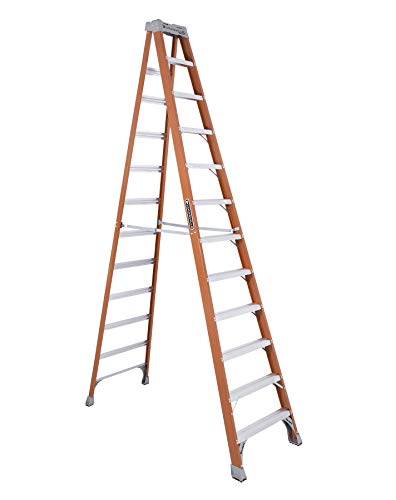
| Louisville FS1408HD | Heavy-duty fiberglass 8 ft step ladder | 375 lb rating; fiberglass | Heavier to carry |
| Louisville 14 ft fiberglass twin step | Tall twin-step, stable outdoors | Type IAA, 375 lb per roundups | Large and heavy; storage space |
| Little Giant King Kombo | One ladder, several set-ups | Type IAA, 375 lb; 4 ft A-frame converting to 7 ft extension | Premium tier; more parts and joints |
| Little Giant Velocity M17 / M22 | Multi-position work and stairs | Type IA aluminum, 300 lb in each folding configuration; M22 about 22 ft reach | Heavier and more complex than a plain stepladder |
| Little Giant Skyscraper M17 | High ceilings, stairwells | Adjusts from 9 to 17 ft as a freestanding A-frame | Premium tier |
How to Choose an A-Frame Ladder
Choose the duty rating
Ladders in North America are classified by duty rating. Werner’s range runs from Type II (225 lb) up to Type IAA (375 lb). Type IA at 300 lb is the usual choice for general home and light trade use, and Type IAA suits heavy-duty users. The rating covers the user plus tools and materials, so add up the weight you will carry. Never exceed the rating printed on the ladder.
Material: aluminum or fiberglass
Aluminum is lighter and easier to transport and store. Fiberglass resists electrical conduction better and is generally more stable for outdoor or near-conductor work. Neither material makes it safe to work near live power lines, and if electrical work is involved you should consult a qualified electrician. Fiberglass is heavier and often costs more.
Height and reach
The ladder’s listed size is the length of the closed ladder, not your reach. A 6 ft stepladder typically allows reaching a ceiling of roughly 10 ft or so when a person stands on the proper step, but the safe standing height depends on the ladder model. Read the maker’s labels about the highest safe standing step and never stand on the top cap or the rung below it unless the maker explicitly allows it.
Folding design and multi-position ladders
Standard A-frame ladders fold flat and open to a fixed triangle, simple and stable on level floors. Multi-position designs, such as Little Giant’s, hinge to become extension ladders, stair ladders or scaffold bases. They offer flexibility, but more hinges and locks mean you should inspect and operate them with care each time.
Features worth having
Look for a tool tray or Holster Top, wide slip-resistant steps, spreader braces that lock firmly, and rubber feet. Twin-step ladders (steps on both sides) let two people work at once, but they are larger and heavier. Smaller indoor stepladders may fit under stairs, while a 12 to 14 ft ladder needs garage or shed space.
Budget Tiers Explained
At the budget tier, simple aluminum Type II or Type I stepladders cover occasional tasks like changing smoke alarm batteries or reaching shelves. The mid-range includes Type IA aluminum and fiberglass models such as the Werner 6204, which balance weight, rating and cost. The premium tier includes Type IAA fiberglass ladders and Little Giant multi-position designs. Spending more is justified if you climb often, carry heavy tools, or work outdoors.
Model Notes
Werner 6204
Roundups name the Werner 6204 as a best overall choice for most users. It has a 300 lb Type IA rating, a tool-securing Holster Top and lightweight alloy construction. Werner generally wins on availability and range at lower prices than Little Giant, per roundups.
Louisville
Louisville’s FS1408HD is listed at 375 lb in an 8 ft fiberglass step ladder and appears in heavy-duty lists. A 14 ft fiberglass twin step is described as Type IAA at 375 lb and stable for outdoor use. These suit contractors and anyone needing a tall, sturdy ladder.
Little Giant
Little Giant leads in transformer-style designs. The King Kombo is described as a 4 ft A-frame that converts to a 7 ft extension and leaning ladder at 375 lb Type IAA. The Velocity M17 can be set up as an A-frame, extension, staircase, 90-degree ladder or trestle-and-plank base, with a 300 lb Type IA aluminum frame. The Skyscraper M17 adjusts from 9 to 17 ft as a freestanding A-frame. The trade-off is premium pricing and more parts to inspect.
Safety and Care Notes
- Read the labels and manual; follow the maker’s weight limit and highest standing step.
- Open the ladder fully, lock the spreaders, and place it on firm, level ground.
- Keep three points of contact and do not overreach; move the ladder instead.
- Do not use any ladder near electrical lines or equipment; consult an electrician for electrical work.
- Inspect for cracks, bent rails, loose rivets and worn feet before each use; retire damaged ladders.
- Do not use an A-frame as a leaning ladder unless the maker says it is designed for that.
Pick X If… Decision Table
| Pick this | If you… |
|---|---|
| Werner 6204 | want a straightforward Type IA ladder for household jobs |
| Louisville FS1408HD | need a heavy-duty fiberglass 8 ft step ladder |
| Louisville 14 ft twin step | want a tall, stable ladder for outdoor or trade work |
| Little Giant King Kombo | want an A-frame that converts to extension and leaning set-ups |
| Little Giant Velocity | work on stairs or uneven levels and want multi-position use |
| Little Giant Skyscraper | need a freestanding ladder for high ceilings or stairwells |
Alternatives to Consider
- Platform step ladders: a wide top platform to stand on and rest tools, suited to long jobs such as painting.
- Extension ladders: for reaching roof lines and exteriors, used leaning with the right angle and tie-off.
- Step stools: for low reaches around the home, where a full ladder is unnecessary.
Before You Buy: A Practical Checklist
Start by listing the jobs the ladder must do: changing light fittings, painting a stairwell, cleaning gutters from a safe stance or hanging decorations. Each job suggests a size and a duty rating. Measure the tallest ceiling or fixture you need to reach and compare it with the maker’s stated maximum standing height rather than the ladder’s nominal length. Next, think about carrying and storage. A fiberglass 8 ft step ladder is stable but bulky, so confirm that it fits your vehicle, hallway and garage before purchase.
Consider the floor surface as well. Rubber feet grip well on dry hard floors but can slide on wet or dusty ones, and soft ground may need a stable base or a different ladder type. On stairs, a multi-position ladder with adjustable legs can level the base, but only when the maker describes that use and every lock is engaged. If you share the ladder with others, put the duty rating and the highest standing step in a place everyone can read, and keep the original labels clean and legible.
Finally, think about how long you will keep it. A ladder used a few times a year can be a simple Type IA model, while one used weekly benefits from sturdier hinges, replaceable feet and a longer warranty. Whichever you pick, retire it after a fall, a bend or any damage that could affect the rails or rungs.
Frequently Asked Questions
What does Type IA mean on a ladder?
Type IA means an industrial-rated ladder with a 300 lb duty rating, covering user, tools and materials. It is the most common choice for homeowners and light trades. Type IAA is rated at 375 lb for heavier use.
Is fiberglass better than aluminum for an A-frame?
Fiberglass resists electrical conduction better and often feels more stable, but it is heavier. Aluminum is lighter and easier to carry. Neither is safe near live power lines.
What size A-frame ladder do I need?
Choose a size that lets you reach the work without standing on the top cap. A 6 ft ladder suits many household tasks, and 8 ft suits taller ceilings. Always check the maker’s highest safe standing step.
Can I use an A-frame ladder as a leaning ladder?
Only if the maker states it is designed for that. Most standard stepladders are not. Multi-position ladders such as Little Giant models are built for it when set up per the manual.
Are multi-position ladders safe?
They can be when used according to the instructions, with all locks engaged and the ladder inspected regularly. They have more moving parts than a standard stepladder. Read the manual for each configuration.
How should I store an A-frame ladder?
Store it dry and off the ground, supported along its length, away from heat and chemicals. Keep it out of direct weather to protect fiberglass and rubber feet. Check it before each use.