Key takeaways
- Airspeed (mph) and airflow (CFM). Airspeed moves wet or stuck leaves, while airflow moves volume. Makers rarely test these the same way, so treat comparisons across brands with care.
- Mulch ratio. Listed as 10:1, 16:1 and so on, this shows how much the machine reduces leaf volume. Higher is better for fewer bag changes, but real-world results depend on leaf dryness and type.
- Bag capacity. Larger bags mean fewer stops but add weight. Look for a zipper bottom for easy emptying.
- Weight and balance. Filled bags hang from the shoulder or the machine, which can fatigue you. A comfortable harness helps.
- Mode switching. Check how easy it is to convert between blow and vacuum modes. Some require removing tubes, which is slower.
- Metal impeller. Some models use a metal impeller to shred leaves, which resists wear better than plastic. Keep hard objects out.
For most homeowners, a cordless leaf vacuum such as the Ryobi RY404150 or the WORX WG583 handles medium yards with little fuss, a corded Black+Decker or WORX Trivac model is the budget answer for small yards, and a gas unit such as the Craftsman BV245, Husqvarna 125BVX or Echo ES-250 suits larger properties with heavy leaf drop. Choose based on yard size, how often you want to empty the bag, and whether you already own a battery platform.
Our top picks
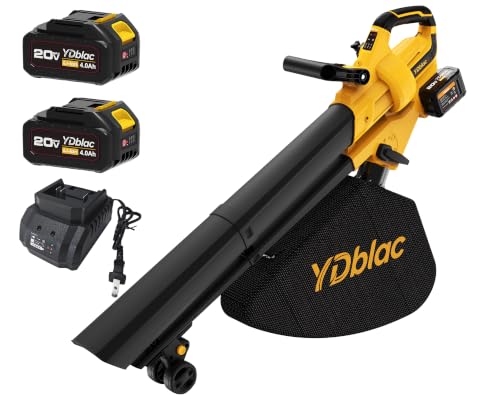

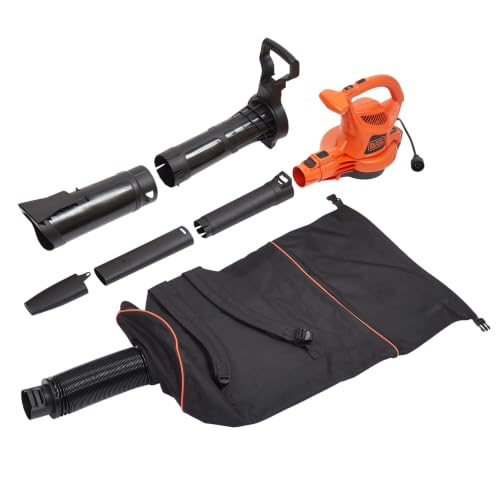

As an Amazon Associate we earn from qualifying purchases at no extra cost to you.
What a Leaf Vacuum Does
A leaf vacuum, often a blower, vacuum and mulcher in one, pulls leaves and light debris into a bag, shredding them on the way. Handheld units are the most common for homeowners. Walk-behind and tow-behind leaf vacuums exist for large properties, but they sit in a different category and are not covered in detail here. The mulching action reduces leaf volume, which means fewer bags to empty. Reviewers highlight mulch ratio, bag size, weight and ease of switching modes as the main differences.
Roundups for 2026 name the Craftsman BV245, Troy-Bilt TB27VH, Husqvarna 125BVX and Poulan Pro PPBV25 for gas, and the Ryobi RY404150, Greenworks G-Max 24322, Makita XBU04PTV, Sun Joe 24V-X2-BVM143 and Black+Decker LSWV36 for cordless. Other sources point to the Black+Decker BV3100 and BV6600, the WORX WG509 Trivac, WORX WG583 and EGO Power+ LB5302. Many of these lists are affiliate-style, and mulch ratios and airspeed figures are the makers’ own numbers.
At a Glance
| Model | Power | Best for | Stated or reported features | Limits |
|---|---|---|---|---|
| Craftsman BV245 | Gas | Large yards, strong all-round performance | Reviewers call it a comfortable gas pick | Fuel, noise, upkeep |
| Husqvarna 125BVX | Gas | Ergonomic gas option | Reviewers note good handling | Weight and noise |
| Echo ES-250 | Gas | Heavy, frequent use | Listed as a top gas pick | Higher cost class, maintenance |
| Poulan Pro PPBV25 | Gas | Budget gas | Maker lists high airspeed up to about 230 mph | Basic features |
| Ryobi RY404150 | Cordless 40V | Medium yards, no cord or fuel | Named best cordless by LawnStarter | Battery runtime |
| WORX WG583 | Cordless | Homeowners wanting strong mulching | Reviewers cite solid mulching | Battery capacity limits long jobs |
| EGO Power+ LB5302 | Cordless 56V | Power users | Maker lists about 530 CFM airflow | Premium tier |
| WORX WG509 Trivac | Corded | Small to medium yards | Three-in-one blower, vacuum and mulcher | Cord reach |
| Black+Decker BV3100 / BV6600 | Corded | Small yards, budget | Lightweight, simple design | Lower mulch capacity |
Gas vs Cordless vs Corded
Gas
Gas leaf vacuums deliver the longest run time and strong airflow. They suit big yards with large amounts of debris. The costs are noise, exhaust, vibration and engine maintenance, including fuel mix for two-stroke models. Always use hearing and eye protection and follow the manual.
Cordless
Battery models are quieter and have no emissions at the tool, and they start with a button. The limits are runtime and mulching under heavy load. A spare battery helps on large cleanups, and owners of an existing battery system often save money by choosing the same brand. Confirm whether the battery and charger are included, as some models ship without them.
Corded
Corded units are light, inexpensive and consistent, but you are tied to an outdoor-rated cord and an outlet. Use a cord rated for outdoor use, keep it clear of the intake, and use a ground-fault protected outlet. Corded units suit small yards and patios.
Key Specs Explained
- Airspeed (mph) and airflow (CFM). Airspeed moves wet or stuck leaves, while airflow moves volume. Makers rarely test these the same way, so treat comparisons across brands with care.
- Mulch ratio. Listed as 10:1, 16:1 and so on, this shows how much the machine reduces leaf volume. Higher is better for fewer bag changes, but real-world results depend on leaf dryness and type.
- Bag capacity. Larger bags mean fewer stops but add weight. Look for a zipper bottom for easy emptying.
- Weight and balance. Filled bags hang from the shoulder or the machine, which can fatigue you. A comfortable harness helps.
- Mode switching. Check how easy it is to convert between blow and vacuum modes. Some require removing tubes, which is slower.
- Metal impeller. Some models use a metal impeller to shred leaves, which resists wear better than plastic. Keep hard objects out.
Safety and Use
- Wear eye and hearing protection, and a dust mask if the area is dusty or moldy.
- Do not vacuum stones, sticks, wire or wet heavy debris, because they can damage the impeller.
- Turn the machine off and remove the battery, unplug the cord or disconnect the spark plug before clearing a jam or changing parts.
- Keep children, pets and bystanders away.
- Do not use a corded tool in the rain or on wet ground.
Budget Tiers
| Tier | Characteristics | Typical models |
|---|---|---|
| Budget | Corded or basic cordless, smaller bag, lower mulch ratio | Black+Decker BV3100, Black+Decker LSWV36, Poulan Pro PPBV25 |
| Mid-range | Stronger cordless or mid gas, better bag and handling | Ryobi RY404150, WORX WG583, Craftsman BV245 |
| Premium | High-output batteries or pro gas, durable build | EGO LB5302, Echo ES-250, Husqvarna 125BVX |
Pick X If… Decision Table
| Pick this | If you |
|---|---|
| Ryobi RY404150 | Want a cordless vacuum and already use the Ryobi 40V line |
| WORX WG583 | Want strong mulching in a cordless tool |
| EGO LB5302 | Want high airflow in a battery platform |
| Craftsman BV245 | Have a large yard and prefer gas |
| Husqvarna 125BVX | Want a gas model with an ergonomic design |
| WORX WG509 Trivac | Have a small yard and are happy with a cord |
| Black+Decker BV3100 | Need a basic, low-cost corded unit |
Alternatives
- Leaf blower plus rake. A blower moves leaves quickly, and you can compost or bag them.
- Mulching mower. Mowing over thin leaf layers breaks them down and returns nutrients to the lawn.
- Tow-behind or walk-behind vacuum. For acreage, these handle volumes handheld models cannot.
Maintenance and Seasonal Storage
Leaf vacuums work hard for a few weeks and then sit for months, so end-of-season care pays off. Empty the bag, shake out dust and let it dry. Inspect the impeller and intake for bent blades, wrapped twigs or cracks. Plastic impellers wear faster than metal ones, and if yours is damaged, order a replacement part from the maker rather than running it unbalanced, which causes vibration.
For battery models, follow the battery maker’s guidance on storage charge and temperature, and keep batteries indoors in a dry spot away from extreme heat. For gas models, either run the engine dry or add a fuel stabilizer, as the manual states, and replace the spark plug and air filter on schedule. Corded models need only a visual check of the cord for nicks before each season.
Noise, Neighbors and Local Rules
Some communities restrict gas blower use or limit operating hours. Battery models are quieter, which helps in dense neighborhoods. Check local ordinances before buying a gas unit, and respect posted quiet hours.
Getting Better Results
Work in dry conditions where possible. Rake leaves into loose rows before vacuuming so the intake does not clog, and keep the nozzle moving at a steady pace. Empty the bag before it is packed full, since a full bag reduces suction and strains the motor. Mulched leaves can feed garden beds or a compost pile, which cuts down on trips to the curb. If you have an unusually large leaf load, consider breaking the job into several short sessions rather than one marathon, which reduces fatigue and keeps batteries and engines cooler.
Frequently Asked Questions
Is a leaf vacuum better than a leaf blower?
A vacuum collects and shreds leaves, reducing what you need to bag. A blower moves leaves but leaves them to collect. Many models do both, so a combination unit gives flexibility.
What mulch ratio should I look for?
Ratios of 10:1 to 16:1 are common claims. Higher means more volume reduction, but real results depend on leaf dryness and machine condition. Dry leaves mulch best.
Can a cordless leaf vacuum handle a large yard?
For medium yards, many can. For larger yards or heavy leaf drop, a spare battery or a gas model can save time. Check the maker’s stated runtime.
Can I vacuum wet leaves?
Makers generally advise against wet debris because it clogs the impeller and bag. Wait for leaves to dry when possible, and follow the manual.
How do I clear a clog safely?
Turn the machine off and remove the battery, unplug the cord or disconnect the spark plug. Then clear the tube with a stick, not your hand, and check the impeller for damage.
Can I compost the mulched leaves?
Yes, shredded leaves break down faster in compost or as mulch for garden beds. Avoid using leaves from diseased plants or black walnut, which can harm other plants.