Key takeaways
- Till when soil is moist but not wet. Soil that clumps in your hand is too wet and will form hard clods.
- Remove large rocks and roots by hand first, since they can damage tines and cause kickback.
- Make several shallow passes rather than one deep one, particularly in hard soil.
- For gas models, follow the manual on fuel mixture, oil changes and winter storage.
- Clean soil off tines after use to reduce rust and sharpen performance.
- Consider whether repeated deep tilling suits your soil; some gardeners prefer no-dig methods to protect soil structure.
For a typical vegetable garden or raised-bed area, an electric or battery cultivator is enough for breaking up loosened soil, while a gas front-tine tiller such as the Troy-Bilt Pony or Earthquake Victory suits larger plots, and a rear-tine tiller is the choice for hard, compacted or first-time ground. This guide lays out the main tiller types, what the makers state, and how to match a machine to your soil and plot size.
Our top picks


As an Amazon Associate we earn from qualifying purchases at no extra cost to you.
Types of Tillers
Cultivators
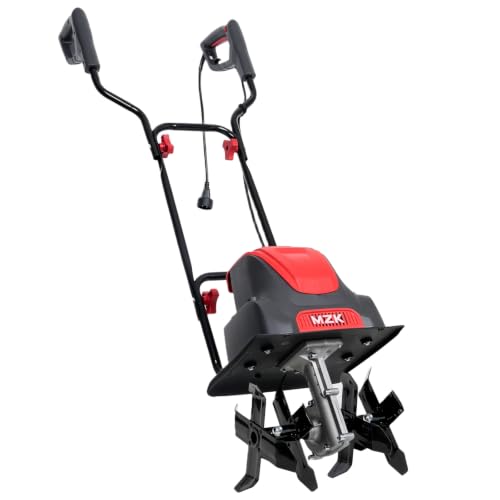
Cultivators are small and light and designed for stirring soil that is already loosened. Electric models such as the Sun Joe TJ604E, which the maker lists as a 16 inch, 13.5 amp machine, and battery-powered units such as the Greenworks cultivator suit established beds. Gas minis like the Mantis tiller and cultivator are narrow and good for tight rows.
Front-Tine Tillers
Front-tine machines have tines at the front that both drive and dig. They are lighter and cheaper than rear-tine models and are best for previously cultivated soil. They can bounce in hard ground, so a firm grip is needed.
Rear-Tine Tillers
Rear-tine tillers drive their wheels separately from the tines, which makes them steadier in tough soil and easier to control. Troy-Bilt’s Super Bronco is an example reviewers often mention. They are heavier, larger and more costly, but handle compacted or sod-covered ground better.
At a Glance: Tillers Compared
| Model or type | Power | Best for | Key stated traits | Limits |
|---|---|---|---|---|
| Sun Joe TJ604E | Corded electric | Small, loosened beds | Maker lists 16 inch width and 13.5 amp motor | Cord reach; limited in hard soil |
| Greenworks battery cultivator | Battery | Raised beds and established gardens | Maker lists battery power and compact width | Runtime depends on battery |
| Mantis tiller and cultivator | Gas or electric options | Narrow rows and tight spaces | Maker lists light weight and narrow tilling width | Small tilling width |
| Troy-Bilt Pony | Gas front-tine | Medium garden plots | Maker lists front-tine design and adjustable width | Bounces in very hard soil |
| Earthquake Victory | Gas front-tine | Medium to larger plots | Maker lists gas engine and adjustable tilling width | Heavier than electric cultivators |
| Troy-Bilt Super Bronco | Gas rear-tine | Hard or compacted ground | Maker lists rear-tine design and larger engine | Heavy; storage space needed |
| Honda mini tiller | Gas | Small beds with premium reliability | Maker lists a 4-stroke engine and compact design | Premium tier cost |
What to Look For
Plot Size and Soil
Measure your garden and consider its history. A new plot that has never been dug, or one with heavy clay or sod, needs a stronger machine than a bed that you turn over each spring. Underpowered tillers frustrate users and may be damaged by overwork.
Tilling Width and Depth
Makers list maximum width and depth. A wider machine covers ground faster but is harder to manoeuvre in tight rows. Depth ratings represent best-case figures; real depth depends on soil moisture and compaction.
Power Source
Electric corded machines are quiet, light and easy to start, but cords limit range. Battery models trade range for convenience. Gas engines provide the most power and freedom, but need fuel, oil and seasonal maintenance, and are louder.
Counter-Rotating or Forward-Rotating Tines
Counter-rotating tines dig harder soil more effectively but are more demanding to control. Forward-rotating tines are easier to handle but may struggle in compacted ground. Some models allow both.
Weight and Handling
A heavy machine bites in well but tires the operator in tight areas. Check the maker’s stated weight, and consider whether you need to lift it into a vehicle or shed.
Safety
Tillers have exposed rotating tines. Wear sturdy boots, eye and hearing protection, and avoid loose clothing. Keep children and pets away and stop the engine before clearing tines. Before tilling, check for buried utility lines by contacting your local line-location service, and follow the manual in all respects.
Budget Tiers
Budget
Corded and small battery cultivators suit light soil and small beds. They struggle with compacted ground but are very easy to start and store.
Mid-Range
Gas front-tine models from Troy-Bilt and Earthquake offer a good compromise for medium gardens, handling most backyard soil with some effort.
Premium
Rear-tine machines and premium compact units like Honda’s offer greater power, reliability and control. They are an investment suited to large gardens or regular use.
Pick X If … Decision Table
| If you … | Choose | Why |
|---|---|---|
| Garden in raised beds | Electric or battery cultivator | Light, quiet, easy to store |
| Have a medium vegetable plot | Gas front-tine tiller | Balance of power and cost |
| Are breaking new or compacted ground | Rear-tine tiller | Stable and stronger in tough soil |
| Garden in narrow rows | Mantis-style narrow tiller | Fits tight spaces |
| Prefer low noise and no fuel | Electric or battery | No fumes, simple maintenance |
| Till only once or twice a year | Consider renting a tiller | Avoids storage and upkeep |
Care and Preparation Tips
- Till when soil is moist but not wet. Soil that clumps in your hand is too wet and will form hard clods.
- Remove large rocks and roots by hand first, since they can damage tines and cause kickback.
- Make several shallow passes rather than one deep one, particularly in hard soil.
- For gas models, follow the manual on fuel mixture, oil changes and winter storage.
- Clean soil off tines after use to reduce rust and sharpen performance.
- Consider whether repeated deep tilling suits your soil; some gardeners prefer no-dig methods to protect soil structure.
Alternatives to Consider
Broadfork or Garden Fork
A broadfork loosens soil without inverting it and needs no fuel. It suits small plots and people who want to limit disturbance to soil structure.
No-Dig and Sheet Mulching
Layering cardboard and compost on top of the ground builds beds without tilling. It takes time but reduces weeds and effort.
Renting or Hiring
For one-off breaking of new ground, renting a rear-tine machine or hiring a service can be more economical than buying.
Sizing a Tiller to Your Garden
A small raised-bed garden of a few beds rarely justifies anything beyond a compact cultivator. A plot of several hundred square feet that is turned over each spring is a good match for a gas front-tine machine or a strong electric model. Once you reach thousands of square feet, or you are converting lawn to garden, a rear-tine machine saves time and strain. These are rough guides, not strict rules; soil type matters as much as area.
Clay soils bake hard in dry weather and turn to paste when wet, which makes timing important and favours machines with more power. Sandy and loamy soils are forgiving, and light machines handle them well. If you are removing turf, you will often need to strip or cut the sod first, or make multiple passes, because grass roots wrap around tines.
Consider storage and maintenance honestly. A gas tiller needs fuel stabiliser, oil changes and a spring tune-up. If you will use it a couple of hours a year, a battery or corded model is simpler. Confirm that replacement tines and parts are available for the model you choose, and read the warranty terms posted by the maker. Whatever the type, pace yourself, let the machine pull forward under its own power and keep both hands on the handles as the manual describes.
Frequently Asked Questions
Do I need a tiller for a small vegetable garden?
Not necessarily. Small beds can be prepared with a garden fork and a rake, and raised beds often need only light cultivation. A tiller becomes worthwhile as plot size grows or soil is compacted.
What is the difference between a tiller and a cultivator?
A tiller breaks up and turns over harder soil, while a cultivator mixes and loosens soil that is already soft. Cultivators are lighter and narrower. Some products are marketed as both.
Are electric tillers strong enough?
For loosened soil and established beds, yes. For sod or heavy clay, most reviewers point to gas machines. Check the maker’s stated use cases for your model.
How deep should I till?
Many makers list depths of around 6 to 10 inches for larger machines, with smaller ones shallower. For most vegetable gardens, shallow to moderate depth is adequate. Deeper tilling is rarely required and may disturb soil life.
When is the best time to till?
Typically in spring once soil has dried enough to crumble rather than clump, and before planting. Some gardeners also till in autumn to incorporate organic matter. Avoid working very wet soil.
Is it safe to till near buried lines?
Contact your local utility locating service before tilling in an unfamiliar area, and keep to shallow depths near known lines. Follow the manual and local guidance.