Key takeaways
- Measure the width and depth of the chest, then add room to open drawers fully. Many people forget that a drawer pulled out 20 inches or more blocks the walkway.
- Check that the combined chest and cabinet can pass through the door you plan to carry it through. Some buyers assemble the unit in the garage because it will not clear a standard doorway.
- Leave a gap between the cabinet back and the wall for airflow, especially in humid climates, so condensation does not sit against the steel.
- Place the unit on a level patch of floor. A visible tilt shows up quickly as drawers that slide open or closed on their own.
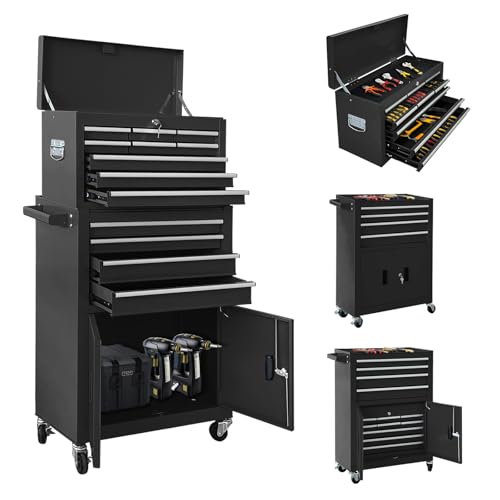
A rolling steel tool chest-and-cabinet combo from a mainstream brand such as Husky, Craftsman or Kobalt suits most home garages, a modular rolling system such as Milwaukee Packout suits people who carry tools to job sites as well, and a compact top chest suits a small bench or apartment-garage setup. The right pick depends on how many tools you own, how heavy they are, and whether the garage sees damp winters or summer heat.
Our top picks


As an Amazon Associate we earn from qualifying purchases at no extra cost to you.
Tool Chests for Garages at a Glance
| Option | Best for | Typical design (as makers describe it) | Limits |
|---|---|---|---|
| Husky heavy-duty welded steel combos | Large home collections, mixed hand and power tools | Steel top chest plus rolling cabinet, ball-bearing drawer slides, locking system, casters | Heavy and bulky; check door and aisle clearance before ordering |
| Craftsman rolling chest and cabinet sets | Hobbyists who want a familiar brand and mid-range pricing | Steel construction, multiple drawers, ball-bearing slides, side handles | Lighter-duty lines carry lower drawer ratings than the premium lines |
| Kobalt tool chests | Budget to mid-range buyers wanting wide drawers | Steel boxes, ball-bearing slides on higher lines, powder-coat finishes | Model lineup changes often; match drawer ratings, not only names |
| Milwaukee Packout rolling tool boxes | Tradespeople and DIYers who move tools between garage and vehicle | Impact-resistant polymer shells, modular stacking, weather-resistant seals as the maker describes them | Less drawer depth than a classic cabinet; modular add-ons add up |
| Gladiator GarageWorks cabinets | Whole-garage organization, cabinet-style storage | Steel cabinets with drawers and work surfaces, designed to match wall and floor storage | More of a storage system than a mobile chest |
| Compact top chests and portable chests (Stanley, Craftsman, Waterloo and similar) | Small collections, workbench tops, renters | Single steel or plastic box with a few drawers | Limited capacity; large sockets and power tools will not fit |
How to Choose a Garage Tool Chest
Start with what you actually store
Count your tools by category before you look at drawer counts. Sockets, wrenches and screwdrivers need shallow, wide drawers. Power drills, impact drivers and their batteries need deeper drawers. Long items such as pry bars and levels often end up leaning against the wall, so some buyers add a separate wall panel. A chest that looks large in a photo can still be missing the one deep drawer you need.
Drawer slides and load ratings
Ball-bearing slides are the usual choice for drawers that will hold metal tools. Makers often publish a per-drawer weight rating and sometimes a total cabinet rating. Compare these numbers rather than the number of drawers. A drawer rated for light use will sag if you fill it with a full set of sockets and a few hammers, and a sagging drawer is hard to close and hard to repair.
Steel gauge, welds and finish
Heavier-gauge steel and welded seams resist racking when the cabinet is loaded and rolled around. Powder-coat paint holds up better to oil and solvents than thin paint, though no finish is chip-proof. Reviewers often point out that dents and scratched corners matter less than rust that starts at an exposed edge, so touch up chips early with a rust-preventive paint.
Casters and mobility
Swivel casters with locks make a rolling cabinet easier to position, but small plastic wheels can struggle on cracked or rough concrete. Larger casters roll over seams and floor drains more easily. If your garage floor is sloped toward a drain, test that both locks hold the cabinet in place with the drawers open, because a loaded cabinet that creeps is a tipping hazard.
Security and locks
Most chests include a keyed lock that secures all drawers at once. These locks deter casual access, such as kids or a visitor, but they are not designed to stop a determined thief. If your tools are valuable, use the lock together with a locked garage door and consider keeping power tool batteries in the house.
Fit, Size and Placement Notes
- Measure the width and depth of the chest, then add room to open drawers fully. Many people forget that a drawer pulled out 20 inches or more blocks the walkway.
- Check that the combined chest and cabinet can pass through the door you plan to carry it through. Some buyers assemble the unit in the garage because it will not clear a standard doorway.
- Leave a gap between the cabinet back and the wall for airflow, especially in humid climates, so condensation does not sit against the steel.
- Place the unit on a level patch of floor. A visible tilt shows up quickly as drawers that slide open or closed on their own.
Care and Safety
Wipe tools dry before putting them in the drawers, and use drawer liners to cut down on sliding and moisture contact. Small desiccant packs help in damp garages. Lubricate slides only as the manual suggests, since some makers warn against oil on certain slide types. Do not open several top drawers of a tall chest at once when it is not secured, because the weight shift can tip the unit. Keep the heaviest tools in the lower drawers, and keep solvents, fuel and aerosol cans out of the chest, since heat in a garage can pressurize them.
Picks by Budget Tier
Budget tier
Entry lines from Craftsman and Kobalt, along with compact top chests from Stanley, give a clean place for a starter set. Expect lighter steel, fewer drawers and lower per-drawer ratings. These are fine for a basic household kit but can feel flimsy when loaded with heavy metal tools.
Mid-range tier
Husky and Craftsman mid-range combos, plus Gladiator GarageWorks cabinets, are the usual middle ground. The makers list ball-bearing slides, heavier steel and larger drawer ratings than the entry lines. For most garages this tier offers the best match of storage and durability.
Premium tier
Husky’s heavy-duty welded lines and Milwaukee’s Packout systems sit at the higher end of this guide. Buyers choose them for heavier ratings, sturdier casters or modular flexibility. Premium also means more weight to move and more space to give up in the garage.
Pick X If …
| Pick this | If you … |
|---|---|
| Husky heavy-duty combo | have a large mixed collection and a fixed spot in the garage |
| Craftsman rolling set | want a middle-of-the-road steel set for weekend projects |
| Kobalt chest | need wide drawers on a tighter budget and will compare ratings carefully |
| Milwaukee Packout | move tools between the garage, a vehicle and job sites |
| Gladiator GarageWorks | are organizing the whole garage with matching cabinets and benches |
| Compact top chest | have a small collection, limited space or rent your home |
Alternatives Worth Considering
- Wall-mounted pegboard or slatwall: Keeps frequently used hand tools in view and frees floor space, but offers no lockable storage.
- Workbench with built-in drawers: Combines a work surface and storage; good if floor space is tight, although drawers are usually shallower than a dedicated chest.
- Stackable plastic storage systems: Lighter and rust-proof, useful in damp garages or for tools that rarely come out.
Common Buying Mistakes to Avoid
The most frequent regret reviewers describe is buying too small. Tool collections grow, and a chest that is full on day one leaves no room for the next drill, socket set or specialty wrench. Leave at least a quarter of the drawer space free. A second mistake is judging a chest by drawer count alone: a unit with many shallow drawers can be less useful than one with fewer, deeper drawers if you own power tools.
Another common issue is ignoring assembly. Large steel cabinets can arrive in heavy boxes and some need two people to lift the top chest onto the base. Plan helpers, and clear a working area before delivery. Finally, think about where the garage door, car doors and workbench sit. A cabinet parked in the wrong spot can block a car door or a walkway, and moving a loaded unit later is a chore. Mark the spot with tape on the floor before ordering to see how the unit will feel in the space.
Last, plan for organization inside the drawers. Foam inserts, socket rails and small bins keep tools from sliding and make it easy to see when something is missing. Even a budget chest feels far more usable with a bit of organization, and it protects tool finishes from banging against each other in a rolling cabinet.
Frequently Asked Questions
How many drawers do I need?
Group your tools into categories and give each category its own drawer, then add one spare. Most home users find five to nine drawers enough. More drawers are not always better, because shallow drawers cannot hold power tools.
Will a steel tool chest rust in a garage?
It can if moisture sits on bare metal. Powder-coated finishes slow rust, but chips and exposed edges are weak points. Keep the chest off a wet floor, wipe up spills, and use drawer liners and desiccant packs in humid climates.
Is a rolling tool chest safe to load fully?
Follow the maker’s per-drawer and total weight ratings in the manual. Put heavy tools in the bottom drawers and avoid opening several upper drawers at the same time, since a top-heavy chest can tip. Lock the casters before you open drawers.
Should I buy a combo or a separate chest and cabinet?
A combo is designed to stack and fit together, so it is usually easier to buy and looks tidy. Buying pieces separately lets you mix brands or add a cabinet later, but you need to check that the footprints match and that the top chest will not slide off.
Are tool chest locks secure?
They keep out casual access, but they are generally not built to resist forced entry. For valuable tools, rely on a locked garage and consider additional measures such as bringing batteries indoors.
Can I store power tool batteries in the chest?
Many makers advise storing lithium-ion batteries in moderate temperatures, away from extreme heat or freezing. Read the battery manual, and consider keeping batteries indoors if your garage runs very hot or cold.