
Key takeaways
- Budget: Echo CS-310, Stihl MS 170, Husqvarna 120 class.
- Mid-range: Husqvarna 450 Rancher and similar 45 to 50 cc saws.
- Premium: Stihl MS 271 and larger pro-oriented saws.
For occasional limb trimming and light firewood, a compact saw such as the Echo CS-310 or the Stihl MS 170 is enough; for regular firewood and larger trees, a 45 to 50 cc saw such as the Husqvarna 450 Rancher or the Stihl MS 271 is the better fit. Gas chainsaws are powerful and dangerous tools, so engine size, bar length and weight should match the work you actually do, and anyone new to chainsaws should read the manual and consider formal training before the first cut.
Our top picks

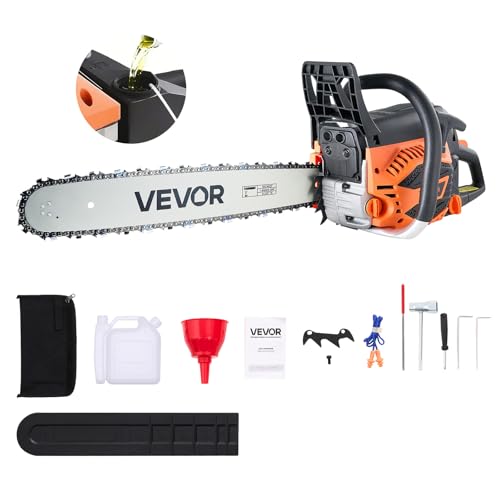


As an Amazon Associate we earn from qualifying purchases at no extra cost to you.
How to size a gas chainsaw
Three numbers decide most purchases. Engine displacement (in cubic centimetres) indicates power: roughly 30 to 40 cc suits light work, 40 to 50 cc covers general homeowner firewood, and larger engines serve heavy felling. Bar length sets the maximum cut diameter; a bar a few inches longer than the wood you typically cut is a common rule of thumb. Weight affects fatigue and control, especially when cutting above shoulder height, which is risky with any saw.
At a glance
| Model | Class | Best for | Key stated specs | Limits |
|---|---|---|---|---|
| Echo CS-310 | Light homeowner | Pruning, storm cleanup, small firewood | Bob Vila lists it around 8.1 lb with a 14-inch bar, the lightest in its class | Small engine, slow in big logs |
| Stihl MS 170 | Light homeowner | Occasional limb work | Lawnity lists 30.1 cc, about 8.6 lb, 12 to 16 inch bar | Not for sustained cutting |
| Husqvarna 120 Mark II | Light homeowner | Beginners on a modest budget | Compared with the CS-310 and MS 170 by Pro Tool Reviews | confirm the latest availability |
| Husqvarna 450 Rancher | Mid-range | Firewood and general property work | Roundups list a 50.2 cc X-Torq engine, about 3.2 hp, 20 inch bar, LowVib, Air Injection, Smart Start | Small fuel tank noted by reviewers |
| Stihl MS 271 Farm Boss | Mid-range to premium | Durability and versatility | Sawoff ranks it first overall; Lawnity says it can carry a 20 inch bar | Higher cost than the Rancher |
| Stihl MS 250 | Mid-range | Step up from the MS 170 | Compared in Stihl roundups | Heavier than compact saws |
Specifications change between model years and regions, so confirm engine size, weight and bar length with the maker’s current listing.
Compact saws: Echo CS-310, Stihl MS 170, Husqvarna 120
Pro Tool Reviews selects the Echo CS-310 as the best gas chainsaw for home use because it is lighter than its rivals, and compares it with the Husqvarna 120 and Stihl MS 170 in the same budget tier. Bob Vila describes the CS-310 as the lightest 14-inch saw in its class. Lawnity places the MS 170 as Stihl’s lightest gas saw, suited to occasional limb work and light firewood. These saws are easy to carry and to start for beginners, but small engines overheat the patience of anyone cutting a winter’s worth of firewood. They are the right size for pruning, clearing storm limbs and cutting small logs.
Mid-range saws: Husqvarna 450 Rancher and Stihl MS 271
For regular firewood and tree work, roundups gravitate to two saws. The Husqvarna 450 Rancher is often named best overall or best value; it uses a 50.2 cc X-Torq engine with a 20 inch bar and features LowVib vibration dampening, Air Injection filtration and Smart Start easy starting, according to reviews. Bob Vila calls it the most ergonomic, and one listed drawback is a small fuel tank. The Stihl MS 271 Farm Boss is ranked first overall by Sawoff for its balance of power, durability and ease of use, and Lawnity notes it can take a 20 inch bar for bigger trunks. It costs more than the Rancher, so buyers choose it for the brand’s dealer network and reputation for durability rather than for a different performance class.
Budget tiers
- Budget: Echo CS-310, Stihl MS 170, Husqvarna 120 class.
- Mid-range: Husqvarna 450 Rancher and similar 45 to 50 cc saws.
- Premium: Stihl MS 271 and larger pro-oriented saws.
Safety, fit and care notes
- Protective gear: Chaps, a helmet with face and ear protection, gloves and sturdy boots are standard guidance from chainsaw makers.
- Read the manual: Kickback, pinch and tree-felling hazards are real. Do not cut above shoulder height, never cut with one hand and do not climb with a running saw.
- Training: New users benefit from a local chainsaw safety course. Large or leaning trees, trees near power lines and storm-damaged trees should be left to a professional arborist.
- Fuel: Most small saws use a two-stroke fuel mix. Follow the maker’s ratio and oil specification exactly, and use fresh fuel; stale fuel is a common cause of hard starting.
- Chain and bar: Keep the chain sharp and correctly tensioned, and oil the bar. A dull chain increases kickback risk and wears the saw.
- Storage: Drain or stabilize fuel before long storage, cover the bar and keep the saw away from children.
- Chain brake: Know how to engage it, and never disable any safety feature.
- Noise and exhaust: Use hearing protection and run the saw outdoors only.
Pick X if…
| If you want… | Pick | Why |
|---|---|---|
| The lightest option for pruning | Echo CS-310 | Lightest 14-inch saw in its class per Bob Vila |
| A Stihl dealer-supported light saw | Stihl MS 170 | Stihl’s lightest gas saw |
| A budget beginner saw | Husqvarna 120 | Competes in the same light class |
| Firewood at a fair cost | Husqvarna 450 Rancher | Often named best value |
| A durable all-rounder | Stihl MS 271 Farm Boss | Ranked first overall by Sawoff |
| Quiet, low-maintenance cutting | Battery saw (see alternatives) | No fuel mixing |
Alternatives
Battery chainsaws from the major makers now handle many homeowner tasks with no fuel mixing, less noise and easier starting, though runtime and sustained power can lag behind a gas saw on large logs. Corded electric saws suit small yards near an outlet. A pole saw handles high limbs from the ground, and a hand saw or loppers suit very small jobs. For big trees, hiring an arborist is the safer option.
Maintenance routine that keeps a gas saw reliable
Most reliability problems trace back to fuel and air. Mix fuel in small batches in a clean approved container, label it and use it within the period the maker states. Clean the air filter often, since sawdust clogs it quickly and makes the saw run rich. Check the spark plug and spark arrestor screen at the interval in the manual, and keep the cooling fins free of debris. File the chain with the correct round file and guide, and keep the depth gauges at the height the chain maker specifies. Flip the bar occasionally to wear it evenly, clean the groove and oil port, and keep the chain oiler reservoir topped up. A dealer service before storage or after heavy seasons is inexpensive insurance, and most makers recommend using an authorized service center for repairs involving safety parts such as the chain brake and anti-vibration mounts.
Bar and chain basics
The bar length on the box is the nominal length, and the actual cutting length is slightly shorter. Chains are specified by pitch, gauge and drive-link count, so replacement chains must match the bar and the saw exactly; check the manual or the numbers stamped on the bar. Low-kickback chains and shorter bars reduce risk for newer users. Many makers sell starter combinations that pair a modest bar with a low-kickback chain for this reason.
Frequently Asked Questions
What size gas chainsaw do I need for firewood?
Most homeowners cutting firewood regularly look at 45 to 50 cc saws with 18 to 20 inch bars, such as the Husqvarna 450 Rancher or Stihl MS 271. Smaller saws can do the job but work slowly and tire quickly. Match the bar to the usual log diameter.
Is a gas chainsaw better than a battery saw?
Gas saws generally provide longer continuous runtime and strong power on large wood. Battery saws are quieter, easier to start and need less maintenance. Choose gas for heavy or remote work and battery for light, convenient jobs.
What fuel mix does a gas chainsaw use?
Most use a gasoline and two-stroke oil mixture in a ratio the maker specifies. Using the wrong ratio or old fuel can damage the engine. Check the manual and mix only what you will use soon.
How do I stay safe using a chainsaw?
Wear protective gear, keep both hands on the saw, stand to the side of the cut and avoid cutting above shoulder height. Read the manual and consider a training course. Leave dangerous trees, especially near power lines, to professionals.
Why will my chainsaw not start?
Common causes are old fuel, a clogged air filter, a fouled spark plug or flooding. Follow the starting steps in the manual and have a service dealer look at it if basic checks do not help. Do not modify safety parts.
How often should I sharpen the chain?
Sharpen it when the saw produces fine dust instead of chips, pulls to one side or needs pressure to cut. Frequency depends on use and on hitting dirt or stones. A properly sharpened chain is both safer and more efficient.





