The best power drill for most buyers is a brushless 18V or 20V cordless drill driver from a platform you will keep buying into. The Milwaukee M18 Fuel is the usual pick for maximum power, the DeWalt 20V MAX XR DCD800 is a widely recommended value choice, the Makita 18V drill suits finish work, and the Ryobi ONE+ HP is the budget homeowner favorite. The drill itself matters less than the battery system behind it, because every later tool you buy will share that battery.
Our top picks
 DEWALT 20V Max XR Drill Driver
- Lightweight design fits into tight areas
- High performance motor delivers 300 unit watts out…
- High speed transmission delivers two speeds (0-450 &…
 DEWALT 20V MAX Drill and Impact Driver
- Ergonomically Designed: Work in tight areas with a…
- Both tools are designed to fit into difficult…
- Complete a wide range of applications with a…
 DEWALT 20V MAX Cordless Drill Driver Set
- Brushless motor delivers more run time over brushed
- Lightweight design fits into tight areas
- Ergonomic comfort grip handle provides ideal balance and…
| Product | Key specs | |
|---|---|---|
| DEWALT 20V Max XR Drill Driver | Lightweight design fits into tight areas High performance motor delivers 300 unit watts out… High speed transmission delivers two speeds (0-450 &… | Check price |
| DEWALT 20V MAX Drill and Impact Driver | Ergonomically Designed: Work in tight areas with a… Both tools are designed to fit into difficult… Complete a wide range of applications with a… | Check price |
| DEWALT 20V MAX Cordless Drill Driver Set | Brushless motor delivers more run time over brushed Lightweight design fits into tight areas Ergonomic comfort grip handle provides ideal balance and… | Check price |
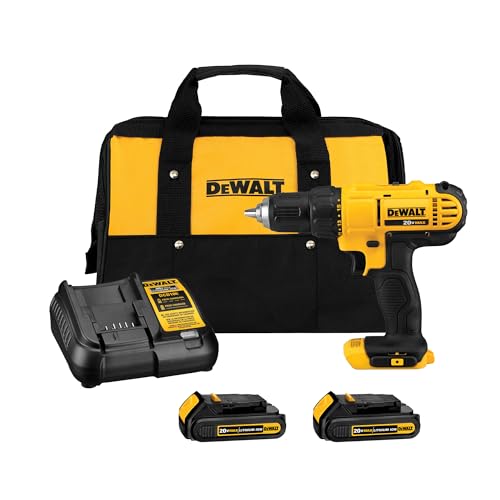
 DEWALT 20V MAX* Cordless Drill | Check price |
As an Amazon Associate we earn from qualifying purchases at no extra cost to you.
Quick Comparison of the Best Power Drills
| Pick | Best for | Chuck / motor | Notable spec (per roundups) | Trade-off | Price tier |
|---|---|---|---|---|---|
| Milwaukee M18 Fuel 1/2 in drill driver | Maximum power, pro use | 1/2 in, brushless | Peak torque listed around 1,200 to 1,400 in-lb depending on source | Heavier and bulkier | Upper-mid to premium |
| DeWalt 20V MAX XR DCD800 | Best value, beginners to pros | 1/2 in, brushless | Compact brushless body | No hammer mode on this model | Mid-range |
| Makita 18V LXT drill driver | Woodworking and finish work | 1/2 in, brushless | Light weight, smooth clutch control | Less peak torque than Milwaukee | Mid-range |
| Bosch 18V drill driver | Precise driving | 1/2 in | 25 clutch settings and kickback control | No hammer setting | Mid-range |
| Bosch 12V drill driver | Light household and overhead work | 3/8 in class | Very light, compact | Limited power for large bits | Budget to mid |
| Ryobi ONE+ HP brushless drill (PBLDD02K1) | Homeowners, platform value | 1/2 in, brushless | Works with a huge ONE+ tool range | Slower than pro drills in tough holes | Budget |
Specifications come from manufacturer pages and published roundups, which sometimes disagree on exact torque and weight. Always confirm the figures for the kit you are buying, including battery size.
Best Overall for Power: Milwaukee M18 Fuel Drill Driver
Several 2026 roundups pick the M18 Fuel as the strongest drill for demanding work such as drilling large holes in studs or driving long structural screws. TechGearLab selects it for jobs that need a lot of drilling and driving power without hurting battery life, and CNN Underscored gave it the edge for heavy-duty use. The trade-off is size and weight: it is noticeably chunkier than compact drills and tiring overhead.
Choose it if you build decks, frame walls or drive lag screws regularly. Pair it with a 4.0 to 6.0 Ah battery for best balance.
Best Value: DeWalt 20V MAX XR DCD800
The DCD800 is a compact brushless drill that suits both newcomers and tradespeople. Roundups often list it at about the price of a mid-range kit, and it connects to a large DeWalt 20V MAX battery line. The omission to know about is hammer mode, so it is a drill driver for wood, metal and light masonry-free work, not a replacement for a hammer drill.
Best for Finish Work: Makita 18V LXT Drill Driver
Makita’s drill drivers, including the XFD16T cited in roundups, are known for light weight, smooth clutch action and durable build. They suit cabinet installation, trim and furniture assembly, where control matters more than top torque. The Makita battery line is also extensive, with all LXT batteries interchangeable.
Best for Precision: Bosch 18V Drill Driver
Bosch’s 18V drill offers 25 torque settings and kickback control, according to roundup coverage. That granularity helps with delicate fasteners in hardware and cabinet work. The lack of a hammer setting is the main limitation.
Best Compact Household Drill: Bosch 12V
A 12V drill weighs far less than an 18V model and fits into cabinet interiors and overhead work. It handles hanging shelves, assembling furniture and light repairs. It is not the drill to pick for decks and large holes.
Best Budget: Ryobi ONE+ HP Brushless Drill
The PBLDD02K1 kit is a popular choice for homeowners because it sits on the ONE+ system, which includes hundreds of tools on one battery type. TechGearLab found a Ryobi ONE+ HP drill cut test holes about six seconds slower than the Milwaukee, which is acceptable for household projects. If you hang pictures, assemble furniture and tackle occasional projects, it is the most economical entry.
Corded Versus Cordless: Which Do You Need?
| Factor | Cordless | Corded |
|---|---|---|
| Portability | Move anywhere | Tethered to an outlet |
| Sustained power | Limited by battery | Continuous, no runtime limit |
| Weight | Heavier with battery | Lighter body |
| Upfront cost | Higher, includes battery and charger | Lower |
| Best uses | General home and job site use | Mixing paint, long stationary drilling, workshop |
For most homeowners, cordless wins because the battery is also useful in other tools. A corded drill makes sense in a workshop where you drill all day beside an outlet.
How to Choose a Power Drill
Pick the battery platform first
Your first cordless tool sets your battery system, and switching later is expensive. Ryobi and Makita offer broad homeowner ranges, while Milwaukee and DeWalt lean toward professional tools. DeWalt’s 20V MAX label and the 18V on Milwaukee and Makita refer to similar nominal voltage, so compare platforms by tool range and price, not by the number.
Brushless over brushed
Brushless motors run cooler and make better use of the battery, which gives longer runtime and a longer motor life. Most recommended drills in 2026 are brushless.
Chuck size and torque
A 1/2 inch chuck handles larger bits and is standard for 18V models. A 3/8 inch chuck fits compact drills. Peak torque of 500 to 700 in-lb suffices for household projects, while 1,000 in-lb and above suits framing and large auger bits.
Speed range and clutch
A two-speed gearbox gives control. Low speed with high torque suits driving screws, and high speed suits drilling small holes. A clutch with many settings prevents stripped screws.
Weight and balance
Hold the drill with the battery installed. A compact drill with a 2.0 Ah battery may weigh around 3 pounds, while a heavy-duty one with a large pack can exceed 5 pounds.
Worked Example: Match the Drill to the Job
| Job | Recommended drill | Reason |
|---|---|---|
| Assembling furniture, hanging shelves | Bosch 12V or Ryobi ONE+ | Light weight and adequate power |
| Building a deck with 3 inch screws | Milwaukee M18 Fuel or DeWalt DCD800 | Torque for long screws |
| Installing cabinets | Makita 18V or Bosch 18V | Fine clutch control |
| Drilling 1 inch holes in studs | Milwaukee M18 Fuel | Sustained torque |
Ownership Realities and Common Mistakes
- Buying the cheapest kit without checking battery size: a 1.5 Ah battery runs out quickly on big jobs.
- Using the wrong bit: dull or mismatched bits cause burning and slipping, which looks like a weak drill.
- Chuck wear: clean and keep the chuck free of debris, and tighten bits by hand.
- Leaving batteries in heat: store batteries at room temperature to maintain capacity.
Which Kit Should You Buy: Bare Tool, Single Battery or Combo?
Kits come in three forms, and the right one depends on whether you already own batteries. A bare tool has no battery or charger and is the cheapest way to add a drill to an existing platform. A single-drill kit usually includes one or two batteries and a charger, which is ideal for a first purchase. A combo kit bundles a drill driver with an impact driver, and sometimes a light or saw, and typically costs less than buying each item separately.
For a first-time buyer, a drill with two compact batteries is usually the sweet spot, because you can charge one while using the other. Aim for at least one 2.0 Ah battery for light work and a 4.0 Ah or 5.0 Ah pack for decks and larger projects. Remember that a larger battery adds weight, so a 5.0 Ah pack can make a compact drill feel nose-heavy.
Bits and Accessories That Matter
A good drill performs poorly with bad bits. Start with a set of quality twist bits for metal and wood, a few brad-point bits for clean holes in wood, spade or auger bits for larger openings, and an assortment of Phillips, Torx and square driver bits. Carry a magnetic bit holder, since it keeps screws on the tip when working overhead. Add a small set of masonry bits only if you plan to drill brick, and use a hammer drill rather than a drill driver for those jobs.
Keep your accessories organized in a case, and replace dull bits instead of pushing harder. Forcing a dull bit increases heat, shortens battery life and can damage the motor. Wear eye protection whenever you drill, and clamp small workpieces rather than holding them by hand.
Frequently Asked Questions
What is the difference between a drill and an impact driver?
A drill driver has a clutch and chuck for drilling and driving, while an impact driver delivers rotational bursts for long screws and bolts. Many people buy both as a combo kit.
Is 18V the same as 20V?
Mostly yes. DeWalt’s 20V MAX is the peak unloaded voltage, while the nominal voltage is 18V, the same as Milwaukee M18 and Makita 18V LXT.
Which power drill brand is best for homeowners?
Ryobi and Makita are commonly recommended for home use because of price and tool range. DeWalt is also a strong all-around brand.
Do I need a hammer drill?
You only need hammer mode if you drill into masonry or concrete regularly. A standard drill driver suffices for wood, drywall and metal.
How long do cordless drill batteries last?
Most lithium-ion batteries last several hundred charge cycles, and years of regular use. Avoid extreme heat and deep discharge to extend life.