The best tool box for most homeowners is a modular system such as Milwaukee Packout or DeWalt ToughSystem 2.0, because the boxes latch together and grow with your tool collection. If you want the lowest cost, a basic 20- to 22-inch plastic box does the job; if you carry tools to job sites daily, a rolling modular stack or a heavy-duty steel box is the better buy.
The right box depends on what you carry, how far you carry it and where it lives between jobs. A plumber who loads a van needs something different from a renter who keeps a hammer and screwdrivers under the sink. This guide compares the main types, names real current lines you can search for, and gives the numbers (capacity, weather rating, carry weight) that actually separate them.
Our top picks



As an Amazon Associate we earn from qualifying purchases at no extra cost to you.
Quick Comparison of Tool Box Types
| Pick | Best for | Key specs | Price range |
|---|---|---|---|
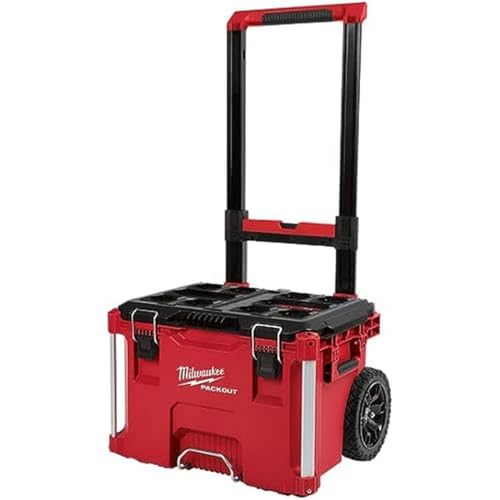
| Milwaukee Packout Rolling Tool Box (22 in.) | Pros and serious DIYers who want a deep ecosystem | Rated for about 250 lb, IP65 weather resistance per maker, locks into the Packout line | Premium |
| DeWalt ToughSystem 2.0 Large Tool Box | Best value modular system | About 110 lb capacity, IP65 per maker, compatible with TSTAK stacks | Mid-range |
| Craftsman Versastack | Entry modular, budget-friendly stacking | Lower IP54 rating, around 66 lb capacity per retail listings | Budget to mid |
| Basic 20-22 in. plastic or metal hand box | Homeowners with a small tool set | Tray on top, one deep cavity, usually under 30 lb loaded | Budget |
| Steel jobsite or truck box | Theft deterrence, vehicle or site storage | Welded steel, padlock hasp, often 32-48 in. long | Mid to premium |
| Rolling tool chest or cabinet | Garage or shop mechanics | 5-9 drawers, ball-bearing slides, often 400-1,000+ lb total capacity | Mid to premium |
| Soft-sided tool bag | Electricians and carpenters on stairs or ladders | Lightweight, wide mouth, many pockets, no lock | Budget to mid |
Specs reflect manufacturer listings and retail pages at the time of writing; always check the maker’s spec sheet for your exact model.
Best Overall: Milwaukee Packout Rolling Tool Box
Milwaukee’s Packout line is the deepest modular system on the market, with boxes, organizers, drawers and bags that all latch together on a common footprint. The 22-inch rolling tool box is the center of the line: a rolling base with a telescoping handle, a top lid with an organizer, and a rating of about 250 pounds according to the manufacturer.
It suits pros and DIYers who plan to keep adding pieces. The main trade-off is price. Packout parts cost more than rivals, so build the system gradually rather than buying everything at once.
Best Value Modular: DeWalt ToughSystem 2.0
DeWalt’s ToughSystem 2.0 covers nearly the same job at a lower cost. The large tool box offers around 110 pounds of capacity and an IP65 rating per the maker, and it nests with the DeWalt TSTAK line. Retail availability is also strong, so replacing a latch or adding a second box is easy.
It suits homeowners who want a tough, stackable setup without paying premium prices. The trade-off is a smaller catalog of specialty inserts than Packout, so plan your organizers around what the line already offers.
Best Budget Modular: Craftsman Versastack
Craftsman Versastack is aimed at hardware-store shoppers who want stackable boxes without a big spend. Retail listings give it a lower IP54 weather rating and around 66 pounds of capacity, which is fine for a garage but weaker for outdoor storage. The latches and wheels are lighter than the premium lines.
It suits occasional DIY use and renters. The trade-off is durability under heavy loading, so avoid stacking more than two boxes of dense hand tools.
Best for a Small Tool Set: Basic Hand Box
A plain 20- to 22-inch hand box with a removable tray is still the right answer for many households. Look for metal latches (rather than plastic clips), a recessed handle, and a lid that closes flat so the box stacks on a shelf. Brands such as Stanley, Husky and Plano make this style.
It suits a starter set of hammer, tape, pliers, screwdrivers and a few drill bits. The trade-off is that deep cavities encourage dumping and digging, so add a tool roll or small organizer for loose items.
Best for Security: Steel Jobsite Box
Steel jobsite and truck boxes are welded, usually 32 to 48 inches long, and accept a padlock. They protect against casual theft in a way a plastic box cannot. Choose one with a recessed lock hasp and a lid with a rain gasket.
It suits contractors, landscapers and anyone leaving tools in a truck. The trade-off is weight; an empty 48-inch box can weigh well over 50 pounds, so it is not meant to be carried.
Best for Garage Work: Rolling Tool Chest or Cabinet
Garage mechanics usually need more than a box. Rolling chests and cabinets from brands such as Husky, Craftsman and Milwaukee Packout offer 5 to 9 drawers with ball-bearing slides, and some combine a top chest with a roll cab. Look at the drawer rating (often 50 to 100 lb per drawer) rather than the total cabinet rating alone.
It suits socket sets, wrenches and power-tool storage. The trade-off is that cabinets are heavy, and you should shop with floor space and garage door clearance in mind.
Best for Ladders and Stairs: Soft Tool Bag
A soft bag keeps weight low and opens wide, which is why electricians and carpenters like them for work on ladders. A bag with a molded base stays upright and keeps tool edges away from your leg. Check that the bottom is waterproof and the stitching is double-sewn at stress points.
It suits portable carry-ups, attic work and small repairs. The trade-off is no lock and less crush protection for fragile tools.
How to Choose a Tool Box
Start from total tool weight
Weigh your tools on a bathroom scale. A basic home set is often 15 to 25 pounds; a full mechanics set can exceed 60. Choose a box rated at least 50 percent above your loaded weight so latches and handles are never stressed.
Match the weather rating to where it lives
An IP65 rating means dust-tight and resistant to water jets, which suits a truck bed or open porch. IP54 resists splashes only, which is fine for a garage or indoors. Metal boxes need a gasket for similar protection.
Worked example: pick by carry distance
| Situation | Loaded weight | Best choice |
|---|---|---|
| Apartment, light repairs | Under 20 lb | Basic hand box or small modular box |
| Homeowner, occasional projects | 20-50 lb | Value modular, such as ToughSystem 2.0 Large |
| Contractor, daily carry | 50-100 lb | Rolling modular, such as Packout 22 in. |
| Truck or site storage | 100+ lb | Steel jobsite box |
Check the latch and wheel details
The first parts to fail are latches, wheels and handles. Metal latches last longer than plastic ones, and larger wheels roll better on gravel. Telescoping handles should lock firmly at more than one height.
Think about the ecosystem
Buying into one modular line means every future box clicks in. Mixing brands is possible only with adapters, so pick one and stay with it, unless you only want a single box.
Durability and Ownership Realities
Plastic boxes crack in cold weather if dropped, and rubber gaskets dry out over time. Wipe the gasket with silicone spray once a year, and lubricate latches lightly. On steel boxes, touch up scratches with paint to prevent rust. Keep heavy tools at the bottom and flat on the base to stop the box from tipping when rolling.
Frequently Asked Questions
Is Milwaukee Packout worth the extra cost over DeWalt ToughSystem?
If you plan to expand into many organizers and drawers, yes. If you just need one or two sturdy boxes, ToughSystem 2.0 does the job for less money.
What size tool box do I need for home use?
A 20- to 22-inch box covers a typical starter set. Choose larger only if you own power tools and need to store them together.
Are plastic or metal tool boxes better?
Plastic is lighter, rust-free and cheaper. Metal is stronger and more secure, but heavier and prone to rust. Most homeowners are better served by plastic.
Can I mix Milwaukee and DeWalt boxes?
The latches differ, so they do not click together directly. Some third-party adapters exist, but it is simpler to stay with one brand.
How do I stop a tool box from rusting tools?
Add a desiccant pack or a small rust inhibitor tab, keep the box off a damp floor, and wipe tools with a light oil film before storing them long term.