Key takeaways
- Blade type and depth adjustment. Steel blades cut cleaner than string. Adjustable depth lets you set a shallow maintenance cut or a deeper trench for a fresh border.
- Wheeled or stick design. Wheeled units follow a curb in a straight line and spare your back. Stick models reach into corners and curves but take more wrist control.
- Cutting guide. A visible guide notch or laser-style line helps you stay on the edge. Not all models include one.
- Blade guard and debris shield. The edger throws soil and stones. A solid guard matters more than any other safety feature.
- Weight and balance. A lighter tool reduces fatigue over a long edge. Weight differences between a cordless and a gas model are noticeable by the fifteenth minute.
- Multi-head versatility. The EGO-style multi-head design is useful if you want one power unit with several attachments, but you give up the dedicated feel of a wheeled edger.
For most suburban yards, a cordless multi-head edger such as the EGO Power+ or a Greenworks 40V model is the easiest all-round choice, a corded WORX or Black+Decker unit suits small plots on a budget, and a gas Echo PE-225 suits large properties with long stretches of curb and driveway. A manual half-moon edger or a sharp spade still wins for tight garden-bed curves where a powered blade is overkill. The right pick depends on edge length, how deep a trench you want, and whether you already own a battery platform.
Our top picks


As an Amazon Associate we earn from qualifying purchases at no extra cost to you.
What a Lawn Edger Actually Does
A lawn edger cuts a clean vertical line where grass meets a sidewalk, driveway, patio or flower bed. A string trimmer can imitate the job when turned on its side, but a dedicated edger uses a steel blade that slices roots and soil, giving a crisp, lasting border. Most powered edgers are either wheeled walk-behind machines with a blade that spins vertically, or stick edgers that look like a trimmer with a small blade guard. Some multi-head tools swap between edger, string trimmer and sometimes a cultivator or brush attachment.
Reviewers at outlets such as Bob Vila, LawnStarter-style roundups and several independent tool sites repeatedly highlight a short list of models: the Echo PE-225 for gas, the EGO Power+ multi-head edger and Greenworks cordless edgers for battery, and the WORX WG896 and Black+Decker 2-in-1 for corded and budget use. Many of these roundups are affiliate-style pages, so treat any ranking as a starting point and compare against the maker’s published specifications.
At a Glance: Popular Edger Options
| Product | Type | Best for | Stated features | Limits |
|---|---|---|---|---|
| Echo PE-225 | Gas stick edger | Large lots, long runs of curb | Maker lists a commercial-style gas engine and a rotating edger blade on a shaft design | Fuel mixing, noise, maintenance |
| EGO Power+ multi-head edger | Cordless, 56V platform | Owners already in the EGO battery system | Interchangeable heads; edger head uses a steel blade | Battery and charger may be sold separately |
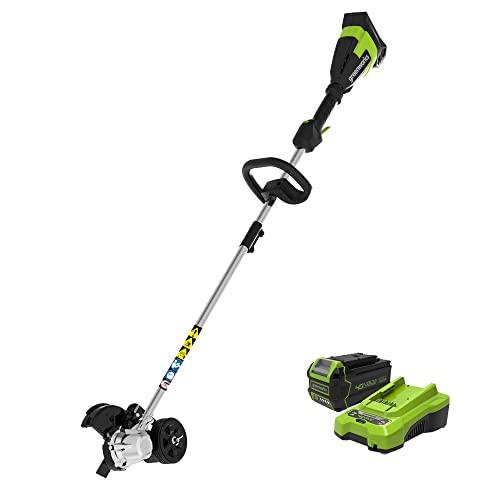
| Greenworks 40V or 60V cordless edger | Cordless wheeled or stick | Mid-size yards, light handling | Reviewers describe a lightweight build and clean cuts | Often sold as a bare tool |
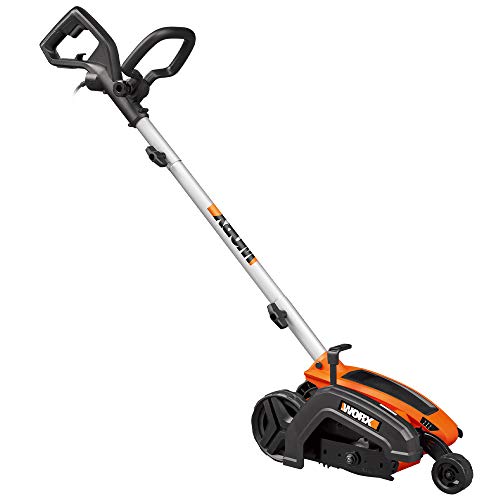
| WORX WG896 | Corded electric | Small to medium yards, budget | Maker lists a trenching mode and adjustable depth | Cord length limits reach |
| Black+Decker 2-in-1 edger | Corded electric | Small yards, occasional use | Converts between edging and trimming use | Lower power on thick turf |
| Manual rotary or half-moon edger | Hand tool | Beds, curves, quiet work | No fuel, no battery, no cord | Physical effort, slower on long lines |
Choosing a Power Source
Gas
Gas edgers have the longest history in professional crews. They run as long as you have fuel, cut through compacted edges, and are not tied to a cord or battery charge. The trade-offs are weight, exhaust, vibration and the upkeep of a small engine: fresh fuel, air filter, spark plug and, for two-stroke models, correct mixing. If your property has hundreds of feet of hard edge, or you edge weekly in thick warm-season grass, gas remains a sensible choice. Always follow the manual on fuel mix, hearing protection and eye protection.
Cordless Battery
Battery edgers have closed much of the performance gap. The largest benefit is convenience: no cord, no fuel, low noise and instant starts. The largest catch is the battery platform. If you already own EGO, Greenworks, Ryobi, DeWalt or another system, an edger that shares batteries is usually the cheapest route even if the tool itself is mid-range. Check whether the product ships with a battery and charger, because several popular edgers are sold bare. Runtime depends on battery capacity and how deep you cut, so a very long edge may call for a spare battery.
Corded Electric
Corded models are light, inexpensive to run and low maintenance. They suit small to medium lots where an outdoor extension cord can reach every edge. Use a cord rated for outdoor use and the gauge the maker specifies, keep it clear of the blade, and plug into a ground-fault protected outlet. If you are unsure about outdoor wiring, ask a qualified electrician rather than improvising.
Manual
A manual rotary edger or a sharp half-moon edger costs little and has no moving parts to fail. Reviewers often point out that a good spade gives the cleanest curve around garden beds. Manual tools demand effort, especially in clay or dry soil, so they fit small yards or occasional touch-ups.
Features That Matter
- Blade type and depth adjustment. Steel blades cut cleaner than string. Adjustable depth lets you set a shallow maintenance cut or a deeper trench for a fresh border.
- Wheeled or stick design. Wheeled units follow a curb in a straight line and spare your back. Stick models reach into corners and curves but take more wrist control.
- Cutting guide. A visible guide notch or laser-style line helps you stay on the edge. Not all models include one.
- Blade guard and debris shield. The edger throws soil and stones. A solid guard matters more than any other safety feature.
- Weight and balance. A lighter tool reduces fatigue over a long edge. Weight differences between a cordless and a gas model are noticeable by the fifteenth minute.
- Multi-head versatility. The EGO-style multi-head design is useful if you want one power unit with several attachments, but you give up the dedicated feel of a wheeled edger.
Budget Tiers
| Tier | What to expect | Typical choices |
|---|---|---|
| Budget | Corded or manual, lower power, fine for small yards and light maintenance | Black+Decker 2-in-1, WORX corded, basic manual edger |
| Mid-range | Cordless platform tools or stronger corded models with depth control | Greenworks cordless, WORX WG896 |
| Premium | Larger batteries or pro-grade gas engines, better build quality and parts support | EGO Power+ multi-head, Echo PE-225 |
Fit and Yard Notes
Match the tool to the surface. Concrete, pavers and asphalt edges let a wheeled unit ride along the hard surface. Mulch and flower-bed borders are softer and usually better served by a stick edger or a manual tool. Thick turf such as St. Augustine or Bermuda grows laterally and may need a more powerful blade than cool-season fescue. Dry ground is harder on blades and motors, so edging after rain or light watering can reduce strain, provided you follow electrical safety guidance and never use a corded tool on wet ground.
Before you start, walk the edge and remove stones, toys and sprinkler heads. Wear eye protection, closed-toe shoes, long pants and hearing protection with gas models. Keep bystanders and pets well away, because edgers can throw debris.
Care and Maintenance
- Clean soil and grass from the blade housing after each session.
- Sharpen or replace the blade when it starts tearing rather than slicing. Follow the maker’s blade instructions, and disconnect the battery, cord or spark plug first.
- Store batteries indoors and away from extreme heat or cold, as the battery maker advises.
- For gas models, use fresh fuel, change the air filter as scheduled, and drain or stabilize fuel before long storage.
Pick X If… Decision Table
| Pick this | If you |
|---|---|
| Echo PE-225 (gas) | Have a big lot, edge weekly, and are comfortable with small-engine upkeep |
| EGO Power+ multi-head | Own or plan to buy into the EGO battery line and want one tool with several heads |
| Greenworks cordless | Want a lightweight cordless edger and already have, or will buy, a Greenworks battery |
| WORX WG896 | Have a small to medium yard, want trenching ability, and are happy using a cord |
| Black+Decker 2-in-1 | Need a low-cost tool for small yards that also trims |
| Manual edger or spade | Mostly edge curved garden beds or want a silent, zero-maintenance option |
Alternatives Worth Considering
- String trimmer turned sideways. Works for light maintenance on existing edges but gives a less defined trench.
- Landscape edging borders. Steel, plastic or paver borders reduce how often you need to edge at all, though installation takes a weekend.
- Hiring a service. If you only need a clean-up twice a season, a lawn crew may cost less than a new tool and storage space.
Frequently Asked Questions
Is a lawn edger worth buying if I already have a string trimmer?
If you want a sharp, defined line along sidewalks and driveways, yes. A trimmer on its side can tidy up grass, but it does not cut a vertical trench the way a bladed edger does. For small yards, a trimmer and a manual edger may be enough.
Are cordless edgers powerful enough for thick grass?
Reviewers generally report that current cordless models handle typical home lawns well, especially with a larger battery. Very dense turf or deep trenching may favor gas or a higher-voltage platform. Check the maker’s stated blade size and voltage before buying.
How often should I edge my lawn?
Many homeowners edge every two to four weeks during the growing season. A fresh trench lasts longer than a light trim, so a deeper cut at the start of spring may reduce how often you need to repeat the job.
What safety gear do I need?
Wear safety glasses, sturdy shoes and long pants. Add hearing protection for gas models. Keep children and pets away, and clear the edge of stones and sprinkler heads. Always read and follow the manufacturer’s manual for your tool.
Can I use an edger around mulch beds?
Yes, but a stick edger or manual edger is easier to control than a wheeled unit. Hold the tool steady so the blade does not throw mulch onto the lawn, and consider a lower speed or depth setting if the tool offers one.
How do I keep the blade sharp?
Clean it after use and inspect it for chips or dullness. Replace or sharpen it according to the manual, with the battery removed, the cord unplugged or the spark plug disconnected. A dull blade tears roots and leaves a ragged edge.