Key takeaways
- Wear eye protection, hearing protection, sturdy footwear and long trousers; edgers throw debris.
- Fuel outdoors, away from ignition sources, with the engine off and cool, and store fuel in approved containers.
- Follow the manual for fuel mix ratio and oil type; do not use old or contaminated fuel.
- Check for buried irrigation lines, cables and utilities before edging deeply; call your local utility locating service where required.
- Keep bystanders and pets away while operating, and let the engine cool before storing.
- Check local noise and fuel-powered equipment rules in your area.
For most buyers who want a dedicated gas edger, the Echo PE-225 is the name reviewers cite most often; the Echo PAS-225 or a Husqvarna attachment-capable powerhead suits those who want an edger plus a string trimmer on one engine; and Troy-Bilt four-cycle models suit buyers who do not want to mix fuel. Choose by yard size, how often you edge, and whether you are willing to handle two-stroke fuel mixing.
Our top picks


As an Amazon Associate we earn from qualifying purchases at no extra cost to you.
Best Gas Lawn Edgers at a Glance
| Model | Best for | Key stated or reported specs | Limits |
|---|---|---|---|
| Echo PE-225 | Dedicated edger, best overall in roundups | Two-stroke 21.2 cc engine; Bob Vila lists about 13.1 lb | Needs mixed two-cycle fuel |
| Echo PAS-225VP kit | Edger plus trimmer on one power head | 21.2 cc engine; about 16.2 lb with attachments per a roundup | Attachment swaps; premium tier |
| Husqvarna 525ECS | Stick-style pro edger | 25.4 cc X-Torq engine per Pro Tool Reviews | Premium tier; two-stroke |
| Husqvarna 122LKE / 330LK | Attachment-capable power heads | 122LKE for light to medium edging; 330LK has Rapid Replace head and Air Purge starting | 122LKE is not for heavy root cutting |
| Troy-Bilt TBE304 | No fuel mixing | 30 cc four-cycle engine runs on straight gas | Heavier; needs oil changes |
| Troy-Bilt TB516 | Value for occasional use | 29 cc four-cycle; about 22 lb; 2-year warranty per a roundup | Heavy; reported as less powerful than pro models |
How to Choose a Gas Lawn Edger
Two-stroke or four-stroke
Two-stroke engines, used by Echo and Husqvarna pro models, are lighter and powerful for their size but require mixing oil into fuel at a ratio the maker specifies. Four-stroke engines, such as Troy-Bilt’s, run on straight gasoline with separate engine oil, which simplifies fueling but adds weight and routine oil changes. Always use the fuel type and oil recommended in the manual; wrong fuel can damage the engine.
Stick edger or wheeled edger
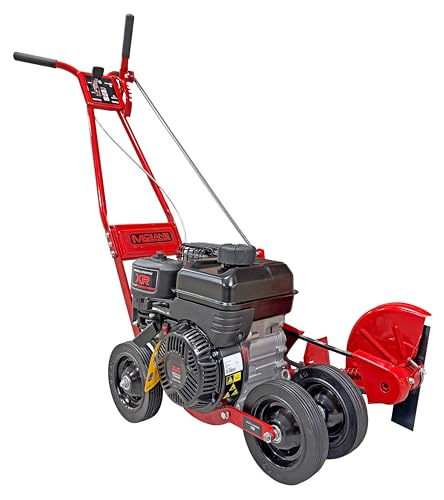
Stick-style edgers have a shaft with a small blade at the end, held like a trimmer, and the blade runs vertically or at an angle. They are lighter and agile for curbs and bed lines. Wheeled edgers roll along a walkway for a straighter line and are common in lower-cost gas models. Reviewers note that stick-style edgers need a steady hand but weigh less to carry.
Blade type and depth control
Edgers use a steel blade that cuts down into the soil along a hard edge. Check that the blade is replaceable and that the depth can be adjusted. Blades wear faster on concrete and gravel, so keep spares if you edge heavily. Wear eye protection because stones and debris can be thrown.
Weight and balance
Weights range from about 13 lb for a lightweight pro edger to over 20 lb for a four-cycle model, and longer sessions make the difference noticeable. Check the maker’s weight and shaft length, and try the grip if possible.
Multi-tool systems
Attachment-capable power heads, such as Echo’s PAS series and Husqvarna’s LK models, let you swap an edger attachment, a string trimmer head and other tools onto one engine. That can save storage and cost, but each swap takes time. If you edge weekly, a dedicated edger is usually more convenient.
Budget Tiers Explained
At the budget tier, wheeled gas edgers or entry-level four-cycle units cover occasional lawn edging, with extra weight and basic parts. The mid-range includes the Troy-Bilt four-cycle models and entry attachment-capable power heads. The premium tier is the Echo PE-225, Husqvarna 525ECS and related pro-grade tools, which offer lighter weight and stronger engines and are what landscapers commonly use. Professional landscapers reportedly favour Echo and Stihl, according to one roundup, though that source gives no specific Stihl edger recommendation.
Model Notes
Echo PE-225
Bob Vila and Pro Tool Reviews both name the PE-225 as best overall. It has a pro-grade two-stroke 21.2 cc engine and is listed at around 13 lb, making it comparatively light. Its downside is the need for two-cycle fuel.
Echo PAS-225VP
Described by Bob Vila as the best gas combo and by another roundup as an editor’s choice, this is an attachment-ready kit with a 21.2 cc engine and interchangeable heads. It is a good fit for homeowners who want trimmer and edger from one engine.
Husqvarna
Pro Tool Reviews picks the 525ECS stick-style edger as its best gas edger. The 122LKE attachment edger is reported as easy to start and quick to switch tools, suited to light to medium edging rather than heavy renovation or root cutting. The 330LK is a premium attachment-capable head with a Rapid Replace system and Air Purge starting.
Troy-Bilt
The TBE304 uses a 30 cc four-cycle engine that runs on straight gas, which reviewers say simplifies fueling and starts reliably, though it is heavier and requires oil changes. The TB516 is a 29 cc four-cycle at about 22 lb with a 2-year warranty, and one roundup calls it the best value but another notes it is a bit underpowered.
Safety and Care Notes
- Wear eye protection, hearing protection, sturdy footwear and long trousers; edgers throw debris.
- Fuel outdoors, away from ignition sources, with the engine off and cool, and store fuel in approved containers.
- Follow the manual for fuel mix ratio and oil type; do not use old or contaminated fuel.
- Check for buried irrigation lines, cables and utilities before edging deeply; call your local utility locating service where required.
- Keep bystanders and pets away while operating, and let the engine cool before storing.
- Check local noise and fuel-powered equipment rules in your area.
Pick X If… Decision Table
| Pick this | If you… |
|---|---|
| Echo PE-225 | want a light, pro-grade dedicated edger |
| Echo PAS-225VP | want edger and trimmer on one engine |
| Husqvarna 525ECS | prefer a stick-style pro edger |
| Husqvarna 122LKE or 330LK | want an attachment system from Husqvarna |
| Troy-Bilt TBE304 | do not want to mix fuel |
| Troy-Bilt TB516 | need a lower-cost option for occasional edging |
Alternatives to Consider
- Battery edgers: quieter and no fuel handling, a good fit for small yards.
- Corded electric edgers: low-cost for small lawns near an outlet.
- String trimmers used vertically: a simple way to define an edge without a dedicated tool, though the result is less crisp.
Before You Buy: A Practical Checklist
Walk your property and note how much edge you have: a short driveway and walk, or long runs along beds, fences and a curb. Short, occasional edging rarely justifies a pro-grade tool, whereas weekly work across a large lot rewards a lighter, stronger edger that is less tiring. Note the surface too. Sandy soil and thin turf are easy to cut, while compacted clay and tree roots demand a stronger engine and a sharp blade.
Think about fuel and maintenance. Two-stroke tools need a fresh fuel mix, a clean air filter and a periodic spark plug check. Four-cycle tools need oil changes. Neither is difficult, but you should be comfortable with seasonal storage, such as running the tank dry or using stabilised fuel as the manual describes. If that sounds like too much, a battery edger may suit your yard better even though the question here is about gas models.
Lastly, consider the dealer network. Pro brands such as Echo and Husqvarna are typically sold through dealers that can service and supply parts. Keep spare blades, a spare spark plug and the correct fuel can on hand, and read the manual for start-up steps, since most hard-starting complaints trace back to the wrong choke or primer sequence.
Frequently Asked Questions
What is the best gas lawn edger overall?
Bob Vila and Pro Tool Reviews both name the Echo PE-225 as the best overall gas edger. It is light for a pro-grade tool and uses a two-stroke engine. If you want to avoid fuel mixing, a Troy-Bilt four-cycle is the alternative.
Do I need to mix oil with gas?
Two-stroke edgers, such as Echo and Husqvarna models, require mixed fuel at the ratio the maker specifies. Four-cycle models such as Troy-Bilt’s run on straight gas with separate oil. Read your manual to be sure.
Is a gas edger better than an electric one?
Gas edgers usually offer more power for long runs and thick turf, while electric and battery models are quieter and easier to maintain. Yard size and noise limits matter. For small yards, battery may suffice.
How often should I replace the edger blade?
Replace it when it becomes dull, chipped or too small to cut effectively. Blades wear faster on concrete and gravel edges. Follow the maker’s guidance on blade type.
Can I edge in wet grass?
Wet turf is heavier and can clog the blade, and footing is slippery. Many people prefer to edge when the ground is slightly damp but not soaked. Keep a firm stance.
How should I store a gas edger?
Let the engine cool, empty or stabilise fuel as the manual directs, clean the blade area and store in a dry place. Keep fuel in an approved container away from heat sources. Follow the maker’s guidance for long-term storage.