Key takeaways
- Fully unfold and lock the stand before mounting the saw.
- Use all the mounting bolts, and tighten them to the stand maker’s instructions.
- Keep the stand level on firm ground, since soft soil or slopes reduce stability.
- Do not exceed the saw weight or support load limit.
- Wear eye and ear protection, and a dust mask; follow your saw’s manual for blade guard use.
- Clamp or support long boards so that offcuts do not bind the blade.
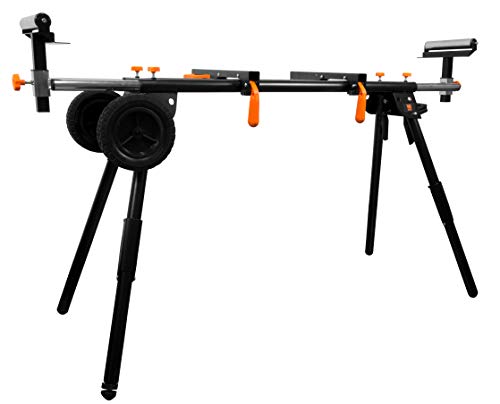
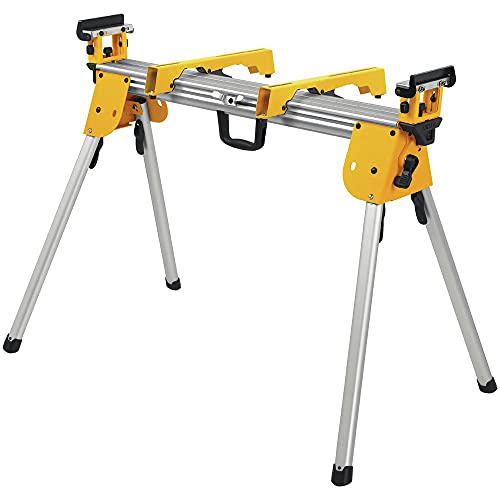
For a jobsite or garage with a 10 or 12 inch miter saw, a folding stand with wheels, such as the DeWalt DWX723 or the Bosch T1B, is the practical pick for most buyers; if you want a stationary bench with storage and dust control, a shop-built or fixed cabinet stand is better. The right stand depends on how often you move it, what saw you own, and how long your stock is.
Our top picks


As an Amazon Associate we earn from qualifying purchases at no extra cost to you.
At a Glance
| Stand | Type | Best for | Limits |
|---|---|---|---|
| DeWalt DWX723 | Folding, wheeled, extendable supports | Jobsite carpentry, mid-size saws | Check saw mounting compatibility |
| Bosch T1B | Folding gravity-rise style | Frequent transport with a Bosch saw or similar | Weight capacity and fit vary by saw |
| Milwaukee and Makita folding stands | Folding, wheeled | Owners already in those tool systems | Models and mounts differ |
| Fixed workshop stand or bench | Stationary, with wing supports | Home shop with long boards | Not portable |
| Lightweight folding stands (Hercules, Delta, others) | Budget folding | Occasional DIY | Lower capacity, less stable |
Specifications such as load capacity, support extension length and weight differ by model and revision. Read the maker’s page for the exact stand and confirm that the stand lists your saw as compatible.
What to Look For
Load capacity
Miter saws, especially 12 inch sliding compound models, weigh significant amounts. Compare your saw’s weight with the stand’s stated capacity and leave a margin. Capacity is usually given for the stand as a whole; extension arms carry less.
Mounting system
Stands attach with brackets, rails or universal mounts. Many offer adjustable brackets that fit multiple saw brands, but fit is not guaranteed. Check the bolt pattern and base size of your saw against the stand’s listed mount range.
Material support
Material supports hold long boards at the same height as the saw table. Look for adjustable supports that slide out and lock, plus a stop block system for repeated cuts. Uneven supports cause inaccurate cuts and unsafe handling.
Mobility
Wheels and a quick-folding mechanism make transport easy. The tradeoff is that wheeled stands are heavier than tripod-style stands, and rough ground can rock them. Level feet or a locking mechanism help.
Setup speed
Some stands, like the DeWalt DWX723 line, are marketed for fast setup with a single folding motion. This matters if you set up and break down multiple times a day.
Stand Types
Folding wheeled stands
These are the mainstream choice. They fold flat for storage, roll like a hand truck and unfold quickly. DeWalt, Bosch, Milwaukee and Makita each have a version, usually at mid-range to premium tiers. They suit most remodelers and trim carpenters.
Lightweight folding stands
Budget-tier stands from brands such as Delta or Hercules are lighter and cheaper but typically have lower capacity and smaller supports. They fit occasional DIY use with a smaller saw. Reviewers often note more flex when extension arms are loaded.
Stationary benches and cabinets
A fixed miter saw station can include storage, dust collection ports, long fence wings and drawers. Brands such as Rockler sell hardware and plans, and many woodworkers build their own. They are the steadiest option, at the cost of floor space and portability.
Safety and Setup
- Fully unfold and lock the stand before mounting the saw.
- Use all the mounting bolts, and tighten them to the stand maker’s instructions.
- Keep the stand level on firm ground, since soft soil or slopes reduce stability.
- Do not exceed the saw weight or support load limit.
- Wear eye and ear protection, and a dust mask; follow your saw’s manual for blade guard use.
- Clamp or support long boards so that offcuts do not bind the blade.
Budget Tiers
| Tier | Typical choice | Trade-off |
|---|---|---|
| Budget | Lightweight folding stand | Lower capacity, less stable with heavy saws |
| Mid-range | Brand-name wheeled folding stand | Heavier, but easier daily use |
| Premium | Top-tier jobsite stand or custom cabinet | Cost, weight or space |
Pick One If… Decision Table
| Your situation | Best fit |
|---|---|
| Daily jobsite work | Wheeled folding stand like DWX723 or T1B |
| Garage DIY, small saw | Budget folding stand |
| Long molding and trim | Stand with long extending supports or stationary station |
| Permanent shop | Fixed bench with dust collection |
| Heavy 12 inch sliding saw | Stand with higher stated capacity and wide mount |
Alternatives
- Workbench with a recessed saw: the saw sits flush with the benchtop for flat support.
- Folding sawhorses with a plank: a very low-cost approach for occasional cuts, though less accurate and less safe than a dedicated stand.
- Multi-tool workstations: stands that switch between miter saw and table saw use.
- Build your own station: using plans and plywood, with material wings.
Matching a Stand to Your Saw
Start with your saw. A 10 inch single-bevel compound saw is much lighter than a 12 inch dual-bevel sliding model, and the stand should reflect that. Sliding saws need extra clearance behind them for the rails, so the stand must leave room at the back or the saw cannot slide through its full range. Check the saw manual for the minimum space it needs behind the fence.
Measure the base of the saw and compare it with the stand’s mounting span. Many stands use adjustable rails that clamp onto the saw feet, but some saws have unusual feet or low clearance that interfere with brackets. If you own multiple tools, a stand that accepts both miter saws and benchtop planers can save money, though it may have a lower capacity than a dedicated model.
Cutting long stock accurately
Accuracy depends on support. Set the extension supports so that the board rests flat at the same height as the saw table, then lock them. Add a stop block to repeat cuts without measuring each time. For crown molding and trim, a fence with a flip stop can speed up work. Take time to square the saw to the fence after mounting it on a new stand, because transport can shift the alignment.
Transport and storage
Folded stands can usually be stored upright against a wall. Lift with your legs when loading a stand with the saw attached, and get a second person for heavy saws. Many stands include wheels sized for rough ground, but stairs remain a challenge, so check the combined weight before relying on one for upstairs work.
Longevity
Wipe off dust, lubricate pivots as the maker advises, and check for loose bolts after transport. A stand that develops play in its legs should be repaired or replaced, since a wobbling saw platform affects both accuracy and safety.
Common Buying Mistakes
- Ignoring saw weight: a stand rated near your saw’s weight leaves no margin for pushing and pulling forces.
- Assuming universal means every saw: brackets have limits, and some saw feet will not clamp.
- Skipping material supports: short wings force you to hold long boards by hand.
- Forgetting rear clearance: sliding saws need space behind them.
- Using it on soft ground: a stand sinking on one leg changes the cut angle.
Reading owner reports for your exact saw and stand pairing is helpful, since fit issues are often brand-specific. Also consider the height of your cutting position and whether you will often work alone, which affects how heavy a stand you can handle comfortably.
Frequently Asked Questions
Will a miter saw stand fit any saw?
Not always. Many stands offer adjustable mounts but have limits on base size and weight. Check the maker’s compatibility list or measure your saw’s base.
Is a wheeled stand worth it?
If you move the saw between rooms or job sites, yes. Wheels and quick folding reduce lifting. For a fixed workshop, a stationary bench is often steadier.
What size saw does a typical stand handle?
Many folding stands are designed for 10 and 12 inch compound or sliding models, but capacity and mount range vary. Confirm with the stand’s specifications.
How do I keep long boards level?
Use adjustable material supports set to the saw table height, and add extra support for very long stock. Uneven support can cause binding and kickback.
Can I use a miter saw stand on uneven ground?
Many stands have adjustable feet, but very uneven ground is risky. Level the stand and make sure all legs are firmly in contact before cutting.
Do I need a stand with dust collection?
It is not required, but dust collection helps visibility and clean-up. Attach a vacuum to the saw’s dust port if the manual allows, and wear a dust mask.