
A hybrid table saw suits the woodworker who wants cabinet-saw manners, a quieter induction motor and a more accurate fence, but only has a home shop, a standard household circuit and limited floor space. If you build furniture in a one-car garage, a hybrid is usually the sensible middle ground between a portable jobsite saw and a heavy cabinet saw. If you run the saw all day or rip thick hardwood constantly, step up to a cabinet saw instead.
Our top picks
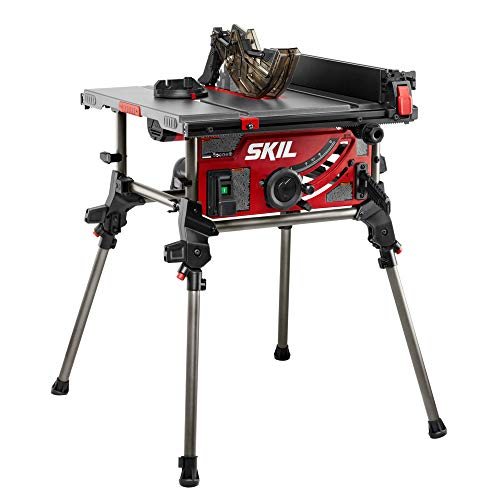
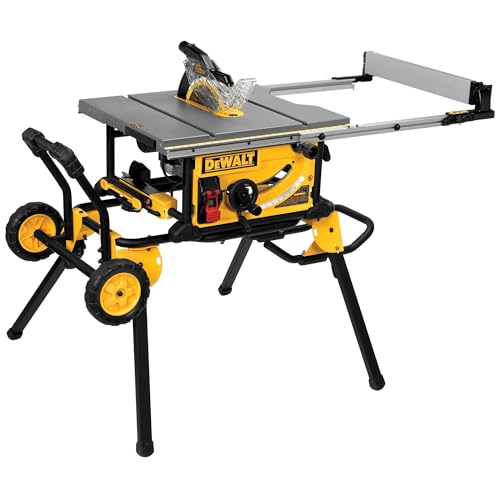


As an Amazon Associate we earn from qualifying purchases at no extra cost to you.
What a hybrid table saw actually is
A hybrid combines features from two older categories. Like a cabinet saw, it normally uses an enclosed base, a belt-driven induction motor and a trunnion mounted to the cabinet rather than hanging from the table. Like a contractor saw, it generally runs on a standard 120-volt household circuit, weighs less than a full cabinet saw and costs less. The result is a saw that is quieter than a universal-motor jobsite model, has less vibration, and offers better dust collection than an open-leg contractor saw because the base is enclosed.
Makers define the category loosely, so two saws sold as hybrids can differ in motor power, trunnion mounting and weight. Always read the manufacturer’s specification sheet rather than relying on the label.
At a glance
| Saw | Best for | Key stated traits | Limits |
|---|---|---|---|
| SawStop Contractor Saw | Home shops that want flesh-sensing brake technology | Maker lists a 1.75 HP, 120-volt motor, a 10-inch blade, cast-iron table and a rail-mounted fence system | Premium tier; the brake cartridge is a consumable once triggered |
| Powermatic PM1000 hybrid | Buyers who prefer a heavy, quiet, traditional build | Maker lists a 1.75 HP, 115-volt motor and a 10-inch blade with a cast-iron top | No flesh-detection brake; premium-leaning tier |
| Jet ProShop-style hybrid | Hobbyists wanting a step up from contractor saws | Maker lists an induction motor, cast-iron top and a rail-and-fence package | Fit and finish vary by revision; read the maker’s spec sheet for the exact model |
| Grizzly hybrid line | Budget-conscious buyers who will tune the saw themselves | Maker offers several hybrid models with 1.5 to 2 HP class motors and 10-inch blades | Setup and alignment often take extra time; support is direct from the maker |
| Shop Fox hybrid line | Value-focused shops | Maker lists an enclosed cabinet, cast-iron table and rail-mounted fence on its hybrid models | Model lineup changes; confirm which version you are buying |
How to judge a hybrid saw
Motor and power supply
Most hybrids use an induction motor in roughly the 1.5 to 2 horsepower range on 120 volts. That is enough for most furniture work, including ripping hardwoods in typical thicknesses, if the blade is sharp and the feed is steady. Check that your circuit is rated for the saw’s listed amperage and that nothing else is running on the same breaker. If you are unsure about your wiring, ask a licensed electrician before installing a dedicated outlet. Some makers allow rewiring to 240 volts; follow the manual and do not modify wiring without qualified help.
Fence and rails
The fence is the part you touch on every cut. T-square style fences that lock at the front and rear generally hold parallel better than single-point clamps. Rip capacity to the right of the blade is commonly offered in 30-inch and 52-inch configurations; pick the one that matches the sheet goods you cut. Reviewers across woodworking outlets often single out fence quality as the best predictor of long-term satisfaction.
Trunnion and table
Cabinet-mounted trunnions make alignment easier because the table can be moved independently of the mechanism. Hybrid saws that bolt the trunnion to the table, as a contractor saw does, can be harder to square. A flat cast-iron top with a ground surface also resists wear and makes outfeed support easier. Wing extensions should sit flush with the main table; many owners check this with a straightedge at setup.
Dust collection
An enclosed base helps, but dust capture still depends on the port size, blade guard and your collector. Most hybrid saws list a 4-inch dust port. A blade guard with its own overhead port captures more fine dust. Fine wood dust is a respiratory irritant, so wear a suitable respirator and keep the shop ventilated.
Safety technology
SawStop’s flesh-detection brake is the best-known safety system on this class of saw. The maker states that the brake stops the blade when it detects contact with skin and drops the blade below the table. It does not replace safe habits: use a riving knife, push sticks, eye and hearing protection, and never stand directly in line with the blade. Other brands rely on standard guards, riving knives and anti-kickback pawls. If several people use the shop, the brake can be a reasonable factor, but it is a back-up, not a substitute for technique.
Budget tier trade-offs
Budget tier
Budget hybrids from value brands typically give you an induction motor and cast-iron top at a lower cost. The trade-off is more time spent aligning the blade, adjusting the fence and possibly upgrading the blade or the miter gauge. Owners who enjoy tuning machinery tend to be happy here.
Mid-range tier
Mid-range saws usually improve the fence, the trunnion fit, the dust port and the quality of the included accessories. Reviewers often describe this tier as the best value for hobbyists who build furniture regularly.
Premium tier
Premium hybrids add either a flesh-sensing brake, heavier castings or a tighter factory setup. The extra weight reduces vibration, and the better fences usually need less adjustment over time. The cost is both cash and floor space.
Pick X if you …
| If you … | Pick | Why |
|---|---|---|
| Want the flesh-sensing brake in a home-shop size | SawStop Contractor Saw | Maker pairs the brake system with a 120-volt motor |
| Prefer a heavy traditional machine and low noise | Powermatic hybrid | Cast-iron heft and an induction motor are the draw |
| Are building a shop on a tight budget | Grizzly or Shop Fox hybrid | More saw for the money, with extra tuning time |
| Need to move the saw often | A jobsite saw instead | Hybrids are heavy and not designed to travel |
| Cut thick hardwood all day | A full cabinet saw | Larger motors handle sustained load better |
Fit, size and care notes
Measure your shop before you buy. A hybrid with a 52-inch rail needs room to the right of the blade for the fence and for sheet goods, plus space in front and behind for long boards. Plan for outfeed support. Weight is also a factor: many hybrids ship at several hundred pounds, so you may need two people and a lift cart to move the crated saw.
For care, wipe the cast-iron top with a dry cloth, apply a paste wax or a rust-preventive product the maker approves, and keep the trunnion free of dust. Check the belt tension and the blade alignment regularly. Always unplug the saw before changing blades or making internal adjustments.
A good blade matters as much as the saw. Many hybrids ship with a general-purpose blade; a quality thin-kerf blade can be easier on a 1.75 horsepower motor, while a full-kerf blade tends to give a flatter cut in thick hardwood.
Alternatives to consider
- Compact or jobsite saws such as SawStop’s portable models, if you need to move the saw between sites or store it in a corner.
- Full cabinet saws, if you have 240-volt service and want a heavier machine with a larger motor.
- Used older cabinet saws, which can offer excellent value but need careful inspection of the trunnion, arbor bearings and fence, and have no modern safety features.
Frequently Asked Questions
Is a hybrid table saw better than a contractor saw?
For most buyers, yes. The enclosed base, belt-driven induction motor and cabinet-mounted trunnion generally run quieter and hold alignment better. A contractor saw may still suit someone with a very small budget who is willing to tune the machine.
Can a hybrid saw run on a normal household outlet?
Most are designed for 120 volts, but they still draw significant current at startup. Use a circuit of the rating the manual specifies and avoid long extension cords. Ask an electrician if you are unsure.
Do I need a cabinet saw instead?
If you rip thick hardwood daily, work in a professional environment or have 240-volt service available, a cabinet saw gives more power and mass. For weekend and furniture projects, a hybrid is often sufficient.
Is the flesh-sensing brake worth it?
The maker says the brake is designed to reduce injury severity. Whether it is worth the premium depends on your budget and how many people use the saw. It does not replace a riving knife, push sticks or careful technique.
What blade should I use?
A quality 40-tooth combination blade covers most general work. Use a rip blade for long cuts in solid wood and a high-tooth-count crosscut blade for plywood and trim. Match the blade to the arbor size and the kerf your riving knife expects.
How heavy are hybrid table saws?
They are generally heavier than jobsite saws and lighter than full cabinet saws, with shipping weights commonly in the several-hundred-pound range. Read the maker’s listed weight and plan a mobile base and help for unloading.





