Key takeaways
- Canned air propellant: low-cost and silent for tiny jobs, but pressure drops as the can empties and it costs more over time.
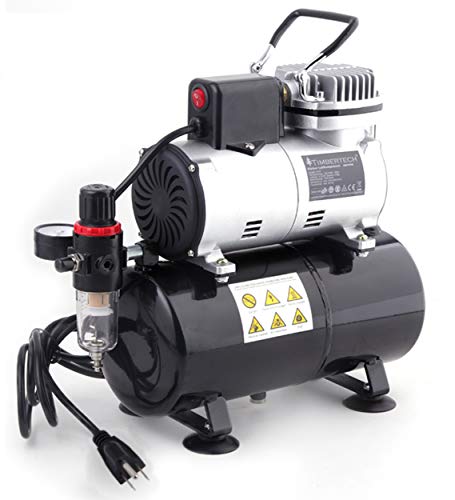
- Shop compressor with regulator: works if you already own one, but noise and moisture control matter.
- Brush painting: for those who do not need airbrush effects.
A compact piston compressor with a regulator and moisture trap suits hobbyists painting miniatures and models, a model with a small air tank suits those who need steadier pressure for fine detail and larger coverage, and a silent or low-noise compressor suits people working in shared rooms. Choose by stable pressure, noise, and tank, not by the biggest number on the box.
Our top picks


As an Amazon Associate we earn from qualifying purchases at no extra cost to you.
Airbrush Compressors at a Glance
| Type | Examples | Best for | Limits |
|---|---|---|---|
| Compact tankless piston | Master Airbrush compact models | Hobby painting on a budget | May pulsate slightly; runs continuously |
| Piston with small tank | Iwata Studio Series Power Jet Lite and similar | Steady pressure, detail work | Larger and heavier; higher tier |
| Quiet/silent models | Sparmax and similar quiet lines | Apartments, shared rooms | Premium tier |
| Diaphragm/mini compressors | Small portable units | Cake decorating, nail art, light use | Not for continuous heavy use |
Makers publish pressure, airflow, and noise figures differently, so compare like with like. Confirm the numbers on the exact model page before you buy.
What to Look For
Pressure and airflow
Most hobby airbrushing runs at relatively low pressure. A regulator lets you dial the pressure down for fine detail and up for thicker paints. Airflow volume matters more for larger airbrushes and for sustained use.
Tank or no tank
A tank smooths pulsing and lets the motor cycle off, which can lower noise and heat. Tankless units are lighter and cheaper but may cause slight pulsing in the spray at low pressure, which reviewers say is more noticeable in fine detail.
Moisture trap
Condensation can spit water into the paint. A moisture trap or filter helps, and an in-line regulator with a gauge gives more control.
Noise
Compressors vary a lot. If you work in a living room or at night, look at the maker’s stated noise level and reviewer comments.
Hose and fittings
Check that the hose fitting matches your airbrush. Adapters are common and cheap. A braided hose is more flexible and durable than a plain one.
Duty cycle and heat
Some compressors are meant for intermittent use and need rest to cool down. Read the maker’s duty cycle guidance, especially for long painting sessions.
Iwata Studio Series Power Jet Lite: Best Steady Performer
Iwata is a long-established airbrush maker and its compressors are aimed at consistent, quiet operation for artists. The Power Jet Lite is a compact unit often discussed in modeling and art communities. Limits: higher cost tier than basic compressors.
Sparmax Compressors: Best Low-Noise Lineup
Sparmax makes a range of compressors, including compact and tank models, often pitched to modelers who want low noise. Check specific model pages for pressure, tank size, and features.
Master Airbrush Compressors: Best Budget Entry
Master Airbrush sells combo kits with airbrush, hose, and compressor, which is convenient for beginners. These units are typically tankless or have a small tank, so expect some noise and less refinement than premium models.
Pick X If You…
| Pick this | If you… |
|---|---|
| Iwata Power Jet Lite | want steady pressure and a trusted artist brand |
| Sparmax | need lower noise and a range of tank options |
| Master Airbrush kit | are starting out on a budget |
| Mini compressor | do light decorating or short sessions |
Safety and Care Notes
Airbrushing creates fine mist. Work in a ventilated area or use a spray booth, and wear a respirator suited to the paints you use. Follow the paint label guidance. Unplug the compressor before servicing, keep cords dry, and drain moisture from the trap and any tank per the manual. Do not exceed the rated pressure of the tank or hose.
Alternatives
- Canned air propellant: low-cost and silent for tiny jobs, but pressure drops as the can empties and it costs more over time.
- Shop compressor with regulator: works if you already own one, but noise and moisture control matter.
- Brush painting: for those who do not need airbrush effects.
Frequently Asked Questions
Do I need a tank on my airbrush compressor?
A tank is not required, but it smooths pulsing and can reduce motor run time. For fine detail work, many painters prefer a tank model.
What pressure do I need?
Hobby painting usually uses low to moderate pressure with a regulator to adjust. Follow your airbrush and paint maker’s guidance.
Why does my airbrush pulse?
Pulsing is common with tankless piston compressors at low pressure. A tank or a regulator with a small buffer can help.
How do I stop water in my airbrush line?
Use a moisture trap, drain it regularly, and let the compressor rest between long sessions.
Are airbrush compressors loud?
Some are, particularly tankless models. Makers of quiet models publish noise levels, and reviewers often mention noise as a deciding factor for home use.
Can I use a compressor for other tools?
Small airbrush compressors are designed for low-volume work and are not meant to power air tools. Use them only for what the maker intends.