For most households, a mid-range expandable hose with brass fittings and a double-layer latex core suits light watering of beds, pots and patios, while anyone who runs a sprinkler for hours, uses a pressure-hungry nozzle or needs a hose that survives being dragged across gravel is better served by a conventional reinforced rubber or hybrid hose. Expandable hoses are popular because they weigh very little and shrink to a fraction of their length when the water is off, but they trade away toughness to get there. This guide explains how they work, which kinds of products fit which jobs, and what to look at before buying.
Our top picks
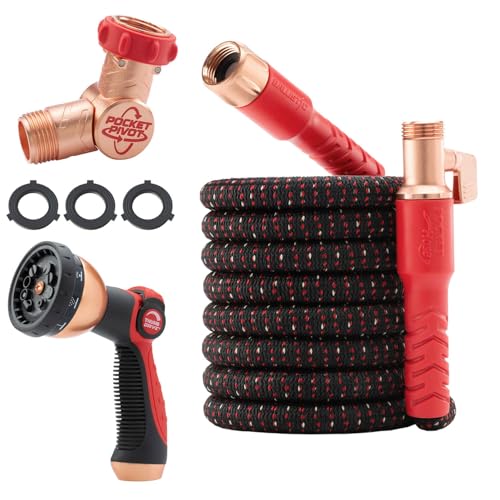 Pocket Hose Ballistic 50 FT Expandable Garden
- WORLD’S #1 EXPANDING HOSE
 Flexi Hose Expandable Garden Hose with 8
- The Flexi Hose expandable garden hose automatically expands…
- Strong fittings for reliability! Solid 3/4 inch brass…
- Expandable, lightweight construction without sacrificing quality! The 3750D…
| Product | Key specs | |
|---|---|---|
 Pocket Hose Copper Bullet 50 FT Expandable | Check price | |
| Pocket Hose Ballistic 50 FT Expandable Garden | WORLD’S #1 EXPANDING HOSE | Check price |
| Flexi Hose Expandable Garden Hose with 8 | The Flexi Hose expandable garden hose automatically expands… Strong fittings for reliability! Solid 3/4 inch brass… Expandable, lightweight construction without sacrificing quality! The 3750D… | Check price |
 Pocket Hose Copper Bullet 100 FT Expandable | Check price |
As an Amazon Associate we earn from qualifying purchases at no extra cost to you.
How an Expandable Hose Works
An expandable hose has an inner elastic tube, usually latex or a similar stretchy material, wrapped in a woven fabric sleeve. When water pressure builds, the inner tube stretches and the hose extends to roughly two to three times its resting length, depending on the model. When you close the nozzle and release pressure, the tube relaxes and the hose contracts. Makers of the best-known lines, including Pocket Hose and XHose, describe this behaviour on their product pages, and quote resting lengths of a few feet that grow to 25, 50, 75 or 100 feet in use.
The lightweight, kink-resistant design is the main selling point. The drawbacks are also built in: the fabric sleeve is thinner than a rubber jacket, the inner tube is a wear item, and constant stretching under pressure means leaks at the fittings or pinholes in the tube are the usual failure points. Reviewers who cover garden products commonly describe expandable hoses as a convenience product for light and occasional work rather than a long-term workhorse.
At a Glance: Hose Types Compared
| Type | Best for | Key stated traits | Limits |
|---|---|---|---|
| Pocket Hose style expandable (brass fittings) | Small yards, balconies, patios | Maker lists lightweight build, brass couplings, lengths up to 100 ft in use | Not meant for continuous pressure or abrasive surfaces |
| XHose style expandable | Storage-conscious households | Maker lists compact resting length and fabric sleeve | Needs draining after use; sleeve can wear on rough ground |
| Budget unbranded expandable | Occasional rinse jobs | Light and cheap, often plastic fittings | Fittings crack or leak first; short lifespan reported |
| Hybrid or polymer hose (Flexzilla, Gilmour Flexogen type) | Everyday general watering | Makers list kink resistance and 5/8 or 3/4 inch bores | Heavier than expandables, does not shrink |
| Reinforced rubber hose | Heavy use, hot water exposure, commercial-style jobs | Thick walls and durable couplings | Heavy and awkward to coil |
What to Look For
Fittings
Solid brass couplings are the single most important upgrade. The connection where the sleeve meets the metal or plastic collar is the most common failure point, so look for a collar that clamps the sleeve rather than just crimping it. Plastic fittings are fine for a seasonal rinse hose but tend to crack when overtightened or left in freezing weather.
Length and Reach
The advertised length is the stretched length at full pressure. Pick the length based on your longest run from the spigot, then add a small margin. Longer expandable hoses take more pressure to stretch fully and may extend unevenly on low-pressure supplies. If your tap delivers modest flow, a 50 foot model often behaves better than a 100 foot one.
Water Pressure
Expandable hoses are designed for typical household pressure. Makers generally list maximum working pressure on the packaging; stay below it. Consider a pressure reducer at the spigot if your home supply is high, since spikes are a classic cause of burst inner tubes.
Nozzle Weight
A heavy metal spray nozzle can pull on the front of a lightweight hose and stress the connector. Most expandable hose kits ship with a plastic multi-pattern nozzle for this reason. If you swap in a heavy nozzle, support it as you work.
Drinking Water Safety
Not every garden hose is safe for drinking. If you want to drink from or fill a pet bowl from the hose, look for a product the maker states is drinking-water safe, usually described as lead-free or NSF-listed. Many expandable hoses carry no such claim, and several makers say outright that the hose is for outdoor watering. Follow the instructions on the packaging, and let the hose run for a moment before using it, particularly after sitting in the sun.
Budget Tiers
Budget
Entry-level expandable hoses are inexpensive and light, and they suit occasional watering of a few pots or washing a patio. Expect plastic fittings in many cases, a shorter lifespan, and the need to handle gently. They are a reasonable trial purchase if you are unsure expandables suit you.
Mid-Range
This is where most buyers should shop. Brass connectors, a thicker sleeve and a reputable brand with a posted warranty period make a meaningful difference. Brand lines such as Pocket Hose Copperhead and XHose are examples reviewers often mention in this tier.
Premium
Premium here means either a better-built expandable or a move away from expandables. Hybrid hoses from Flexzilla or Gilmour weigh more than expandables but resist kinks and abrasion and lie flat without stretching. For daily use, the premium tier is usually the better long-term value.
Pick X If … Decision Table
| If you … | Choose | Why |
|---|---|---|
| Have a small yard or balcony and little storage | Mid-range expandable with brass fittings | Shrinks to a small coil and is easy to carry |
| Water daily or run sprinklers for hours | Hybrid or rubber hose | Handles continuous pressure and drag better |
| Want to try an expandable cheaply | Budget expandable | Low commitment, accept shorter life |
| Have limited grip strength or mobility | Expandable of moderate length | Light weight reduces strain |
| Need drinking-water safe delivery | A hose the maker states is drinking-water safe | Most expandables do not make this claim |
| Live where winters freeze | Any hose, drained and stored indoors | Trapped water damages every type |
Care Tips That Extend Life
- Always open the nozzle fully, then turn on the tap gradually. Sudden pressure strain is a common cause of leaks.
- Drain the hose after use and store it out of direct sun. Ultraviolet exposure degrades latex and fabric over time.
- Do not pull a pressurised expandable hose around corners or over sharp edges; the sleeve scuffs and the inner tube eventually weakens.
- Do not leave the hose attached and pressurised when you are away. Many makers advise turning off the tap at the end of each session.
- Replace the rubber washers in the couplings if you see drips, since this is cheaper than replacing the hose.
- Keep it away from hot surfaces and open flame, and do not use it with pressure washers unless the maker explicitly approves.
Alternatives to Consider
Flexzilla and Hybrid Polymer Hoses
Makers of hybrid hoses list kink resistance and extended-temperature flexibility, and reviewers often name them as the best all-round upgrade for people who find expandables frustrating. They are heavier, and they do not collapse for storage, but they tend to last longer under everyday use.
Traditional Reinforced Rubber
If you need to drag a hose across driveways, drive over it occasionally or use it in hot conditions, rubber remains the toughest option. It is heavy, but it is predictable.
Soaker or Drip Lines
If your real goal is watering beds with less effort, a soaker hose or a drip kit with a timer may serve you better than any hand-held hose, and it can use less water.
Frequently Asked Questions
How long does an expandable garden hose last?
Lifespan depends heavily on use and care. Reviewers commonly report seasons rather than decades, with leaks at the fittings or pinholes in the inner tube being the usual end point. Draining the hose, avoiding abrasive surfaces and storing it in shade all help.
Can I leave an expandable hose connected to the tap?
Most makers advise turning off the water and releasing pressure after each use. Leaving a pressurised hose connected stresses the inner tube and fittings, and sun exposure can raise the pressure further. Follow the instructions in your product manual.
Is an expandable hose safe for drinking water or pets?
Only if the maker states the hose is drinking-water safe. Many do not make that claim. If you are unsure, use the hose for watering plants and washing, and use a hose labelled for drinking for anything else.
Why does my expandable hose leak at the connector?
The most common reasons are a worn rubber washer, an overtightened plastic fitting or a sleeve pulling away from the collar. Replace the washer first and hand-tighten the fitting. If the sleeve has separated from the metal or plastic collar, the hose usually needs replacing or a maker warranty claim.
Do expandable hoses work with low water pressure?
They can, but very long models may not extend fully or evenly on low-pressure supplies. A shorter length generally behaves better, and opening the tap fully helps. If the hose barely stretches, check for a clogged screen or a partially closed shut-off valve.
Which is better, an expandable or a hybrid hose?
An expandable is better for light weight and compact storage. A hybrid hose is better for durability and sustained use. Choose based on how often you water and how rough your yard is on equipment.