The best junior drum sets for most young beginners are the Ludwig Questlove Pocket Kit, Pearl Roadshow Jr., and Tama Stagestar, because they offer real wood shells, adjustable height hardware sized for kids 3 to 10 years old, and a footprint under 4 x 3.5 feet that actually fits a bedroom or apartment corner.
Our top picks
 VEVOR Kids Drum Set
- Unleash Professional Sound Quality: Elevate your kids drumming…
- 5-Piece Beginner-to-Pro Drum Set: Our drum set is…
- Kickstart Your Kid's Musical Journey: Ignite your child's…
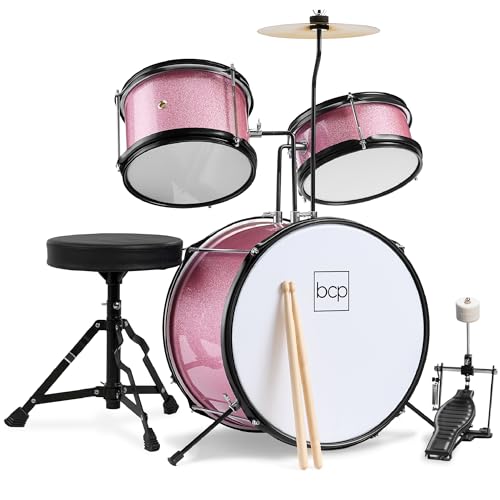 Best Choice Products 3-Piece Beginner Drum Set
- Sized for children ages 3 and up with…
- Carefully shaped and sealed wood shells create a…
- Blackened metal fastenings come together in an easy…
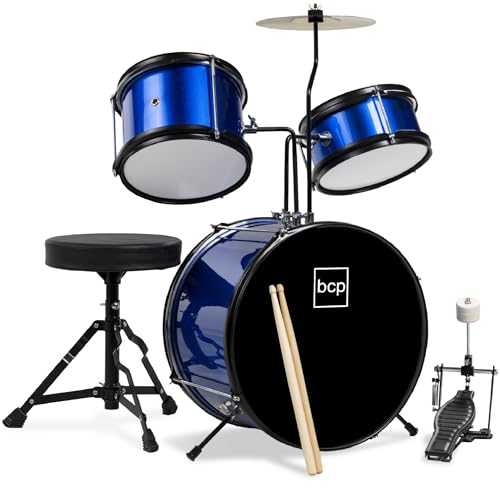 Best Choice Products 3-Piece Beginner Drum Set
- Sized for children ages 3 and up with…
- Carefully shaped and sealed wood shells create a…
- Blackened metal fastenings come together in an easy…
| Product | Key specs | |
|---|---|---|
| VEVOR Kids Drum Set | Unleash Professional Sound Quality: Elevate your kids drumming… 5-Piece Beginner-to-Pro Drum Set: Our drum set is… Kickstart Your Kid's Musical Journey: Ignite your child's… | Check price |
| Best Choice Products 3-Piece Beginner Drum Set | Sized for children ages 3 and up with… Carefully shaped and sealed wood shells create a… Blackened metal fastenings come together in an easy… | Check price |
| Best Choice Products 3-Piece Beginner Drum Set | Sized for children ages 3 and up with… Carefully shaped and sealed wood shells create a… Blackened metal fastenings come together in an easy… | Check price |
 VEVOR Kids Drum Set | Pro-Level Sound for Young Drummers: Elevate your child's… 5-Piece Kit for Every Skill Level: From first… Spark a Lifelong Love for Music: This kid-friendly… | Check price |
As an Amazon Associate we earn from qualifying purchases at no extra cost to you.
How to Choose by Age, Height, and Space
Adult drum dimensions don’t scale down linearly. A 22-inch bass drum requires a leg reach and foot pressure most kids under 4’6″ can’t manage, which forces bad posture and kills motivation. Junior kits solve this with 16-inch to 18-inch bass drums, shallow toms, and shorter stands. Pick by inseam and setup space, not just age.
- Ages 3-6 (35″ to 45″ tall): Look for a 16-inch bass drum, 8″ and 10″ toms, and a throne that drops to 14-15 inches. The kit should assemble to a footprint of about 38″ x 32″. Pedal tension must be adjustable to light.
- Ages 6-10 (43″ to 54″ tall): A 16-inch or 18-inch bass drum with 10″ and 12″ toms works better. It feels closer to a full kit but still allows the snare to sit at waist height without shoulder hunching. Expect a footprint of 42″ x 36″ to 48″ x 40″.
- Ages 10+ or over 4’8″: Skip most junior kits. A compact 20-inch “bop” or “micro” kit with a standard throne and hardware will fit longer and transition to lessons on a studio kit without re-learning spacing.
Quick Fit Check Before You Buy
Have your child sit on the throne with feet flat. Thighs should be slightly above parallel to the floor, and the snare rim should sit 1-2 inches above the lap. If they have to reach up for the snare or extend their leg fully to press the bass pedal to the head, the kit is too large. Measure your practice area too: include 12 inches of clearance behind the throne and 6 inches on each side for stick movement.
Junior Drum Set Comparison: Real Sizes and Specs
These five kits are widely available from major drum brands in 2026 and represent the core market for true junior kits with wood shells and included hardware. Specs below are factory standard configurations.
| Model | Configuration | Bass Drum | Snare / Toms | Shell Material | Cymbal(s) Included | Approx. Footprint (W x D) | Throne Height Range |
|---|---|---|---|---|---|---|---|
| Ludwig Questlove Pocket Kit | 4-piece | 16″ x 14″ | 12″ x 8″ snare / 10″ x 7″ tom / 13″ x 11″ floor tom | Poplar | 10″ hi-hats, 16″ crash/ride | 38″ x 32″ | 14″ – 18″ |
| Pearl Roadshow Jr. | 5-piece | 16″ x 14″ | 12″ x 8″ snare / 10″ x 7″ & 11″ x 8″ toms / 13″ x 9″ floor tom | Poplar | 10″ hi-hats, 16″ crash | 42″ x 36″ | 15″ – 19″ |
| Tama Stagestar SG52KH4 | 5-piece | 18″ x 14″ | 12″ x 8″ snare / 10″ x 8″ & 11″ x 9″ toms / 14″ x 11″ floor tom | Poplar | 13″ hi-hats, 16″ crash, 18″ crash/ride (on some bundles) | 48″ x 40″ | 16″ – 22″ |
| Yamaha Manu Katche Junior Kit (JK6F5) | 5-piece | 16″ x 15″ | 10″ x 6″ snare / 10″ x 7″ & 13″ x 10″ toms / 13″ x 10″ floor tom | Birch / Poplar blend | 13″ hi-hats, 16″ crash (often sold with Yamaha HW3 hardware pack) | 44″ x 38″ | 15.5″ – 20″ |
| PDP By DW Player Jr. | 5-piece | 18″ x 12″ | 12″ x 8″ snare / 10″ x 7″ & 12″ x 8″ toms / 14″ x 10″ floor tom | Poplar | 10″ hi-hats, 16″ crash | 46″ x 38″ | 16″ – 21″ |
Key takeaway: The Ludwig and Yamaha kits pack the smallest while keeping real tuning lugs and wood shells. The Tama and PDP 18-inch bass drums sound fuller and feel closer to a full-size kit, but need 6-10 inches more floor space in each direction and a taller minimum throne height, which can be too high for kids under 40 inches tall.
What Actually Differs: Hardware and Cymbals
Shell sizes get the attention, but hardware determines whether a small child can play comfortably week after week.
- Pedal and hi-hat: Junior pedals should have a shorter footboard and adjustable spring tension. The Ludwig and Pearl Jr. pedals are scaled down, while Tama and PDP often include a standard junior/proportional drive pedal that heavier elementary-age kids control more easily. Check that the hi-hat stand has a small footplate and a clutch that holds thin 10″ or 13″ hats without slipping.
- Stands: Single-braced, lightweight stands are correct here. Double-braced adult hardware is stable but adds 3-5 lbs per stand and raises the minimum cymbal height by 4-6 inches, pushing crashes out of reach.
- Cymbals: All kits in this range include brass cymbals, not professional bronze. They are fine for learning timekeeping and dynamics but will sound brassy and wear faster if crashed hard. Budget for an upgrade to B8 or B20 bronze in year two if your child sticks with lessons. A 16-inch brass crash/ride doubles as both, which saves space but limits technique.
- Heads: Stock heads are single-ply clear. They tune up quickly but dent easily under heavy sticks. Use 7A or 5A sticks, not adult 2B, to reduce head wear and volume.
Decision Matrix: Which Kit Fits Your Situation
| If Your Situation Is… | Best Match | Why |
|---|---|---|
| Toddler / preschooler, very small bedroom or apartment | Ludwig Questlove Pocket Kit | Smallest footprint, lowest throne, 16″ bass drum easiest to trigger, 4-piece means fewer stands to trip over |
| Elementary age, wants a full-looking kit for lessons | Pearl Roadshow Jr. | True 5-piece setup with two rack toms, 16″ bass drum keeps volume and reach manageable |
| Tall for age (over 4’6″) or sharing with an older sibling | Tama Stagestar or PDP Player Jr. | 18″ bass drum and larger toms project more and transition to a full-size kit with less adjustment |
| Focus on tone and build quality over lowest price | Yamaha Manu Katche Junior Kit | Birch-blend shells tune more precisely and hold tuning longer, hardware pack is more durable |
| Extremely tight space and noise-sensitive home | Any 16″ kit + add-on mesh heads or low-volume cymbals later | 16″ shells take mesh conversion heads better and low-volume cymbals keep footprint while cutting volume 70-80% |
Sizing and Space Calculation: Do It in 2 Minutes
Before ordering, run this quick math:
1. Footprint required = kit width + 12″ + kit depth + 24″ The extra 12″ covers cymbal arms and stick swing on the sides; the extra 24″ covers the throne pushed back and the drummer’s leg extension. For a Pearl Roadshow Jr. at 42″ x 36″, you need at least 54″ x 60″ of clear floor. In a general market range, junior kits from major brands typically fall between $300 and $600 as a complete bundle with hardware and cymbals; compact and pocket kits are usually at the lower end, 18-inch 5-piece bundles at the higher end.
2. Volume check: An acoustic junior kit at medium playing strength still hits 90-105 dB at 3 feet. In an apartment, plan on mesh drum heads and low-volume cymbals or a rug and sound-absorbing panels. A 5 x 7 foot rug under the kit protects floors, prevents creep, and reduces reflected sound more than any expensive drum mat.
Durability and Ownership Realities
Junior kits are real instruments, but ownership costs are not zero.
- What wears first: Brass cymbals crack at the edge and hi-hat clutches strip with over-tightening. Snare and batter heads dent in the center from rimshots. Bass drum pedal springs stretch and need re-tensioning every few months.
- Consumables to budget: Replacement drumheads (one set of batters runs $40-$70), a pair of 7A sticks every 2-4 months for regular practice, and cymbal felts and sleeves that prevent metal-on-metal wear. Keep spare tension rods – kids drop them during tuning.
- Cleaning and tuning: Wipe chrome with a dry microfiber cloth, not liquid cleaners. Tune in star patterns in quarter-turns; junior lugs strip easily if cranked unevenly. Check all wing nuts and memory locks weekly – vibration loosens them.
- Common mistakes: Over-tightening heads to chase a high pitch chokes the drum and warps hoops. Setting the throne too low forces knee strain; set it so the hip is just above the knee. Leaving brass cymbals tightly clamped without felts causes keyholing and early cracking. Placing the kit directly against a wall amplifies bass and annoys neighbors more than centering it in the room.
- Growth path: Most kids outgrow a 16-inch kit in 2-3 years. Kits that use standard 7/8″ or 1″ tom arms and standard cymbal stands (Yamaha, Tama, PDP) let you reuse hardware when you upsize to a 20-inch or 22-inch kit, saving $150-$250 later.
Setup Tips for Small Rooms and Noise Control
Start with the throne, bass drum, and snare in a triangle, then add toms and cymbals within easy reach without leaning. Angle the 10-inch rack tom nearly flat so a small arm can strike the center without glancing off the rim. Keep cymbals low and slightly tilted toward the player – high, flat cymbals encourage reaching and edge cracks. If you need quieter practice, mesh heads and low-volume cymbals drop overall volume to conversation level but retain the same stick rebound and pedal technique, unlike switching to rubber pads.
Frequently Asked Questions
Is a junior drum set just a toy?
No. Kits from Ludwig, Pearl, Tama, Yamaha, and PDP use wood shells, tunable heads, and metal hardware scaled down. Toys use plastic shells and pre-tensioned heads that can’t be tuned and break quickly under real sticks.
Should I buy an electronic junior kit instead for volume?
Electronic junior kits solve noise but often have small rubber pads with poor dynamic range and a kick pedal that doesn’t develop bass drum technique. If noise is the primary constraint, consider an acoustic 16-inch kit with mesh heads and low-volume cymbals, which keeps real drum feel while staying apartment-friendly. A dedicated electronic kit makes more sense if you need headphone practice after 8 p.m. daily.
What age can a child start?
Most teachers start at 5-7 years for formal lessons, but a 3-4 year old can explore a 16-inch 4-piece kit for rhythm play with supervision. Keep sessions to 10-15 minutes, use light sticks, and lower the hi-hat and crash to their shoulder height.
Do I need to buy anything beyond the bundle?
Add a rug, a pair of 7A sticks, hearing protection rated for music (SNR 20-25 dB earmuffs sized for kids), and a basic drum key. A practice pad can also help build technique without extra noise between kit sessions.