
The best car creepers are the ones that match your vehicle’s underside height, garage floor, body size, and repair frequency—not simply the ones with the most wheels.
Quick picks by garage and repair situation
| Situation | Best creeper type | Target specifications | Why it fits |
|---|---|---|---|
| Occasional home maintenance | Low-profile plastic or padded creeper | 38–40 in long, 3–5 in high, 250–300 lb capacity | Affordable, light, and easy to hang or stand upright |
| Frequent brake, exhaust, or suspension work | Professional padded creeper with six wheels | 40–48 in long, 3.5–5 in high, 300–400 lb capacity | Better support, smoother movement, and less fatigue |
| Low sports car or lowered vehicle | Ultra-low steel or composite creeper | 2.5–3.5 in high, recessed wheels, 300 lb or more | Slides beneath low subframes without hitting bodywork |
| Uneven concrete or garage threshold | Wide-wheel or off-road-style creeper | 3–4 in wheels, 5–6 wheel layout, 300 lb or more | Large wheels cross cracks more reliably than small casters |
| Limited storage space | Folding or convertible creeper | Folded length under 24 in; 250–300 lb capacity | Can be stored vertically or converted into a low seat |
What matters when choosing among the best car creepers
Pad length and body fit
A creeper should support your shoulders, back, hips, and at least most of your thighs. For many adults, a padded surface between 38 and 42 inches is adequate. Taller users may prefer 45–48 inches, particularly when working with the head near the front wheels and the legs extending toward the rear axle.
Our top picks
 M-AUTO Foldable Z Creeper 2-in-1 Rolling Folding
- Easily Converted - It is designed to convert…
- Sturdy Construction - Creeper is built with the…
- Work Easier - With its weight capacity of…
 M-AUTO Foldable Z Creeper 2-in-1 Rolling Folding
- Easily Converted - It is designed to convert…
- Sturdy Construction - Creeper is built with the…
- Work Easier - With its weight capacity of…
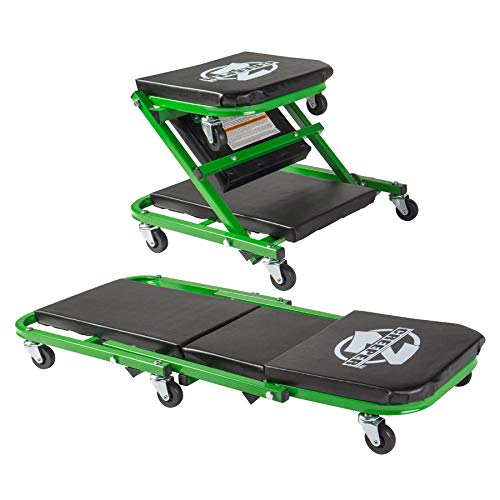 Pro-LifT Mechanic Creeper
- Convertible Design: Easily converted from creeper to seat…
- Comfortable Padded Cushions: Thick padded cushions create a…
- Enhanced Mobility: Features 6 swivel casters for easy…
| Product | Key specs | |
|---|---|---|
| M-AUTO Foldable Z Creeper 2-in-1 Rolling Folding | Easily Converted - It is designed to convert… Sturdy Construction - Creeper is built with the… Work Easier - With its weight capacity of… | Check price |
| M-AUTO Foldable Z Creeper 2-in-1 Rolling Folding | Easily Converted - It is designed to convert… Sturdy Construction - Creeper is built with the… Work Easier - With its weight capacity of… | Check price |
| Pro-LifT Mechanic Creeper | Convertible Design: Easily converted from creeper to seat… Comfortable Padded Cushions: Thick padded cushions create a… Enhanced Mobility: Features 6 swivel casters for easy… | Check price |
 Auto Dynasty 40 in Low-Profile Under-Car Rolling | Lightweight: Auto Dynasty Plastic Creeper is a one-piece… 360 Degree Swivel Casters: Our rolling creeper is… 350 LBS Capacity: The Creeper boasts a weight… | Check price |
As an Amazon Associate we earn from qualifying purchases at no extra cost to you.
Longer is not always better. A long frame can catch on suspension components, exhaust pipes, or the garage door when you are working in a confined bay. Measure the usable space beneath the vehicle, then leave several inches of clearance at each end. A short creeper is also easier to turn around under a compact car.
Height and underside clearance
Compare the creeper’s overall height—not just its wheel diameter—with the lowest solid obstruction under your vehicle. A stated height of 3.5 inches may become functionally higher if the caster brackets, frame rails, or headrest rise above the deck.
For a standard sedan, a 3.5–5 inch creeper usually works well. Lowered cars and sports cars may require an ultra-low model around 2.5–3.5 inches. Trucks and SUVs provide more room, but a taller creeper is not automatically more comfortable: it can place your back closer to the underside and reduce working space around your chest.
Never use a creeper as a substitute for properly rated jack stands. Raise the vehicle on a level surface, support it at approved points, and test its stability before sliding underneath.
Wheel design for different floors
Wheel quality often matters more than padding. Six small swivel casters allow easy direction changes on smooth, sealed concrete, but they can stop abruptly at expansion joints, gravel, floor drains, or a garage threshold. Wider wheels or larger-diameter casters roll over minor imperfections more easily.
- Smooth epoxy or painted concrete: polyurethane or hard plastic casters roll easily and resist oil better than soft foam wheels.
- Rough unfinished concrete: choose larger wheels, preferably 3 inches or more, and a rigid frame that will not flex.
- Cracked floors or thresholds: a wide-wheel design is safer than very small twin casters, though no creeper should be forced over a large lip while occupied.
- Oil-prone floors: look for sealed bearings and wheels that can be wiped clean. Oil-soaked soft wheels may become slippery or deteriorate.
A six-wheel arrangement usually distributes weight better than a four-wheel layout. Eight wheels can improve stability, but they also create more parts to clean and more opportunities for one caster to bind.
Headrest comfort and adjustability
A fixed headrest is simple and durable, but it can force your neck into an awkward angle when inspecting the transmission or rear axle. A padded, slightly raised head section is useful for short jobs; an adjustable backrest is more versatile for longer repairs.
Look for dense foam covered with oil-resistant vinyl rather than very soft padding that compresses against the frame. A headrest should support the base of your skull without pushing your chin toward your chest. If the creeper has a hinge, check that the locking mechanism is shielded from grit and cannot collapse when weight is applied.
Weight capacity: use a margin
Rated capacity includes your body, clothing, tools, and anything placed on the creeper. If you weigh 210 pounds and carry a 25-pound tool tray, a 250-pound rating leaves only 15 pounds of margin. A 300- or 400-pound model is a more sensible choice.
Capacity alone does not describe durability. A steel frame may tolerate abuse but weigh considerably more than a molded composite body. Reinforced plastic can resist corrosion and slide over the floor quietly, but excessive heat, harsh solvents, or impact can damage it. For regular professional-style use, choose a frame with a capacity at least 25% above your likely loaded weight.
Head-to-head: low-profile versus convertible creepers
Low-profile creeper
A dedicated low-profile creeper is usually the better choice for frequent work under cars. It has fewer moving parts, a lower deck, and often a broad padded surface. It is stable and quick to deploy, but it takes up more storage space and may be uncomfortable if you need to sit repeatedly while working near wheels.
Convertible creeper
A convertible model can fold into a mechanic’s seat or knee-height work platform. It makes sense when garage space is tight or when one repair alternates between underbody and wheel-level work. The trade-off is weight, hinge complexity, and sometimes a shorter sleeping surface. Examine the locking points carefully; a mechanism that is convenient to fold is also a component that can collect grit or wear.
For a single-purpose underbody tool, choose the low-profile creeper. For mixed brake, tire, detailing, and underbody work in a small garage, the convertible format earns its extra complexity.
Real products worth comparing
The Lisle 97102 40-Inch Low Profile Creeper is a compact, molded creeper format suited to smooth garage floors and users who want a relatively light tool. Its shorter length is convenient around small cars, though taller users should compare the usable padded area rather than the advertised overall length.
The Traxion 2-700 ProGear Mobile GearSeat is a convertible seat-and-creeper design. It is aimed at users who want to change position during a job and store one tool instead of separate seating and underbody equipment. Its value depends on whether that flexibility outweighs its additional structure and storage footprint.
The Omega 91452 Black Low Profile Creeper represents the traditional padded steel style. This type generally offers a substantial deck and familiar six-caster layout, making it appropriate for routine garage repairs. Steel construction can be reassuring, but check its actual weight before buying if you regularly carry tools up stairs or hang the creeper on a wall.
These products illustrate three categories rather than a universal ranking. Confirm the latest manufacturer dimensions, capacity, and replacement-wheel availability before purchase, since specifications can vary by production run or seller listing.
Worked sizing example
Suppose you are 6 feet 1 inch tall, your sedan has 5 inches of usable underside clearance, and the space between the front bumper and rear wheel area is 76 inches. A 40–42 inch creeper leaves roughly 17–18 inches of free vehicle length, enough to maneuver without the frame constantly contacting the tires or bumper.
If you weigh 205 pounds, carry 20 pounds of tools, and want a 25% safety margin, calculate: (205 + 20) × 1.25 = 281.25 pounds. Choose at least a 300-pound creeper. If the floor contains a 1-inch expansion ridge, prioritize wheel diameter and frame clearance rather than selecting a deck that is merely one inch lower.
Ownership details that listings often omit
- Wheels wear first: grit, welding debris, and oil can cause caster bearings to bind. Replacement casters are preferable to discarding an otherwise sound frame.
- Padding needs cleaning: wipe vinyl after each greasy job with mild soap and water. Avoid soaking foam or using solvents that can harden the cover.
- Small wheels punish clutter: sweep bolts, gravel, and metal chips before use. A single sharp fragment can stop a caster suddenly.
- Do not exceed the rating: a heavy toolbox placed on the deck changes the load and can damage hinges or caster mounts.
- Inspect before every job: check cracked plastic, loose caster fasteners, bent brackets, torn padding, and convertible locks.
- Store it dry: steel frames should be dried after wet cleaning, while composite frames still benefit from indoor storage away from extreme heat.
Bottom line
For most home garages, the best car creeper is a 40–42 inch model with a 3–5 inch overall height, six smooth casters, oil-resistant padding, and at least a 300-pound capacity. Choose an ultra-low design for lowered vehicles, larger wheels for rough floors, a longer deck for tall users, and a convertible model only when its seating and storage advantages will be used regularly.









