
Key takeaways
- Never mix bleach with acid-based cleaners, ammonia or rust removers.
- Avoid using a dry pumice stick.
- Keep acid off chrome and brass.
- Do not leave strong cleaners sitting for hours.
- Store products out of reach of children and pets.
The best toilet stain remover depends on the stain color. For hard-water rings and white scale, an acid cleaner like Lysol Power Toilet Bowl Cleaner or CLR is the strongest option. For orange rust, Iron OUT is built for iron stains. For stubborn rings you can scrub, a Pumie pumice stick removes them without harsh chemicals when used wet. Identify the stain first, then pick the product.
Our top picks



As an Amazon Associate we earn from qualifying purchases at no extra cost to you.
Quick Comparison of Toilet Stain Removers
| Pick | Best for | Type | Key traits | Price range |
|---|---|---|---|---|
| Pumie Toilet Bowl Ring Remover | Best for hard rings | Pumice stick | No chemicals, use wet, scrubs off mineral rings | Low |
| Iron OUT Rust Stain Remover | Best for rust | Reducing agent | Targets iron stains, orange and brown, powder or liquid | Low to mid |
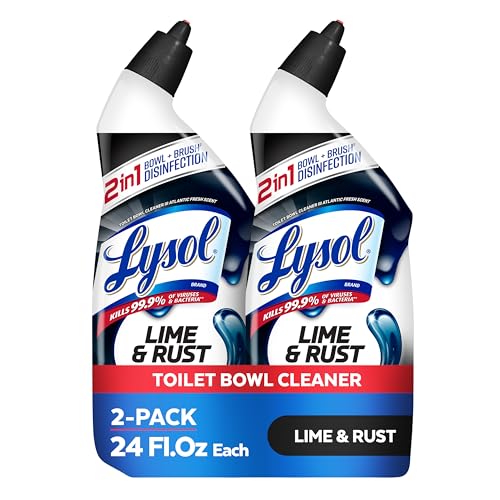
| Lysol Power Toilet Bowl Cleaner | Best for limescale | Acid-based | Dissolves mineral buildup, angled bottle | Low |
| CLR Calcium, Lime and Rust Remover | Best all-round deposit remover | Acid-based | Handles calcium, lime and rust, strong fumes | Low to mid |
| Bar Keepers Friend | Best for light stains and scrubbing | Oxalic acid powder | Mild abrasive, spot clean, rinse well | Low |
Best for Hard Rings: Pumie Toilet Bowl Ring Remover
A Pumie is a pumice scouring stick shaped for the toilet. Wet the stick and the stain, then rub lightly. It removes hard-water rings and mineral scale without releasing fumes. The pumice is softer than porcelain when kept wet, so it should not scratch.
It suits stubborn rings at the waterline where cleaners just glide off. The trade-offs: it requires hand effort, and a dry stick can scratch the porcelain, so keep both wet. Do not use it on colored fixtures that are not fully glazed.
Best for Rust: Iron OUT
Orange or brown streaks point to iron in the water, and normal cleaners barely touch them. Iron OUT uses a reducing agent to convert the iron into a soluble form that rinses away. It is available as a powder or liquid, and it is used in many homes with well water.
The trade-off is the smell and the need to follow label directions closely. Do not combine it with bleach, and keep it off metals. Rinse thoroughly.
Best for Limescale: Lysol Power Toilet Bowl Cleaner
This acid-based cleaner dissolves mineral scale and works on the pink and white deposits at the waterline. The angled bottle helps you reach under the rim. It suits hard-water homes. The trade-off is that acid is harsh on skin, so wear gloves, and never mix it with bleach or any other chemical.
Best All-Round Deposit Remover: CLR
CLR (Calcium, Lime and Rust Remover) handles several types of buildup in one product. It is useful if your toilet has both scale and rust. It is acid-based and has a notable odor, so ventilate the bathroom. The trade-off: it can dull some metal fittings and finishes, so keep it off chrome and brass, and wipe up spills.
Best for Light Stains: Bar Keepers Friend
Bar Keepers Friend is an oxalic acid powder that cleans light stains and rust marks with gentle scrubbing. Make a paste, apply it, scrub with a nylon brush and rinse. The trade-off is that it is mildly abrasive and not meant for every surface, so follow the label and test on a small area.
How to Identify the Stain
| Stain color | Likely cause | Best product |
|---|---|---|
| White or gray ring | Hard water scale | Pumie, Lysol Power, CLR |
| Orange or brown | Iron or rust | Iron OUT, CLR |
| Pink or red slime | Bacteria | Bleach cleaner and brush |
| Black spots | Mold or manganese | Bleach for mold, acid for manganese |
| Yellow streaks | Urine scale | Acid cleaner |
How to Remove a Toilet Stain
- Wear gloves and ventilate the bathroom.
- Lower the water level by pushing it down with a brush, or turn off the supply and flush so the stain is exposed.
- Apply the cleaner directly to the stain, working under the rim.
- Let it sit for the time on the label, usually 5 to 15 minutes.
- Scrub with a brush or Pumie, then rinse and flush.
- Repeat for older stains. Do not mix products between attempts, and flush twice between.
Safety and Mistakes to Avoid
- Never mix bleach with acid-based cleaners, ammonia or rust removers.
- Avoid using a dry pumice stick.
- Keep acid off chrome and brass.
- Do not leave strong cleaners sitting for hours.
- Store products out of reach of children and pets.
Prevention
Hard-water stains return fast, so a weekly swish with a mild cleaner prevents buildup. A water softener or iron filter addresses the cause for the whole house. If you are on well water, a whole-house filter costs more but spares you from scrubbing.
Product Chemistry and Surface Safety
| Product | Active type | Safe on glazed porcelain | Avoid on | Ventilation |
|---|---|---|---|---|
| Pumie | Pumice stone | Yes, when wet | Dry, unglazed or colored finishes | None needed |
| Iron OUT | Reducing agent | Yes | Brass, chrome fittings | Open a window |
| Lysol Power | Acid | Yes | Metal trim, grout | Required |
| CLR | Acid blend | Yes | Brass, aluminum, natural stone | Required |
| Bar Keepers Friend | Oxalic acid | Yes | Colored fixtures, cracked glaze | Recommended |
Worked Example: Fixing a Rust Ring
Suppose you have an orange ring at the waterline in a house on well water. Lower the water by turning off the supply and flushing. Apply Iron OUT per the label, wait the stated time, scrub with a nylon brush and rinse. If a faint shadow remains, rub it gently with a wet Pumie. Then address the cause: a whole-house iron filter or a softener rated for iron will prevent the ring returning every few weeks. Without that, expect to repeat the cleanup monthly.
Ownership Realities
Porcelain has a glass-like glaze that resists staining when it is smooth. Repeated scrubbing with abrasives can wear that glaze over the years, giving stains more places to hold. Use the gentlest method that works, in this order: a brush and mild cleaner, then an acid or rust remover, then a wet pumice stick last. Replace a bowl brush that has gone stiff or flattened, since it will not reach under the rim.
Frequently Asked Questions
What removes a brown ring in a toilet?
Brown rings are usually iron or manganese deposits. Use a rust remover such as Iron OUT or a pumice stick used wet.
Does vinegar remove toilet stains?
Vinegar can dissolve light mineral scale if given time, but it is weaker than commercial acid cleaners and does little on hard rust.
Is bleach good for toilet stains?
Bleach whitens and disinfects, but it does not dissolve mineral deposits and can set rust stains. Use it for organic stains only.
Will a pumice stick scratch my toilet?
It should not when both the stone and the surface are wet and you use light pressure. Dry rubbing can scratch.
Why do stains return quickly?
Because the cause, hard water or iron, is still there. Regular cleaning and, if needed, water treatment will slow regrowth.









