
Key takeaways
- Choosing the wrong size.
- A chain that is too tight (stops the seal) or too loose (stops the lift).
- Not cleaning the seat.
- Using chlorine tablets in the tank.
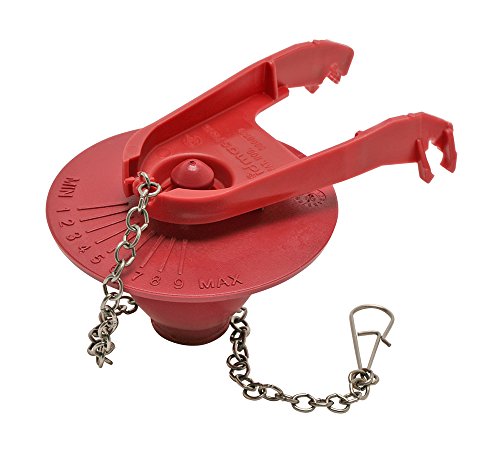
The best toilet flapper for most toilets is the Korky 100BP 2-inch flapper, a chlorine-resistant universal part with an adjustable flush range of roughly 1.28 to 5 gallons per flush. If your toilet has a 3-inch flush valve, you need a 3-inch flapper instead, and the Fluidmaster PerforMAX 502P21 is a good alternative for adjustable 2-inch openings. Measure the flush valve opening before buying, because size is the main reason replacements fail.
Our top picks



As an Amazon Associate we earn from qualifying purchases at no extra cost to you.
Quick Comparison of Toilet Flappers
| Pick | Best for | Size | Key traits | Price range |
|---|---|---|---|---|
| Korky 100BP | Best overall 2-inch | 2 inch | Red chlorine-resistant rubber, adjustable 1.28 to 5 gpf | Low |
| Korky 2017 Ultra 2X | Best for longevity | 2 inch | Longer-life design from Korky, heavier rubber | Low to mid |
| Fluidmaster PerforMAX 502P21 | Best adjustable alternative | 2 inch | Adjustable flush setting, universal fit | Low |
| Universal 3-inch flapper | Best for 3-inch valves | 3 inch | For newer toilets with wide flush valves | Low |
| Korky 818MP kit | Best with fill valve | 2 inch | Includes 528MP fill valve and 100 flapper | Low to mid |
Best Overall: Korky 100BP
Korky lists its 2-inch Ultra High Performance flapper as part number 100, with the “BP” version the retail pack. The red rubber is formulated to resist chlorine, and the flapper adjusts across a range of 1.28 to 5 gallons per flush, which suits both old and new toilets. It fits many popular brands with a standard 2-inch flush valve.
It suits owners of standard 2-inch toilets who want a replacement that works the first time. The trade-off: it will not fit a 3-inch valve, and in-tank chlorine tablets will shorten any flapper’s life.
Best for Longevity: Korky 2017 Ultra 2X
Korky also offers a longer-life 2-inch flapper that uses a more durable build. It is aimed at hard-water homes and users who see flappers fail every year or two. The trade-off is a slightly higher cost, which is usually recovered if it prevents a second replacement.
Best Adjustable Alternative: Fluidmaster PerforMAX 502P21
The Fluidmaster 502P21 is a competing 2-inch flapper with a built-in adjustment for flush volume. It suits users who like Fluidmaster fill valves and want a consistent family of parts. The trade-off is that the adjustment adds a small part that can be set wrongly, so follow the instructions on the package.
Best for 3-Inch Valves: Universal 3-Inch Flapper
Many newer high-flow and pressure-assist designs use a 3-inch flush valve. A 3-inch flapper is bigger and heavier so it lifts more water and flushes more strongly. Confirm your valve size first: if the flush valve opening measures about 3 inches across the bowl-side outlet, this is the right type. The trade-off is that it will not fit a 2-inch opening, and a mismatch gives a leaky seal.
Best with a Fill Valve: Korky 818MP Kit
If your fill valve is also old, buying the kit pairs the Korky 528MP fill valve and a 2-inch 100 flapper with the hardware. This is convenient and cuts down the number of trips to the store. The trade-off: you pay for two parts even if only one has failed.
How to Choose a Flapper
Measure the flush valve
Measure the opening on the tank bottom where the flapper sits. About 2 inches across means a 2-inch flapper; about 3 inches means a 3-inch flapper. If it is oval or has an unusual shape, it may need a brand-specific part.
Chain, ears or hinge
Most flappers clip onto two ears on the overflow tube. Some have a ring that slips over the tube. Check how the old one is attached and match it.
Chemical resistance
Bleach tablets in the tank degrade rubber quickly. If you use them, choose a chlorine-resistant flapper or stop using the tablets.
Flush volume
Adjustable flappers let you set the flush time. Too short a flush leaves waste in the bowl, while too long wastes water. Most adjust with a dial or a float.
Worked Example: How Much Water a Leaking Flapper Wastes
A slow flapper leak can pass about 1 gallon every few hours without making noise. At 8 gallons a day, that is roughly 240 gallons a month, which adds to the water bill and costs far more than a replacement flapper. To check, add a few drops of food coloring to the tank, wait 15 minutes without flushing and see if color appears in the bowl.
How to Replace a Flapper
- Turn off the water supply and flush to empty the tank.
- Unclip the old flapper from the overflow tube ears and detach the chain.
- Clean the flush valve seat with a cloth or soft pad. Any slime or mineral deposits will prevent a seal.
- Clip in the new flapper, and attach the chain with about half an inch of slack.
- Turn the water on, flush, and watch for leaks.
Common Mistakes
- Choosing the wrong size.
- A chain that is too tight (stops the seal) or too loose (stops the lift).
- Not cleaning the seat.
- Using chlorine tablets in the tank.
Flapper Types Compared
| Type | Fits | Typical life | Strength | Weakness |
|---|---|---|---|---|
| Standard 2-inch rubber | Most 1.6 gpf and 1.28 gpf toilets | 3 to 5 years | Cheap, easy to find | Hardens with chlorine |
| Long-life 2-inch | Same as above | 5 or more years | Resists wear | Costs more |
| 3-inch flapper | Newer large flush valves | 3 to 5 years | Strong flush volume | Wrong size if misidentified |
| Adjustable | Standard 2-inch valves | 3 to 5 years | Tunable flush time | Dial can be misset |
Durability Realities
A flapper is a rubber part that sits in water all day, so it gradually softens, warps or slimes over. Hard water leaves mineral deposits on both the flapper and the seat; chlorine tablets harden and crack the rubber. If you notice black residue when you rub the flapper with a finger, the rubber is breaking down and sealing less well. Replace it at the first sign rather than waiting for the leak.
The chain length is a surprisingly common failure point. Too long, and the chain can get under the flapper and stop it closing. Too short, and it holds the flapper open slightly. Aim for about half an inch of slack when the flapper is closed, and trim any excess chain beyond a few links so it cannot tangle.
Which Size Do You Have?
Look at the flush valve opening at the bottom of the tank, which is the hole the flapper covers. Measure the diameter of that hole from the inside edge. Roughly 2 inches is the old standard that Korky 100BP and Fluidmaster 502P21 fit. About 3 inches is the larger size seen on many toilets built in the past decade. If you are unsure, take the old flapper with you or photograph the valve and the toilet model number on the tank.
Frequently Asked Questions
How do I know if my flapper is bad?
Common signs are phantom flushing, a tank that refills at random, a constantly running toilet, and a flapper that feels soft, warped or slimy. The dye test confirms a leak.
How long does a toilet flapper last?
Typically three to five years, but chlorine tablets and hard water can shorten that. Some people replace it every couple of years as maintenance.
Are all flappers universal?
No. Size matters most, and some brands use proprietary shapes. Universal flappers fit many toilets but not all.
Why does my toilet run after I replace the flapper?
The chain may be too tight, the seat may be dirty, or the fill valve may be set too high. Check each in order.
Should I replace the flapper and fill valve together?
If both are old, yes. A kit is convenient, and it keeps the tank working as a system.









