
The best flight simulator cockpits for most home setups are dedicated frame rigs if you have permanent space, and heavy-duty desk-clamp stands if you need to reclaim your room after flying. Your choice comes down to floor space, how often you fly, and whether you use a yoke, HOTAS, or rudder pedals as your primary controls.
Our top picks
 Marada Racing Flight Simulator Cockpit with Red
- 2-in-1 Sim Cockpit: This multi-use sim rig is…
- Heavy-Duty Frame: Made of 40mm thick square tubes…
- Fully Adjustable Design: 6-way adjustable side joystick panels,…
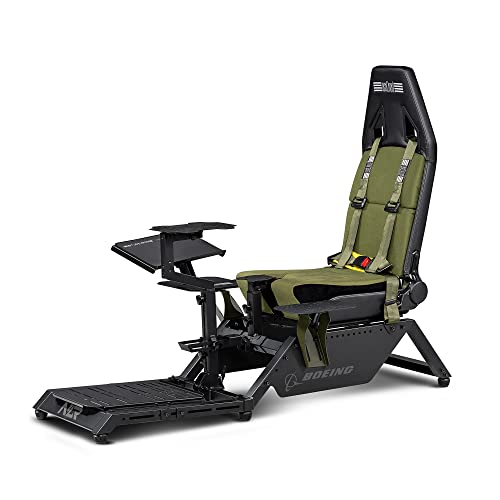 Next Level Racing Flight Simulator Cockpit: Boeing
- Dedicated flight cockpit for maximum simulation immersion
- Official licensed product of The Boeing Company
- Inspired Boeing inspired components like green canvas seat…
 Marada Universal Flight Simulation Cockpit with Racing
- 【Solid Design】This sim racing and flight cockpit is…
- 【Highly Adaptable】This flight and racing wheel stand can…
- 【Free Adjustable】Many parts of this sim flight cockpit…
| Product | Key specs | |
|---|---|---|
| Marada Racing Flight Simulator Cockpit with Red | 2-in-1 Sim Cockpit: This multi-use sim rig is… Heavy-Duty Frame: Made of 40mm thick square tubes… Fully Adjustable Design: 6-way adjustable side joystick panels,… | Check price |
| Next Level Racing Flight Simulator Cockpit: Boeing | Dedicated flight cockpit for maximum simulation immersion Official licensed product of The Boeing Company Inspired Boeing inspired components like green canvas seat… | Check price |
| Marada Universal Flight Simulation Cockpit with Racing | 【Solid Design】This sim racing and flight cockpit is… 【Highly Adaptable】This flight and racing wheel stand can… 【Free Adjustable】Many parts of this sim flight cockpit… | Check price |
 Next Level Racing Flight Simulator Cockpit: Boeing | Dedicated flight cockpit for maximum simulation immersion Official licensed product of the Boeing company Boeing inspired components like faux wool seat covering… | Check price |
As an Amazon Associate we earn from qualifying purchases at no extra cost to you.
Desk-Clamp vs. Dedicated Frame: The Core Tradeoff
These two categories solve the same problem differently: keeping your controls stable under load without flex or creep.
Desk-Clamp and Wheel Stand Style Rigs
This type includes flight stands and clamp-on mounts that attach to an existing desk or a freestanding A-frame stand. Examples include the Next Level Racing Flight Stand Pro and similar stands from GT Omega and OpenWheeler.
- Pros: Small footprint when folded, no dedicated seat to store, easy to move, works with your existing office chair, lower cost of entry.
- Cons: Limited mounting points, more flex with forceful yoke or pedal inputs, office chairs will roll or tilt unless blocked, cable management is harder, ergonomics depend entirely on your desk height.
- Best for: Renters, occasional flyers (1-2 times per week), users who already own a solid desk that can handle clamping force.
Dedicated Frame Cockpits
A full cockpit combines the frame, seat, and integrated mounts into one rigid platform. Examples include the Next Level Racing Flight Simulator and Boeing Editions, Volair Sim Universal Cockpit, and GT Omega Prime Flight Cockpit.
- Pros: Near-zero flex, pre-drilled patterns for yokes, HOTAS and pedals, adjustable seat and pedal distance for proper rudder technique, consistent ergonomics every session.
- Cons: Large, heavy, and semi-permanent, requires assembly and leveling, higher upfront cost.
- Best for: Frequent flyers, IFR practice, users with heavy controls or force-feedback yokes, anyone training for real-world procedures.
Spec Comparison: Footprint, Materials, and Capacity
Marketing photos hide the real dimensions. Measure your space before you buy and add 24-30 inches behind the seat for recline and entry/exit.
| Cockpit Type / Model Example | Frame Material | Footprint (L x W) | Height | Rig Weight | Max Pilot Weight | Pedal Deck Adjustment |
|---|---|---|---|---|---|---|
| Lightweight Foldable Flight Stand (e.g., Next Level Racing Flight Stand Pro, OpenWheeler Stand) | Carbon steel tube, powder coated | 38 x 22 in / 97 x 56 cm | 28-32 in adjustable | 28-33 lbs / 12.7-15 kg | N/A (uses your chair) | 12 in / 30 cm slide |
| Mid-Range Dedicated Cockpit (e.g., Volair Sim Universal) | Steel frame + aluminum mounting plates | 68 x 30 in / 173 x 76 cm | 48 in with yoke mount | 85-95 lbs / 38-43 kg | 300 lbs / 136 kg | 14 in / 35 cm slide + angle tilt |
| GT Omega Prime Flight Cockpit | Aluminum extrusion + steel brackets | 62 x 28 in / 157 x 71 cm | 50 in | 75 lbs / 34 kg (without seat) | 325 lbs / 147 kg | 18 in / 46 cm extruded rail |
| Premium Full Cockpit (e.g., Next Level Racing Boeing Flight Simulator) | Steel tube + laser-cut steel plates | 78 x 32 in / 198 x 81 cm | 52 in | 120-135 lbs / 54-61 kg | 285 lbs / 129 kg | 20 in / 51 cm + independent rudder angle |
Allow an extra 10-12 inches of width if you mount a side stick or throttle quadrant outside the main frame. Rudder pedals also need a wall or stop behind them on stands; dedicated rigs include a fixed heel plate so your pedals do not walk forward under braking.
Compatibility Check: Yokes, HOTAS, and Rudder Pedals
Mounting compatibility is where buyers get stuck. Most cockpits use either pre-drilled plates or universal clamping rails. Check these three interfaces before ordering:
1. Yoke and Center Stick
Honeycomb Alpha Flight Controls, Logitech G Pro Flight Yoke, and Turtle Beach VelocityOne yokes use a flat desk clamp plus bottom screw holes. Dedicated cockpits provide a flat yoke plate with multiple hole patterns. Flight stands often require the clamp to bite onto a 1.5-2 inch tube or plate edge. If you use a force-feedback yoke or a Brunner-style unit, avoid lightweight stands. The sustained torque will loosen clamps over time.
2. HOTAS (Hands On Throttle-And-Stick)
Thrustmaster Warthog, T.16000M, TCA Airbus range, Win Wing Orion, and VKB Gladiator sticks need side or center mounts. Look for:
- Two separate removable plates for stick and throttle, not one fixed center plate
- Height-adjustable side mounts to align your elbow at roughly 90 degrees
- Side plates rated for at least 15 kg of pull force if you use an extension
Aluminum extrusion rigs like the GT Omega Prime handle extensions best because you can slide the mount anywhere along the rail and add a support bracket.
3. Rudder Pedals
Logitech G Pro Rudder Pedals, Thrustmaster TFRP/TPR, and MFG Crosswind pedals vary wildly in length and hole spacing. Steel pedal decks with slots, not just four holes, are essential. The Volair Sim and Next Level Racing decks support inverted mounting and include adjustable heel rests. The most common error is mounting pedals too close. When your knees are fully extended on the rudder, you should still have slight bend left; if your knees lock, you will lose fine yaw control.
Seat Adjustability and Ergonomics That Actually Matter
A flight sim seat is not a racing seat. You need upright posture for long IFR sessions and small pedal inputs, not deep recline.
- Sliding seat rails: Should offer at least 10 inches / 25 cm of travel. This lets users from 5’4″ to 6’2″ reach full rudder without stretching.
- Recline range: 90 to 135 degrees is ideal. More than 150 degrees puts your yoke too far from your chest and strains your shoulders during flare.
- Lumbar and cushion density: Flat, automotive-style seats wear better than heavily bolstered buckets for 2+ hour flights. Look for high-density foam rather than thin fabric over plywood.
- Seat height: Dedicated rigs keep your eyes at the same level as the top third of your monitor. If your seat is too low, you will crane your neck to see the horizon over the instrument panel.
Foldable stands paired with an office chair cannot replicate this. If you must use an office chair, lock the casters with caster cups or replace them with locking gliders, and use a ratchet strap from the stand to the chair base to prevent separation during hard braking.
How Much Space Do You Really Need?
Measure wall-to-wall, not just the rig footprint.
Worked example for a mid-range dedicated cockpit: A Volair Sim-style rig is 68 inches long. Add 28 inches for seat slide and getting in, plus 6 inches clearance from the wall for cables and monitor mount. Total length needed: 68 + 28 + 6 = 102 inches or 8.5 feet. Width is 30 inches plus 12 inches on the throttle side for hand clearance: 42 inches or 3.5 feet. Total dedicated floor area is about 30 square feet, plus space for a monitor stand or TV behind the yoke.
A foldable stand in use needs about 40 x 24 inches plus your chair. Folded, it collapses to around 38 x 22 x 20 inches and can be stored in a closet. That difference is the main reason frequent renters choose stands despite the comfort tradeoff.
Decision Matrix: Which Cockpit Fits Your Situation
| Your Situation | Recommended Type | Why | General Market Range |
|---|---|---|---|
| Limited space, fly 1-2x per week, budget conscious | Foldable flight stand + your desk chair | Folds away, lowest cost, easy to move | $250 – $450 |
| Apartment with no permanent corner, uses HOTAS only | A-frame stand with dual side mounts | HOTAS plates are included, better than desk clamp for stick extensions | $300 – $550 |
| Own home, fly 3+ times per week, use yoke + rudder | Dedicated steel frame with sliding seat | Rigidity for yoke inputs, proper pedal distance, faster setup time | $600 – $1,100 |
| Real-world training, force feedback or heavy pedals, triple screens | Aluminum extrusion or heavy steel full cockpit | Extrusion supports monitor arms and extension mounts without drilling | $1,000 – $2,000+ |
| Shared room / need to hide setup quickly | Next Level Racing Boeing-style foldable cockpit | Full cockpit feel but folds upright on casters | $700 – $900 |
If you are between categories, choose the stiffer option. Flex is the number one regret after purchase and is expensive to fix with aftermarket braces.
Durability and Ownership Realities
Cockpits are simple mechanically, but three areas wear first:
- Fasteners and pivot points: Clamp bolts loosen from vibration, especially on pedal decks. Apply medium-strength threadlocker to high-stress bolts after your first week of adjustments and re-torque monthly.
- Seat upholstery and foam: Synthetic leather cracks in dry, sunny rooms and absorbs sweat. Vacuum the seat rails weekly so grit does not grind into the sliders. Cover or condition faux leather every 3-6 months and avoid harsh cleaners.
- Powder coating and edges: Bare metal under the pedal deck rusts if you fly with shoes that bring in moisture. Place a rubber mat under the rig and wipe the deck after use.
Common mistakes to avoid: over-tightening the yoke plate until it bows, mounting rudder pedals with only two screws to save time, and placing the rig on thick carpet without foot cups. Carpet compresses unevenly and makes the whole frame rock during yaw inputs. Hardwood or a thin, low-pile mat with leveling feet is more stable.
For cleaning, use compressed air on rails and a mild soap solution on the frame. Avoid WD-40 on sliders; use dry silicone spray sparingly if rails squeak.
Frequently Asked Questions
Can I mount both a yoke and a HOTAS on the same cockpit?
Yes on most dedicated frames that include swappable center and side plates, but not on most single-plate stands. If you switch often, choose a cockpit with quick-release plates or aluminum extrusion so you can slide mounts off without re-drilling. Keep bolt patterns and spare hardware labeled.
Do I need a separate rudder pedal frame if I buy a flight stand?
No, if the stand includes a slotted pedal plate with a heel stop. Without a heel stop, your pedals will slide on hard floors. Add adhesive grip tape and a wall or heavy box behind the stand as a backstop if your floor is slick.
Will any cockpit work with VR?
Yes. VR does not require a monitor mount, which actually reduces the footprint by 18-24 inches of depth. Ensure your chair position lets you reach all controls without leaning, since you cannot see them. Fixed seating and tactile button boxes help build muscle memory in VR.









