
For most homeowners with a small to mid-size yard, a battery-powered handheld blower from a major platform such as Ego, DeWalt, Milwaukee or Ryobi is the best fit, because it starts instantly, runs far quieter than gas and needs little upkeep. Larger properties with heavy, wet leaf loads may still favor a stronger or gas-powered unit, and buyers should match the blower to the battery system they already own.
Our top picks


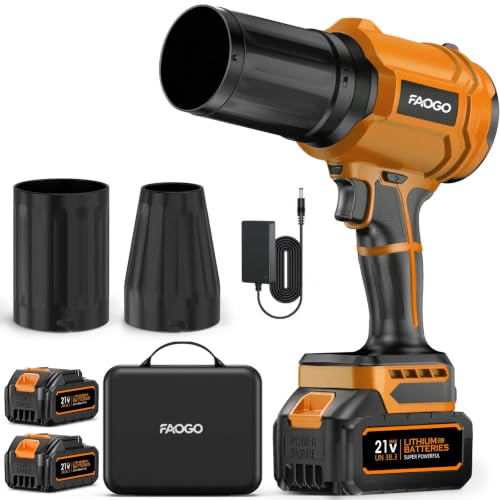
As an Amazon Associate we earn from qualifying purchases at no extra cost to you.
Handheld Leaf Blowers at a Glance
| Model line | Best for | Key stated details | Limits |
|---|---|---|---|
| Ego Power+ handheld (56V) | Larger yards wanting high airflow without gas | The maker lists airflow in the 500 to 650 CFM range depending on the model | Premium cost; battery is a major part of the purchase |
| DeWalt 20V MAX handheld | Owners of DeWalt 20V tools | The maker lists a brushless motor and a variable-speed trigger on current models | Airflow is lower than 56V and 60V rivals |
| Milwaukee M18 Fuel handheld | Pros and homeowners on the M18 platform | Brushless motor, shared M18 batteries, according to the maker | Often sold bare, so batteries add cost |
| Ryobi 40V / One+ handheld | Budget buyers who want an easy entry | Several battery platforms are offered, including 18V and 40V | Lower power on 18V models; best for light debris |
| Corded electric blower | Small patios, decks and garages | Unlimited runtime, light weight | Cord limits reach; extension cord needed |
Understanding the Specs
CFM and MPH
Makers publish two main numbers. CFM, or cubic feet per minute, measures the volume of air; MPH measures the speed of that air at the nozzle. High CFM moves piles of light leaves, while high MPH loosens stuck-on debris and wet leaves. Neither number alone tells the whole story, and independent reviewers note that maker figures are measured under ideal conditions. Look for a balance, and treat the numbers as comparison tools rather than guarantees.
Battery voltage and runtime
Voltage indicates platform class more than power on its own. The 56V Ego and 40V Ryobi platforms are generally positioned for stronger work, while 18V and 20V platforms are positioned for lighter tasks. Runtime depends on the speed setting: turbo modes empty the pack quickly, and low settings last much longer. If you have a big yard, a second battery or a rapid charger is a practical addition.
Weight and balance
A handheld blower is used at arm’s length, so weight matters. Heavier models with a big battery can tire the wrist and shoulder over a long job. Check the weight the maker lists with the battery installed, and pay attention to where the battery sits, since rear-mounted packs often balance better.
Noise
Battery models are generally quieter than gas blowers, and many neighborhoods have restrictions on gas blower use or operating hours. Makers list decibel ratings, and some local codes set limits. Wearing hearing protection is still sensible with any blower, particularly in turbo mode.
Budget Tiers
Budget
Entry-level 18V and corded blowers handle patios, driveways and dry leaves. They suit small yards and quick cleanup but struggle with wet, matted leaves or large piles.
Mid-range
Brushless 20V and 40V models from DeWalt, Ryobi and others fit most suburban yards. They offer variable speed, a turbo button and decent runtime, especially with a larger battery.
Premium
Ego 56V and Milwaukee M18 Fuel models target heavy use. Reviewers often credit them with strong airflow and long motor life. The extra cost is easiest to justify when you also use the same batteries for other tools.
Which Blower for Which Yard
| Pick this if you … | Suggested direction |
|---|---|
| Have a small yard, deck or patio | Corded blower or entry 18V/20V cordless |
| Have a mid-size lot with mature trees | Brushless 20V or 40V model with a second battery |
| Have a large yard or wet leaves | Ego 56V or a gas blower |
| Already own DeWalt tools | DeWalt 20V MAX handheld, bare tool |
| Already own Milwaukee M18 tools | Milwaukee M18 Fuel handheld |
| Want the lowest-cost start | Ryobi One+ or 40V entry blower |
Safety and Care Notes
Follow the maker’s manual for all operation. Wear eye protection and hearing protection, and a dust mask in dry conditions. Keep bystanders, pets and open windows in mind, since blowers can launch small stones and debris. Never point the nozzle at people or animals.
Remove the battery before clearing a blocked nozzle or inspecting the unit. Store lithium-ion packs indoors, away from extreme heat or cold, and use only the charger approved by the maker. Wipe dust from the air intake and vents after use so that the motor stays cool. Be considerate of neighbors by observing local noise rules and avoiding early or late hours.
Features That Make Life Easier
A variable-speed trigger or dial lets you lower power near flower beds. A cruise-control lock reduces finger fatigue. Some models have a nozzle that narrows airflow to dislodge debris from cracks, and others include a concentrator attachment. Check whether the tool is sold with the battery and charger, since bare tools are cheaper but need both.
Some blowers also offer a vacuum or mulching mode, but the handheld category usually focuses on blowing only. If you want to collect and shred leaves, read the product page to confirm the model supports it.
Using a Blower Efficiently
Technique can matter as much as the machine. Work in the direction of the wind where possible, and move debris in a steady sweeping motion toward a collection area instead of chasing individual leaves. Keep the nozzle low and angled slightly down for compacted leaves, and raise it to lift light material from beds and gravel. Use the lowest speed that does the job, which saves battery and reduces noise.
Dampen dusty areas lightly before blowing if local rules allow, so the blower does not throw up clouds of dust. Avoid blowing debris onto roads or into a neighbor’s property, and collect leaves for composting or municipal pickup according to local guidance.
Warranty, Service and Platform Longevity
Battery platforms are a long commitment. Look at the maker’s warranty terms for both the tool and the battery, since packs are the part most likely to age. Check whether local dealers or service centers support the brand, and whether spare nozzles, batteries and chargers are easy to find. Major platforms such as Ego, DeWalt, Milwaukee and Ryobi have broad ranges, which lowers the risk of orphaned batteries.
Seasonal use means a blower may sit idle for months. Charging batteries before storage and following the maker’s guidance on storage temperature helps preserve capacity. If a pack no longer holds a useful charge, use municipal battery recycling instead of household trash.
Beyond Leaves: Other Jobs for a Blower
A handheld blower clears grass clippings from driveways, light snow dustings from steps, sawdust from a garage floor and debris from gutters within reach. Most makers do not design these tools for snow removal, so treat that as a light-duty use only. Cleaning a dusty workshop with a blower can spread fine dust into the air, so wear a mask and open doors.
When blowing near parked cars, pools or windows, point the nozzle away from them and lower the speed. Gravel drives need the nozzle angled upward and speed reduced to avoid launching stones.
Alternatives to Consider
- Backpack blower: shifts weight to your back and offers higher output for large properties.
- Gas handheld blower: maximum power with unlimited runtime, but louder, heavier and more maintenance.
- Walk-behind blower: used on very large lots and commercial areas.
- Leaf rake and tarp: quiet, low-cost and effective on small areas.
Frequently Asked Questions
How many CFM do I need?
For a small yard with dry leaves, a few hundred CFM is usually enough. Larger lots and heavier debris benefit from higher airflow, though CFM alone does not tell you everything. Look at both CFM and MPH and read reviewer comments about wet leaves.
Are battery blowers as powerful as gas?
The strongest battery models come close to many consumer gas blowers, but the very high end of gas power is still ahead for commercial work. For typical residential yards, battery blowers are usually sufficient.
Can I use any battery with any blower?
No. Batteries are specific to each platform, so a DeWalt 20V pack will not fit an Ego blower. Choosing a platform you already own can save money on batteries and chargers.
How long does the battery last?
Runtime depends on the setting and the pack size. Turbo drains the pack quickly, while low settings last far longer. Makers publish runtime estimates, which should be read as approximate.
Is it safe to use in wet weather?
Most manuals advise against using electric tools in rain or standing water. Damp leaves are fine, but follow the maker’s guidance, keep cords and batteries dry, and stop if the tool shows any damage.
How do I store a blower in winter?
Remove the battery, wipe the tool clean and store both in a dry, moderate place. Many makers suggest storing lithium-ion packs partly charged rather than empty or full, so read the manual for the model you own.





