
The best label maker for most homes and offices is a Brother P-touch such as the PT-D210 or PT-D220, because its laminated tape is waterproof and cheap to replace. If you only label pantry containers, a thermal Bluetooth model like the Niimbot D110 or Phomemo D30 is cheaper to run, and the Dymo LabelManager 160 is a solid no-phone option.
Our top picks


As an Amazon Associate we earn from qualifying purchases at no extra cost to you.
Quick Comparison of the Best Label Makers in 2026
| Pick | Best for | Type | Max tape width | Connectivity | Price range |
|---|---|---|---|---|---|
| Brother P-touch PT-D210 | Best simple handheld | Thermal transfer, laminated TZe | 12 mm | None | Budget |
| Brother P-touch PT-D220 | Best for home organising | Thermal transfer, TZe | 12 mm | None | Budget |
| Brother PT-D610BT | Best for business | Thermal transfer, TZe | 24 mm | USB, Bluetooth | Upper-mid |
| Brother P-touch Cube Plus | Best phone-based | Thermal transfer, TZe | Up to 24 mm class | Bluetooth | Mid-range |
| Dymo LabelManager 160 | Best no-phone typing | Thermal transfer, D1 | 12 mm | None | Budget |
| Niimbot D110 | Best pantry thermal | Direct thermal, no ink | About 15 mm | Bluetooth | Budget |
| Phomemo D30 | Best tiny Bluetooth | Direct thermal | About 15 mm | Bluetooth | Budget |
Tape widths follow common manufacturer specs; exact models and regional versions vary, so confirm tape compatibility.
Best Overall Simple: Brother P-touch PT-D210
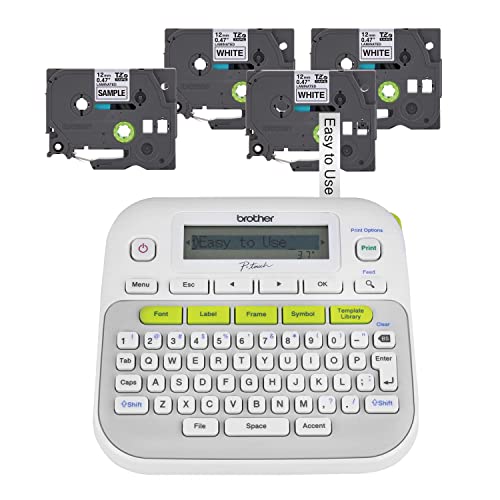
The PT-D210 prints laminated TZe labels that resist water, heat and fading. It has a keyboard, preset frames and symbols, and runs on batteries or an adapter. Who it suits: anyone who wants a no-fuss tool. Trade-off: TZe tape is pricier per label than thermal paper.
Best for Home Organising: Brother P-touch PT-D220
The PT-D220 is a step up in features and shares the same laminated labels, making it a good everyday pick for cables, shelves and storage bins.
Best for Business: Brother PT-D610BT
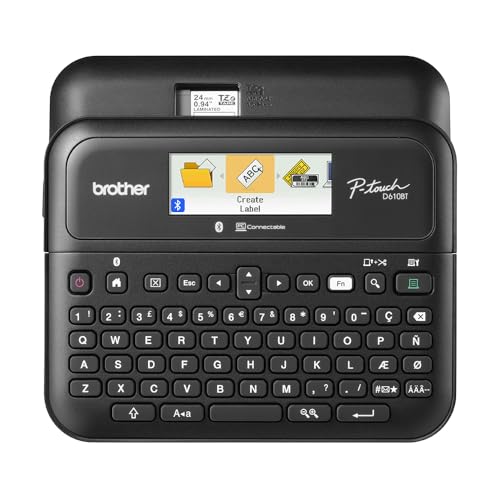
The PT-D610BT adds a colour display, Bluetooth and USB, a library of templates, an automatic cutter and wider tape up to 24 mm. Trade-off: a higher price and larger size.
Best Phone-Based: Brother P-touch Cube Plus
This compact model designs labels on a phone app and prints on laminated TZe tape. Trade-off: you need a smartphone.
Best Typing Handheld: Dymo LabelManager 160
A QWERTY handheld that prints on D1 tape up to 12 mm. It is easy to use and fast. Trade-off: D1 labels are less durable than laminated TZe.
Best Pantry Thermal: Niimbot D110
The D110 is an inkless thermal printer controlled by Bluetooth. Paper labels are cheap, and rolls are available in various sizes. Trade-off: thermal labels fade with heat and sunlight, so they suit pantries, not hot garages.
Best Tiny Bluetooth: Phomemo D30
A pocket-size thermal printer similar to the D110. It prints from a phone and is available in many roll types.
How to Choose a Label Maker
- Durability: laminated TZe resists water and sunlight; direct thermal paper does not.
- Running cost: third-party thermal rolls cost about half as much per roll, so high volume favours thermal.
- Tape width: 12 mm suits cables and bins; wider tape suits shelves and binders.
- Input: keyboard is fast for short labels; a phone app is better for icons and QR codes.
- Cutter: automatic cutters save time on batches.
Worked Example: Cost Per Label
Cost per label is the cost of the tape divided by the number of labels it makes. If a laminated cassette holds about 8 metres and each label is 5 cm long, it makes roughly 160 labels. A thermal roll of similar price may hold 200 to 300 short labels, so thermal paper is usually cheaper per label. Laminated tape costs more per label but survives water, heat and sunlight for years. Use thermal for indoor pantry jars and laminated tape for the garage, cables and anything outdoors.
Decision Guide
| Your situation | Pick |
|---|---|
| Garage, tools, outdoors | Brother PT-D210 or PT-D220 |
| Pantry containers | Niimbot D110 or Phomemo D30 |
| Office, cable labelling | Brother PT-D610BT |
| Prefer designing on phone | Brother Cube Plus |
| Quick typing | Dymo LabelManager 160 |
Ownership Realities
Remember to keep spare tape cassettes, as the print head wears over time and can be cleaned with isopropyl alcohol. Apps from third-party makers sometimes limit features without an account. Brands differ in tape compatibility, so check before buying generic rolls.
Label Tape and Media Explained
| Media | Used by | Durability | Typical use |
|---|---|---|---|
| Laminated TZe tape | Brother P-touch | Water, heat and fade resistant | Garage, cables, tools, outdoors |
| D1 tape | Dymo LabelManager | Good indoors | Office, files, shelves |
| Thermal paper roll | Niimbot, Phomemo | Fades with heat and light | Pantry, craft, shipping |
| Fabric or iron-on tape | Brother (some models) | Washable | Clothing, camp gear |
Best Uses by Room
- Pantry: thermal labels on jars and bins look neat. Keep them away from the stove, where heat can darken the paper.
- Garage and workshop: laminated tape on drawers and cables survives dust and moisture.
- Home office: label chargers, patch cables and file folders. A 12 mm tape is enough for most.
- Kids’ items: iron-on or waterproof labels for school gear.
Mistakes to Avoid
Do not buy a label maker without checking tape availability and cost per cassette. Brother and Dymo cassettes are not interchangeable. Avoid thermal printers for labels that will sit in sunlight or hot cars. Keep a spare cassette because one runs out right when you need it. For lettering, choose a clean sans-serif font at a size that is legible from arm’s length. If a label peels, clean the surface with isopropyl alcohol first, because grease prevents adhesion, and press firmly for several seconds.
Wrapping a label around a cable as a flag label lets both ends show the text. Many Brother models include a cable flag layout, and this feature alone makes them popular with people who manage networking or AV equipment.
Features Worth Paying For
Check how many font sizes and styles are offered, whether the machine has an automatic cutter, whether it can print two lines, and whether it supports barcodes or QR codes. A memory function that saves frequently used labels is useful for offices. Backlit screens help in dim garages. Look at battery life and whether the unit runs on rechargeable cells or a USB cable, since a label maker that is out of power when you need it is not much help. Printing speed matters mostly for batches of dozens of labels, such as patch-panel work.
Finally, think about label length. Short labels waste tape if the machine adds a long leader margin, so find out whether the model has a chain-printing or reduced-margin option. Using the half-cut or reduced-margin setting on Brother machines can cut tape waste noticeably when printing many short labels in a row.
Frequently Asked Questions
What is the difference between thermal and thermal transfer?
Direct thermal printers heat special paper and need no ink; thermal transfer printers use a ribbon and make more durable labels.
Are Brother label makers worth the price?
For durability, yes. Laminated tape is waterproof and fade-resistant, which suits workshops.
Can I use label makers for pantry jars?
Yes. Choose a model that handles water-resistant labels, and keep them dry when washing jars.
Can third-party tape work?
Often yes for TZe tape, but quality varies. Confirm width and print compatibility.
Do label makers need a phone?
Not all. Brother D-series and Dymo 160 work on their own; Niimbot and Phomemo need an app.









