
The best laundry detergent for sensitive skin that still cleans well is a fragrance-free, dye-free formula that is dermatologist-tested and hypoallergenic but retains enzymes or surfactants for stain removal, with All Free Clear, Tide Free & Gentle, and Seventh Generation Free & Clear consistently ranking as the top choices for balancing low irritation risk and proven cleaning performance.
Our top picks
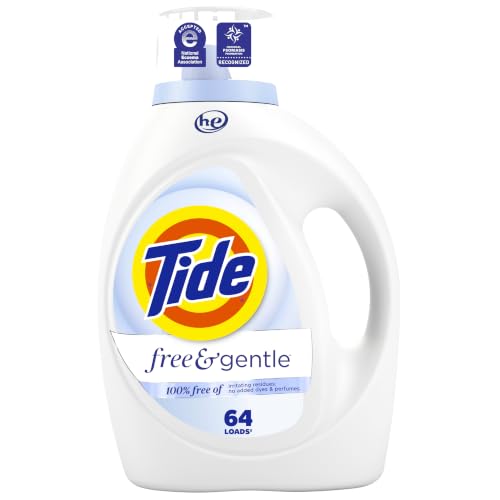 Tide Free & Gentle Liquid Laundry Detergent
- Designed to provide a deep clean that is…
- Laundry detergent made without dyes and perfumes for…
- Formulated to help minimize the risk of skin…
 Tide Simply Liquid Laundry Detergent
- Gentle on skin
- No dyes or perfumes
- Unscented Liquid Laundry Detergent
 Tide PODS Free & Gentle Laundry Detergent
- Provides a deep clean that is gentle on…
- NEA and NPF Certified Tide PODS Free And…
- Hypoallergenic laundry detergent pacs made with no irritating…
| Product | Key specs | |
|---|---|---|
| Tide Free & Gentle Liquid Laundry Detergent | Designed to provide a deep clean that is… Laundry detergent made without dyes and perfumes for… Formulated to help minimize the risk of skin… | Check price |
| Tide Simply Liquid Laundry Detergent | Gentle on skin No dyes or perfumes Unscented Liquid Laundry Detergent | Check price |
| Tide PODS Free & Gentle Laundry Detergent | Provides a deep clean that is gentle on… NEA and NPF Certified Tide PODS Free And… Hypoallergenic laundry detergent pacs made with no irritating… | Check price |
 Tide Clean and Gentle Powder Laundry Detergent | For a deep clean that's gentle on skin NEA and NPF Certified Hypoallergenic laundry detergent | Check price |
As an Amazon Associate we earn from qualifying purchases at no extra cost to you.
What Actually Makes a Detergent Safe for Sensitive Skin and Effective
For sensitive skin, the cleaning power and the irritation risk come from different ingredients. Fragrances, dyes, and preservatives like methylisothiazolinone are the most common triggers for contact dermatitis, while cleaning is driven by surfactants and enzymes. The best formulas for sensitive skin remove the first group without removing the second.
Look for these labels and what they mean in practice:
- Fragrance-free vs. unscented: Fragrance-free means no fragrance chemicals were added. Unscented can mean a masking fragrance was added to neutralize odor. For sensitive skin, choose fragrance-free.
- Dye-free: No added colorants, which reduces residue that can stay in fabric and rub against skin.
- Dermatologist-tested / hypoallergenic: These indicate patch testing or formulation to minimize allergens, but they are not regulated medical guarantees. They suggest lower risk, not zero risk. If you have diagnosed eczema, detergent allergy, or frequent rashes, talk to a dermatologist or allergist.
- Enzyme-based vs. plant-based surfactants: Enzymes (protease, amylase) break down protein and starch stains like blood, egg, and grass at lower temperatures. Plant-based surfactants from coconut or corn can clean well but often need a slightly higher dose or warmer water for greasy stains.
Residue is the other factor people overlook. Liquid detergents dissolve more completely in cold water than pods or powders if dosed correctly, which matters for front-load HE machines that use less water. Excess dosing leaves surfactant residue in fibers, which can irritate skin even if the formula is free and clear.
The Best Free and Clear Detergents Compared
These options are all fragrance-free, dye-free, and widely available in the U.S. market in 2026. They differ in cleaning system, certifications, and machine compatibility.
1. All Free Clear – Best Overall for Sensitive Skin and Stain Removal
All Free Clear is the dermatologist-recommended standard for sensitive skin. It uses a dual surfactant system with enzymes but no perfumes, dyes, or fragrances. It is formulated to lift everyday stains like body oil, food, and dirt in cold water while rinsing clean in both HE and standard machines. It is also the most accessible hypoallergenic liquid for families who need strong odor removal without scent.
2. Tide Free & Gentle – Best Cleaning Power in Cold Water
Tide Free & Gentle keeps Tide’s enzyme and surfactant cleaning system but removes dyes and perfumes and is dermatologist-tested and hypoallergenic. It typically outperforms other free and clear liquids on set-in stains like collar ring, chocolate, and grass in independent lab tests that measure stain removal at 85-90F. The trade-off is it is not plant-based and contains a broader ingredient list than minimalist brands.
3. Seventh Generation Free & Clear – Best Plant-Based Option
Seventh Generation Free & Clear uses USDA Certified Biobased 97% plant-based surfactants, no fragrances, dyes, or artificial brighteners, and is Leaping Bunny certified. It is a good fit if you want a formula with fewer synthetic ingredients and transparent disclosure. It cleans well on everyday soils but may require pre-treatment or warm water for heavy grease or protein stains compared to enzyme-heavy formulas.
4. Arm & Hammer Sensitive Skin Free & Clear – Best Value for Large Households
Arm & Hammer Sensitive Skin Free & Clear combines baking soda with a fragrance-free, dye-free formula and is dermatologist-tested. It is marketed for sensitive skin and offers strong odor neutralization due to the baking soda, which helps with workout clothes and towels. It is one of the lowest cost-per-load liquids in free and clear category.
5. Molly’s Suds Unscented Laundry Powder and Dropps Sensitive Skin Pods – Best Low-Residue Alternatives
These are for readers who want ultra-minimal ingredients. Molly’s Suds laundry powder uses 5-6 earth-derived ingredients and is cruelty-free and vegan, while Dropps Sensitive Skin pods are mineral-based, free of dyes and fragrances, and come in compostable packaging. Both rinse very clean and leave little residue, but powders and pods require proper dissolving – powder needs warm water or pre-dissolving, pods need to be placed directly in the drum before clothes.
Spec and Feature Comparison
This table compares common retail sizes as sold in 2026 to help you evaluate dosage accuracy, loads, and suitability. Market prices vary by retailer and region, typically from budget to premium ranges for free and clear detergents.
| Detergent | Form | Bottle / Pack Size | Standard Dose | Loads per Container | HE Compatible | Key Certifications |
|---|---|---|---|---|---|---|
| All Free Clear | Liquid | 88 fl oz / 2.6 L | 1.5 fl oz (45 ml) | 58 | Yes | Dermatologist-tested, hypoallergenic |
| Tide Free & Gentle | Liquid | 92 fl oz / 2.72 L | 1.45 fl oz (43 ml) | 64 | Yes | Dermatologist-tested, hypoallergenic, EPA Safer Choice |
| Seventh Generation Free & Clear | Liquid | 66 fl oz / 1.95 L | 1.66 fl oz (49 ml) | 40 | Yes | USDA Certified Biobased 97%, Leaping Bunny, EPA Safer Choice |
| Arm & Hammer Sensitive Skin Free & Clear | Liquid | 105 fl oz / 3.1 L | 1.05 fl oz (31 ml) | 100 | Yes | Dermatologist-tested, hypoallergenic |
| Molly’s Suds Unscented | Powder | 65 oz / 1.84 kg | 0.5 oz (1 tbsp) | 130 | Yes (dissolve first in cold water) | Leaping Bunny, vegan |
| Dropps Sensitive Skin | Pods | 64 pods | 1 pod | 64 | Yes | Leaping Bunny, EPA Safer Choice, plastic-free packaging |
Decision Matrix: Which Should You Choose
Match your household situation to the formula that solves the specific trade-off between irritation risk and cleaning needs.
| Your Situation | Priority | Best Match | Why |
|---|---|---|---|
| Baby, eczema-prone, or easily irritated skin in household | Lowest risk of residue and fragrance exposure | All Free Clear or Molly’s Suds Powder | Minimal fragrance/dye load, dermatologist-tested, rinses clean even in cold water when dosed correctly |
| Heavily soiled kids’ clothes, sports uniforms, food stains | Maximum stain removal without perfume | Tide Free & Gentle | Enzyme system removes protein and oil stains at lower temperatures without added dyes or perfumes |
| Want plant-based, cruelty-free, and transparent ingredients | Ingredient philosophy and low environmental impact | Seventh Generation Free & Clear or Dropps | Certified biobased or mineral formulas, no optical brighteners, disclosed ingredient lists |
| Large family, frequent washes, tight budget | Low cost per load with sensitive-skin safety | Arm & Hammer Sensitive Skin Free & Clear | Highest loads per bottle in this group with baking soda for odor control |
| Front-load HE machine, cold-water washes only | Prevent residue buildup | All Free Clear Liquid or Tide Free & Gentle Liquid | Liquids dissolve fully in low-water, cold cycles; easier to dose precisely than powder or pods |
Cost Per Load Calculation: What You Actually Pay
Free and clear detergents range broadly in general market pricing from about $0.10 to $0.28 per load for liquids and $0.08 to $0.25 for powders and pods, depending on brand and pack size. To compare accurately, calculate cost per load yourself:
Formula: Container Price / Loads per Container = Cost per Load
Worked example using typical general market ranges in 2026:
- Arm & Hammer 105 oz liquid at 100 loads: Even at a mid-range price of $14.00, cost is $14.00 / 100 = $0.14 per load.
- Tide Free & Gentle 92 oz at 64 loads: At a higher mid-range price of $15.00, cost is $15.00 / 64 = $0.23 per load.
- Molly’s Suds 65 oz powder at 130 loads: At a mid-range price of $22.00, cost is $22.00 / 130 = $0.17 per load.
This shows why bottle size alone is misleading. The concentrated liquid with a smaller dose or the powder with 130 loads can be cheaper per wash than a larger bottle with a higher dose, even if the upfront price is higher.
How to Wash for Sensitive Skin Without Sacrificing Clean
Even the best hypoallergenic detergent can irritate if it is overdosed or not rinsed. Use this routine to reduce residue while keeping cleaning performance:
- Measure, don’t pour: Use the cap or scoop lines for your load size. For HE machines, use Line 1 for small loads, Line 2 for medium. More detergent does not mean cleaner clothes; it means more residue.
- Dose by soil, not by habit: Use the regular dose for everyday wear, and only add 50% more for heavily soiled items. For plant-based liquids, pre-treat collars and cuffs with a dab of liquid instead of adding extra to the whole drum.
- Wash in cold to warm, not hot, unless needed: Cold water (60-85F) is sufficient for enzyme formulas and reduces energy use, but greasy stains and powders dissolve better at warm (90-105F). Check garment care labels.
- Use an extra rinse if you see suds or residue: If you have soft water, a skin condition, or you wash bulky items like towels that trap suds, run an extra rinse cycle. This is more effective than switching to a harsher formula.
- Clean the machine monthly: Residue from fabric softeners and excess detergent builds up in dispensers and drums. Run an empty hot cycle with machine cleaner and wipe the gasket on front-loaders to prevent redeposit on clean laundry.
Durability and Ownership Realities
Liquid free and clear detergents have a shelf life of about 12-18 months unopened and 6-12 months after opening before enzymes degrade and cleaning weakens. Store at room temperature with the cap closed; freezing or extreme heat can separate ingredients.
Powders last longer, typically 18-24 months, but clump in humidity. Keep the bag sealed and scoop with dry hands. Pods are the most sensitive to moisture and heat; a compromised pod film can leak or not dissolve fully, leaving film on clothes.
What wears first is not the detergent but the washer’s ability to rinse. Fabric softeners and scent beads coat fibers and washer drums with waxy residue that traps detergent. If you use a free and clear detergent for sensitive skin, skip softeners and beads entirely. Use wool dryer balls for softness instead.
Common mistakes that increase irritation risk: mixing multiple detergents, using too much for a small HE load, and washing on quick-cycle with a full drum. Quick cycles use less water and time, so they need a smaller, not larger, dose and a lighter load to rinse properly.
What to Avoid for Sensitive Skin
Avoid detergents labeled with fragrance, parfum, fresh scent, mountain breeze, or added optical brighteners if you are reactive. Optical brighteners leave fluorescent chemicals on fabric to appear whiter but can irritate sensitive skin and are unnecessary for cleaning. Also avoid adding separate scent boosters, even if your base detergent is free and clear, because they reintroduce fragrance directly to fibers.
If rashes, itching, or redness persist after switching to a free and clear formula and correcting dosing, consider other sources like dryer sheets, laundry sanitizers, or detergent residue from shared laundry facilities. General information in this article is not medical advice, and a healthcare professional can help identify whether the cause is detergent-related or due to another skin condition.
FAQ
Is free and clear detergent less effective at removing stains?
Not necessarily. Fragrance and dye do not clean. Modern free and clear formulas from All, Tide, and Seventh Generation use the same surfactants and enzymes as scented versions. Differences in stain removal come from enzyme concentration and wash temperature, not from the absence of perfume.
Do I need a special baby detergent for sensitive skin?
Many families use the same fragrance-free, dye-free detergent for the whole household. Baby-specific detergents are often milder but not always stronger on stains. A dermatologist-tested free and clear liquid that rinses clean is typically sufficient for both babies and adults. If your pediatrician recommends a specific product for infant eczema, follow that guidance.
Are pods or powders safer for sensitive skin than liquid?
All three forms can be safe if they are fragrance-free and dye-free and dosed correctly. Liquids offer the most precise dosing and dissolve best in cold, low-water HE cycles. Pods prevent overdosing but give you no dose flexibility for small loads. Powders have minimal liquid additives but must be fully dissolved to avoid gritty residue.









