The best lawn striping kits for professional results are heavy roller-based systems matched exactly to your mower’s deck width, with the Big League Lawns CheckMate and Toro Lawn Striping System consistently delivering the most defined light-dark contrast because they use weighted, ground-contact rollers rather than drag flaps or brushes.
Our top picks
 EGO AR2100 21inch Mower Striping Kit for
- Compatible with all EGO 21” mowers listed in…
- Add high-quality stripes and patterns to your lawn…
- Easy to install and remove
 Broom and Stripes Co. Lawn Striping Kit
- works with standard wooden push broom heads
- Customize height and pressure settings to suit any…
- Delivers bold, eye-catching lawn stripes from your very…
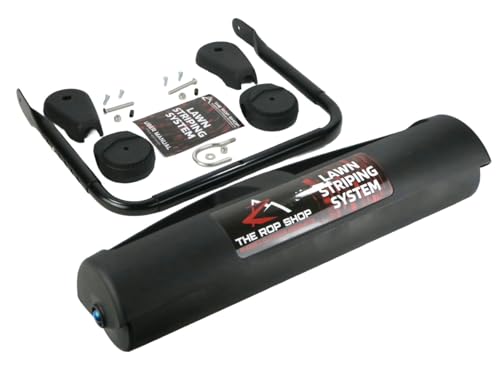 The ROP Shop Lawn Striping Kit for
- Transform your yard into a showpiece with this…
- DESIGNED FOR TORO 21" & 22" PUSH MOWERS:…
- CONSISTENT, DEFINED LAWN PATTERNS: The durable roller system…
| Product | Key specs | |
|---|---|---|
| EGO AR2100 21inch Mower Striping Kit for | Compatible with all EGO 21” mowers listed in… Add high-quality stripes and patterns to your lawn… Easy to install and remove | Check price |
| Broom and Stripes Co. Lawn Striping Kit | works with standard wooden push broom heads Customize height and pressure settings to suit any… Delivers bold, eye-catching lawn stripes from your very… | Check price |
| The ROP Shop Lawn Striping Kit for | Transform your yard into a showpiece with this… DESIGNED FOR TORO 21" & 22" PUSH MOWERS:… CONSISTENT, DEFINED LAWN PATTERNS: The durable roller system… | Check price |
 Wyckoff 19A70059OEM Lawn Striping Kit for 50"/54"/60" | 19A70059OEM ➤ Designed to fit 50"/54"/60" Zero-turn mowers… Wide Compatibility ➤ Compatible CUB CADET Models: ZT1-50… Dual-Action Efficiency ➤ Mow and stripe simultaneously for… | Check price |
As an Amazon Associate we earn from qualifying purchases at no extra cost to you.
What Actually Creates a Professional Stripe
Stripes are not cut into the grass, they are bent. A striping kit mounts behind the mower deck and uses a weighted roller or bar to bend grass blades forward in one direction and backward on the next pass. Light reflects differently off the bent blades, creating the light and dark bands you see on baseball fields. Roller kits produce sharper, longer-lasting stripes than rubber flap or brush kits because they apply even, downward pressure across the full width of the pass.
For a pro look, you need three things: full-width coverage, sufficient weight to bend the grass without scalping, and a roller that stays in contact with the ground over uneven terrain. If any of those are missing, stripes will look faded or wavy.
5 Decision Criteria Before You Buy
1. Mower Compatibility
Compatibility is the first filter. Striping kits are not universal. Most are designed for a specific mower type:
- Walk-behind push mowers (20-22 inch): Universal clamp-on rollers like the Big League Lawns CheckMate for 21-inch mowers fit most residential decks with a rear discharge or mulching setup.
- Lawn tractors and zero-turns (42-60 inch): Brand-specific kits are required. John Deere, Husqvarna, Toro, and Exmark all make bolt-on kits for their own tractor and ZTR models. Aftermarket brands like Big League Lawns and Agri-Fab offer models sized for 42, 46, 48, 52 and 54-inch decks but you must match the mounting bracket to your deck.
- Commercial stand-on and zero-turn mowers: Look for fabricated steel brackets and independent roller suspension, such as Big League Lawns Big League Stripes Roller, which accommodates floating decks.
Check your mower’s model number and deck size before ordering. A kit for a 42-inch stamped deck will not fit a 42-inch fabricated deck from the same brand without an adapter.
2. Roller Width and Weight
Width should match or slightly exceed your cutting width. A roller that is 2-4 inches narrower than your deck will leave unstripped gaps between passes. A roller wider than your deck can catch fences or landscaping.
Weight determines stripe definition. Light poly rollers (under 15 lbs) work on soft, cool-season grasses like Kentucky bluegrass and fine fescue. Heavier steel or sand/water-fillable rollers (30-60 lbs) are needed for stiff warm-season grasses like Bermuda or Zoysia and for larger lawns where you want the stripe to persist for several days. Most pro-grade rollers allow you to add sand or water to tune weight to your grass type and soil moisture.
3. Installation Type
- No-drill clamp-on: Common on push-mower kits. Installs in 10-20 minutes with wrenches, no deck drilling. Ideal for renters or owners who switch mowers often. Trade-off is slightly less rigid mounting.
- Bolt-on bracket: Standard for tractors and zero-turns. Requires drilling 2-4 holes in the deck or frame and takes 30-60 minutes. Creates a much more stable, rattle-free mount and keeps the roller tracking straight at higher ground speeds.
- Hitch-mounted tow-behind: Such as Agri-Fab style stripe rollers towed behind any tractor via pin hitch. No deck modification needed, but adds length and makes tight turns harder.
4. Durability and Materials
Polyethylene rollers resist corrosion and dents but can crack if left full of water in freezing temperatures. Steel rollers with powder coating are more durable and heavier, but will rust if the coating chips and they are stored damp. Look for sealed bearings or solid bushings, and UV-resistant mounting hardware. Cheaper flap-style kits using rubber mats wear and curl within one to two seasons, especially in heat.
5. Storage and Maneuverability
A striping kit adds 6-12 inches to the rear of your mower and typically 5-15 inches of ground clearance when raised. If you store your mower in a shed or garage with limited space, measure the added length. Kits with quick-release pins or lift mechanisms that let the roller swing up for reversing and trailering are worth the premium for zero-turn users. Tow-behind rollers need separate wall or floor storage.
Spec Comparison: Popular Striping Kits in 2026
This table compares common roller-based options by the specs that directly affect stripe quality, not marketing claims.
| Kit Type / Example Model | Fits Mower Size | Roller Width | Roller Weight (Empty / Filled) | Roller Material | Install Method | Storage Footprint Added |
|---|---|---|---|---|---|---|
| Big League Lawns CheckMate (21″) | 20-22″ push mowers | 20.5″ | 12 lbs / 38 lbs (sand-filled) | Polyethylene with steel axle | No-drill clamp | +7″ length |
| Toro Lawn Striping System (for TimeCutter 42-50″) | Toro 42″, 50″ fabricated decks | 42″ or 50″ | 18 lbs / 52 lbs (water-filled) | Steel roller, powder-coated | Bolt-on bracket | +9″ length, roller lifts for reverse |
| Big League Lawns Big League Stripes (48-54″) | Universal ZTR / tractor 48-54″ | 48″ | 28 lbs / 65 lbs (sand-filled) | Commercial-grade polyethylene | Bolt-on with quick-release pins | +11″ length, pivots up |
| Husqvarna Striping Kit (for TS series tractors) | Husqvarna 42″, 46″, 54″ tractors | 42″, 46″, 54″ | 22 lbs / 48 lbs (water-filled) | Steel | Bolt-on | +8″ length |
| Agri-Fab Tow-Behind Roller/Striper (36″) | Any tractor with pin hitch | 36″ | 45 lbs / 250 lbs (water-filled) | Steel drum | Tow hitch, no deck mount | Separate unit: 36″ x 14″ drum |
Which Kit Should You Choose? Decision Matrix by Situation
Use your lawn size, mower, and grass type to narrow the choice:
| Your Situation | Best Kit Type | Why It Works | General Market Price Range |
|---|---|---|---|
| Small lawn under 1/4 acre, push mower, cool-season grass | Clamp-on poly roller (e.g., 20-22″ CheckMate type) | Lightweight, no drilling, enough weight for soft grasses, easy to store | $90 – $160 |
| 1/4 to 1 acre, lawn tractor 42-46″, wants crisp stripes without buying a new mower | Brand-specific bolt-on roller for your tractor | Matches deck width exactly, maintains roller contact on rolling terrain, lifts for reverse | $180 – $350 |
| 1+ acre, zero-turn 50-60″, Bermuda/Zoysia or high-traffic lawn | Heavy-duty ZTR roller with fillable weight (e.g., Big League Stripes 50″+) | High filled weight needed to bend stiff grasses, wide coverage reduces passes | $300 – $500 |
| Rental property or shared mower, no modifications allowed | Tow-behind roller/striper | No deck drilling, transferable between mowers, doubles as lawn roller | $150 – $280 |
| Budget priority, short-term or inconsistent striping | Rubber flap / brush kit | Cheapest upfront, easy install, but stripes fade fast and flaps wear quickly | $50 – $110 |
Worked Calculation: Coverage and Weight Needs
To see why width matching matters, calculate your stripe passes and time cost.
Example: You have a 10,000 sq ft rectangular lawn (approx. 100 ft x 100 ft) and a 42-inch tractor.
- Usable cutting width is about 40 inches after overlap. Passes needed: 100 ft (1200 inches) / 40 inches = 30 passes.
- Length per pass is 100 ft. Total linear distance mowing: 30 x 100 = 3,000 ft.
- If your roller is only 36 inches wide, you leave a 4-inch unstripped gap per pass. Over 30 passes that is 10 linear feet of missed striping across the lawn, which shows as faded lines.
- For weight, a 42-inch steel roller at 50 lbs applies about 1.2 lbs per inch of width. For warm-season grass, aim for 1.1 to 1.5 lbs per inch. For cool-season grass in spring when soil is soft, 0.6 to 0.9 lbs per inch is sufficient to avoid compaction.
If your mower is larger than 50 inches, consider a two-piece articulated roller rather than a single rigid drum. Rigid rollers wider than 54 inches tend to bridge over dips and leave uneven pressure marks.
Durability and Ownership Realities
Striping kits are simple mechanically, but these parts wear first:
- Bearings and bushings: Sealed ball bearings last 3-5 seasons; plain plastic bushings need replacement every 1-2 seasons if you mow weekly. Rinse grit after mowing and grease fittings monthly if your kit has them.
- Mounting brackets: Check bolt torque after the first 5 hours of use. Vibration loosens bolts, causing the roller to skew and scalp one side. Use lock nuts or thread locker.
- Poly rollers: Never store filled with water where temperatures drop below 32°F. Ice expansion will split seams. Drain and store dry. Sand filling avoids freeze damage but makes the roller permanently heavier to lift.
- Steel rollers: Touch up paint chips immediately. A small chip exposed to fertilizer and moisture will rust through a powder-coated drum in one season.
- Common mistake: Mowing too short while striping. Below 2.5 inches, there is not enough blade length to bend and reflect light, so stripes disappear even with a heavy roller. Raise cutting height by 0.5 inch when you start striping for the best contrast, then alternate mowing direction weekly to avoid grain memory and turf stress.
Cleaning is minimal: rinse the roller with a hose, remove wrapped grass from axle ends, and store the mower with the roller lifted to avoid flat spots on poly drums. Avoid dragging the roller backward over concrete or curbs while lowered; this bends brackets and flattens one side of the roller.
Installation Tips for a Straight Stripe
Even the best kit will stripe poorly if installed crooked. After mounting, park on flat pavement and check that the roller touches the ground evenly end-to-end. There should be less than 1/8-inch gap on either side. Adjust bracket height so the roller compresses grass but does not carry the weight of the mower. If the rear of the mower lifts when you lower the roller, it is set too low.
For your first mow, mow the perimeter twice to create a turning border, then stripe the interior in straight, parallel passes using a distant landmark to stay straight. Overlap the previous wheel track by 2-3 inches, not the roller edge, to maintain consistent stripe width.
Frequently Asked Questions
Do I need a striping kit for professional results or can I use a DIY roller?
DIY options like a PVC pipe filled with concrete can bend grass, but they rarely track straight, lack lift mechanisms, and put uneven pressure across the width. Manufactured kits use centered axles and balanced weight distribution that prevents wobble and scalping, which is why they create cleaner lines faster.
Will a striping kit damage my lawn?
When used at proper weight and on dry to slightly moist turf, no. Avoid striping when soil is saturated; the extra weight can cause compaction and rutting. Alternate stripe direction weekly (north-south, then east-west, then diagonal) to prevent wearing a permanent grain into the turf.
Can I stripe warm-season and cool-season grasses the same way?
Warm-season grasses have stiffer blades and need more roller weight and slightly higher cutting heights (2.5 to 4 inches) for visible contrast. Cool-season grasses stripe easily at 3 to 3.5 inches with lighter rollers, but show stripes best when grass is actively growing in spring and fall.