
Our Top Picks
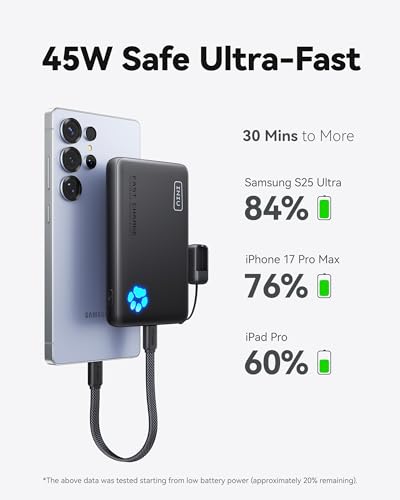
 INIU 10000mAh 45W Fast Charging Portable ChargerSmall Size5.26 x 2.7 x 0.5 Inches0.5 poundsCheck on Amazon
The best power banks for everyday carry are the compact 10,000mAh models, while 20,000mAh units suit longer trips and laptops need a dedicated high-output bank. This set covers all three groups, from slim phone chargers to a 25,000mAh laptop model and two 60,000mAh packs. It is an editorial comparison of listing information, not a lab report, so use it to narrow the field and then read each product page.
Top picks at a glance
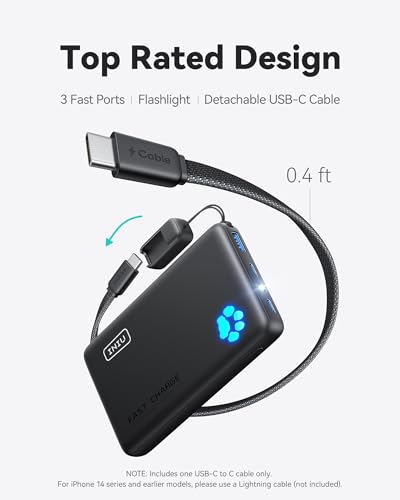
INIU 10000mAh 45W Fast Charging Portable Charger, Smaller Travel Power Bank | Flight-Safe, Detachable USB C Cable, Travel Essential, External Battery Phone Pack for iPhone 18 17 Samsung iPad etc



As an Amazon Associate we earn from qualifying purchases. Product prices and availability are accurate as of the date/time indicated.

Miady 2-Pack Portable Charger, Slim 10000mAh Power Bank Travel Battery Pack | Dual USB丨3 Outputs 2 Inputs丨for Backpack Travel Camping丨Slim丨Compatible with iPhone Android etc丨Flight-Safe丨37Wh丨Black+White


As an Amazon Associate we earn from qualifying purchases. Product prices and availability are accurate as of the date/time indicated.
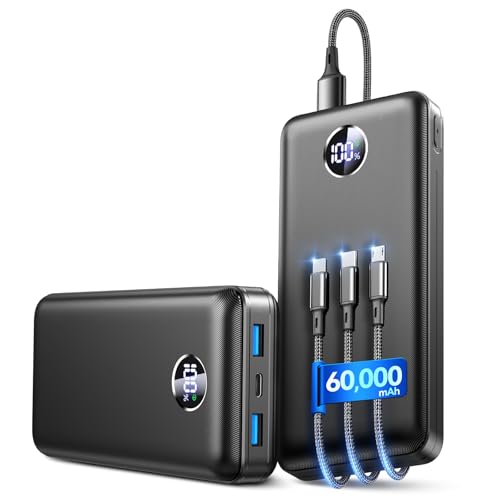
IAPOS 60000mAh 22.5W Fast Charge Portable Charger, for 5-Devices Power Bank | 45% Larger Capacity, 10 times for iPhone, with 3-in-1 Cable, External Battery Pack for Phones/iPad, Travel Camping Essential


As an Amazon Associate we earn from qualifying purchases. Product prices and availability are accurate as of the date/time indicated.
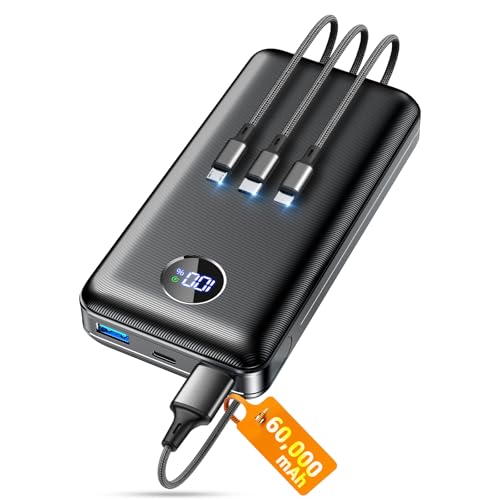
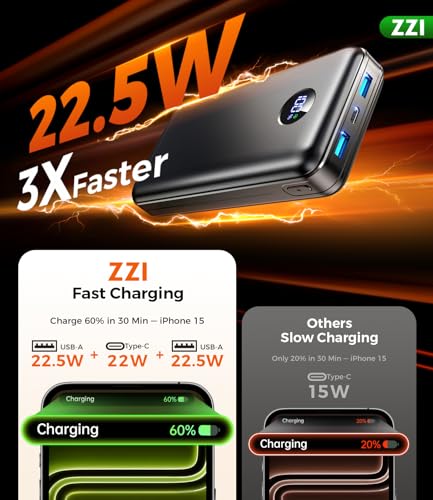
ZZI Portable Charger Power Bank 60000mAh, 22.5W PD Fast-Charge Battery Pack | Charge 5 Devices, 3-Ports & 3 in 1 Cable, 60% in 30min, 10 times for iPhone, Fit All Cell Phone/Tablets,Camping/Travel/Outage




As an Amazon Associate we earn from qualifying purchases. Product prices and availability are accurate as of the date/time indicated.

Anker Power Bank, 10,000mAh Portable Charger, PowerIQ USB-C Battery Pack | 5V / 3A High-Speed Charging, for iPhone, iPad, and More, Ultra-Compact Travel-Ready Design (Black)


As an Amazon Associate we earn from qualifying purchases. Product prices and availability are accurate as of the date/time indicated.

Anker Laptop Power Bank, 25,000mAh Travel Essential with 165W Total Output | 3 USB-C Ports with 100W Max Each, Built-In Retractable Cables, Flight-Ready, for iPhone 17 Series ,MacBook, and More


As an Amazon Associate we earn from qualifying purchases. Product prices and availability are accurate as of the date/time indicated.

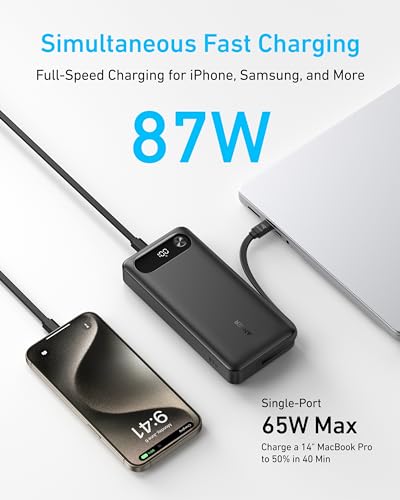
Anker Power Bank, 20,000mAh Travel Essential, Built-in USB-C Cable(Black) | 3-Port 87W Max Fast Charging Battery Pack, for MacBook, iPhone 16 / 15 Series, Samsung, Switch, and More


As an Amazon Associate we earn from qualifying purchases. Product prices and availability are accurate as of the date/time indicated.

Anker Zolo Power Bank,20,000mAh 30W Portable Charger with Built-in USB-C | High-Speed Charging for iPhone 17 / 16 / 15 Series, Galaxy, and More



As an Amazon Associate we earn from qualifying purchases. Product prices and availability are accurate as of the date/time indicated.

Ridge 20W Magnetic Power Bank Battery Pack 10,000mAh - Fast Charging - Portable Charger Flight-Safe Travel Powerbank - Built-in Cables & Magnetic Attachment (Basecamp Orange)


As an Amazon Associate we earn from qualifying purchases. Product prices and availability are accurate as of the date/time indicated.
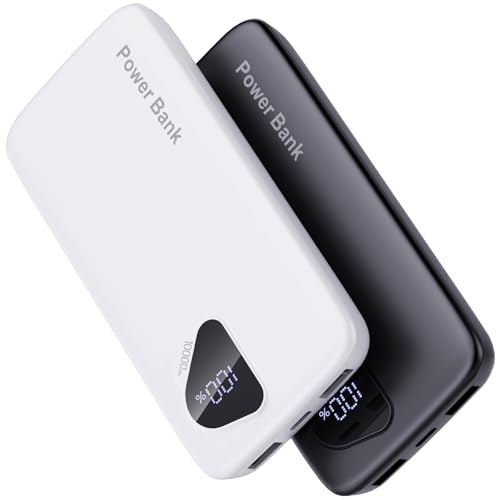
2026 2-Pack 10000mAh Portable Charger Battery Pack with Built in Cables | Travel Essential, 4 Outputs 2 Inputs Slim Power Bank for iPhone 17/16/15/14, Samsung Galaxy S23/22, Pixel etc


As an Amazon Associate we earn from qualifying purchases. Product prices and availability are accurate as of the date/time indicated.
| Model | Key point from the title | Price tier | Best for |
|---|---|---|---|
| INIU 10000mAh | 45W claim, detachable USB-C cable | Budget | Travel phone top-ups |
| Miady 2-pack | Two slim 10000mAh banks, 37Wh | Budget (two units) | Sharing or spares |
| IAPOS 60000mAh | 22.5W, charges 5 devices, 3-in-1 cable | Mid-range | Camping and outages |
| ZZI 60000mAh | 22.5W PD, 3 ports, 3-in-1 cable | Budget | Low-cost bulk capacity |
| Anker 10,000mAh PowerIQ | 5V/3A, ultra-compact | Budget | Pocket-sized backup |
| Anker Laptop 25,000mAh | 165W total, three USB-C ports, retractable cables | Premium | Laptops and multiple devices |
| Anker 20,000mAh 87W | 3 ports, built-in USB-C cable | Mid-range | Phone plus light laptop |
| Anker Zolo 20,000mAh | 30W, built-in USB-C cable | Mid-range | Phones and tablets, long days |
| Ridge 10,000mAh magnetic | 20W, built-in cables, magnetic attachment | Premium | Style and cable-free carry |
| FancyBean 2-pack | Built-in cables, 4 outputs, 2 inputs | Budget (two units) | Households sharing chargers |
What is shifting in portable power
Output numbers have climbed. A few years ago most portable chargers delivered phone-level power and little else, whereas this set includes a bank advertising 165W across three ports, aimed at laptops. Higher output usually depends on the bank, the cable and the device all supporting a matching fast-charging standard, so a big number on the box is a ceiling, not a promise.
Built-in cables are another visible trend. Several listings fold a USB-C cable or a 3-in-1 cable into the body, a convenience for travel that also fixes your connector options. Others keep detachable cables or offer a magnetic attachment meant to hold the bank to a phone, though whether a given phone works with it is something to confirm on the page.
At the other end, very large capacities are being marketed to campers and outage planners. Capacity is also a travel issue, because bigger batteries run into the energy limits that many airlines apply to carry-on lithium cells. Finally, multi-packs are common, which is a value pitch but a comparison trap if you judge by the headline cost alone. These are general observations, not market statistics.
One more shift is worth noting: sellers increasingly print the watt-hour figure or a flight-safe label in the title. That is a good sign for buyers, because it answers the question most travelers have before they reach the checkout. Where a title omits it, the number can still be estimated from mAh, but the printed label is the one to trust.
How we picked these
We worked from the published listing titles, the specifications stated in them and general battery knowledge, favoring clear output claims and sensible features for the stated use. Nobody on the team used or measured these units. Every number below is the seller’s claim, and we point out ambiguous wording rather than guessing from memory about a brand. Price tiers are relative within these ten and are not dollar figures.
The ten listings, one by one
INIU 10000mAh: slim travel charger with a detachable cable
This listing describes a 10000mAh bank with a 45W fast-charging claim, a detachable USB-C cable and a flight-safe label, aimed at travel. The compatibility list in the title names several newer iPhone generations, plus Samsung and iPad. Treat that list as a seller claim and check it against the phone you own.
A commuter or traveler who wants one compact bank for a phone and perhaps earbuds is the natural buyer. The title does not say how many ports there are or how fast it recharges.
- Pro: small format with a bundled detachable cable.
- Pro: flight-safe wording for travel.
- Con: 45W may apply only to certain devices or port setups.
- Con: capacity suits phones, not laptops.
When a title leads with a wattage claim, read the fine print for which port delivers it and what the pack does when two devices are plugged in. A detachable cable is easy to replace if it frays, which is a quiet advantage over fixed designs.
Check the listing: port count, recharge time and the exact wattage per port. Ask before buying: does my phone support the fast-charging standard being advertised?
Miady 2-pack: two slim banks, with the Wh figure stated
Miady sells a two-pack of slim 10000mAh power banks with dual USB, three outputs and two inputs, labeled flight-safe, with a 37Wh figure in the title and a black and white pair. The Wh number is helpful because it matches a 10000mAh cell at a nominal voltage of about 3.7V, and it is the figure airlines tend to ask about.
Think of a family trip where two people each need a backup, or a bag with one charged and one waiting. The listing says USB outputs but not their wattage, so it is unclear how fast either unit charges.
- Pro: two units at a budget tier.
- Pro: Wh figure printed in the title.
- Con: output wattage is not stated.
- Con: slim designs often have limited capacity to spare.
A pair is only a bargain if both banks are the quality you want, so look at the photos for port types and any labels. Two inputs may mean both a USB-C and a micro-USB port, which could matter if you still own older cables.
Check the listing: input types, per-port output and cable inclusion. Ask before buying: do I need two banks, or one bigger one?
IAPOS 60000mAh: very large capacity for outages and camping
IAPOS lists a 60000mAh bank with 22.5W fast charging, five-device support, a claimed 45 percent larger capacity and about 10 iPhone charges, plus a 3-in-1 cable. The comparison behind the 45 percent figure is not named, so it is marketing language. The capacity does not claim to be flight-safe.
The arithmetic is worth doing: 60000mAh at roughly 3.7V is about 222 Wh, above the 100 Wh level often cited for airline carry-on rules, so check your carrier before flying with it. It is a better fit for a car, campsite or power-cut kit.
- Pro: capacity for several days of phone use.
- Pro: charges several devices, per the title.
- Con: heavy and slow to recharge, in all likelihood.
- Con: travel limits on very large lithium packs.
Long recharge times are a real issue at this size, so confirm the input wattage and whether it can pass power through while charging. Keep it out of hot cars and follow the manufacturer’s guidance for storage.
Check the listing: weight, size, input rating and port layout. Ask before buying: will I really use all that capacity, or am I paying for weight?
ZZI 60000mAh: another high-capacity pack at a lower tier
ZZI describes a 60000mAh bank with 22.5W PD fast charging, charging for five devices through three ports, a 3-in-1 cable, a claim of 60 percent in 30 minutes and about 10 iPhone charges. It is budget-tier in this set, and it shares many features with the IAPOS listing, which makes the two near rivals.
The 60-percent-in-30-minutes claim most likely refers to a particular phone under ideal conditions, and the title does not say which. Use it as a hint, not a benchmark.
- Pro: very large capacity at a budget tier.
- Pro: PD (Power Delivery) is named in the title.
- Con: the 60-in-30 claim lacks conditions.
- Con: similar travel and weight caveats as other large packs.
Between the two 60000mAh listings, compare input power, port types and cable length rather than the headline numbers, which are nearly identical. A built-in 3-in-1 cable simplifies a bag but locks you into its connector set.
Check the listing: which connectors the 3-in-1 cable offers and the recharge time. Ask before buying: is a cheaper giant bank better than a mid-size one I will carry more often?
Anker 10,000mAh PowerIQ: compact backup at the budget tier
This Anker listing is for a 10,000mAh USB-C battery pack with PowerIQ and 5V/3A charging, described as ultra-compact and travel-ready, in black. The 5V/3A figure points to modest output, around 15W, which suits phones and small accessories rather than laptops.
It fits a bag-bottom backup: the pack you forget about until a phone hits 5 percent. The title does not mention a built-in cable or a flight label, so look at the page.
- Pro: small size and clear spec line.
- Pro: budget-tier price with a plainly stated spec line.
- Con: modest output compared with newer listings.
- Con: single-speed approach may feel slow with recent phones.
If your phone supports faster charging, this pack may not use it, so the saving can come with a speed trade-off. For occasional emergencies that is fine; for daily top-ups, you may prefer a faster model.
Check the listing: dimensions, port count and cable inclusion. Ask before buying: do I need fast charging or just a safety net?
Anker Laptop Power Bank 25,000mAh: the high-output option
The title for this model states 25,000mAh, 165W total output, three USB-C ports at up to 100W each, built-in retractable cables and a flight-ready label, for laptops and phones. It is the premium-tier listing in the set, and it targets users who charge laptops on the go.
At about 3.7V, 25,000mAh works out to roughly 92 Wh, which is under the commonly cited 100 Wh level, though the listing and your airline are the authorities. The 165W figure is total output, so using all three ports shares it.
- Pro: multiple high-wattage USB-C ports and retractable cables.
- Pro: capacity and output suit a laptop plus a phone.
- Con: the highest cost in the set.
- Con: heavier than the phone-oriented banks.
A laptop must accept USB-C charging at a wattage the bank can supply, so check your charger rating. Retractable cables are neat, but they add mechanical parts that can wear.
Check the listing: per-port limits when all ports are in use. Ask before buying: what wattage does my laptop charger put out?
Anker 20,000mAh with 87W max: a middle path
This listing describes a 20,000mAh bank with a built-in USB-C cable, three ports and an 87W maximum, suited to laptops, phones and a Nintendo Switch. It sits at the mid-range tier, between the compact phone banks and the laptop-focused flagship.
For a light laptop, a phone and earbuds on a day out it is a sensible fit, but 87W is the maximum across the pack, not per port. Under the 70 percent assumption, 20,000mAh gives roughly 52 usable Wh, so a laptop with a small battery could get roughly one full charge, and a larger one would not.
- Pro: laptop-capable output with a built-in cable.
- Pro: three ports let you charge a few devices at once.
- Con: built-in cable limits flexibility.
- Con: bulkier than 10,000mAh options.
The model number in the title mentions specific phone families; ignore those and confirm connectors instead. If you carry a laptop and a phone, check whether simultaneous charging drops the speed of either one.
Check the listing: per-port wattage split and cable length. Ask before buying: is the built-in cable long enough for my desk and seat?
Anker Zolo 20,000mAh: capacity with 30W output
The Zolo listing states a 20,000mAh, 30W portable charger with a built-in USB-C cable, with fast charging for several phone families and Galaxy models. It is a mid-range choice that favors capacity and phone or tablet charging rather than laptop-class output.
Imagine a long travel day with a phone and a tablet: the capacity covers it, and 30W is plenty for those devices. A thin laptop may charge slowly or not at all, depending on its needs.
- Pro: large capacity with built-in cable.
- Pro: 30W suits phones and tablets.
- Con: less output than the 87W sibling.
- Con: no laptop claim in the title.
Ports and extra cables are not described, so check how many devices it can serve at once. A familiar brand name tells you little by itself; only the product page and buyer feedback provide specifics.
Check the listing: port count, weight and whether it can charge itself and a device at once. Ask before buying: do I need laptop output at all?
Ridge magnetic 10,000mAh: built-in cables and magnet attachment
Ridge describes a 20W magnetic power bank with a 10,000mAh battery, fast charging, built-in cables and magnetic attachment, flight-safe, in a Basecamp Orange finish. It is premium-tier, so the price reflects design and features rather than capacity.
The magnet is meant to hold the bank on the back of a compatible phone, which can be handy on a hike or in a rideshare. Whether your phone aligns with the magnet is something to verify on the product page.
- Pro: built-in cables and magnetic attachment reduce clutter.
- Pro: flight-safe wording in the title.
- Con: premium tier for 10,000mAh capacity.
- Con: 20W is modest.
If you care about looks and not carrying cables, this is the stylish choice, whereas capacity-per-dollar favors others. Magnets can also affect nearby items such as cards, so consider how you carry it.
Check the listing: which phones the magnet suits and what the built-in cables are. Ask before buying: am I paying for design more than capacity?
FancyBean 2-pack: two slim banks with built-in cables
FancyBean lists a two-pack of 10000mAh portable chargers with built-in cables, four outputs and two inputs, slim, for phones including several Samsung and Pixel families. The title opens with a year-style label; ignore it as a model indicator and check the page for the actual model.
It suits a household that wants to hand a charged bank to each person. The cable types built in are not stated in the title.
- Pro: two units with built-in cables.
- Pro: four outputs per bank, per the title.
- Con: cable connectors are unspecified.
- Con: output wattage is not stated.
As with other two-packs, compare per unit. With little technical detail in the title, buyer feedback on the page is the only guide to cable durability and charging speed.
Check the listing: built-in cable types and wattage. Ask before buying: are two basic banks better than one stronger bank?
Buying guide: capacity, output and safety
Turn mAh into something useful
The mAh figure alone hides the real energy. Watt-hours is roughly mAh x 3.7 / 1,000. Here is a worked example with stated assumptions: a 10,000mAh bank is about 37 Wh. Assume 70 percent of that reaches the phone, which is 26 Wh, and a phone battery of about 15 Wh. Then you get roughly 1.7 charges. Efficiency varies with cable, heat and device, so this is an estimate, not a guarantee.
Apply the same math to a 60000mAh pack: about 222 Wh, roughly 155 Wh usable, around ten phone charges, which fits the listings loosely. A 25,000mAh bank is about 92 Wh. A laptop with a 50 Wh battery would take about one and a quarter full charges from it at 70 percent efficiency (92 x 0.7 is about 65 Wh).
| Spec concept | What to look for | Why it matters |
|---|---|---|
| Capacity (Wh) | mAh x 3.7 / 1,000, or a printed Wh figure | Real energy and travel limits |
| Output per port | Watts per port, not just total | Charging speed for your device |
| Fast-charge standard | PD or the standard your phone supports | A mismatch means slow charging |
| Input rating | Wattage for recharging the bank | Large banks can take many hours |
| Cables | Built-in or detachable, and the connector | Convenience versus flexibility |
| Size and weight | Dimensions listed on the page | Daily carry versus occasional use |
Match the size to your day
Think about the longest stretch you go without a wall socket. A commuter who lands at 20 percent by evening needs perhaps one extra charge, so a 10,000mAh bank is plenty and pocket-friendly. A weekend traveler with a phone, earbuds and a tablet may prefer 20,000mAh. Someone camping for three days, or covering a power cut, may value a 60000mAh pack despite the weight.
Also think about who else will borrow it. A bank shared among several people drains faster than the math suggests, which is where multi-port packs or two-packs earn their place. Heavier packs tend to stay at home, so the best bank is often the one you will actually carry.
Output and cables
Wattage figures are maximums. A 45W or 87W claim needs a phone or laptop that can accept it and a cable rated for it. Many listings give only a total, so with several devices plugged in, each may get less. If you plan to charge a laptop, confirm that its required wattage fits one port.
Battery safety and travel
Lithium batteries can overheat if damaged, crushed, or exposed to heat. Stop using a pack that swells, smells or gets unusually hot, avoid leaving it in a hot car, and follow the manufacturer’s instructions. Airline rules for power banks differ, so check yours, carry the bank in cabin baggage and look at the Wh label.
A quick comparison habit
When two listings look alike, line up four things: watt-hours, per-port output, input wattage and weight. The 60000mAh pair in this set, for example, share a 22.5W claim and a 3-in-1 cable, so the decision hinges on recharge rate, port layout and what buyers say about build quality. Likewise the three larger Anker listings, two at 20,000mAh and one at 25,000mAh, differ mainly in output class rather than capacity.
It also helps to write down what you will charge. A phone and earbuds need little; a tablet needs more; a laptop needs a bank built for it. Matching the bank to the heaviest device you own avoids the common disappointment of a pack that can only trickle-charge your most important gadget.
Recharging and everyday habits
A large bank that takes a day to refill may sit empty when you need it. Check the input wattage, use a suitable wall charger and top up before trips. Smaller banks are easier to keep ready, and a pair can keep one always charged.
Mistakes buyers make
- Believing the mAh number alone. Convert to Wh and allow for losses.
- Ignoring per-port output. A high total may not reach the port your device uses.
- Forgetting travel limits. Very large banks may be restricted on flights.
- Buying a pair for the headline. Compare per unit and check both are what you want.
- Assuming compatibility. Title lists of phone models are seller claims.
- Choosing built-in cables blindly. A fixed connector can age out.
- Charging a bank overnight in a hot place. Heat is hard on lithium cells, so keep it somewhere cool and visible.
Verdict by use case
For a pocket backup, the compact 10,000mAh listings, including the Anker and INIU models, are the sensible tier. For sharing, the two-packs offer value if you check quality. For laptops, the 25,000mAh Anker with high-wattage USB-C ports is the clear specialist, with the 87W 20,000mAh model as a lighter alternative. For outages and camping, the 60000mAh packs deliver bulk, with weight and travel limits as the trade-off. For design and cable-free carry, the Ridge is the style pick. Confirm all specs on the listing, since this comparison rests on titles and general battery knowledge, not on measurements.
Related guides
- Black Friday Cyber Monday Health Equipment Deals
- Hanging Purse Organizer For Small Closet
- Closet Organizers For Small Closets
Frequently asked questions
How many phone charges does a 10,000mAh power bank give?
Usually fewer than the math on the label suggests. The rated figure is measured at the cell’s internal voltage, and conversion losses reduce what reaches your phone. Under a stated assumption of about 70 percent efficiency and a phone battery near 15 Wh, a 10,000mAh bank gives roughly one and a half charges. Phone size, cable quality and charging speed all shift that number.
Can I take a power bank on a plane?
Rules differ by airline and country, so check yours before you fly. Lithium power banks generally belong in carry-on bags rather than checked luggage, and a limit of around 100 Wh is commonly cited for banks without special approval. Capacity in Wh is mAh times roughly 3.7 volts divided by 1,000. Treat that as an estimate and rely on the label and the airline.
What does 22.5W or 45W on a listing actually mean?
It is the maximum output the seller claims for a single port under ideal conditions. Your phone, cable and charging protocol decide what you actually get, and multi-port use usually shares the total. A bank rated for 22.5W suits phones and small tablets, while laptops generally need much higher output on a port that supports the right standard. Check the listing for per-port figures, not just the headline number.
Is a 60,000mAh power bank worth it?
Only if you will use that capacity. At about 3.7 volts that is a very large battery, and it brings weight, long recharge times and travel restrictions. It makes sense for camping, power cuts or several devices over days, and less sense for a daily commute. Check dimensions, weight and recharge speed on the listing, and think about how often you would really carry it.
Are built-in cables better than detachable ones?
Built-in cables mean one less thing to lose and a cleaner pack, but a damaged cable can compromise the whole device and the connector type is fixed. Detachable cables let you swap in your own, but they are easy to forget. Choose based on how you travel and whether you carry spare cables anyway. Either way, confirm the connector type on the product page before ordering.
Why do some listings say 2-pack?
A two-pack gives you two separate batteries, which can be handy for sharing or for keeping one charged while the other is in use. It also means the price covers two units, so compare per unit rather than on the headline. Check whether each is the same model and whether both include the cables you need. Some pairs are sold in two colors, which makes sharing easier.









