
Key takeaways
- Sidewinder circular saws: lighter and cheaper, often adequate for DIY use.
- Track saws: better for sheet goods and straight, splinter-free cuts.
- Reciprocating or chain saws: for demolition or heavy timber, where a circular saw cannot reach.
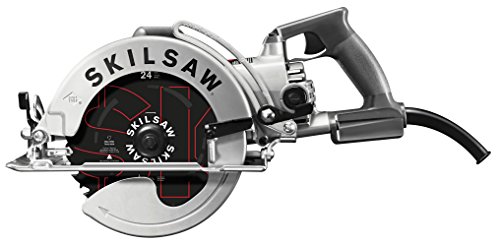
For most framers and serious DIYers, the Skilsaw SPT77WML-01 is the worm drive saw that reviewers name most often, while the Milwaukee 6477-20 and Makita 5377MG suit buyers who value warranty or torque and the DeWalt DCS577 FlexVolt suits those who want a cordless option. Worm drive saws place the motor behind the blade and use gears to turn it, giving high torque and a long, narrow body that sits comfortably when cutting framing lumber. This guide explains how they differ from sidewinder saws, summarizes the current lineup, and sets out the trade-offs.
Our top picks


As an Amazon Associate we earn from qualifying purchases at no extra cost to you.
Worm drive saws at a glance
| Model | Type | Best for | Stated or reported points |
|---|---|---|---|
| Skilsaw SPT77WML-01 | Corded, 15 amp | Professional framing and general carpentry | Magnesium construction; TechGearLab reports fast crosscutting; about 11.5 pounds reported; one outlet noted a short warranty |
| Milwaukee 6477-20 | Corded | Heavy-duty work and buyers who care about warranty | A roundup gives it a warranty award; described as a step up from standard circular saws |
| Makita 5377MG and 5477NB | Corded | Torque for hardwood and millwork | 5377MG reported near 5,800 rpm and 13 pounds; often compared with Skilsaw and DeWalt |
| DeWalt DWS535B | Corded | Pros who want a magnesium body and electric brake | Reported weight around 13 pounds |
| DeWalt DCS577 FlexVolt | Cordless, 60V-class battery system | Job sites without power | Homegrail calls it the best worm drive for the money |
| Skilsaw SPT70V-11 Super Sawsquatch | Corded, large capacity | Cutting thick timber and posts | Large-capacity blade saw |
| Skilsaw SPTH77M | Cordless | Premium cordless worm drive buyers | Named the premium cordless pick in a roundup |
| Bosch CSW41 | Corded | Users who value ergonomics | Praised for handling |
What makes a worm drive saw different
A sidewinder circular saw mounts the motor beside the blade and drives it directly. A worm drive saw sets the motor behind the blade and uses worm and pinion gears. The result is more torque at a lower blade speed, a longer body, and a blade on the left side for right-handed users. That left-side blade position gives a clear view of the cut line for right-handers. The gearbox also adds weight and requires oil changes as stated in the manual.
People choose worm drives for ripping and cross-cutting wet or dense lumber, long straight cuts, and heavy daily use. They are a long-standing favorite among framers in North America. Sidewinders are lighter, cheaper and more common, and cordless models are making them very capable. If you cut mostly sheet goods and trim, a good sidewinder may be enough.
Corded or cordless
Corded worm drives deliver consistent power, run without battery limits, and typically cost less per unit of power. They suit shop work and sites with extension cord access. Cordless models, such as the DeWalt DCS577 FlexVolt and Skilsaw SPTH77M, remove cord management and are more convenient on roofs, in frames and in remote locations. The trade-off is battery cost, weight with a large pack, and finite runtime during heavy ripping.
When choosing cordless, consider the battery platform you already own. A FlexVolt saw uses the DeWalt battery system; if your other tools run on another platform, a corded saw may be more economical.
Features to compare
Weight and balance
Worm drive saws are heavier than most sidewinders. Reported weights fall in the 11 to 14 pound range for the corded models listed above. Lighter magnesium housings reduce fatigue on overhead or vertical cuts. Hold the saw in a store if you can.
Depth and bevel capacity
Standard 7-1/4 inch blades cut roughly 2-1/2 inches deep at 90 degrees, per most maker listings. Larger 10-1/4 inch saws, such as the Super Sawsquatch, cut deeper and suit timber work but weigh more and need heavier blades.
Blade guard and brake
An electric brake stops the blade quickly after the trigger is released and is a common feature on professional saws. Check that the lower guard moves smoothly and is never pinned back.
Oil and maintenance
Gear oil must be checked and changed at the interval the maker states. Use the oil type listed in the manual. Keep ventilation slots clear of sawdust and inspect the cord for nicks.
Warranty and service
Warranty terms differ between makers. One reviewer noted that the Skilsaw has a short warranty on its base listing, while another gave the Milwaukee a warranty award. Read the terms from the maker’s own page and consider service center access.
Budget tiers
| Tier | Typical choice | Trade-off |
|---|---|---|
| Budget | Entry corded worm drives from major brands | Fewer features, plain guards, often heavier |
| Mid-range | Milwaukee 6477-20, Makita 5377MG, DeWalt DWS535B | Strong torque and durable housings; corded only |
| Premium | Skilsaw SPT77WML-01, cordless FlexVolt or Skilsaw cordless worm drives | Highest cost, battery platform commitments for cordless |
Pick the right one
| Pick this if you | Consider | Why |
|---|---|---|
| Frame houses daily | Skilsaw SPT77WML-01 | Top pick in most roundups and fast crosscutting in TechGearLab’s comparison |
| Want a strong warranty story | Milwaukee 6477-20 | Named for warranty in one roundup |
| Cut hardwood or dense stock | Makita 5377MG | Often reported to match or beat rivals on torque |
| Need an electric brake and magnesium body | DeWalt DWS535B | Both features are reported |
| Work off-grid | DeWalt DCS577 or Skilsaw SPTH77M | Cordless convenience |
| Cut large timbers | Skilsaw SPT70V-11 | Large blade capacity |
| Only cut occasionally | A good sidewinder instead | Lighter and cheaper |
Safety and blade tips
Read the manual before the first cut. Wear safety glasses, hearing protection and a dust mask for fine dust. Support the workpiece so the offcut cannot pinch the blade, set the depth so the blade extends only a little below the material, and keep both hands on the saw. Disconnect the cord or remove the battery when changing blades. Never defeat the guard or switch.
Blade choice matters. Framing blades with fewer teeth cut quickly in lumber, while higher tooth counts give smoother cuts in plywood and trim. Use blades with the arbor size and maximum rpm rating matching the saw.
Alternatives
- Sidewinder circular saws: lighter and cheaper, often adequate for DIY use.
- Track saws: better for sheet goods and straight, splinter-free cuts.
- Reciprocating or chain saws: for demolition or heavy timber, where a circular saw cannot reach.
Buying checklist before you commit
Decide first whether you need a worm drive at all. If most of your cutting is plywood, trim and occasional framing, a quality sidewinder will do the job at lower weight. If you cut lumber daily, rip long boards or work with wet or dense stock, the torque and body shape of a worm drive become worth the extra weight.
Next, think about handedness. Most worm drive saws put the blade on the left, which suits right-handed users who want to see the line. Left-handed users should handle a saw before buying to confirm sight lines feel natural. Then consider power source, battery platform and the nearest service center, since gearbox work is best done by a qualified shop.
Common mistakes to avoid
- Skipping the gear oil check and running the saw dry of lubricant.
- Using a blade with the wrong arbor size or an rpm rating below the saw’s speed.
- Letting the cord drag under the cut path, which risks cutting through it.
- Setting the blade too deep, which increases kickback risk and exposes more teeth.
- Forcing the saw through the cut instead of letting the blade work at its own pace.
Reviewers also point out that specifications vary between listings, so weights and speeds quoted in roundups are best treated as approximate. Use the maker’s own manual as the authority on oil type, blade size and safe operation.
Frequently Asked Questions
Is a worm drive saw better than a sidewinder?
It depends on the work. Worm drives offer more torque and a long, stable body, which framers like. Sidewinders are lighter, cheaper and easier to handle for occasional use.
Why is the blade on the left side?
Many worm drive saws place the blade on the left, which gives right-handed users a clear view of the cut line. Left-blade sidewinders also exist, so check the model if sight line matters to you.
Do worm drive saws need oil?
Yes. They have a gearbox that needs lubricant, and the manual states the type and service interval. Skipping oil changes can shorten the life of the saw.
Are cordless worm drive saws strong enough?
Modern cordless models such as the DeWalt DCS577 and Skilsaw SPTH77M are aimed at professionals, though runtime depends on battery size and the material cut. Corded saws still have no runtime limit.
What blade size should I get?
Most worm drive saws use 7-1/4 inch blades, while large-capacity models such as the Super Sawsquatch use 10-1/4 inch blades. Use only the size listed in the manual.
How heavy are they?
Reported weights for the corded models listed here range from about 11.5 to 13 pounds, which is heavier than most sidewinders. Try one first if you will make many overhead cuts.





