Key takeaways
- Large fill plug. Makes filling and draining easier.
- Scraper bar. A scraper keeps wet soil from sticking to the drum.
- Folding or removable handle. Easier storage.
- Foam-grip handle. More comfortable pushing.
- Sealed drum ends. Prevent leaks.
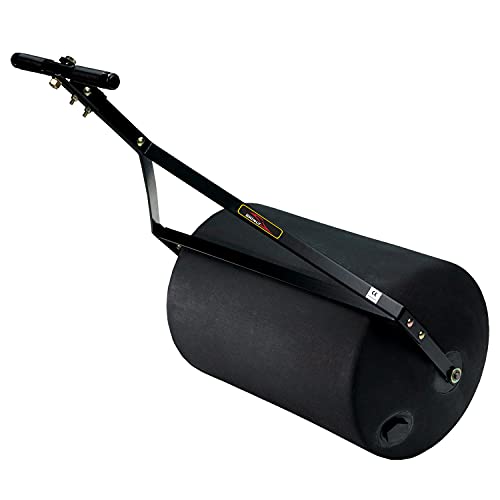
For most homeowners with a small to medium lawn, a poly push or tow roller such as the Brinly 270 lb model is the best all-round pick, a larger tow-behind like the Agri-Fab or Brinly PRT-36BH suits owners with a riding mower and bigger lawn, and a budget steel roller from VEVOR or Goplus works for occasional use if you accept rust risk and a heavier empty weight. Rolling is a small, occasional job, so choose a roller you can store and fill easily.
Our top picks



As an Amazon Associate we earn from qualifying purchases at no extra cost to you.
What a Lawn Roller Is For
A lawn roller presses seed into soil, settles freshly laid sod so roots touch the ground, and smooths minor bumps from winter frost heave. It is not a cure for compacted soil, and it does not replace core aeration. In fact, heavy or frequent rolling can compact soil and harm grass, so most lawn guides advise rolling only when needed and when the soil is lightly moist, not saturated or dry and hard. Follow the guidance of your local extension service for your grass type.
Roundups for 2026 repeatedly mention the Brinly poly push or tow roller as the main general-purpose model, plus Agri-Fab and Brinly tow-behind options for larger lawns, and steel rollers from VEVOR, Goplus, VINGLI and others for budget use. Many of those lists are affiliate-style, so use them as a starting point.
At a Glance
| Model | Type | Drum material | Stated capacity | Best for | Limits |
|---|---|---|---|---|---|
| Brinly PRC-242BH | Push or tow | Poly | Makers and reviewers cite a 28-gallon drum, up to about 270 pounds filled | Small to medium lawns, one-person use | Not for very large areas |
| Brinly PRT-36BH | Tow-behind | Poly | Larger drum, tow hitch | Larger lawns with a mower or tractor | Needs a tow vehicle and storage space |
| Agri-Fab poly tow roller | Tow-behind | Poly | Reviewers cite up to about 400 pounds filled with water | Heavy settling, sod work | Some buyers report assembly frustrations |
| VEVOR steel roller | Push or tow | Steel | Capacity varies by model, typically fillable with water or sand | Budget buyers who want weight | Rust risk if the coating chips |
| Goplus 36 inch steel roller | Push or tow | Steel | Wider drum for fewer passes | Value, wider coverage | Heavy to move when filled |
| Yard Butler spike roller | Push, spiked | Spiked drum | Light aeration while rolling | Light jobs | Not a substitute for core aeration |
Capacity numbers are the makers’ or reviewers’ stated figures. Read the product documents for exact weights and fill instructions.
Drum Material: Poly vs Steel
Poly
Plastic drums do not rust, are light when empty and are easier to push or store. Weight comes from water or sand filled through a plug. A downside is that poly can crack if struck or left filled in freezing temperatures, because water expands as it freezes. Drain the drum before winter as the maker instructs.
Steel
Steel drums are stronger and often cheaper per pound but add rust risk, especially if the paint is scratched or if water stays inside. Wipe it dry and store it indoors or covered. Steel suits people who want a durable roller and will keep it dry.
Push, Tow or Both
A push roller is fine for small yards but heavy to move when filled. Tow-behind units connect to a lawn tractor, garden tractor or ATV with a hitch, and they reduce physical effort on big lawns. Some models, like the Brinly push or tow roller, convert between the two, which is handy if your needs change. Check that your mower’s hitch is compatible and that your mower can safely tow the filled weight.
Width and Weight
A wider drum covers more area per pass but is harder to turn and store. A 24 inch drum fits tight spaces, while 36 inch drums speed up bigger lawns. Weight is adjustable with water or sand. Water is easier to fill and drain, while sand gives more weight but is hard to empty. Do not overload your tow vehicle or exceed the roller’s rated weight.
Features Worth Having
- Large fill plug. Makes filling and draining easier.
- Scraper bar. A scraper keeps wet soil from sticking to the drum.
- Folding or removable handle. Easier storage.
- Foam-grip handle. More comfortable pushing.
- Sealed drum ends. Prevent leaks.
When and How to Roll
- Roll in spring when soil is soft but not soggy. Wet soil compacts easily.
- For new seed, make a light pass to press seed into soil, then water as the seed instructions direct.
- For new sod, roll once to ensure contact with the soil.
- Start with a partly filled drum and add weight only if needed.
- Do not roll compacted clay or frozen soil. Aerate instead.
- When towing, take slopes carefully and avoid turning sharply. Follow safety guidance in your mower manual, and keep children and pets away.
Budget Tiers
| Tier | Characteristics | Typical choices |
|---|---|---|
| Budget | Steel drum, basic handle, weight adjustable, assembly required | VEVOR, Goplus, VINGLI |
| Mid-range | Poly drum, push or tow, good fill plug and scraper | Brinly PRC-242BH |
| Premium | Larger tow-behind poly rollers with hitch and wider drum | Brinly PRT-36BH, Agri-Fab |
Pick X If… Decision Table
| Pick this | If you |
|---|---|
| Brinly PRC-242BH | Have a small to medium lawn and want one roller for push and tow |
| Brinly PRT-36BH | Have a bigger lawn and a mower that can tow |
| Agri-Fab tow roller | Want a heavy poly tow roller for sod work |
| VEVOR or Goplus steel | Want a low-cost heavy roller and will keep it dry |
| Yard Butler spike | Want light aeration and rolling at once |
Alternatives
- Core aerator rental. Better for compaction than a roller.
- Top-dressing with sand or compost. Levels low spots without compaction.
- Renting a roller. If you only roll once a year, renting may be better than owning.
Common Mistakes to Avoid
The most frequent error is rolling at the wrong time. Soggy soil compacts under a heavy drum and stays dense for months, while very dry soil can be too hard to benefit from a pass. Aim for slightly damp, crumbly soil. Another mistake is filling the drum to its maximum weight for every job. A light pass is usually enough to press seed or settle sod, and extra weight rarely helps.
Avoid rolling the same lines repeatedly. Overlap passes slightly, change direction on later rolls, and do not turn sharply on grass, which can tear turf. On slopes, roll across rather than straight up and down when the maker permits, and never tow a filled roller on steep terrain, since it can push your mower. Keep hands and feet clear of the drum, and unhitch before filling or draining a tow-behind unit.
Cleaning and Winter Care
Rinse mud off the drum, check the plug seal, and drain water completely before freezing weather. Store the roller under cover on a flat surface, with the plug slightly open so any leftover moisture can escape. Inspect hitch pins and handle bolts at the start of each season, and replace worn parts according to the maker’s instructions. Poly drums should be kept out of strong sun when stored, since long UV exposure can weaken plastic over time.
If your lawn has persistent bumps, compaction or thatch, a roller is only one tool in a larger plan that may include aeration, overseeding and leveling with a sand and soil mix. Your local extension office can suggest timing for your grass type.
Frequently Asked Questions
Is a lawn roller bad for my grass?
It can be if used too often or on wet soil, because it compacts the ground and limits root growth. Use it sparingly and at the right soil moisture. Many lawn guides favor aeration for most problems.
How much weight should I add?
Start with a light fill, such as a quarter or half of the drum, and increase only if seed or sod is not pressing in well. Follow the maker’s maximum weight rating.
Should I fill with water or sand?
Water is easy to drain and adjust. Sand adds more weight but is harder to remove. In cold climates, drain water before freezing to prevent cracks.
Can I use a roller to level a bumpy lawn?
A roller can smooth small bumps from frost heave, but it will not level deep holes. Top-dressing with soil or sand is the usual fix for uneven turf.
What size roller do I need?
For lawns up to roughly half an acre, a push or tow roller around 24 to 36 inches wide is common. Larger lawns usually justify a tow-behind model.
How do I store a lawn roller?
Drain the drum, let it dry, and store it under cover. Keep the plug loose to avoid trapped moisture, and follow the maker’s winter storage guidance.