
The best field mowers for overgrown grass and brush are usually a self-propelled walk-behind brush mower for tight, uneven lots, a tow-behind rough-cut mower for large open fields, or a tractor-mounted rotary cutter when acreage and brush diameter justify the equipment.
A field mower is not simply a wider lawn mower. It needs a reinforced deck, a blade system that can tolerate stems and saplings, enough torque to avoid stalling, and wheels or tires that remain stable on ruts and slopes. The right choice depends more on terrain, vegetation, and annual hours than on maximum cutting width.
Our top picks
 BILT HARD Self-Propelled Walk-Behind String Trimmer
- 【Powerful 170cc 4-Cycle Engine】Equipped with a robust 170cc…
- 【Self-Propelled Drive for Easy Operation】The self-propelled system moves…
- 【22" Cutting Path & 8-Position Height Adjustment】The wide…
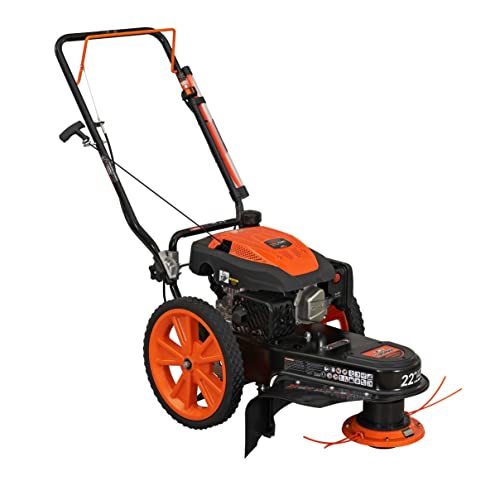 YARDMAX YL2250 22 in. 170cc Gas Walk
- Offset head position allows you to easy trim…
- Designed to get big jobs done fast
- Onboard trimmer string storage - cord caddy included
 KEARIXM 49CC Gas Walk Behind Brush Cutter
- 【Industrial-Grade Strength】This walk behind brush cutter is built…
- 【2-in-1 Mowing & Tilling】This brush cutter integrates mowing…
- 【Low Fuel Consumption】This bush hog features a high-efficiency…
| Product | Key specs | |
|---|---|---|
| BILT HARD Self-Propelled Walk-Behind String Trimmer | 【Powerful 170cc 4-Cycle Engine】Equipped with a robust 170cc… 【Self-Propelled Drive for Easy Operation】The self-propelled system moves… 【22" Cutting Path & 8-Position Height Adjustment】The wide… | Check price |
| YARDMAX YL2250 22 in. 170cc Gas Walk | Offset head position allows you to easy trim… Designed to get big jobs done fast Onboard trimmer string storage - cord caddy included | Check price |
| KEARIXM 49CC Gas Walk Behind Brush Cutter | 【Industrial-Grade Strength】This walk behind brush cutter is built… 【2-in-1 Mowing & Tilling】This brush cutter integrates mowing… 【Low Fuel Consumption】This bush hog features a high-efficiency… | Check price |
 140CC 5HP Self Propelled Gas Lawn Mower | [Durable build] Steel, nylon, and manganese steel with… [Powerful engine 140CC 4-stroke single-cylinder OHV engine, 5HP,… [Self-propelled drive] This self propelled lawn mower has… | Check price |
As an Amazon Associate we earn from qualifying purchases at no extra cost to you.
Best field mower types by situation
| Use case | Best type | Typical width | Typical power | Best advantage | Main compromise |
|---|---|---|---|---|---|
| Residential lot, trails, and tight gates | Self-propelled walk-behind brush mower | 20–30 inches | 8–16 hp gasoline | Precise maneuvering | Slower coverage and operator fatigue |
| Several open acres of tall grass | Zero-turn or rough-cut riding mower | 36–60 inches | 20–35 hp | Fast coverage | Needs broad access and careful slope limits |
| Large fields behind an ATV or UTV | Tow-behind rough-cut mower | 44–60 inches | 12–24 hp engine | Efficient field clearing | Limited maneuverability around trees and obstacles |
| Pasture, woodland edge, and saplings | Tractor-mounted rotary cutter | 48–72 inches | 25–50 tractor PTO hp | Heavy-duty brush capacity | Requires a suitable tractor and storage space |
| Fine finish on tall grass and narrow paths | Flail mower | 30–60 inches | 15–40 hp | More uniform cut and contained discharge | More moving parts and higher maintenance |
Our picks by mowing problem
Best all-around walk-behind: a self-propelled rough-cut brush mower
For a property with gates, trees, ditches, and irregular sections, choose a walk-behind field mower with a 24- to 30-inch deck, powered wheels, a locking differential or traction-friendly drive system, and a cutting height of at least 3 inches. Models from the DR Field and Brush Mower range are examples of this category. They are designed for tall grass, weeds, vines, and moderate brush rather than manicured lawns.
Look for a steel deck, protected belt routing, large pneumatic tires, and a blade clutch or equivalent safety control. A single blade bar is easier to service than a complicated multi-blade system. The trade-off is that these machines are physically demanding on steep ground: let the mower’s drive system do the work, keep both hands on the controls, and avoid turning across a slope when the manufacturer’s manual prohibits it.
Best for open acreage: a tow-behind rough-cut mower
A tow-behind mower is usually the most productive option when the field is broad, relatively open, and accessible by an ATV, UTV, or garden tractor. Swisher TrailCutter and rough-cut models are representative examples. A 44- to 60-inch deck can cut several times the swath of a walk-behind mower, while independent engine power prevents the towing vehicle from losing much speed.
Choose a tow-behind model with adjustable offset or a pivoting hitch if you need to mow beside fences. Confirm the tow vehicle’s hitch height, towing rating, braking ability, and stability before buying. A large deck is not automatically better: on a narrow trail, every extra inch makes it harder to avoid trees, rocks, and washouts.
Best for heavy brush: a tractor rotary cutter
For recurring work in pasture, neglected acreage, or woodland margins, a three-point rotary cutter is the durable choice. Bush Hog is a long-established example of this equipment category. Tractor cutters typically handle thicker stems than homeowner walk-behind machines, but their true capacity depends on blade-tip speed, gearbox rating, tractor horsepower, and the manufacturer’s stated cutting limit.
Use a rotary cutter when you already own a compatible tractor with a properly guarded PTO. A slip clutch or shear-bolt protection is important because hidden stumps and rocks can transfer a severe shock through the driveline. This setup costs more and requires more storage, but it is generally easier to keep productive over many seasons than a small mower used beyond its design limits.
Best cut quality: a flail mower
Flail mowers use many hinged knives on a rotor. They are useful where grass must be cut relatively evenly and clippings should remain contained rather than thrown a long distance. They are often a strong choice for trails, orchard edges, and fields near buildings or public paths.
The advantages come with more maintenance. Flail knives, mounting hardware, rotor bearings, and belts need regular inspection. A flail mower is not necessarily the best tool for large woody stems; a rotary cutter is usually simpler and more tolerant of occasional heavy brush.
Head-to-head buying criteria
Cutting width and coverage
Width determines theoretical productivity, but rough terrain reduces the real advantage. A 50-inch mower traveling at 3 mph has a theoretical coverage of about 1.5 acres per hour before overlap, turning, refueling, and slow spots. In practice, 0.7 to 1.1 acres per hour is more realistic in an irregular field.
A 26-inch walk-behind at 2 mph has theoretical coverage of about 0.63 acres per hour and may deliver only 0.3 to 0.45 acres per hour in heavy growth. If you mow three acres twice yearly, the wider machine can save substantial time; if the property has narrow trails and many obstacles, its advantage may disappear.
Engine power and brush capacity
Horsepower matters less than torque delivery and blade speed under load. For grass and weeds, an 8- to 12-hp walk-behind may be sufficient. Dense vines, reeds, and repeated saplings favor 13- to 16-hp equipment. Tow-behind units commonly use 12- to 24-hp engines, while tractor cutters depend on PTO horsepower.
Do not treat a stated “brush capacity” as permission to mow an entire field of woody stems. A mower rated for 2-inch brush may cut an occasional stem of that size, not continuous growth at full travel speed. Walk the area first and remove wire, cable, rocks, and larger fallen branches.
Deck height and cutting strategy
For the first pass through neglected growth, a 4- to 6-inch setting reduces the chance of burying the deck and lets the blades clear debris. Follow with a lower pass if the mower allows it and the terrain is smooth. Cutting low immediately can overload the engine, hide obstacles, and scalp high spots.
Height adjustment should be tool-free or use a clearly marked pin system. A deck that adjusts only with multiple loose spacers is inconvenient when field conditions change.
Terrain handling and maneuverability
Large tires, a low center of gravity, and a wide wheel stance matter on ruts. Differential lock or limited-slip traction helps when one wheel loses contact. For slopes, follow the manual’s limits rather than relying on engine power. A mower that feels stable on dry grass may slide after rain.
Walk-behind machines turn more tightly, but a heavy deck can be difficult to reverse or pivot. Tow-behind units cover ground faster but need a wide turning radius. Articulated or pivoting mower decks can follow the tow vehicle better around obstacles, although their joints and linkages add wear points.
Decision matrix
| Your situation | Recommended choice | Target specification | Why |
|---|---|---|---|
| Under 1 acre, many obstacles | Walk-behind brush mower | 22–26 inches, powered drive, 3–6 inch height | Fits gates and gives close control |
| 1–5 open acres, occasional mowing | Tow-behind rough-cut mower | 44–50 inches, 12–18 hp | Good output without tractor ownership |
| Frequent mowing and finish-quality paths | Flail mower | 30–60 inches, replaceable knives | Leaves a tidier, contained cut |
| Thick brush or more than 5 acres | Tractor rotary cutter | 48–72 inches, matched PTO rating | Best durability and sustained capacity |
| Limited storage and low annual use | Smaller walk-behind mower | Steel deck, common engine parts | Lower purchase and storage burden |
Ownership costs and maintenance that matter
Typical purchase ranges in 2026 are roughly $1,500–$3,500 for a serious walk-behind brush mower, $2,500–$6,000 for a powered tow-behind rough-cut mower, and $3,000–$12,000 or more for a tractor rotary cutter, excluding the tractor. Commercial flail and specialized riding equipment can exceed these ranges.
The first parts to wear are usually blades or knives, belts, wheel bearings, tires, skid shoes, and clutch components. Before each use, inspect blade fasteners, guards, deck cracks, tire pressure, and control cables. After mowing wet or sappy growth, scrape packed material from beneath the deck once the engine is stopped, the spark-plug lead is disconnected where appropriate, and the machine is secured.
Replace or sharpen blades according to condition rather than forcing a damaged blade to last. A bent blade can cause vibration and damage spindle bearings. Keep cooling fins and engine screens clear, change oil on schedule, use fresh fuel, and grease pivot points specified in the manual.
Common buying mistakes
- Choosing by deck width while ignoring gate openings, turning space, and slope conditions.
- Assuming a lawn mower can handle saplings, vines, or hidden debris.
- Buying a tow-behind mower without checking the towing vehicle’s capacity and hitch setup.
- Cutting neglected grass too short on the first pass, which overloads the deck and hides obstacles.
- Skipping hearing, eye, leg, and foot protection around thrown stones and brush.
- Leaving fuel, wet clippings, or corrosive plant residue under the deck between uses.
Bottom line
For most small properties, the best field mowers are self-propelled walk-behind brush mowers because they balance width, control, and access. Choose a tow-behind rough-cut model for open acreage, a flail mower when finish and debris containment matter, and a tractor-mounted rotary cutter for sustained heavy brush. Match the machine to the terrain and vegetation first; a narrower mower that stays stable and reaches every section will outperform a wider machine that cannot safely navigate the property.









