
The best grass seed for lawns for most homes is a turf-type tall fescue blend if you want durability and wide climate tolerance, a Kentucky bluegrass blend if you want the thickest, self-repairing lawn and can wait longer for establishment, and perennial ryegrass if you need the fastest fill-in for overseeding or high-traffic repair.
There is no single best grass seed for lawns because performance depends on sun exposure, foot traffic, and whether you live in a cool-season or warm-season region. The right pick balances germination speed against long-term density, shade tolerance, and drought or heat handling. Below is how the major grass types compare on the specs that actually determine success, plus a simple way to match a seed to your yard size and conditions.
Our top picks
 Scotts Turf Builder Grass Seed Sun &
- This combination lawn seed, grass fertilizer, and soil…
- Use this sun and shade lawn grass seed…
- GROW THICK, GREEN GRASS: Scotts Turf Builder Grass…
 Scotts Turf Builder Thick'r Lawn Sun &
- Thicker Lawn: With Scotts Turf Builder Thick'R Lawn…
- Sun and Shade Grass: 3-in-1 lawn care product…
- Usage: This grass seed mix is for thickening…
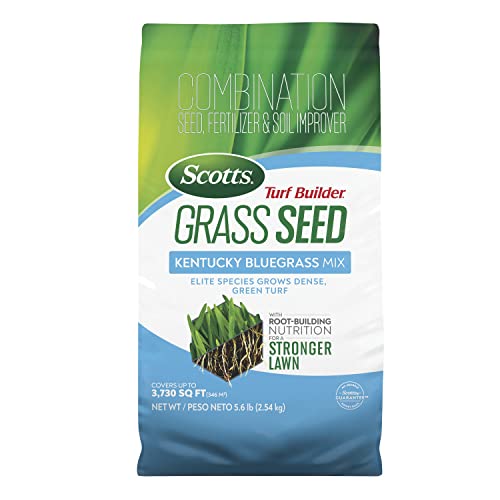 Scotts Turf Builder Grass Seed Kentucky Bluegrass
- Kentucky Bluegrass seed with our Root-Building Nutrition, a…
- Scotts Turf Builder Grass Seed Kentucky Bluegrass Mix…
- This lawn grass seed blend is designed for…
| Product | Key specs | |
|---|---|---|
| Scotts Turf Builder Grass Seed Sun & | This combination lawn seed, grass fertilizer, and soil… Use this sun and shade lawn grass seed… GROW THICK, GREEN GRASS: Scotts Turf Builder Grass… | Check price |
| Scotts Turf Builder Thick'r Lawn Sun & | Thicker Lawn: With Scotts Turf Builder Thick'R Lawn… Sun and Shade Grass: 3-in-1 lawn care product… Usage: This grass seed mix is for thickening… | Check price |
| Scotts Turf Builder Grass Seed Kentucky Bluegrass | Kentucky Bluegrass seed with our Root-Building Nutrition, a… Scotts Turf Builder Grass Seed Kentucky Bluegrass Mix… This lawn grass seed blend is designed for… | Check price |
 Scotts Turf Builder Grass Seed Tall Fescue | This lawn care product contains a combination of… Tall Fescue seed should be watered daily or… This lawn grass seed mix should be planted… | Check price |
As an Amazon Associate we earn from qualifying purchases at no extra cost to you.
Cool-Season vs. Warm-Season: Choose By Climate First
Grass seed is divided by climate zone, not just brand. Using the wrong type is the most common reason for thin, patchy results.
- Cool-season grasses (Kentucky bluegrass, perennial ryegrass, fine fescue, turf-type tall fescue): Best for northern and transition zones where summers are moderate and winters are cold. They grow most actively in spring and fall when soil temperatures are 50-65°F.
- Warm-season grasses (bermudagrass, zoysiagrass, bahiagrass, centipedegrass): Best for southern zones with hot summers and mild winters. They thrive when soil temperatures are 65-75°F and go dormant and brown after hard frost.
- Transition zone: If you are between roughly USDA zones 6-7, turf-type tall fescue and zoysiagrass are the most adaptable options because they tolerate both heat and some cold.
If you are unsure, check the label for the recommended region map. A seed rated for your zone will germinate more reliably and require less water and re-seeding than an out-of-zone variety.
Comparison Table: Sun, Shade, Traffic, Germination and Coverage
Coverage per pound and germination time vary significantly by species because seed size differs. Fine seeds like bermuda cover more square feet per pound than large seeds like tall fescue, but that does not mean you need less seed for a thick lawn — the seeding rate is calibrated to achieve the right plant density.
| Grass Type | Germination Time (days) | Full Sun Needed | Shade Tolerance | Traffic / Wear Tolerance | Typical New Lawn Coverage per lb | Best Use Case |
|---|---|---|---|---|---|---|
| Kentucky Bluegrass | 14-28 | 6+ hours | Low | High (self-repairs via rhizomes) | 1,500 – 2,000 sq ft | Dense, premium lawn where you can wait for establishment |
| Perennial Ryegrass | 5-10 | 6+ hours | Low to Moderate | High | 1,000 – 1,500 sq ft | Fast overseeding, patch repair, athletic areas |
| Turf-Type Tall Fescue | 7-14 | 6+ hours | Moderate | High (bunch-type, improved varieties are denser) | 500 – 800 sq ft | General-purpose, drought and heat-tolerant lawn |
| Fine Fescue (creeping red, chewings, hard) | 7-14 | 4+ hours | High – Best for shade | Low | 800 – 1,200 sq ft | Shady yards, low-input or wooded lots |
| Bermudagrass (hulled) | 7-14 | 8+ hours | Very Low | Very High | 1,500 – 2,000 sq ft | Hot, sunny southern lawns with heavy use |
| Zoysiagrass | 14-21 | 6-8 hours | Moderate | High | 1,000 – 1,500 sq ft | Heat-tolerant, dense carpet that crowds weeds once established |
Blends and mixes often combine these strengths. For example, many northern mixes combine Kentucky bluegrass for density, perennial ryegrass for speed, and fine fescue for shade. A label that lists cultivars like Scotts Turf Builder or Pennington Smart Seed or Jonathan Green Black Beauty will usually show the percentage by weight of each species — check that to understand what you are actually planting.
Decision Matrix: Match Seed to Your Situation
Use your primary constraint to narrow the choice, then confirm with sun and traffic needs.
| Your Situation | Best Grass Seed Type | Why It Fits |
|---|---|---|
| New lawn, full sun, northern climate, want thickest look | Kentucky Bluegrass blend (80-100% bluegrass) | Spreads to fill gaps on its own, best long-term density |
| Patchy existing lawn that needs quick thickening in fall | Perennial Ryegrass or Ryegrass/Bluegrass mix | Germinates in under 10 days to outcompete weeds |
| Yard with 4-6 hours sun, trees or north side of house | Shade mix with fine fescue + turf-type tall fescue | Only fine fescues persist in moderate to heavy shade |
| Busy family yard with kids and dogs, variable sun | Turf-Type Tall Fescue blend | Deep roots handle drought, heat, and wear without thinning |
| Southern yard, full sun, high heat | Bermudagrass or Zoysiagrass | Built for heat and drought, recovers quickly from traffic |
| Low-maintenance or low-water priority | Turf-Type Tall Fescue or Fine Fescue (cool climates) / Zoysia (warm) | Lower fertilizer and water needs once rooted |
How Much Seed Do You Need? A Worked Coverage Calculation
Do not buy by bag size alone. Calculate based on seeding rate, not just coverage claim, because overseeding needs about half the rate of a bare-soil new lawn.
Example for a 5,000 sq ft yard:
- Turf-type tall fescue new lawn rate: approx. 6-8 lbs per 1,000 sq ft. For 5,000 sq ft you need 30-40 lbs.
- Same grass for overseeding thin areas: approx. 3-4 lbs per 1,000 sq ft. For 5,000 sq ft you need 15-20 lbs.
- Kentucky bluegrass new lawn rate: approx. 2-3 lbs per 1,000 sq ft. For 5,000 sq ft you need 10-15 lbs, even though the bag says it covers more per pound — the seeds are much smaller and need higher plant counts.
To estimate cost: Multiply pounds needed by general market price. In 2026, standard cool-season blends typically run $25-$45 for a 7 lb bag and $55-$90 for a 20 lb bag, while premium bluegrass or coated seeds cost more per pound. Coated seeds (like many Pennington Smart Seed or Scotts coated products) include a clay or moisture-retaining coating that makes the bag heavier but the actual seed count lower — a 10 lb bag of coated seed may contain only 5-6 lbs of pure seed. Always compare the net seed weight and pure seed percentage on the tag, not just bag weight.
Steps to get the number right
1. Measure: Length x width for rectangular areas, or use a mapping tool for irregular yards and subtract house, driveway, and beds. 2. Decide: New lawn (bare soil) or overseeding (existing grass). 3. Check the seed tag for the listed rate — for example, “New lawn: 8 lbs/1,000 sq ft”. 4. Multiply rate x (your sq ft / 1,000) and add 10% extra for overlap and washout.
What Ownership Is Really Like: Establishment and Common Mistakes
A thick lawn fails more often from aftercare than from seed quality.
- Watering is critical for 3-4 weeks. Keep the top 0.5 inch of soil consistently moist with light watering 1-2 times daily until germination, then shift to deeper, less frequent watering. Letting seedlings dry out after they sprout kills them faster than underwatering before germination.
- Mow high and early. Most failures come from mowing too short. For tall fescue and bluegrass, maintain 3-3.5 inches. Mow for the first time when seedlings reach about 3-4 inches, and never remove more than one-third of the blade height at once.
- Weed control timing matters. Do not apply crabgrass pre-emergent at seeding — it prevents grass seed from germinating too. Look for starter fertilizer with mesotrione if you need weed suppression during seeding, and wait at least 60 days before using standard broadleaf herbicides on new seedlings.
- What wears first: Perennial ryegrass establishes fastest but thins under prolonged shade. Fine fescue tolerates shade but wears thin under heavy traffic. Kentucky bluegrass is the slowest to fill in and can look patchy for the first season, but once mature its underground rhizomes repair damage. Bermudagrass needs aggressive sun and will thin out in shade within one season.
- Soil contact beats extra seed. Seed sitting on thatch or dead grass germinates poorly. Rake, aerate, or slit-seed to ensure seed touches soil, and top-dress lightly with 1/8 inch of compost or peat moss to retain moisture — do not bury seed deeper than 1/4 inch.
When to Plant for Best Results
For cool-season grasses, early fall is ideal when soil is still warm but air is cooler and weeds are less aggressive. Late summer to mid-September in northern states and September to October in the transition zone gives seedlings time to root before winter. Spring seeding works but requires more watering and weed pressure management. For warm-season grasses like bermuda and zoysia, late spring to early summer when soil temperatures are consistently above 65°F gives the strongest establishment.
Top Picks By Scenario
Best for Full Sun and Durability: Turf-Type Tall Fescue Blend
Examples include Jonathan Green Black Beauty Original or Ultra, and Scotts Turf Builder Turf-Type Tall Fescue Mix. Look for varieties labeled turf-type, with endophyte enhancement for insect resistance and improved drought tolerance. These establish in 7-14 days and create a deep-rooted, wear-tolerant lawn.
Best for Fast Repair: Perennial Ryegrass Blend
If you are overseeding a thin northern lawn in September, a 100% perennial ryegrass or a ryegrass-heavy mix gives visible coverage in a week to 10 days. It is the best bridge while slower bluegrass fills in around it.
Best for Shade: Fine Fescue Mix
Under trees or on the north side where you get 4-5 hours of filtered sun, no sun-loving grass will stay thick. A mix dominated by creeping red fescue, chewings fescue, and hard fescue will persist where bluegrass and ryegrass fade.
Best for Thick, Self-Repairing Lawn: Kentucky Bluegrass Blend
If you have irrigation and patience, a blend of 3-4 elite bluegrass cultivars creates the classic dense carpet. Expect 21-28 days to germination and a full season to close completely — but once established it is the best at filling bare spots on its own.
Best for Southern Heat: Bermudagrass or Zoysiagrass
For high-heat, full-sun yards, uncoated hulled bermuda like Scotts Turf Builder Bermudagrass or zoysia like Pennington Zenith Zoysia establish a tough, drought-tolerant lawn. Zoysia is slower but more shade-tolerant and less aggressive into beds than common bermuda.
FAQ
Can I mix sun and shade seed in the same yard?
Yes. Many homeowners use a tall fescue or bluegrass blend for sunny front and side yards and a fine fescue mix for shady backyard sections under trees. It is better than using one mix everywhere and watching it fail in shade.
How long until I can walk on new grass?
Light foot traffic after the first mow (usually 3-4 weeks for ryegrass/fescue, 4-6 weeks for bluegrass) is fine. Heavy play should wait until after 2-3 mows and the grass resists a gentle tug, indicating roots are anchored.
Do I need straw over new seed?
Straw can help retain moisture but often introduces weed seeds. A thin layer of weed-free straw or a light compost top-dress is cleaner and more effective for moisture retention.









