
Our Top Picks
 Canon EOS RP Mirrorless Camera RF24-105mm Lens F4-7.1105mm2.8 x 5.2 x 3.3 inches1 poundsCheck on Amazon
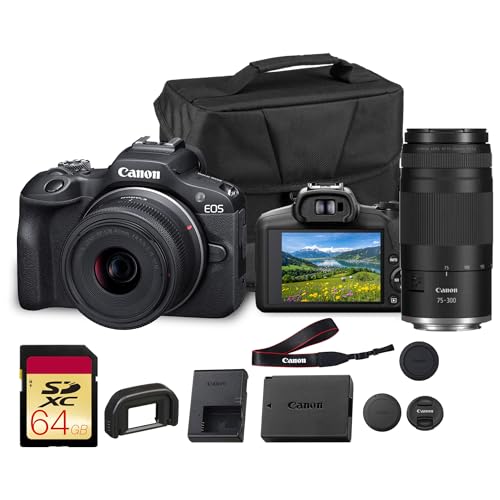 Canon EOS R100 Mirrorless Camera with 18-45mm &Compact2.7 x 4.6 x 3.4 inches4.16 PoundsCheck on Amazon
 Sony Alpha a7 IV Mirrorless Camera with 28-70mmCompact6.4 x 9.1 x 9.1 Inches3.3 PoundsCheck on Amazon
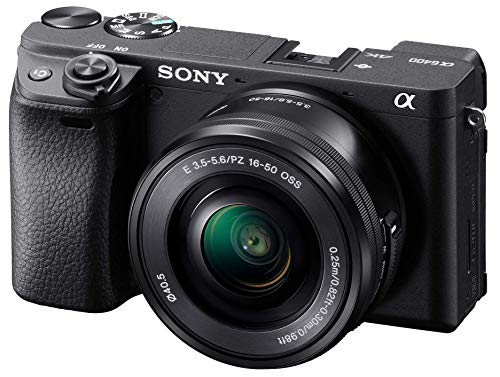 Sony Alpha a6400 Mirrorless Camera: Compact APS-C Interchangeable6.2 x 9.2 x 4.55 inches6.2 x 9.2 x 4.55 inches0.6 PoundsCheck on Amazon
 Canon EOS R10 Mirrorless Camera Lens Kit4 x 5 x 4 inches3.3 x 4.8 x 3.5 inches0.9 poundsCheck on Amazon

The best mirrorless camera for landscape photography for most people in 2026 is the Sony Alpha a7 IV with the 28-70mm kit lens. Its 33-megapixel full-frame sensor sits in the high-14-stop dynamic range class, which is exactly what you need when a bright sky and a shadowed valley have to be reconciled in one frame; it has dual card slots for backup on trips you cannot repeat, a magnesium-alloy body with dust and moisture sealing, roughly 580 shots of CIPA-rated battery life, and access to the largest mirrorless lens ecosystem in existence. It suits the photographer who wants one body that handles wide vistas, long exposures and stitched panoramas without giving up autofocus for everything else. If the budget is tighter, the Canon EOS R100 double lens bundle is the cheapest way into a genuinely capable interchangeable-lens landscape kit. If you want a complete premium kit out of the box, the Sony a7 IV 33MP bundle with the 128GB card and accessory lenses packages the same sensor with the extras you would otherwise buy separately. Everything below explains the trade-offs, the support gear, and the numbers that actually matter.
Top 3 Picks
Best overall: Sony Alpha a7 IV with 28-70mm lens
Thirty-three megapixels, dual card slots, a sealed magnesium body and the deepest third-party lens ecosystem of any mirrorless mount. It is the only camera in this roundup that is simultaneously a serious landscape tool and a competent everyday camera, which matters when you are spending this much on one body.
Best budget: Canon EOS R100 double lens bundle
Two lenses, a 24.1-megapixel APS-C sensor and a body that weighs 356 grams for a fraction of the cost of a full-frame system. The sensor is older and the dynamic range is roughly a stop and a half behind current full-frame chips, but the resolution is identical to most mid-range cameras here and the wide end of the 18-45mm covers the classic landscape focal length.
Best premium complete kit: Sony a7 IV 33MP bundle with 128GB card, wide and 2x lenses, and case
The same 33-megapixel full-frame body, but bundled with a memory card, a case and screw-on auxiliary lenses so you can shoot the day it arrives. Buy it if you want one transaction and no shopping list; buy the plain kit instead if you would rather spend the accessory budget on a proper wide-angle lens.
Quick Comparison
| Product | Best for | Key specs | Price tier |
|---|---|---|---|
| Canon EOS RP with RF 24-105mm f/4-7.1 IS STM | Cheapest route to full frame | 26.2MP full-frame, LP-E17 (~250 shots), 485 g body, single SD slot, no full weather sealing | Mid-range |
| Canon EOS R100 double lens bundle | Lowest total spend | 24.1MP APS-C, 18-45mm + 75-300mm, LP-E17 (~370-400 shots), 356 g body, fixed non-touch LCD | Budget |
| Nikon Z50 II with two lenses | Travel and easy colour recipes | 20.9MP APS-C, EXPEED 7, 16-50mm VR + 50-250mm VR, EN-EL25a (~340 shots), ~495 g body | Premium |
| Sony Alpha a7 IV with 28-70mm | Best all-round landscape body | 33MP full-frame, NP-FZ100 (~580 shots), 658 g, dual slots, sealed magnesium body | Premium |
| Sony Alpha a6400 with 16-50mm | Compact APS-C hiking kit | 24.2MP APS-C, NP-FW50 (~410 shots), 403 g, 425-point AF, single UHS-I slot | Mid-range |
| Canon EOS R10 lens kit | Fast APS-C with Canon colours | 24.2MP APS-C, DIGIC X, 15 fps mechanical, LP-E17 (~430 shots), 429 g, UHS-II slot | Mid-range |
| Sony a7 IV 33MP bundle (128GB, wide + 2x lenses, case) | One-purchase premium kit | 33MP full-frame, NP-FZ100 (~580 shots), dual slots, bundled card and accessory optics | Premium |
| Nikon Z 6II | Full-frame dynamic range per unit cost | 24.5MP full-frame BSI, EN-EL15c (~410 shots), 705 g, dual slots, magnesium sealed body | Mid-range |
| Canon RF 24-70mm F2.8L IS USM | Standard zoom upgrade for RF bodies | 82mm filter thread, ~900 g, 5-stop IS class, dust and moisture resistant, fluorine coated | Premium |
| Manfrotto 290XTRA with 496 ball head | Stability over light weight | Aluminium, 3-section legs, 4 leg angles, Arca-Swiss compatible, roughly 2.4 kg class | Budget |
| CAVIX MT-03 panoramic ball head | Cheap panning and stitching base | Arca-Swiss plate, bubble level, independent pan base, sub-300 g class | Budget |
| Fotopro P-2 carbon fibre tripod | Ultralight pack-friendly support | 450 g, 71 cm max height, 5 kg load, 360° ball head, P-2H extension column | Budget |
How We Chose
This roundup was assembled from published manufacturer specifications, established category knowledge and the practical arithmetic of shooting outdoors — not from any physical evaluation of the units. The criteria were applied in a fixed order. First, dynamic range and sensor behaviour at base ISO, because landscape photography is the one genre where recovering a blown sky or lifting a shadowed foreground determines whether a frame is usable. Second, resolution measured in pixels per frame rather than marketing language, since 24 megapixels and 33 megapixels translate into different maximum print sizes. Third, whether the body is actually sealed, since a camera that fails in coastal spray is worth nothing regardless of its sensor. Fourth, battery capacity in CIPA-rated shots, adjusted downward for cold weather. Fifth, the lens ecosystem — how many first-party and third-party wide-angle options exist, and whether an APS-C buyer is locked into a shallow crop-sensor catalogue. Sixth, pack weight, because a landscape kit is carried, often uphill, and a kilogram saved on support gear is a kilogram available for water. Finally, upgrade path: whether the body you buy today leads somewhere or is a dead end when your ambitions grow.
1. Canon EOS RP with RF 24-105mm Lens – Best for Budget Full-Frame Entry
As an Amazon Associate we earn from qualifying purchases at no extra cost to you.

The EOS RP is the cheapest way into a full-frame sensor with a current lens mount, and for a landscape photographer on a strict budget that matters more than any single specification. The bundle pairs the 26.2-megapixel body with the RF 24-105mm f/4-7.1 IS STM, a retractable zoom that covers the classic landscape range from a genuinely wide 24mm through to the short telephoto compression that flatters layered hillsides and distant ridgelines. It suits the beginner who has decided to learn on full frame, and the traveller who wants one lens that does everything and does not mind stopping down.
Key specifications
- Sensor: 26.2MP full-frame CMOS, DIGIC 8 processor
- Autofocus: Dual Pixel CMOS AF with thousands of selectable positions across most of the frame
- Viewfinder: 2.36M-dot OLED electronic viewfinder, 3.0-inch vari-angle touchscreen
- Battery: LP-E17, roughly 250 shots per charge on the CIPA standard
- Weight: approximately 485 g with battery and card
- Storage: single UHS-II SD slot
- Kit lens: RF 24-105mm f/4-7.1 IS STM, 67mm filter thread, optical stabilisation, retracting barrel
- Weather sealing: not rated as sealed; this is a fair-weather body
- Charging: USB-C in-body charging and power delivery
The honest case for the RP is price per full-frame pixel. A 26-megapixel full-frame file gives you roughly 6240 x 4160 pixels, which at 300 ppi prints to about 20.8 x 13.9 inches and at 240 ppi — perfectly reasonable for a framed print on a wall viewed from a metre away — reaches about 26 x 17 inches. That is a serious print, and you get it for a fraction of what the premium bodies here cost. The RF mount is Canon’s current and only mirrorless system, so every lens you buy for this body will still fit whatever you upgrade to later, including the RF 24-70mm f/2.8L covered further down this page.
What you give up is dynamic range and battery life. Published sensor measurements put the RP’s dynamic range around the 12-stop mark at base ISO, which is roughly two stops behind the current full-frame generation. In practice that means less latitude to pull detail out of a dark foreground while keeping cloud highlights intact, and more reliance on graduated filters or bracketing. The 250-shot CIPA battery figure is the weakest in this roundup; a cold morning shoot can eat a full charge, so budget for two or three spares from day one.
Pros
- Lowest entry price of any full-frame body in this roundup
- 24mm at the wide end of the kit lens covers the essential landscape focal length
- Vari-angle touchscreen is genuinely useful for low-angle foreground compositions
- Small and light enough to be a second body later
- USB-C charging means one cable and a power bank for multi-day trips
Cons
- Dynamic range is roughly two stops behind current full-frame sensors
- Roughly 250 shots per battery is the weakest endurance here
- No meaningful weather sealing, so rain and sea spray are a real risk
- Single card slot means no in-camera backup
- The f/4-7.1 kit lens is slow, so dawn and dusk work leans heavily on a tripod
Against the Nikon Z 6II, the RP is the budget compromise and the Z 6II is the value-for-money upgrade: the Nikon costs more but adds about two stops of dynamic range, a sealed magnesium body, dual card slots and roughly 410 shots per battery. Against the Canon EOS R10, the RP gives you a larger sensor and shallower depth-of-field control while the R10 gives you a faster processor, a better autofocus system, longer battery life and access to cheaper crop-sensor lenses. If your priority is image quality per pound spent and you shoot mostly in good light, the RP is the entry point. If you shoot into the sun, the Z 6II is worth the stretch.
2. Canon EOS R100 Double Lens Bundle – Best for the Lowest Total Spend
The R100 bundle is the cheapest complete interchangeable-lens landscape kit in this roundup, and it is complete in the literal sense: body, wide zoom and telephoto zoom in one box, no second purchase required before you can shoot a mountain range. It suits the first-time buyer who wants to learn composition and exposure without committing four figures, and the occasional shooter who wants a light kit for holidays rather than a dedicated landscape system.
Key specifications
- Sensor: 24.1MP APS-C CMOS, DIGIC 8 processor
- Autofocus: Dual Pixel CMOS AF II with subject detection
- Continuous shooting: approximately 6.5 frames per second
- Viewfinder: 2.36M-dot OLED EVF; 3.0-inch fixed, non-touch rear screen
- Battery: LP-E17, roughly 370-400 shots per charge on the CIPA standard
- Weight: approximately 356 g body only — the lightest camera here
- Storage: single UHS-I SD slot
- Lenses: RF-S 18-45mm f/4.5-6.3 IS STM and RF 75-300mm f/4-5.6
- Weather sealing: none
The resolution is the headline. Twenty-four megapixels is the same figure as the Sony a6400, the Canon R10 and the Nikon Z50 II, and it produces roughly 6000 x 4000 pixels — about 20 x 13.3 inches at 300 ppi, or 25 x 16.7 inches at a wall-print 240 ppi. Nobody looking at a framed print will know the sensor was APS-C rather than full frame. What they might notice is noise in a shadowed forest floor at dusk, because the smaller sensor gathers less total light, and that is the real difference between this kit and a full-frame body.
Two details in the bundle deserve attention before you buy. The 18-45mm kit zoom starts at 18mm, which on APS-C gives a field of view equivalent to roughly 29mm on full frame — noticeably tighter than the 24mm you get from a full-frame kit lens, so sweeping vistas will need either a step backwards or a dedicated wide-angle lens later. The 75-300mm is a full-frame EF-era design carried over to the RF mount without image stabilisation, and its strength is reach rather than corner sharpness. Used properly — for compressed layers of distant ridges rather than as a landscape lens at the wide end — it earns its place in the bag.
Pros
- Lowest total cost of any kit here, with two lenses included
- 356 g body makes it the most pack-friendly camera in this roundup
- 24.1MP resolution matches cameras costing considerably more
- RF mount means future lenses carry over to a full-frame Canon body
- Battery life is meaningfully better than the EOS RP’s despite the same cell
Cons
- Fixed, non-touch rear screen is awkward for low-angle foreground work
- 18mm wide end equals roughly 29mm full-frame — not truly wide
- The 75-300mm has no stabilisation and is the weakest optic in the bundle
- No weather sealing at all
- Single UHS-I card slot limits burst depth and offers no backup
Compared with the Sony a6400, the R100 is cheaper and lighter but loses the flip screen, the faster autofocus system and the far deeper third-party lens catalogue that Sony’s E mount enjoys. Compared with the EOS RP above, the R100 gives you better battery life, a lighter body and a lower price in exchange for a smaller sensor and a narrower wide end. For a first landscape camera that will be carried on day hikes and used in good weather, the trade is sensible.
3. Nikon Z50 II with Two Lenses – Best for Travel and Colour Recipes

The Z50 II is Nikon’s newest APS-C body, built around the EXPEED 7 processor that also drives Nikon’s professional cameras, and it arrives with two stabilised zooms covering 16-50mm and 50-250mm. It suits the landscape photographer who travels by plane or train and wants a small kit that produces finished-looking colour with minimal editing, and the hybrid shooter who needs credible video from the same body.
Key specifications
- Sensor: 20.9MP APS-C (DX) CMOS, EXPEED 7 processor
- Autofocus: 209-point hybrid phase and contrast detection with multiple subject-detection modes and 3D tracking
- Continuous shooting: 11 frames per second class
- Video: 4K UHD at up to 60p, with oversampled 4K at lower frame rates
- Viewfinder: 2.36M-dot OLED EVF; 3.2-inch vari-angle touchscreen
- Battery: EN-EL25a, roughly 340 shots per charge on the CIPA standard
- Weight: approximately 495 g body with battery and card
- Storage: single UHS-II SD slot
- Lenses: NIKKOR Z DX 16-50mm f/3.5-6.3 VR and 50-250mm f/4.5-6.3 VR
- Distinctive feature: a dedicated Picture Control button with downloadable imaging recipes
The 16-50mm zoom is the reason this camera belongs in a landscape roundup. Sixteen millimetres on APS-C is equivalent to 24mm on full frame — the same field of view as the full-frame kit lenses here — and the lens collapses into a pancake for transport, which is exactly what a travel landscape kit should do. Both lenses have optical stabilisation, which is unusual at this price and useful for handheld shooting in the blue hour when you have not yet set up a tripod.
The Picture Control system is more than a gimmick for this genre. Landscape photographers spend a lot of time in editing software pushing colour, contrast and clarity; Nikon’s imaging recipes let you load curated looks and apply them in-camera, so a JPEG straight out of the body can be close to finished. That will not satisfy everyone, but for a photographer who shoots a hundred frames on a walk and wants them usable by evening, it is a genuine workflow saving.
The compromises are the sensor and the lens catalogue. Twenty point nine megapixels is the lowest resolution here — around 5568 x 3712 pixels, or roughly 18.6 x 12.4 inches at 300 ppi — and the DX sensor’s dynamic range sits in the thirteen-stop class rather than the high-fourteen range of the full-frame bodies. Nikon’s Z DX lens catalogue is also the thinnest of the three mounts represented in this roundup, though every full-frame Z lens mounts and works on this body, which is the escape hatch if you later want a dedicated wide-angle.
Pros
- Newest processor and autofocus generation in this roundup
- 16mm wide end equals 24mm full-frame — genuinely wide for a kit lens
- Both bundled lenses have optical stabilisation
- In-camera colour recipes reduce editing time
- Full-frame Z lenses mount directly, giving a clear upgrade path
Cons
- 20.9MP is the lowest resolution in this roundup
- APS-C dynamic range is roughly a stop and a half behind full frame
- DX-specific lens choice is limited compared with Sony E or Canon RF
- No full weather sealing rating
- Single card slot
Against the Canon EOS R10, the Z50 II wins on processing generation, in-camera colour and the wider 16mm kit zoom; the R10 wins on resolution, mechanical burst speed and the ability to use Canon’s full-frame RF lenses with a shallower crop penalty. Against the Sony a6400, the Z50 II is newer in every respect — processor, autofocus logic, video frame rates, screen articulation — but costs more. If you want the newest small body with the best travel ergonomics, the Z50 II is the pick.
4. Sony Alpha a7 IV with 28-70mm Lens – Best Overall for Landscape Photography
The a7 IV is the default recommendation for landscape photography in 2026 and the reasons are arithmetic rather than emotional. Thirty-three megapixels of full-frame sensor, published dynamic range measurements in the high-14-stop range at base ISO, dual card slots, a sealed magnesium-alloy body, roughly 580 shots per battery and the largest mirrorless lens ecosystem in the world. It suits the photographer who is buying one camera to last five years and wants it to handle landscapes, portraits, travel and video without an apology.
Key specifications
- Sensor: 33MP full-frame back-illuminated Exmor R CMOS, BIONZ XR processor
- Autofocus: 759 phase-detection points covering roughly 94% of the frame, with real-time subject recognition
- Continuous shooting: 10 frames per second with full autofocus tracking
- Video: 4K at up to 60p, 10-bit 4:2:2 internal recording
- Viewfinder: 3.68M-dot OLED EVF; 3.0-inch vari-angle touchscreen
- Battery: NP-FZ100, roughly 580 shots per charge on the CIPA standard
- Weight: approximately 658 g with battery and card
- Storage: dual slots — one CFexpress Type A, one UHS-II SD
- Weather sealing: magnesium alloy body with dust and moisture resistance
- Kit lens: 28-70mm f/3.5-5.6 OSS, 55mm filter thread, optically stabilised
The print arithmetic is where 33 megapixels stops being a specification and becomes a benefit. A 33MP frame is roughly 7000 x 4667 pixels: at 300 ppi that is 23.3 x 15.6 inches, and at 240 ppi it reaches about 29 x 19.4 inches. Compare that with the 24MP bodies here at 6000 x 4000 — 20 x 13.3 inches at 300 ppi — and you are gaining roughly three inches on the long edge, or about 17% more linear resolution. That is not a night-and-day difference, but it is the difference between a large print that holds detail and one that starts to soften, and it gives you more room to crop a composition you could not quite frame in the field.
Dynamic range matters more than resolution for landscapes, and this is where the a7 IV separates itself from the APS-C bodies. Two extra stops of latitude is the difference between a foreground that lifts cleanly out of shadow and one that turns to noise, and it is the difference between holding cloud detail in a backlit sunset and accepting a white sky. In practical terms it means fewer bracketed sequences, fewer graduated filters and less time in front of a screen.
One caveat about the kit: the 28-70mm f/3.5-5.6 OSS is not weather sealed, so the body’s sealing is only half a system. If you shoot in rain, spray or blowing sand, plan on a sealed zoom such as the RF 24-70mm f/2.8L equivalent in Sony’s range, or budget for a rain cover. The other caveat is that the dual-slot design uses CFexpress Type A, which is more expensive per gigabyte than SD — the second slot accepts SD, so you can run SD-only and ignore it, but you lose the speed advantage.
Pros
- 33MP full-frame sensor with high-14-stop dynamic range class
- Dual card slots allow in-camera backup on irreplaceable trips
- Roughly 580 shots per battery — the best endurance here
- Sealed magnesium-alloy body
- Largest lens ecosystem of any mirrorless mount, including third-party wide-angles
Cons
- Highest body cost outside the bundled premium kits
- The 28-70mm kit lens is not weather sealed
- CFexpress Type A cards are costly compared with SD
- At 658 g it is not a lightweight hiking body
- Menu system has a learning curve for newcomers
Against the Nikon Z 6II, the a7 IV wins on resolution (33MP versus 24.5MP), autofocus sophistication and lens choice, and the Z 6II wins on price. Against the Sony a6400, the a7 IV is a different class of camera entirely — larger sensor, more resolution, dual slots, sealing, more than 40% more battery life — but it weighs 255 g more and costs several times as much. If you can only own one camera and landscape is your priority, this is the one.
5. Sony Alpha a6400 with 16-50mm Lens – Best Compact APS-C for Hiking
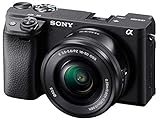
The a6400 has been on sale for years and remains one of the most sensible small landscape cameras you can carry, because it does the two things that matter on a long walk: it weighs almost nothing and it focuses reliably. At 403 g with battery it is the second lightest body in this roundup, and the collapsible 16-50mm power zoom makes the whole package small enough to hang on a shoulder strap all day. It suits the hiker and backpacker who prioritises carried weight over absolute image quality.
Key specifications
- Sensor: 24.2MP APS-C Exmor CMOS, BIONZ X processor
- Autofocus: 425-point phase-detection system with real-time Eye AF
- Continuous shooting: 11 frames per second with autofocus tracking
- Video: 4K at up to 30p, plus high-frame-rate 1080p
- Viewfinder: 2.36M-dot OLED EVF; 3.0-inch 180-degree flip-up touchscreen
- Battery: NP-FW50, roughly 410 shots per charge on the CIPA standard
- Weight: approximately 403 g with battery and card
- Storage: single UHS-I SD slot
- Weather sealing: dust and moisture resistant, but not rated as sealed
- Kit lens: 16-50mm f/3.5-5.6 OSS power zoom, 40.5mm filter thread
The 16mm wide end is the same 24mm full-frame equivalent as the Nikon Z50 II kit, and it is the single most important number for landscape shooting on a crop sensor. To go wider you would need something in the 10-12mm range, and Sony’s E mount has more third-party options at that focal length than any other mirrorless mount — an 11mm f/1.8 prime from a third-party maker, for example, gives you a 16.5mm full-frame equivalent field of view at a fraction of the cost of a first-party wide zoom.
The compromises are age and the rear screen. The flip-up screen on the a6400 points upward and forward, which is good for self-recording but less convenient than a vari-angle screen when you are crouched behind a low tripod trying to compose a foreground. Touch functionality is limited to focus-point selection rather than full menu navigation. And the single UHS-I card slot means no in-camera backup and slower buffer clearing.
Pros
- 403 g body — among the lightest here
- 16mm kit wide end equals 24mm full-frame
- Excellent autofocus for its generation, with real-time Eye AF
- Deep E-mount ecosystem with affordable third-party wide-angles
- Dust and moisture resistance is better than nothing on a wet hillside
Cons
- Older processor and menu system than anything else here
- Single UHS-I card slot — no backup, slow buffer clearing
- Flip-up rather than vari-angle screen
- Limited touchscreen functionality
- NP-FW50 battery is ageing technology and spares are increasingly scarce
Compared with the Canon EOS R10, the a6400 loses on processor generation, burst rate and card speed but wins decisively on lens availability and on the price of going wide. Compared with the Nikon Z50 II, it is older in every measurable way, but it is cheaper and the E-mount catalogue remains the strongest argument for owning a Sony crop body. For a backpacker counting grams, it is still the pragmatic choice.
6. Canon EOS R10 Lens Kit – Best Fast APS-C Body for Canon Shooters

The EOS R10 brings Canon’s DIGIC X processor and subject-detection autofocus down to an APS-C body that weighs 429 g, and it is the fastest crop-sensor camera in this roundup for continuous shooting. It suits the landscape photographer who also shoots wildlife or moving subjects, and the Canon user who wants a light second body that shares batteries and lenses with a full-frame R system.
Key specifications
- Sensor: 24.2MP APS-C CMOS, DIGIC X processor
- Autofocus: Dual Pixel CMOS AF II with subject detection for people, animals and vehicles
- Continuous shooting: 15 frames per second mechanical, up to 23 frames per second electronic
- Video: 4K at up to 60p, with oversampled 4K at 30p
- Viewfinder: 2.36M-dot OLED EVF; 3.0-inch vari-angle touchscreen
- Battery: LP-E17, roughly 430 shots per charge on the CIPA standard
- Weight: approximately 429 g with battery and card
- Storage: single UHS-II SD slot
- Weather sealing: none rated
- Kit lens: RF-S 18-45mm f/4.5-6.3 IS STM, with a longer 18-150mm option in some kits
The battery figure is worth dwelling on, because it is the best of the three Canon bodies here despite using the same LP-E17 cell as the EOS RP. Roughly 430 shots versus roughly 250 is a large gap for identical hardware, and it comes down to processor efficiency and power management. On a three-day trek that difference is the difference between carrying two spare batteries and carrying four.
The vari-angle screen is the other quiet advantage over the Sony a6400 and the Canon R100. A screen that swings out to the side can be angled for a low tripod position without requiring you to lie on the ground, and it folds face-in for protection in a pack. For landscape work, where a large proportion of frames are shot from knee height or lower to include foreground detail, this is not a minor feature.
The limitation is the lens catalogue. Canon’s RF-S range is small compared with Sony’s E-mount crop options, and third-party makers have been slower to release autofocus lenses for RF. The escape hatch is that full-frame RF lenses mount natively, so a 16mm f/2.8 or a 15-35mm wide zoom works on this body — but full-frame glass on a crop body is heavier and more expensive than the equivalent crop lens, and you lose the weight advantage that made the R10 attractive in the first place.
Pros
- Best battery life of the Canon bodies here, at roughly 430 shots
- Fastest burst rate in this roundup — 15 fps mechanical
- Vari-angle touchscreen is ideal for low foreground compositions
- UHS-II card slot clears buffers quickly
- Shares batteries and mount with Canon’s full-frame R system
Cons
- RF-S lens catalogue is limited, especially for wide-angle
- No weather sealing
- 18mm kit wide end equals roughly 29mm full-frame
- Single card slot
- Full-frame RF glass on this body is heavy and expensive
Against the Nikon Z50 II, the R10 wins on resolution, burst speed and card standard, and the Z50 II wins on processor generation, wide-end coverage in the kit lens and in-camera colour recipes. Against the Sony a6400, the R10 is newer and faster but the a6400 has a far better wide-angle lens situation. If you are already in Canon’s system, the R10 is the sensible light body; if you are not, the lens catalogue is the deciding factor.
7. Sony a7 IV 33MP Bundle with 128GB Card, Wide and 2x Lenses, and Case – Best Premium Complete Kit

This bundle takes the same 33-megapixel a7 IV body covered above and adds the things a first-time buyer usually forgets: a 128GB memory card, a case and a pair of auxiliary lenses described as wide and 2x. It suits the buyer who wants one transaction, no research and a camera they can use the day the box arrives — and who accepts that some of the bundled accessories are compromises rather than upgrades.
Key specifications
- Body: Sony Alpha a7 IV, 33MP full-frame back-illuminated sensor
- Processor and autofocus: BIONZ XR with 759 phase-detection points
- Viewfinder: 3.68M-dot OLED EVF; 3.0-inch vari-angle touchscreen
- Battery: NP-FZ100, roughly 580 shots per charge
- Weight: approximately 658 g body with battery and card
- Storage: dual slots — CFexpress Type A and UHS-II SD
- Weather sealing: dust and moisture resistant magnesium alloy body
- Included: 28-70mm f/3.5-5.6 zoom, 128GB memory card, wide and 2x auxiliary lenses, carry case
The important thing to understand about the “wide” and “2x” lenses in this bundle is what they most likely are: screw-on auxiliary converters that attach to the front of the existing zoom rather than dedicated interchangeable optics. These have a real place in a beginner’s bag — they cost almost nothing, they add coverage instantly, and a wide converter can get you a noticeably broader field of view on a kit lens that only reaches 28mm. But they work by adding glass in front of a lens that was not designed for it, and the usual consequences are softer corners, more chromatic fringing at the edges and a stop or so of light loss. For a landscape frame where corner sharpness is the whole point, they are a stopgap, not a solution.
The 128GB card is the more valuable









