
Our Top Picks
 TONOR Wood Wall Panels for Interior Wall Decor-44 PCS47.2 x 23.6 x 0.4 inches6.2 poundsCheck on Amazon
The best acoustic panels depend on the problem: for a bare room that rings when you clap, a large pack of thin foam tiles is the cheapest way to calm it, while thicker or larger boards are the better pick if you also care about how the wall looks or want more low-frequency absorption. In this set, the 4-pack of 48 by 24 inch, 2 inch foam boards is the closest thing to a balanced, thick option, and the wood slat sets are the choice if décor matters. None of them will stop sound passing through a wall.
Top picks at a glance

Focusound 52 Pack Acoustic Foam Panels 1" x 12" x 12" Sound Proof Foam Panles Soundproofing Noise Cancelling Wedge Panels for Home Office Recoding Studio with 300PCS Double-Side Adhesive


As an Amazon Associate we earn from qualifying purchases. Product prices and availability are accurate as of the date/time indicated.
TONOR Wood Wall Panels for Interior Wall Decor-4 Pack 47.2" x 23.6" | Wood Slat Acoustic Panels-31ft² for Noise Cancelling and Wall Décor Living Room, Home Decor, Office, Walnut


As an Amazon Associate we earn from qualifying purchases. Product prices and availability are accurate as of the date/time indicated.

24 Pack 2” Thick Pyramid Acoustic Foam, Sound Proof Foam Panels for Walls | High NRC Echo Control, 24 Sq Ft Coverage, 25kg/m³ High Density Foam, Flame Retardant Certified, Recording & Home Studio Ready


As an Amazon Associate we earn from qualifying purchases. Product prices and availability are accurate as of the date/time indicated.

50 Pack Sound Proof Foam Panels for Walls, 2 X 12 X 12 Inches Acoustic Foam Panels, High Density Acoustic Panels Sound Absorbing, Noise Cancelling Studio Wedges, Black (NOT INCLUDE ADHESIVE)


As an Amazon Associate we earn from qualifying purchases. Product prices and availability are accurate as of the date/time indicated.

NeatiEase Wood Panels for Wall, 4-Piece 96" x 12.6" Soundproof Wood Slat Wall Panel for Interior Wall Decor Noise Cancelling, Acoustic Wall Panels, Sound Absorbing Panel (Teak)


As an Amazon Associate we earn from qualifying purchases. Product prices and availability are accurate as of the date/time indicated.
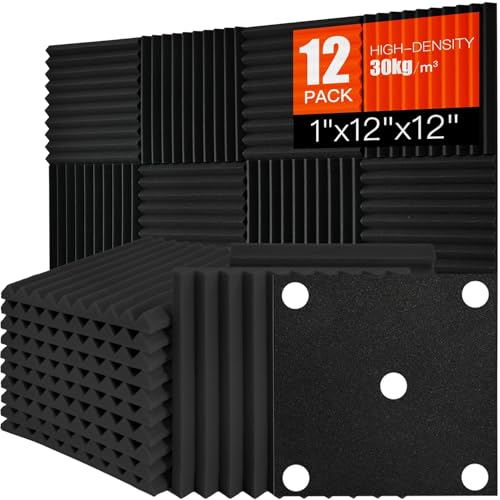
Saiqiang Acoustic Foam Panels Sound Absorbing 12 Pack - 1" X 12"X 12" Sound Proof Panels Noise Reducing for Walls, High Density Sound Deadening Panels Black Wedge for Studio Recording & Office & Home



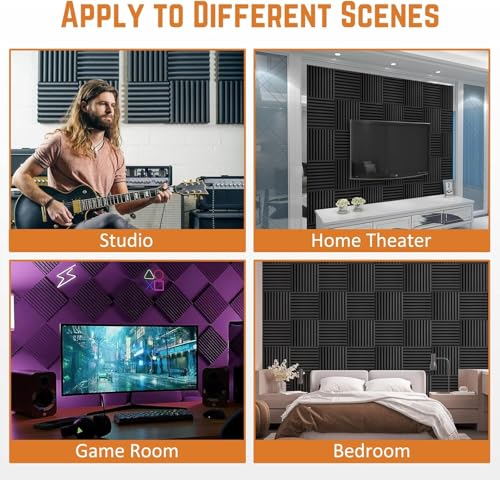


As an Amazon Associate we earn from qualifying purchases. Product prices and availability are accurate as of the date/time indicated.

TEMGCUAM 54 Pack Acoustic Foam Wall Panels, 12 x 12 x 1 in | High-Density Sound Absorbing Panels for Studios, Gaming Rooms & Offices; Includes 270 Adhesive Pads for Easy Wall Application


As an Amazon Associate we earn from qualifying purchases. Product prices and availability are accurate as of the date/time indicated.

EVERECO 12 Pack Large Acoustic Wall Panels, 47.2 x 23.6 x 0.4 Inch (92.8 sq ft), Self-Adhesive Sound Absorbing Panels, Decorative Sound Proof Panels for Walls, Echo Reduction for Studio, Office, Black


As an Amazon Associate we earn from qualifying purchases. Product prices and availability are accurate as of the date/time indicated.

Vyntqlla 4-Pack Acoustic Foam Panels, 48" x 24" x 2" High-Density Soundproof Foam Wall Panels for Wall, Ceiling, Noise Dampening Panels for Office, Studio and Home (Black 4 Pack, 48 x 24 x 2 Inches)


As an Amazon Associate we earn from qualifying purchases. Product prices and availability are accurate as of the date/time indicated.
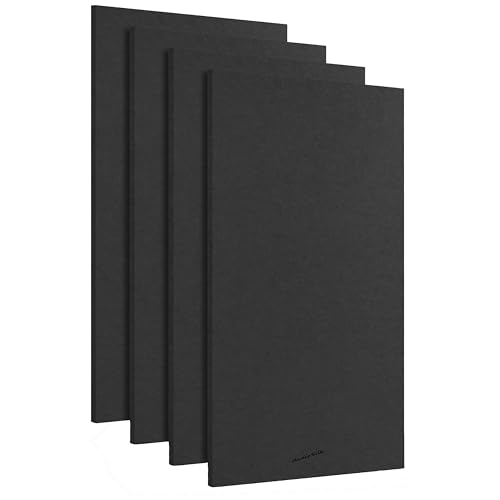
AudioSilk Acoustic Panels, 4 Pack ROOM KIT, Large, 46" x 23", Black


As an Amazon Associate we earn from qualifying purchases. Product prices and availability are accurate as of the date/time indicated.
| Model | Key point from title | Price tier | Best for |
|---|---|---|---|
| Saiqiang 12-pack foam wedges | 1 x 12 x 12 inch, black | Budget | Trying panels in one corner |
| TEMGCUAM 54-pack foam | 12 x 12 x 1 inch, 270 adhesive pads | Budget | Covering lots of wall cheaply |
| SD SODOCT 24-pack pyramid | 2 inch thick, 24 sq ft, flame retardant claim | Budget | Thicker foam on a tight budget |
| Focusound 52-pack wedges | 1 x 12 x 12 inch, 300 adhesive pieces | Budget | Large coverage with adhesive included |
| Knightsacoustic 50-pack | 2 x 12 x 12 inch, adhesive not included | Mid-range | Thicker tiles if you bring your own mounting |
| Vyntqlla 4-pack boards | 48 x 24 x 2 inch foam | Mid-range | Fewer, larger foam panels |
| TONOR wood slat 4-pack | 47.2 x 23.6 inch, walnut, 31 sq ft | Mid-range | Living rooms and offices |
| AudioSilk 4-pack room kit | 46 x 23 inch, black | Premium | Small studio, simple kit |
| EVERECO 12-pack | 0.4 inch thick, self-adhesive, 92.8 sq ft | Premium | Big area, light treatment |
| NeatiEase wood slat 4-piece | 96 x 12.6 inch, teak | Premium | Feature wall |
What panels can and cannot do for a room
Most home rooms sound bad for the same reason: hard, parallel surfaces bounce sound around, so speech smears and music loses detail. Absorptive panels soak up part of that energy, which shortens the echo you hear when you clap. That is useful for podcasting, video calls, practicing an instrument or watching films. General buying advice also says that panels are one tool among several. Rugs, curtains, bookshelves and upholstered furniture absorb sound as well, and treating them as part of the plan often means you need fewer panels than you expect.
Two limits are worth stating plainly. First, absorption is not isolation. Blocking sound from reaching the apartment next door needs mass and airtight construction, which light foam does not provide. Second, thickness matters because thin material mostly handles higher frequencies. Many listings use broad words such as “noise cancelling” or “soundproof” for foam tiles; read those as marketing shorthand, and look for a stated thickness, density and any absorption rating before paying for the claim.
Product design is also moving beyond the black wedge look. Slat-style wood boards, large flat fabric-style panels and self-adhesive sheets are common because buyers want a treated room that does not look like a recording booth. Expect more mixed products in this space, and expect specs to vary in how clearly they are stated. That is the main reason a careful reader should compare thickness, coverage and mounting method, not just pack counts.
A fourth thing to keep in mind is that listings vary widely in how much they tell you. Some give thickness, density and coverage in the title; others offer only a pack count and a color. When a seller leaves out the number that matters, that is a reason to compare more carefully, not a reason to assume the best. Return policies matter here too, because a panel set is hard to judge before you hear it in your own room.
How the list was put together
This list is built from published titles, listing specifications, manufacturer documentation and the general pattern of buyer feedback on this type of product. Products were chosen to cover different approaches: thin foam in bulk, thicker foam, large foam boards, and decorative wood slat sets. Nobody on the team used or measured these units. Where a title makes a claim, such as flame retardant or high absorption, we pass it on as the seller’s claim and tell you what to verify on the listing. Price tiers are relative within this set.
The ten picks, one by one
Saiqiang 12-Pack Foam Wedges
The title describes twelve black wedge tiles, each 1 by 12 by 12 inches, aimed at studios, offices and homes. That is about 12 square feet of coverage, which suits a single corner, the wall behind a microphone or a small desk nook. It is the least expensive entry here, so it works as a low-risk trial of what foam can do before spending more.
Thin foam of this kind generally tames higher-pitched echo and does little for bass. If your room booms, this will not fix it. Scenario: a spare bedroom used for video calls, with panels placed behind the monitor and beside the desk.
- Pros: lowest entry cost; small pack is easy to place and remove; quick way to test the idea.
- Pros: black finish hides on dark walls.
- Cons: only 1 inch thick, so limited effect on lower frequencies.
- Cons: small total coverage; adhesive is not mentioned in the title, so check the listing for what is included.
Question to ask before buying: does the listing state a density, a flame rating or an absorption figure, or only a size?
TEMGCUAM 54-Pack Acoustic Foam
This set covers more wall for the money. The title lists 54 tiles at 12 by 12 by 1 inch, which is about 54 square feet, plus 270 adhesive pads, and mentions studios, gaming rooms and offices. Five pads per tile means you can mount the whole set without a separate purchase.
Because the foam is 1 inch thick, think of it as echo control for mid and high frequencies. It suits a gaming room where you want fewer reflections without a big project. Scenario: covering the wall behind a stream setup and the side walls near the desk.
- Pros: large coverage; adhesive pads included per the title.
- Pros: uniform square tiles are easy to arrange.
- Cons: thin material; adhesive pads can mark paint when removed.
- Cons: “high-density” is a seller claim with no number in the title.
Question to ask: can the wall surface hold adhesive, or should you plan for another mounting method?
SD SODOCT 24-Pack Pyramid Foam
The title gives 24 pyramid-profile panels, 2 inches thick, covering 24 square feet, with a 25 kg per cubic meter density and a flame-retardant certification. It also claims “High NRC”, without a number. The 2 inch depth is the reason this set stands out among budget foam.
Treat the density, certification and NRC claims as seller statements until the listing or the manufacturer shows the document and the test standard. Within those limits, it is a reasonable choice for a small recording nook or a home studio wall where you want more than thin tiles offer.
- Pros: thicker than most budget packs; coverage stated in the title.
- Pros: a certification claim is at least stated, so it can be checked.
- Cons: 24 square feet is modest for a whole room.
- Cons: NRC claim has no figure; adhesive is not mentioned in the title.
Question to ask: which standard does the flame-retardant claim refer to, and is the paperwork posted?
Focusound 52-Pack Wedge Panels
Focusound sells 52 wedge panels at 1 by 12 by 12 inches with 300 double-sided adhesive pieces, for home offices and recording studios. The title contains typos (“Panles”, “Recoding”), which is worth noting when judging how carefully the listing was prepared. The product is similar to the other 1 inch packs, with generous coverage of about 52 square feet.
The title mixes “soundproofing” and “noise cancelling” language with foam wedges. Read that as echo reduction. Scenario: a home office with a bare wall facing the desk, where video calls echo.
- Pros: large pack; ample adhesive pieces included.
- Pros: fits a broad range of room sizes.
- Cons: only 1 inch thick; ambitious wording on the title.
- Cons: adhesive can damage walls on removal.
Question to ask: does the seller list real specifications such as density and fire rating?
Knightsacoustic 50-Pack Foam Panels
Fifty black tiles at 2 by 12 by 12 inches make about 50 square feet of thicker foam. The title explicitly says adhesive is not included, which is an honest and useful note: you will need to buy mounting hardware, spray adhesive suited to foam, or removable strips.
The extra depth over 1 inch packs means better absorption in the lower mids. Scenario: a podcast corner where you plan to mount the foam on a plywood board or frame instead of directly on the wall, which protects paint and lets you take it with you when you move.
- Pros: 2 inch thickness; wedge profile; large quantity.
- Pros: no forced adhesive if you prefer to mount your own way.
- Cons: extra cost and effort for mounting.
- Cons: still foam, so it will not isolate sound.
Question to ask: what mounting method will you use, and what does it cost on top?
Vyntqlla 4-Pack Foam Boards
Instead of dozens of tiles, this set has four large boards, each 48 by 24 by 2 inches, which is about 8 square feet each and 32 square feet in total. They are listed for walls and ceilings, for office, studio and home use.
Fewer, bigger pieces mean quicker installation and a cleaner look than a mosaic of tiles. At 2 inches, they suit first-reflection points beside a desk or monitors. Scenario: two boards on side walls and two behind a seat, in a small studio.
- Pros: larger format; 2 inch thickness; easy to arrange.
- Pros: fewer seams than tile packs.
- Cons: awkward to ship, carry and cut; the title does not mention mounting hardware.
- Cons: black foam finish only.
Question to ask: how will you hang boards of this size without damaging the wall?
TONOR Wood Slat Wall Panels, 4-Pack
These are decorative wood slat panels in walnut, 47.2 by 23.6 inches each, totalling 31 square feet. The title calls them acoustic and noise cancelling, and also décor for living rooms, homes and offices. The look is the selling point.
Slat panels typically rely on a felt or foam backing to absorb sound, and the slats add some scattering. The title does not say what the backing is or give an absorption rating, so check the listing. Scenario: an accent wall behind a desk or sofa where you want better call acoustics without foam.
- Pros: attractive finish; fits living spaces.
- Pros: 31 square feet is enough for a feature wall.
- Cons: backing material and absorption not stated in the title.
- Cons: higher price per square foot than foam.
Question to ask: what is behind the slats, and how thick is it?
AudioSilk 4-Pack Room Kit
The title is short: four large acoustic panels, 46 by 23 inches, black, sold as a room kit. That is about 29 square feet. Thickness, core material and any rating are not stated, so everything beyond size and count needs confirming on the listing.
A kit of this kind is aimed at someone who wants panels without piecing a project together. Scenario: a small home studio where four panels go at first reflection points and the rear wall.
- Pros: simple kit format; large panels cover well.
- Pros: black finish suits studios.
- Cons: thin title leaves thickness and core unknown.
- Cons: premium price tier relative to foam.
Question to ask: what material fills the panel, and what is the thickness?
EVERECO 12-Pack Self-Adhesive Panels
The title gives twelve black panels at 47.2 by 23.6 by 0.4 inches, totalling 92.8 square feet, self-adhesive, for echo reduction in studios and offices. The 0.4 inch thickness is the key detail: this is a light, decorative treatment, closer to a felt-style sheet than to thick foam.
The math checks out, since each panel is about 7.7 square feet. Light panels can quiet flutter on bare walls, but they are not a substitute for thick absorbers if your room is boomy. Scenario: covering a wide office wall with minimal installation.
- Pros: very large coverage; self-adhesive; slim profile.
- Pros: clean look.
- Cons: thin, so limited low-frequency effect.
- Cons: adhesive removal can damage paint, and the price reflects the big pack.
Question to ask: do you want broad light coverage or deeper absorption in fewer places?
NeatiEase Wood Slat Panels, 4-Piece
Four teak-finish slat boards, each 96 by 12.6 inches, are sold for interior decor and described as soundproof and sound absorbing. At roughly 8.4 square feet each, the set covers about 34 square feet, and the long format suits tall walls or a vertical feature.
The “soundproof” wording should be read as marketing; slat panels mainly improve the room’s sound, not its isolation. Scenario: a home theater or bedroom feature wall where the slat look matters most.
- Pros: striking long panels; premium look.
- Pros: works as décor and mild treatment.
- Cons: highest price in this set; absorption data not in the title.
- Cons: long boards need careful handling and a planned install.
Question to ask: is the primary goal looks or acoustics, and does the listing state a rating?
Choosing panels: a plain-language buying guide
Start with the symptom
Clap once in the room. A quick, metallic “flutter” points to parallel bare walls and responds well to panels at side-wall reflection points. A boomy, lingering low rumble points to bass trapping, which thin panels barely touch. If the main complaint is noise coming through the wall, no panel set here is the right tool.
Thickness, density and ratings
Absorption tends to rise with thickness. As a rule of thumb, 1 inch foam is a light treatment, 2 inch foam is better, and bass control usually needs several inches of dense material, often in corners. Density in kg per cubic meter, noted on one listing here, is a useful number when it is real. An absorption rating such as NRC is more useful still, but only if the seller names a lab or standard. When a title says “high NRC” with no figure, treat it as unproven.
Foam, fabric or wood
Foam is the cheapest per square foot and the easiest to cut, but it looks utilitarian and can be a fire concern. Fabric-covered or felt-style panels look cleaner. Wood slat boards look the best in a living space, though the sound-absorbing layer is usually the backing, not the wood. Choose by the room’s role: a studio can look like a studio, a lounge probably cannot.
Where to put them
Placement beats quantity. Sit where you normally sit and have a helper slide a mirror along the side walls; wherever you can see the speaker or your own mouth reflected, that is a first reflection point and a good spot for a panel. Then treat the wall behind you, since a bare rear wall sends sound straight back. The ceiling above a desk or kit is the next candidate. Corners are where bass collects, so thin tiles there do little, while thick wedges or stacked foam help more.
Mounting and walls
Adhesive pads and tapes are convenient, yet they can lift paint or drywall paper. If you rent, test a hidden patch, consider a frame or removable strips rated for the weight, and never rely on tape alone for heavy boards. Follow the manufacturer’s instructions for surface and weight limits.
Worked example: a small office
Assumptions: a 10 by 12 foot room, 8 foot ceiling, hard walls, desk against one short wall. Wall area is about 2 x (10 + 12) x 8 = 352 square feet. Covering 15 to 25 percent gives a target of roughly 53 to 88 square feet. Using only the sizes in the titles, here is what each approach would offer.
| Spec concept | What to look for | Why |
|---|---|---|
| Coverage target | About 50 to 90 sq ft for this room (estimate) | Gives noticeable echo reduction without over-damping |
| Thickness | 2 inches or more for mid-range, thinner only for light treatment | Thin material works mostly on higher frequencies |
| Rating or density | A named test standard, or a stated density | Separates real data from marketing wording |
| Mounting | Included adhesive, or a plan for frames and strips | Protects walls and avoids surprise costs |
| Fire information | A named standard on the listing | Foam can burn; verify claims rather than assume |
Under these assumptions, a 54-pack of 1 inch tiles reaches about 54 square feet, a 50-pack of 2 inch tiles about 50, and a 12-pack of 0.4 inch sheets about 93. Four large boards give 29 to 34 square feet, which is enough for first reflection points but not a whole wall. These figures are arithmetic from the titles, not measurements of performance.
Safety and care
Keep foam away from heaters, lamps, outlets and cooking areas, and follow the manufacturer’s instructions and local fire codes, particularly in rented or shared buildings. Foam and felt collect dust, so a light vacuum with a brush attachment is enough for upkeep.
Mistakes buyers make
The most frequent error is expecting panels to block neighbors’ noise. They reduce echo inside the room; they do not seal a wall. Another is buying the biggest tile count without looking at thickness, then wondering why bass is unchanged. A pack of 54 thin tiles and a pack of four thick boards are different tools.
People also cover every wall evenly. It works better to place panels at reflection points first, then add more only if echo remains. Over-treating a room can leave it sounding dull and deadened, especially for music.
Skipping the mounting plan is a quiet cost. Adhesive may damage paint, and some packs do not include any. Last, many shoppers accept “flame retardant” or “high NRC” at face value. Ask for the standard or document behind the claim.
One more slip is stacking foam over furniture-sized gaps, or hanging it behind a couch where it cannot do anything useful. Sound needs a clear path to the surface. A panel hidden behind a bookshelf, curtain or monitor stand is mostly decoration, and leaving a small air gap behind a panel often improves its low-end behavior compared with gluing it flat to the wall.
Verdict by use case
For a first trial in one corner: the Saiqiang 12-pack is the smallest commitment. For maximum coverage per unit spend with adhesive included: TEMGCUAM or Focusound. For thicker foam: SD SODOCT, Knightsacoustic or the Vyntqlla boards, with SD SODOCT the cheapest of those and Vyntqlla the least fiddly to install. For a living room where looks count: TONOR or NeatiEase, after confirming the backing. For large light coverage: EVERECO. For a simple studio kit: AudioSilk, once thickness is confirmed.
If you are undecided, a sensible path is to buy one modest, thicker set first, place it at the reflection points, and listen for a week. Many rooms need less than buyers expect, and a second order is easier to make once you have heard what the first one did. Keep the packaging until you are sure of the result.
Renters should lean toward framed or removable mounting, and anyone with a bass problem should plan for dedicated thick traps in corners instead of spreading thin tiles across every wall. Whatever you choose, record a short clap or voice test before and after so you can compare the change by ear rather than by memory.
Related guides
- Black Friday Cyber Monday Health Equipment Deals
- Hanging Purse Organizer For Small Closet
- Closet Organizers For Small Closets
Frequently asked questions
Do acoustic panels block noise from the next room?
Mostly no. Panels absorb sound inside the room they hang in, which reduces echo and flutter, but they add little mass, and blocking sound between rooms depends on mass, sealed gaps and decoupled construction. Thin foam stuck to a wall will make a space sound drier, yet a neighbor will still hear a loud voice or bass through the wall. Treat panels as an echo tool and use dense materials and sealing for isolation.
How many panels do I need for a small room?
A common starting point is covering roughly 15 to 30 percent of the wall area, concentrating on first reflection points beside and behind your listening or speaking position. A 10 by 12 foot room with 8 foot walls has about 350 square feet of wall, so 50 to 100 square feet of absorption is a reasonable first pass. Add more only if echo remains audible. This is a rule of thumb, not a measurement.
Is acoustic foam or a fabric or wood panel better?
They suit different jobs. Thin foam is cheap and covers a lot of area but usually does little for low frequencies and has a recording-booth look. Thicker, denser panels absorb more of the lower range. Wood slat boards mix decoration with some diffusion and absorption, and the backing matters. Check the thickness and any absorption rating on the listing, and pick by the problem you hear.
Will adhesive pads damage my walls?
They can. Double-sided adhesive may pull paint or drywall paper when removed, especially on flat paint, wallpaper or textured walls. If you rent or plan to repaint, test a small hidden spot first, consider hanging hardware or removable mounting strips rated for the weight, and avoid adhesive on heavy boards. Follow the manufacturer’s instructions for the surface type and weight limit.
Are foam panels a fire risk?
Foam can burn, and some products carry a flame-retardant claim that you should verify rather than assume. Look for a named standard on the listing or manufacturer page, keep foam away from heaters, lamps and outlets, and avoid it in kitchens or near open flame. Follow the manufacturer’s instructions and local fire codes, particularly in rented or commercial spaces.
Can I use panels to make a room quieter overall?
You can make a room feel calmer, because less echo makes voices and appliances sound less harsh. Overall loudness from outside sources will not drop much. If the aim is lower volume from the street or a neighbor, look at sealing door gaps, adding heavy curtains, and mass-based solutions, then use panels to polish what remains inside.









