
The best book stand for most readers is an adjustable metal or bamboo desk stand with page clips, such as the Fellowes BookLift, while cookbook users do better with a sturdy holder like the Lipper bamboo cookbook stand. Check the weight capacity and the depth of the ledge first, since many cheap stands are built for paperbacks and bow under a heavy hardback.
Our top picks

As an Amazon Associate we earn from qualifying purchases at no extra cost to you.
Quick Comparison of the Best Book Stands in 2026
| Pick | Best for | Material | Angle / height | Folds flat | Price range |
|---|---|---|---|---|---|
| Fellowes BookLift | Best overall desk stand | Metal and plastic | Nine height positions | Yes | Mid-range |
| Lipper bamboo cookbook holder | Best for the kitchen | Bamboo | Adjustable tilt | Yes | Budget |
| Bookchair Deluxe | Best for thick books | Metal frame | Fixed ergonomic angle | Yes | Upper-mid |
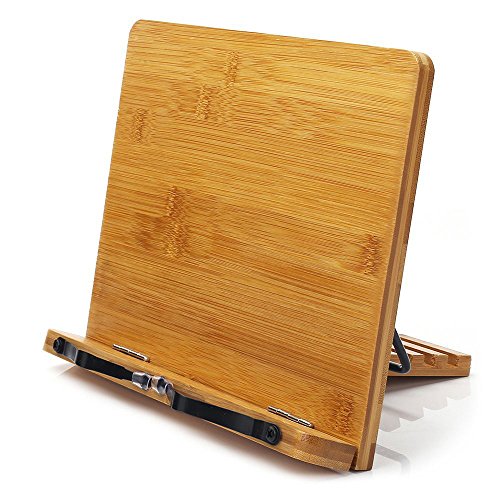
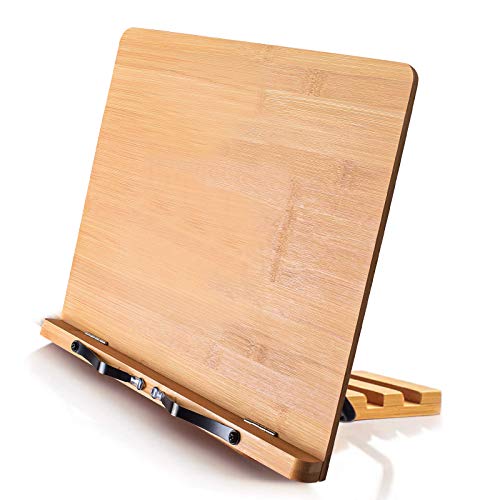
| Adjustable bamboo reading stand | Best stylish option | Bamboo | Multi-angle | Yes | Budget |
| Cast iron cookbook stand | Best for heavy cookbooks | Cast iron | Fixed tilt | No | Mid-range |
| Cuddly Reader pillow holder | Best for bed or sofa | Foam and fabric | Flexible | Soft | Mid-range |
| Thumb page holder | Best for one-handed reading | Plastic or metal ring | N/A | Pocketable | Budget |
Specs reflect typical manufacturer listings; confirm weight capacity and book thickness limits for the exact model.
Best Overall: Fellowes BookLift
The BookLift offers nine height positions and two adjustable page clips, and it folds flat for storage. It handles textbooks, tablets and cookbooks reasonably well.
Who it suits: students and home workers. Trade-off: its plastic and metal construction can feel light with very heavy volumes.
Best for the Kitchen: Lipper Bamboo Cookbook Holder
This bamboo holder keeps a recipe open at an angle and wipes clean. Pick one with a lip deep enough to hold a thick cookbook. Trade-off: bamboo can warp if soaked in water.
Best for Thick Books: Bookchair Deluxe
A sturdy design aimed at thick hardcovers and reference books. Trade-off: a larger footprint and higher price.
Best Stylish Pick: Adjustable Bamboo Stand
Bamboo reading stands combine multiple angles with a clean look. They suit desks where appearance matters.
Best for Heavy Cookbooks: Cast Iron Stand
A heavy, stable stand that will not tip over when holding a large volume. Trade-off: weight and a fixed angle.
Best for Bed and Sofa: Pillow-Style Reader
A cushion-based holder, such as the Cuddly Reader, rests on your lap and holds books or tablets without hands. Trade-off: less stable on a hard desk.
Best for One-Handed Reading: Thumb Page Holder
A small ring that holds pages open, helpful for travel and for people with sore hands. It does not support the book’s weight.
How to Choose a Book Stand
- Weight capacity: a 400-page hardback can weigh 1 to 2 kg, so look for a stand rated well above that.
- Ledge depth: thick books need a wide ledge, or they slide off.
- Angle: reading angles of roughly 30 to 45 degrees reduce neck strain.
- Page clips: metal arms hold pages, but spring tension should be adjustable.
- Portability: folding stands are best if you move between rooms.
Worked Example: Fit for a Specific Book
A textbook that is 25 cm wide, 5 cm thick and 1.8 kg needs a stand with a ledge at least 5 cm deep, a width of at least 25 cm and a capacity above 1.8 kg. A stand that fits only a 2 cm thick paperback will let the textbook tilt. Measure before you buy: spine thickness decides whether the ledge works.
Decision Guide
| Your situation | Pick |
|---|---|
| Students and office | Fellowes BookLift |
| Cooking from a cookbook | Lipper bamboo holder |
| Big hardbacks | Bookchair Deluxe or cast iron stand |
| Reading in bed | Pillow reader |
| Travel | Thumb page holder |
Ownership Realities
Hinges loosen over time, and bamboo should be wiped dry. Splash guards on kitchen holders help protect pages. Do not leave a book clamped open for weeks, as spines can crack.
Types of Book Stands Compared
| Type | Strength | Weakness | Best use |
|---|---|---|---|
| Adjustable desk stand | Many angles | Thin hinges on cheap models | Study, work |
| Kitchen cookbook holder | Wipeable, splash guard | Larger footprint | Cooking |
| Pillow reader | Hands-free on a bed | Not stable on a desk | Bed, sofa |
| Floor or lectern stand | Standing height | Bulky | Music, reference books |
| Thumb page holder | Pocketable | Does not bear weight | Travel |
Using a Book Stand to Reduce Strain
- Raise the page toward your eyes. A flat book forces your head forward and down. Tilting the page reduces neck bend.
- Keep the top of the page near eye level. Slightly below eye level is comfortable for most people.
- Take breaks. Every 30 minutes look away or stretch your neck.
- Light the page. Position a lamp so it does not cast your shadow on the text.
Mistakes to Avoid
- Buying a stand rated for paperbacks and loading it with a heavy hardback.
- Choosing page clips that are too stiff, which can leave marks on thin paper.
- Overlooking a splash guard in the kitchen, which makes cleaning easier.
- Using a tablet in a stand that has no lip, so the device can slide.
For music scores, lecterns with wide ledges let you spread large sheets. If you read in bed, a lightweight pillow-style holder is more comfortable than a rigid metal stand. Wooden and bamboo stands look good on a desk, while metal ones usually fold flatter for a bag.
Choosing by Material and Build
Metal stands are strong and fold flat, but cheap ones have thin hinges that loosen over time. Bamboo and wood stands look attractive and are stable, but they can warp with moisture and are usually heavier to carry. Acrylic stands are clear and modern but can scratch. Plastic stands are the lightest and cheapest, though they flex under heavy books. Look for rubber feet that grip the desk, a ledge that is at least as deep as your thickest book, and adjustable clips that hold pages without covering text.
If you often switch between books and a tablet, a stand with a lip and multiple angles is more flexible than a fixed cookbook holder. For people who read large-format art books or music, check the maximum width as well as the weight, since some stands accept books only up to about 30 cm wide. A stand that is too small makes pages sag and defeats the point.
Frequently Asked Questions
What is the best angle for a book stand?
Most ergonomics advice suggests tilting the page about 30 to 45 degrees toward your eyes, which reduces neck bending.
Can a book stand hold a tablet?
Many can, if the ledge is deep enough and the stand has a lip. Check weight capacity for larger tablets.
Are bamboo stands durable?
Yes for dry use, but bamboo can warp with moisture. Wipe, do not soak.
Do I need a cookbook stand with a splash guard?
Not required, but a clear guard keeps pages clean while you cook.
Which stand is best for textbooks?
An adjustable stand with strong page clips and a wide ledge, such as the BookLift or a thick-book stand.









